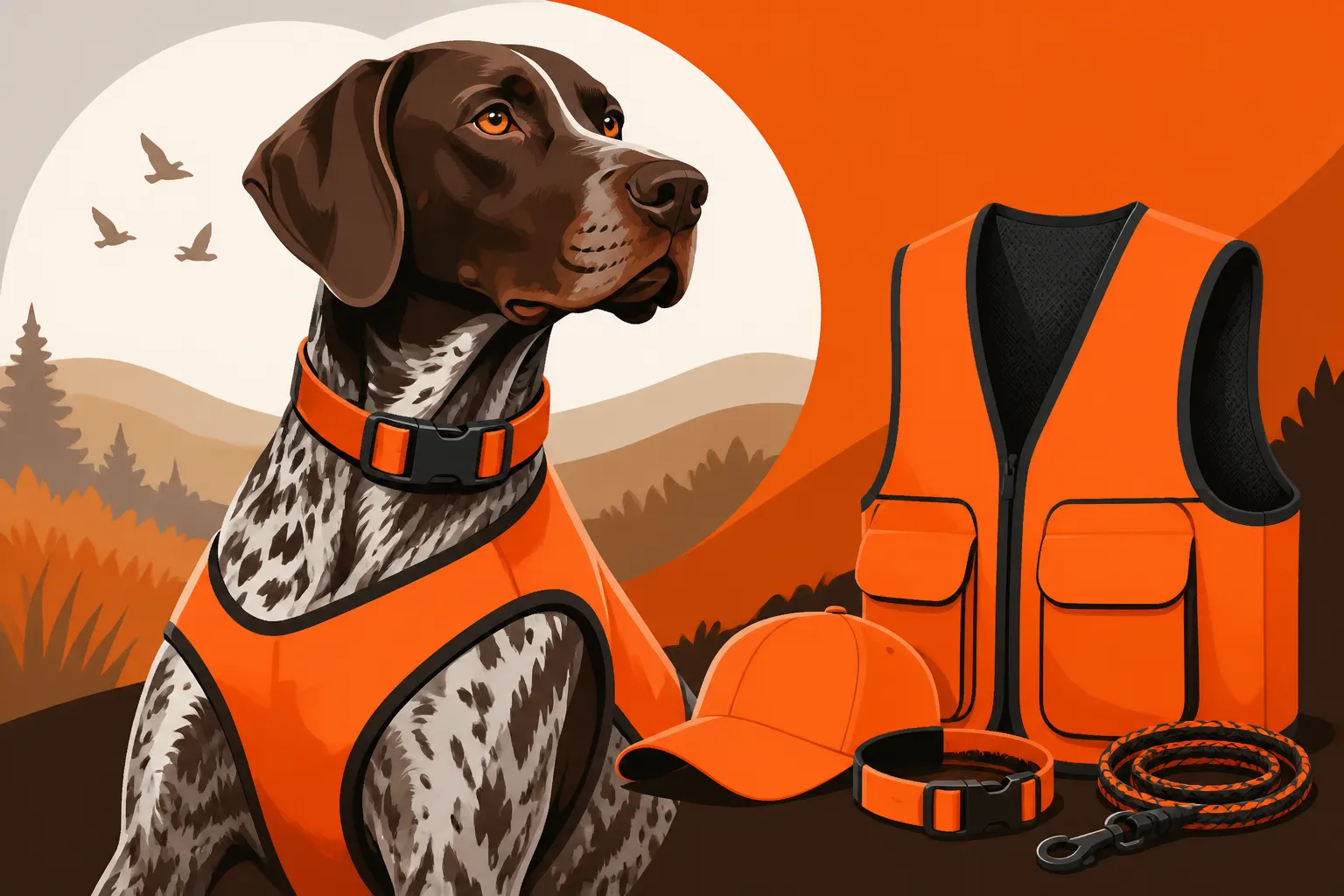
Blaze Orange Gear for a Hunting Shorthair
One of the biggest worries for any German Shorthaired Pointer owner during hunting season, especially when you're out in heavy cover or with multiple hunting parties, is losing sight of your dog or, even worse, having another hunter mistake your beloved GSP for game. It's a terrifying thought that keeps many of us up at night. This guide is all about understanding why blaze orange gear isn't just a good idea, but a critical component of safety for your hunting Shorthair, and how to choose and use it effectively to protect your partner in the field.
Why Blaze Orange Isn't Just for You: The Safety Imperative
When you step into the field with your German Shorthaired Pointer, you're not just bringing a hunting dog; you're bringing a family member, a powerful and fast athlete, and a creature with an instinct that can sometimes carry them further than you anticipate. The sad reality is that accidents happen, and many of them are preventable with proper precautions. Blaze orange on your dog is a major part of that prevention. It's not about making a fashion statement; it's about making your dog unequivocally visible.
Visibility for Other Hunters
Imagine hunting public land, or even private land where other parties might be present. In the excitement of the moment, with adrenaline pumping and birds flushing, it can be incredibly easy for someone to misidentify a fast-moving, liver-colored blur in the brush. While a GSP's natural coloring might offer some camouflage against certain backdrops, it also makes them blend in dangerously well with the browns and golds of late-season fields or the dappled light of woodland edges. A clear flash of blaze orange helps to instantly differentiate your dog from wildlife, preventing tragic accidents. It's a silent signal to everyone within sight: "This is a dog, not game."
This enhanced visibility provides crucial seconds for other hunters to identify your Shorthair as a domestic animal and not a target. Even seasoned hunters can make mistakes in fast-paced situations, especially when sightlines are obscured by brush or rolling terrain. Equipping your GSP with bright orange acts as an additional layer of protection, something every responsible hunter should consider. Think of it as another form of etiquette and safety protocol, ensuring everyone has a safe and enjoyable day afield.
Visibility for You
Beyond protecting your dog from other hunters, blaze orange gear also helps you keep track of your own German Shorthaired Pointer. These dogs are incredible athletes, capable of covering vast amounts of ground in pursuit of scent. Even with a good recall and a GPS Collar Subscription Fees for a Shorthair Owner, your eyes are often the first line of defense. When your Shorthair is working dense cover, or ranging out further than usual, that splash of bright orange can be the difference between a moment of panic and calmly observing their progress.
It’s particularly helpful in situations where your dog might be out of earshot, or where the terrain makes it difficult to follow their movements directly. A flash of orange against a green field or a snow-dusted landscape allows you to maintain visual contact, anticipate their next move, and know where they are relative to yourself and any hazards. This is invaluable when you're navigating tricky terrain or need to quickly assess their position to guide them with a whistle command. You’ll find it significantly reduces the stress of wondering exactly where your fast-moving partner has gone, allowing you to focus on the hunt itself.
Legal Requirements and Ethical Considerations
While specific laws vary greatly by state and even by particular hunting areas, many jurisdictions have requirements or strong recommendations for hunters themselves to wear blaze orange. Increasingly, some areas are extending these requirements to hunting dogs as well, or at least strongly recommending it for everyone's safety. It's crucial to check the regulations in the areas you plan to hunt each season. Ignorance of the law is no excuse, and violating these rules could result in fines or, more importantly, put your dog and others at risk.
Beyond legal mandates, there's an ethical responsibility to consider. As custodians of these incredible animals, it's our duty to do everything we can to ensure their safety and the safety of those around them. This includes making them as visible as possible in a hunting environment. Equipping your Shorthair with blaze orange demonstrates a commitment to responsible hunting practices and respect for the safety of all participants in the field. It's a simple, affordable measure that offers substantial peace of mind and protection, validating the precious bond you share with your GSP.
Types of Blaze Orange Gear for Your Shorthair
The market for blaze orange gear has really expanded over the years, which is fantastic for us Shorthair owners. There's a lot more than just a simple bandana available now, and each type of gear offers different levels of visibility and protection, designed for various hunting scenarios and dog temperaments. Knowing your options means you can choose what works best for your specific hunting style and your dog's individual needs.
Blaze Orange Vests
Blaze orange vests are perhaps the most common and effective piece of high-visibility gear for hunting dogs. They cover a significant portion of your Shorthair's body, from their chest and back to their flanks, providing a large, unmistakable patch of orange. These vests are typically made from durable, often water-resistant materials, designed to stand up to the rigors of busting through heavy cover. Some vests even include extra padding or reinforced chest plates to offer a degree of protection against brush, thorns, and minor impacts, which can be a real lifesaver when your Shorthair is barreling through dense undergrowth.
When selecting a vest, fit is paramount. A vest that's too loose can snag on branches or shift, becoming uncomfortable and ineffective. One that's too tight can restrict movement and cause chafing, especially on a hard-working dog. You want something that allows full range of motion while staying securely in place. Brands like Ruffwear and other outdoor gear companies offer excellent options that are often adjustable and built for athletic dogs. Many vests also incorporate reflective strips, which are invaluable during low-light conditions at dawn or dusk, or if your hunt extends unexpectedly into the evening. Finding the right Vests and Boots for a Hunting German Shorthaired Pointer can make a huge difference in their comfort and safety.
High-Visibility Collars and Leashes
Even if your Shorthair wears a vest, a blaze orange collar and leash are essential backups and additions. A collar is a non-negotiable piece of safety equipment, providing a place for ID tags and often serving as the primary attachment point for a leash or check cord. Opting for a blaze orange collar ensures a continuous splash of color around your dog's neck, which can be highly visible even if their vest gets temporarily obscured or if they shed it in thick cover (it happens!). Some collars come with built-in reflective elements or even small, battery-powered LED lights for ultimate visibility in very low light.
A matching blaze orange leash complements the collar and makes it easier for you to spot your dog when they're close, particularly during handling in and out of the field, or when moving through designated non-hunting areas. The brightly colored leash acts as an extension of your visual cue, making it obvious to others that your dog is under control and part of a hunting party. While you might be able to get by with a standard collar and leash from Chewy, for example, purpose-built high-visibility options are often more durable and feature-rich for the demands of hunting.
Specialty Items and Accessories
Beyond vests and collars, there's a range of other specialty items that can enhance your German Shorthaired Pointer's visibility and safety. For instance, some companies make blaze orange wraps that go around a dog's tail, offering a unique visual marker that can be seen even when the rest of the dog is hidden by tall grass. These are particularly useful for those moments when your Shorthair has gone into a deep point in heavy cover, and only the tip of their tail is visible.
Another consideration, especially for waterfowlers or those hunting near water, might be blaze orange covers for dog pack vests or even custom-fit ear protection that incorporates high-visibility colors. If your dog carries their own gear, such as a small first-aid kit or water bottle, an orange pack cover ensures that they're still highly visible. These accessories, while perhaps not strictly necessary for every hunt, can add an extra layer of protection and peace of mind, demonstrating a thorough approach to your Shorthair's safety afield. For concerns about field injuries, you can also read about Field Injuries a Hunting German Shorthaired Pointer Comes Home With.
Choosing the Right Fit and Material for Durability
Picking the right blaze orange gear isn't just about color; it's about finding pieces that will last, function well, and keep your dog comfortable through long, active days in the field. A German Shorthaired Pointer is a powerhouse, and their gear needs to stand up to their intensity. This means paying close attention to fit, material quality, and additional features that boost both visibility and durability.
Getting the Right Size
This might seem obvious, but getting the right size for your Shorthair's blaze orange vest or harness is absolutely critical. A poorly fitting vest can chafe, cause discomfort, restrict movement, or even get snagged and come off, defeating its purpose. German Shorthaired Pointers are lean, athletic dogs with deep chests and slender waists, so generic sizing might not always be perfect. You'll want to take accurate measurements of their neck, chest girth, and back length. Most manufacturers provide a sizing chart, and it's always best to measure rather than guess.
When you try on the gear, observe your dog's movement. Does it rub anywhere? Does it hinder their stride or make them appear stiff? Can they still breathe easily? A good fit should be snug enough not to shift or snag, but loose enough to allow full, uninhibited motion, especially when they're running, jumping, and crashing through brush. Remember, this isn't just for a short walk; this is for hours of hard work in diverse terrain. Comfort directly impacts their performance and willingness to wear the gear.
Material Durability and Comfort
A German Shorthaired Pointer is built for tough conditions, and their gear needs to be too. Look for materials that are known for their durability and resistance to tears and abrasions. High-denier nylons, Cordura, and other rugged synthetic fabrics are excellent choices. The material should also ideally be water-resistant or waterproof, especially if your Shorthair will be working in wet conditions or making retrieves from water, which many excel at. The Water Resistant Coat a Shorthair Carries is great, but their gear can still soak up water and become heavy if not chosen carefully.
Beyond durability, consider comfort. A Shorthair's coat is relatively short, so softer edges and well-finished seams are important to prevent chafing. Breathability is also a factor, as these dogs can generate a lot of heat when working hard. Some vests incorporate mesh panels for better airflow. While looking at products online, perhaps on a site like Chewy, read reviews from other hunting dog owners to get a sense of real-world performance and comfort.
Reflective Strips and Bells
While blaze orange is fantastic for daylight visibility, light conditions aren't always perfect. Overcast days, early mornings, and late evenings can reduce the effectiveness of even the brightest orange. That's where reflective strips come in. Many high-quality blaze orange vests and collars integrate reflective elements that catch and bounce back light from headlamps, vehicle headlights, or even the faint glow of a rising moon. This significantly enhances visibility in low-light situations, adding a critical layer of safety if your hunt runs longer than expected or if your dog needs to be located after dark.
Some hunters also swear by attaching small bells to their dog's collar or vest. While not directly blaze orange, the audible cue a bell provides can be incredibly helpful for locating your Shorthair when they are deep in heavy cover and out of sight. It creates an auditory marker that works in conjunction with the visual blaze orange. This combination of visual and auditory cues can make your German Shorthaired Pointer much easier to track, especially when you're moving through dense thickets or trying to pinpoint a dog on point in tall grass.
Ensuring Your Shorthair Accepts the Gear
It’s one thing to buy the gear; it’s another to get your German Shorthaired Pointer to wear it happily and without distraction. These dogs are intelligent and sensitive, and a new, potentially restrictive item can be a source of confusion or discomfort if not introduced properly. The goal is to make the blaze orange gear just another normal part of their hunting routine, not a nuisance.
Positive Introduction and Conditioning
The key to getting your Shorthair to accept any new gear, including blaze orange vests and collars, is a positive and gradual introduction. Don't just spring it on them on opening day. Start well before the season. Let your dog sniff the gear, associate it with treats and praise. Then, put it on for very short periods, always in a positive context. Maybe they wear it for five minutes before a meal, or for a quick play session in the yard. The moment they tolerate it, take it off and reward them generously.
Slowly increase the duration they wear it, and gradually introduce it during activities they enjoy, like a short walk in the park or a training retrieve. The goal is for them to associate the vest or collar with good things and exciting activities. If they show any signs of discomfort or stress – freezing, trying to rub it off, or moving stiffly – dial back the intensity and duration. Patience is vital here. You want them to think, "Oh, orange vest means we're going to do something fun!"
Troubleshooting Refusal or Discomfort
Despite your best efforts, some Shorthairs might initially resist wearing blaze orange gear. This could be due to the novelty of the sensation, an uncomfortable fit (re-check those measurements!), or even a fabric that irritates their skin. If your dog is showing clear signs of refusal – constantly trying to bite or scratch at the vest, hunching, or refusing to move – it's time to troubleshoot.
First, check the fit again. Are there any seams rubbing? Is it too tight around the chest or armpits? Sometimes a different style of vest, perhaps one with fewer straps or a lighter material, can make a difference. If the fit seems fine, go back to basics with extremely short durations and very high-value rewards. Try distracting them with an engaging game or a favorite chew toy the moment the vest goes on. If persistent refusal or signs of discomfort continue, consult with your vet to rule out any underlying skin issues, or a professional trainer for guidance on behavior modification. It's worth the effort to ensure your dog is safe and comfortable.
Pre-Season Preparation and Routine
As the hunting season approaches, integrate the blaze orange gear into your Shorthair's regular conditioning routine. They should be wearing their vest or high-visibility collar during practice retrieves, conditioning runs, and any simulated field work you do. This helps them build stamina and comfort with the gear in action, mimicking real hunting conditions. It also allows you to identify any potential issues with fit or durability before you're out in the actual field. Think about it: you condition their body, so condition them to their gear, too.
Making it a routine eliminates any surprise or novelty on opening day. When they see the blaze orange come out, it should signal an exciting adventure, not a new burden. Regular checks of the gear for wear and tear are also important. Burrs, thorns, and general rough use can quickly degrade fabrics and stitching. A quick once-over after each training session or hunt will ensure that their safety gear remains in top condition, ready to protect your intrepid German Shorthaired Pointer for many seasons to come. You might also want to review The Vet Schedule a Working Shorthair Should Keep and consider insurance options like Healthy Paws for any unexpected bumps or scrapes that might happen during intense training or hunting sessions, just to be prepared. For overall diet and energy, perhaps look into a brand like Ollie to ensure they're getting the nutrition needed for this demanding activity.
Here's a quick comparison of popular blaze orange gear types for German Shorthaired Pointers:
| Gear Type | Primary Benefit | Coverage Area | Durability | Best Use Case | Considerations |
|---|---|---|---|---|---|
| Hunting Vest | Maximum Visibility & Protection | Torso, Chest, Back | High | Dense cover, heavy brush, group hunts, low light | Can be warm, requires proper fit to prevent chafing |
| High-Vis Collar | Always Present, ID carrier | Neck | Medium-High | All situations, especially as a backup to a vest | Less coverage, may be obscured by head/body position |
| Blaze Orange Leash | Handler Visibility, Control | Held by Handler | Medium-High | Transport, walking to/from hunting area, close work | Not for dog's field visibility (unless worn as a drag) |
| Tail Wrap/Bandana | Specific Visual Cue | Tail or Neck | Low-Medium | Spotting dogs in tall grass or deep points | Can fall off, less overall visibility and protection |
Disclaimer
This article is for general informational purposes only and does not constitute professional advice. Laws, prices and regulations vary by location and change over time. Consult a qualified professional for guidance on your specific situation.