Boots for a Shorthair on Rough Ground
For any German Shorthaired Pointer owner who loves to get out into the field, forest, or even just some seriously rocky trails, the worry about their dog's feet is constant. Those sensitive pads, designed for speed and agility, are surprisingly vulnerable to the harsh realities of rough terrain, leading to painful cuts, abrasions, and even punctures. This guide will walk you through everything you need to know about selecting, fitting, and introducing dog boots to your hard-working German Shorthaired Pointer to keep their paws sound and ready for action.
Why Dog Boots are a Non-Negotiable for Rough Terrain
It's easy to assume a dog's paws are naturally tough, but for a breed like the German Shorthaired Pointer, bred for endless energy and relentless pursuit across varied landscapes, their paw pads can take a real beating. Unlike some breeds with thicker, more calloused pads, Shorthairs often have relatively softer pads that are more susceptible to injury. Rough ground isn't just a minor annoyance; it's a genuine threat to their health and ability to perform, whether they're hunting pheasants, running a trail, or just exploring new areas with you. Ignoring these risks can lead to serious setbacks, painful recoveries, and unexpected vet bills.
Protecting Against Cuts, Scrapes, and Abrasions
Imagine running barefoot over sharp gravel or jagged rocks for hours. That's essentially what we ask our GSPs to do. Cuts and scrapes are the most common injuries, often caused by sharp stones, broken glass, or even hard-packed dirt with abrasive particles. These aren't just superficial wounds; a deep cut can sideline a dog for weeks, requiring stitches, bandages, and strict rest. Abrasions, though seemingly minor, can wear down the pad, exposing sensitive tissue underneath and leading to chronic soreness or infection. Boots provide a crucial barrier, absorbing the impact and deflecting sharp objects, much like your own hiking boots protect your feet. It's about proactive care, not just reacting to an injury.
Preventing Punctures from Thorns, Stubble, and Debris
Beyond mere cuts, the field is full of hazards designed, it seems, to poke holes in soft paw pads. Thorns from rose bushes, hawthorn, or even dried tumbleweeds can easily penetrate a paw. In agricultural areas, harvested fields often leave behind sharp stubble from corn or wheat stalks, which can be like walking on a field of tiny knives. And let's not forget the sheer unpredictability of discarded litter or hidden sharp objects. A puncture wound is particularly insidious because it can introduce bacteria deep into the paw, leading to abscesses and serious infections that are difficult to treat. Boots, especially those with robust soles, act as a shield against these hidden dangers, allowing your Shorthair to focus on the hunt or run without the constant threat of a foot injury. This peace of mind is invaluable for any owner who wants to keep their dog sound.
Addressing Extreme Temperatures: Hot Ground and Frozen Surfaces
Rough terrain isn't just about sharp objects; it also encompasses temperature extremes. In the heat of summer, asphalt, concrete, and even sun-baked dirt can reach scorching temperatures that will quickly burn a Shorthair's pads. A simple "seven-second rule" applies: if you can't hold the back of your hand on the surface for seven seconds, it's too hot for your dog's paws. Boots provide insulation, protecting against these burns. Conversely, in winter, frozen ground, ice, and snow can cause frostbite or painfully cold paws. Ice balls can form between toes, leading to lameness and irritation, a problem boots can effectively prevent. For a German Shorthaired Pointer that loves to be out in all seasons, adapting to these environmental challenges with proper paw protection is crucial for Keeping a German Shorthaired Pointer Hunting Past Ten.
Choosing the Right Boots for Your German Shorthaired Pointer
Selecting the perfect boots for your German Shorthaired Pointer isn't just about picking the first pair you see. It's an investment in their comfort, health, and continued working ability. The market offers a bewildering array of options, and what works for a pampered house dog might not stand up to the demands of a driven Shorthair quartering a field all day. You need to consider materials, sole design, fit, and how they secure onto those lean, energetic legs. Remember, a boot that comes off in the thick of it is no protection at all.
Durable Materials and Robust Soles for Field Work
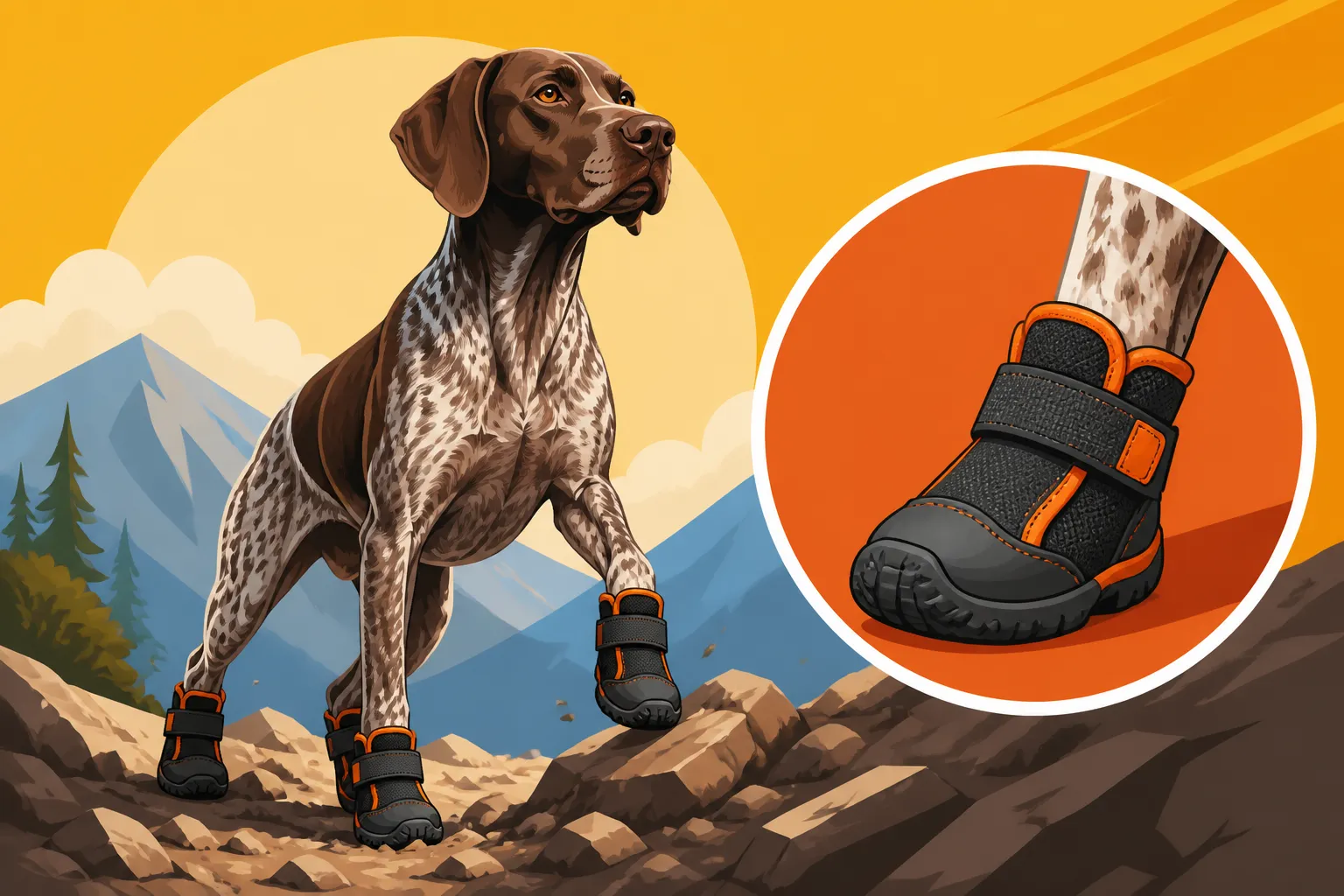
When your German Shorthaired Pointer is plunging through heavy cover or scrambling over rock piles, their boots need to be as tough as they are. Look for materials that offer a balance of durability, flexibility, and breathability. Options like Cordura, dense nylon weaves, or even synthetic leather can provide excellent abrasion resistance on the upper part of the boot. For the sole, real rubber or a similar high-density synthetic compound is paramount. You want a sole that's thick enough to resist punctures and absorb shock, but still flexible enough to allow for natural paw flexion and grip. A rigid sole will impede their natural movement and could even cause discomfort or alter their gait. Think of the specialized tread on a hiking boot: it’s designed to grip varied surfaces, and your dog’s boots should be too. Some boots even come with reinforced toe caps or extra stitching in high-wear areas, which are big plusses for a dog that covers as much ground as a Shorthair.
Achieving the Perfect Fit and Secure Closure
This is arguably the most critical aspect of dog boots. A poorly fitting boot is worse than no boot at all; it can cause chafing, blisters, and become a tripping hazard. First, you absolutely need to measure your dog's paws accurately. This usually involves measuring the widest part of the paw when weight is on it. Don't assume all four paws are the same size; often, the front paws are slightly larger than the rear.
Measuring Your Shorthair's Paws:
| Step | Description |
|---|---|
| 1. Prepare Your Dog | Have your dog stand on a piece of paper or cardboard. Ensure they are placing full weight on the paw you are measuring. |
| 2. Trace the Paw | Carefully trace around the paw, including the nails. If your dog is moving too much, you can also place their paw flat on a ruler. |
| 3. Measure Width and Length | Measure the widest part of the paw trace from side to side. Then measure the length from the back of the large pad to the tip of the longest toe nail. |
| 4. Compare to Sizing Chart | Check the manufacturer's sizing chart. If your dog is between sizes, it's often better to size up slightly to accommodate swelling during exercise, but always check recommendations. |
| 5. Measure All Four Paws | Remember to measure both front and back paws individually, as there can be size differences. |
Once you have the size, consider the closure system. Velcro straps are common, but look for multiple straps or a wide, sturdy strap that wraps securely around the narrowest part of the leg, above the dewclaw, to prevent the boot from slipping down. Some designs incorporate elastic cinches or drawstrings, which can also work well if they don't dig into the leg. The goal is snugness without constriction, allowing for full range of motion while ensuring the boot stays put during rigorous activity. Brands like Ruffwear and Kurgo are often praised for their secure designs. Checking product reviews, perhaps on a site like Chewy, for boots specifically for active dogs can give you insights into real-world performance. You'll want to ensure Whether a Shorthair Tolerates Boots is part of your consideration, as even the best boot is useless if your dog won't wear it.
Considerations for Water, Weight, and Breathability
A German Shorthaired Pointer often finds itself in wet environments, whether it's crossing a stream, retrieving from a pond, or hunting in damp conditions. Water resistance, if not full waterproofing, is a huge plus. Wet boots can become heavy, uncomfortable, and lead to skin irritation. Look for boots with water-repellent coatings or quick-drying materials.
However, water resistance can sometimes come at the expense of breathability. Just like human feet, dog paws can sweat, and trapped moisture can lead to fungal infections or softened pads, making them even more prone to injury. A good boot will try to strike a balance, offering some water protection while still allowing air circulation.
Finally, consider the weight and bulk. Your Shorthair is a graceful, agile athlete. Heavy, clunky boots will hinder their natural gait and tire them out faster. Seek out lightweight options that feel like an extension of their paw, not a lead weight. The goal is protection that doesn't compromise their incredible athleticism.
Introducing Boots to Your Shorthair with Patience
Let's be real, putting something foreign on your dog's paws isn't usually met with immediate enthusiasm. German Shorthaired Pointers, being intelligent and sensitive, might react with confusion, mild indignation, or even dramatic attempts to kick off the offending items. The key here is patience, positive reinforcement, and a gradual introduction. Rushing the process is the fastest way to create a negative association and make your Shorthair resistant to future boot wear.
Making it a Positive Experience
The first step is to associate the boots with good things. Start by simply showing them the boots, letting them sniff them, and immediately rewarding them with a high-value treat or praise. Don't even try to put them on yet. Do this a few times a day for a couple of days. The boots should become a cue for something positive.
Next, try putting just one boot on for a few seconds. As soon as it's on, give a treat and lavish praise, then take it off. Repeat this several times. Gradually increase the number of boots (one front, then one back, then both fronts, etc.) and the duration they are worn. The moment the boot goes on, a treat appears. The goal is to make them think, "Oh, boots mean yummy things!" High-value treats, perhaps some bits of their favorite food from Ollie, can really help seal the deal.
Short Sessions and Gradual Exposure
Start with very short sessions, ideally indoors, where there are no distractions from exciting outdoor scents or sights. A few minutes in the living room is plenty. Many dogs will perform the "boot dance" – high-stepping, shaking their paws, or trying to chew them off. This is normal. Ignore the dramatics as long as they aren't actually harming themselves or the boots. Distract them with a favorite toy or a quick game of fetch (indoors, of course, to keep the boots on soft carpet).
Once they tolerate boots for 5-10 minutes indoors without too much fuss, try a short walk in the yard. Again, keep it brief and positive. Build up to longer walks, then eventually to actual field or trail excursions. This slow and steady approach helps them acclimate to the strange sensation and realize the boots aren't going anywhere and aren't causing harm. Don't forget to inspect their paws after each session, checking for any rubbing or irritation, which could be a sign of improper fit. Fitting Boots on a German Shorthaired Pointer correctly is paramount to this process.
Strategic Use of Distraction and Routine
When you first put the boots on, a little distraction can go a long way. Immediately engage your Shorthair in an activity they love – a favorite puzzle feeder, a chew toy, or a brief training session with treats. The less they focus on the boots, the quicker they'll forget they're wearing them. Making boot-wearing a routine before specific activities, like every time you head to the truck for a hunt or a long trail run, can also help. They'll start to associate the boots with the exciting activity that follows, making them more accepting. Consistency is key. Every time you know you'll be on rough ground, the boots come out. This helps them understand the purpose and reduces surprise.
Maintaining and Caring for Your German Shorthaired Pointer's Boots
Just like any piece of specialized gear, your German Shorthaired Pointer's boots require proper care and maintenance to ensure they last and continue to provide optimal protection. Neglecting them can lead to premature wear, reduced effectiveness, and even bacterial growth. Think of them as an extension of your own hunting or hiking equipment; they need to be cleaned, inspected, and stored correctly to be ready for the next adventure.
Cleaning and Inspecting After Every Use
After every outing, especially those on rough, dirty, or wet terrain, it's crucial to clean your dog's boots. Mud, dirt, sand, and other debris can get trapped in the fabric or Velcro, not only causing wear and tear but also potentially irritating your dog's paws or even harboring bacteria. A simple rinse with water, perhaps with a mild soap for stubborn grime, is usually sufficient. Make sure to thoroughly clean the Velcro closures, as trapped dirt can compromise their stickiness, leading to boots coming loose.
Once clean, let them air dry completely. Never put them away damp, as this can encourage mold and mildew growth, not to mention a funky smell. While they're drying, take the opportunity to inspect them. Look for any signs of wear: fraying fabric, tears in the sole, worn-out stitching, or stretched-out straps. These are all indicators that the boot's protective qualities might be compromised. Catching these issues early means you can repair or replace them before they fail in the field, potentially preventing a paw injury that could land you with a hefty vet bill, even with a good insurance plan like Healthy Paws.
Proper Storage and Knowing When to Replace
How you store the boots matters. Keep them in a dry, clean place, away from direct sunlight or extreme temperatures, which can degrade materials over time. Avoid just tossing them into a pile of gear where they can get crushed or lost. A small mesh bag or a dedicated spot in your gear bag works well.
Knowing when to replace boots is also important. Even the most durable boots have a lifespan, especially with a high-energy dog like a German Shorthaired Pointer constantly putting them to the test. If you notice significant thinning of the sole, persistent holes or tears, or if the closure system no longer holds securely, it's time for a new pair. Don't try to squeeze another season out of worn-out boots; the risk of injury to your dog's paws simply isn't worth it. Investing in new boots is far cheaper and less stressful than dealing with a severe paw injury. For comprehensive paw care, it's also wise to implement routine checks for Cut Pads on a German Shorthaired Pointer After a Long Day.
Complementary Paw Care Strategies for a Hunting Shorthair
While dog boots are an excellent first line of defense against rough ground, a holistic approach to paw care will ensure your German Shorthaired Pointer's feet remain in top condition. Boots work best as part of a broader strategy that includes conditioning, regular checks, and knowing when to call in professional help. Combining these methods provides the best possible protection and resilience for your active companion.
Pad Tougheners and Paw Balms
Boots are great, but the pads themselves still need care. Just like an athlete conditions their skin, you can condition your Shorthair's paw pads. Products designed to toughen paw pads, often containing ingredients like tannic acid, can help make them more resistant to wear over time. These aren't a substitute for boots on truly harsh ground, but they build a stronger foundation.
Paw balms and waxes, such as Musher's Secret, are another fantastic tool. These products create a protective, breathable barrier that shields pads from moisture, salt, ice, and even some abrasive surfaces. They also moisturize, preventing cracking and dryness, which can make pads more vulnerable to injury. Applying a balm before a hunt and after cleaning can keep pads supple and less prone to splitting. It's an easy addition to your routine that offers significant benefits. Read more about Pad Toughener Products for a Hunting Shorthair.
Regular Paw Checks and Preventative Measures
Developing a habit of checking your German Shorthaired Pointer's paws regularly is absolutely essential. After every hunt or strenuous outing, take a few minutes to examine each paw thoroughly. Spread the toes to look for burrs, foxtails, thorns, cuts, cracks, or any signs of irritation or swelling. Pay close attention to the webbing between the toes, where foreign objects often lodge.
Early detection of issues can prevent minor problems from escalating into major injuries. If you find a foreign object, remove it carefully with tweezers. For small cuts, clean the area with an antiseptic solution. If you notice any deep punctures, persistent lameness, swelling, or signs of infection, it's time to visit your veterinarian. Don't try to treat serious paw injuries at home, as they can quickly become infected and lead to prolonged recovery times. Incorporate this paw check into your broader routine of Checking a German Shorthaired Pointer Over After a Hunt.
Knowing When to Consult Your Veterinarian
Sometimes, despite all your best efforts with boots, balms, and diligent checks, paw injuries happen. If your German Shorthaired Pointer experiences a deep cut, a puncture that won't stop bleeding, severe lameness, or a paw that is swollen, hot, or painful to the touch, it's time to seek professional veterinary care immediately. A veterinarian can properly clean and close wounds, prescribe antibiotics if infection is present, and ensure there are no deeper issues like broken bones or embedded foreign objects that you can't see.
Chronic paw problems, such as recurring infections, unusual growths, or unexplained lameness, also warrant a vet visit. These could be signs of underlying conditions like allergies, autoimmune diseases, or even certain types of cancer. Early diagnosis and treatment are always best. Keeping up with The Vet Schedule a Working Shorthair Should Keep will ensure these issues are caught and addressed promptly. Your vet is your best partner in keeping your Shorthair's paws healthy and ready for a lifetime of adventure.
Disclaimer
This article is for general informational purposes only and does not constitute professional advice. Laws, prices and regulations vary by location and change over time. Consult a qualified professional for guidance on your specific situation.