Chest Surgery Prices When a Shorthair Inhales an Awn
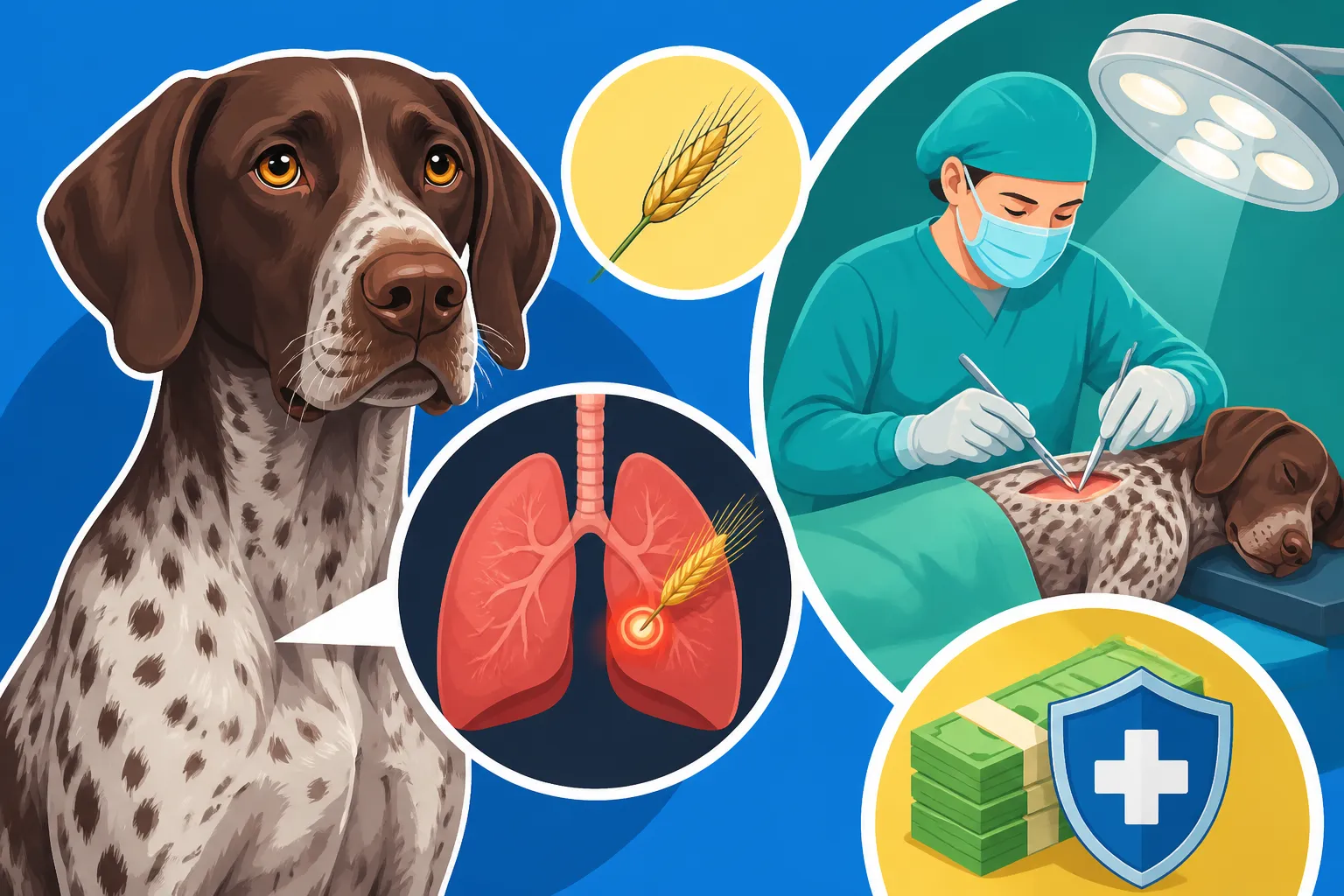
One of the most terrifying moments for a German Shorthaired Pointer owner is when your dog, usually a picture of boundless energy, suddenly shows signs of serious distress. Even worse is discovering that a seemingly innocent grass seed, or "awn," has migrated internally, necessitating emergency chest surgery. The financial burden of such a critical procedure can be overwhelming, leaving many owners reeling. This comprehensive guide aims to shed light on what to expect when faced with chest surgery for your Shorthair due to an inhaled awn, helping you understand the process and the financial commitment involved.
The Hidden Danger: When Grass Awns Become a Serious Threat to Your German Shorthaired Pointer
We all know the joy of seeing our GSPs tearing through fields, nose to the ground, living their best life. But these very fields, especially those rife with certain types of grasses, harbor a silent and insidious threat: grass awns. These are the barbed seed heads from plants like foxtail, cheatgrass, wild barley, and spear grass. They’re designed by nature to hitch a ride and burrow, and they’re incredibly adept at it.
Why German Shorthaired Pointers Are Uniquely Vulnerable
German Shorthaired Pointers, with their short, sleek coats, deep chests, and relentless drive to cover ground, are unfortunately prime candidates for awn-related issues. Unlike longer-coated breeds where awns might get tangled in fur, a Shorthair's coat offers little resistance. These seeds can easily get caught between toes, in ears, eyes, or, most alarmingly, inhaled directly. Because GSPs are bred to work and breathe heavily while searching, they can suck these tiny, barbed missiles deep into their respiratory system. It's a cruel irony that the very traits that make them such incredible hunting partners also expose them to this danger. We’ve all done that post-hunt Checking a German Shorthaired Pointer Over After a Hunt, but some of these dangers are almost invisible.
Imagine your Shorthair, after a glorious day in the field, suddenly developing a persistent cough or difficulty breathing. At first, you might attribute it to dust, allergies, or a minor cold. But the microscopic barbs on an awn prevent it from backing out; it only moves forward. Once inhaled, an awn can lodge in the nasal passages, throat, or, most severely, migrate into the lungs. From there, it can puncture lung tissue, creating abscesses, pneumothorax (collapsed lung), or even tracking into the chest cavity, causing pleurisy or empyema (pus in the chest cavity). This isn't just a minor irritation; it's a rapidly escalating, life-threatening situation. Early detection is key, but these things can be incredibly hard to spot, leading to genuine panic when symptoms finally become undeniable. You might have seen the article Foxtails and Grass Awns in a Hunting Shorthair and thought you were safe, but these things can be sneaky.
The Alarming Journey of an Inhaled Awn
The progression of an inhaled awn is often stealthy and terrifying. Initially, symptoms might be vague: a subtle cough, a bit of nasal discharge, or just a general "off" feeling in your dog. As the awn travels, it can create inflammation and infection. If it reaches the lungs, it causes more severe signs, such as a deep, wet cough, rapid or labored breathing, fever, lethargy, loss of appetite, and pain when the chest is touched. The insidious nature of awn migration means that by the time overt symptoms appear, the problem is often advanced and requires immediate, aggressive intervention. It’s a frustrating scenario because you feel like you did everything right, but this tiny piece of vegetation found a way in. Sometimes, you're left wishing you'd opted for Stapling a German Shorthaired Pointer's Field Wound instead, as that's a much more straightforward fix!
Unraveling the Mystery: Diagnosing an Internal Awn Migration
When your German Shorthaired Pointer shows signs of respiratory distress or unexplained illness after field exposure, your vet will begin a diagnostic journey that can be both exhaustive and expensive, even before surgery is on the table. Pinpointing an awn can be like finding a needle in a haystack, especially if it has been migrating for a while.
Initial Veterinary Assessment and Imaging
Your first step is typically a visit to your regular veterinarian. They'll perform a thorough physical exam, listen to your dog's lungs, and likely recommend initial diagnostics. This usually includes blood work to check for signs of infection or inflammation, and chest radiographs (X-rays). While X-rays can show signs of pneumonia, fluid in the chest, or lung abscesses, they rarely show the awn itself, as these plant materials are not opaque on standard X-rays. This is often the first moment of financial stress, as you're paying for tests that don't give you a clear answer, only pointing to a serious underlying issue.
If the X-rays suggest a problem in the chest cavity but don't pinpoint the cause, your vet might recommend further, more advanced imaging. An ultrasound of the chest can sometimes detect fluid or abscesses, and in some cases, might even catch a glimpse of the foreign body if it's close to the chest wall. However, the gold standard for detailed imaging in these situations is often a CT scan. A CT scan provides much more detailed cross-sectional images of the lungs and chest cavity, dramatically increasing the chances of locating the awn and assessing the extent of damage. Of course, this means another set of specialist fees, and often requires referral to a veterinary specialty hospital. It’s a bitter pill to swallow when you're already worried sick about your dog, and the bills keep mounting.
Endoscopy, Bronchoscopy, and Advanced Procedures
Sometimes, even with advanced imaging, the exact location or nature of the foreign body isn't clear, or it might be accessible via less invasive means initially. A bronchoscopy involves inserting a thin, flexible tube with a camera down your dog's windpipe into the bronchi of the lungs. This allows the specialist to visualize the airways directly, look for the awn, and sometimes even remove it if it's in an accessible location. If the awn is lodged in a nasal passage, a rhinoscopy (nasal endoscopy) might be performed. These procedures require general anesthesia and specialist equipment, adding another layer of cost and complexity.
In cases where the awn has caused a significant abscess or collection of fluid in the chest (empyema), samples of this fluid may be taken for analysis. This involves a procedure called thoracocentesis, where a needle is inserted into the chest to draw fluid. This diagnostic step helps identify the type of infection and guide antibiotic treatment, but it's another procedure your dog endures, and you pay for, on the path to figuring out the full scope of the problem. It’s easy to feel overwhelmed by the sheer number of tests and procedures, each with its own significant price tag, all while your best friend is unwell.
The Reality of Chest Surgery: What to Expect in Care and Cost
Once an inhaled awn has migrated into the chest cavity or caused severe lung damage, surgery often becomes the only viable option. This isn't a simple procedure; it's a major undertaking that requires a skilled veterinary surgical team, specialized equipment, and extensive post-operative care. The prices involved reflect this complexity and the level of expertise required.
Surgical Procedure and Associated Fees
Chest surgery, also known as a thoracotomy, involves opening the chest cavity to access the lungs and other organs. This is a delicate procedure, often performed by a board-certified veterinary surgeon. The goal is to locate and remove the foreign body (the awn), excise any damaged or infected lung tissue, drain abscesses or fluid from the chest, and thoroughly clean the area. Depending on the extent of the infection and damage, the surgery can be lengthy and intricate. It's not uncommon for a chest tube to be placed post-operatively to help drain fluids and air from the chest cavity.
The cost of the surgery itself is a significant component. This typically includes the surgeon's fee, the anesthesiologist's fee, operating room use, surgical supplies, and the cost of any tissue biopsies or cultures sent to a lab. Remember, we’re not just talking about your general practitioner here; these are often specialist veterinary surgeons in a referral hospital, commanding fees appropriate to their expertise and the advanced facility they operate within. Just as a comparison, even a less invasive emergency like The Bill When a Shorthair Torsions Mid Season can run into thousands, and chest surgery is often more complex.
| Cost Category | Description | Examples of Services Included | Impact on Total Bill |
|---|---|---|---|
| Pre-Surgical Diagnostics | Identifying the problem and its extent before surgery. | Initial vet exam, blood tests, X-rays, ultrasound, CT scan, bronchoscopy, thoracocentesis. | Can range from hundreds to several thousands of dollars, setting the stage for surgery. |
| Surgical Procedure | The core surgery to remove the awn and address damage. | Surgeon's fee, anesthesiologist's fee, operating room usage, surgical supplies, internal medication, placement of chest tube, histopathology of removed tissues. | This is usually the largest single component, often several thousands of dollars, reflecting the complexity and specialist involvement. |
| Post-Operative Care | Recovery, monitoring, and ongoing treatment after surgery. | Hospitalization (often multiple days in ICU), continuous monitoring, pain management, IV fluids, antibiotics, chest tube management, re-check X-rays, dressing changes, follow-up specialist consultations. | Can add significantly to the bill, easily another few thousands, especially if complications arise or extended ICU stay is needed. |
| Medications & Supplies | At-home care to support recovery. | Oral antibiotics, pain medication, anti-inflammatory drugs, specialized diet, wound care supplies. | Typically hundreds of dollars, but essential for successful recovery and preventing recurrence. |
Hospitalization and Post-Operative Care
The journey doesn't end when your Shorthair leaves the operating room. Post-operative care for chest surgery is critical and can be extensive. Your dog will likely require hospitalization for several days, often in an intensive care unit (ICU), for close monitoring. This includes continuous pain management, intravenous fluids, antibiotics, and meticulous care of the chest tube if one was placed. The veterinary staff will be monitoring vital signs, lung sounds, and the amount and nature of drainage from the chest. Every day your German Shorthaired Pointer spends in the ICU adds to the overall cost, and rightfully so, as they are receiving round-the-clock, expert care.
It's a huge emotional and financial burden during this time. You're trying to visit your dog, understand complex medical jargon, and simultaneously worry about the accumulating bill. Complications, though rare with skilled surgeons, can also extend the recovery time and further increase costs. These might include ongoing infection, persistent air leakage from the lung, or complications related to anesthesia. Even once your Shorthair is home, there will be follow-up vet visits, continued medication, and potentially physical therapy if recovery is slow. The dedication needed is immense, but we all know our GSPs are worth it.
Navigating the Financial Strain: Preparing for Unexpected Vet Bills
The reality of an inhaled awn leading to chest surgery for your German Shorthaired Pointer is that it's an emergency that comes with a substantial price tag. This kind of event can throw even the most financially prepared owner for a loop. However, there are ways to manage and prepare for these unexpected, high-cost veterinary bills.
The Lifeline of Pet Insurance
For many German Shorthaired Pointer owners, pet insurance can be an absolute lifesaver in situations like this. While it won't cover pre-existing conditions, if you have a policy in place before an emergency like an inhaled awn occurs, it can significantly reduce your out-of-pocket expenses. Policies vary widely, but most cover accident and illness, which this surgery would fall under. You typically pay a monthly premium, meet an annual deductible, and then the insurance company reimburses you for a percentage of the covered veterinary costs. This could mean the difference between paying several thousand dollars and only a few hundred. Companies like Healthy Paws are well-regarded for their comprehensive coverage, which is exactly what you need when facing a major surgical event. When considering pet insurance, always dig into the details to understand what percentage they cover, what the deductible is, and if there are any per-incident or annual payout limits. It's worth comparing against Monthly Insurance Premiums on a German Shorthaired Pointer and checking Whether a Policy Covers a Shorthair's Hunting Injuries because GSPs are prone to all sorts of field-related mishaps.
Imagine having a policy that covers 80-90% of your vet bill after your deductible. That huge, scary number suddenly becomes much more manageable. While it’s an investment, the peace of mind it offers when your beloved Shorthair faces a life-threatening emergency is priceless. Even if you've been putting it off, an incident like an awn migration can be a stark reminder of how quickly a healthy dog can become critically ill, and how essential that financial safety net can be.
Emergency Funds and Payment Options
If pet insurance isn't an option or your deductible is high, having an emergency fund specifically for your pet is incredibly important. Setting aside even a small amount each month into a dedicated savings account can build up a substantial buffer over time. This fund can cushion the blow of unexpected medical crises. For those without an emergency fund, many veterinary specialty hospitals offer payment plans or work with third-party financing options like CareCredit. These are essentially credit lines specifically for healthcare costs, allowing you to pay off large bills over time, often with deferred interest for a set period. It can be a huge relief in the moment, but always be sure to understand the terms and interest rates before committing.
Some veterinary clinics also work with charities or non-profit organizations that offer financial assistance for owners facing high vet bills. While these programs often have strict eligibility requirements and limited funds, it's always worth asking your veterinary team if they know of any resources. Don't be afraid to have an open conversation with your vet about the costs involved and what your payment options are. They understand that these bills are substantial and want to help you make the best decisions for your dog without breaking the bank. For a broader perspective, understanding The First Year Bills on a German Shorthaired Pointer helps put these emergency costs into context of overall ownership. Also, it’s worth investigating Whether Charities Help With a Shorthair's Vet Bills or The Credit Line a Shorthair Owner Should Arrange as part of a proactive plan.
Beyond these direct financial solutions, maintaining your Shorthair's overall health can indirectly help manage costs. Feeding a high-quality diet, perhaps from brands like Ollie that focus on fresh, nutritious food, can support a strong immune system and general well-being, potentially reducing other routine vet expenses. Similarly, buying supplies and medications from reputable online retailers like Chewy can sometimes save you money on day-to-day items, freeing up funds for that emergency savings account. While these won't prevent an awn, they contribute to a healthy dog better equipped to recover.
Disclaimer
This article is for general informational purposes only and does not constitute professional advice. Laws, prices and regulations vary by location and change over time. Consult a qualified professional for guidance on your specific situation.