Fencing That Holds a German Shorthaired Pointer
The boundless energy and keen intelligence of a German Shorthaired Pointer can make even the most robust backyard feel like a mere suggestion of a boundary. Many GSP owners, myself included, have stood in their yard, scratching their heads, wondering how their athletic companion managed to clear, tunnel under, or simply outsmart their seemingly secure fence. This guide is here to walk you through the real challenges of containing a German Shorthaired Pointer and offer practical solutions, from building a fort knox of a physical fence to understanding when a different approach might be needed.
Why Keeping a German Shorthaired Pointer Contained Is Such a Challenge
Let's be honest: a German Shorthaired Pointer isn't your average couch potato. These dogs were quite literally bred to be an all-purpose hunting machine, capable of pointing, retrieving, and tracking over vast expanses of varied terrain. That heritage means they come pre-loaded with an incredible drive, intelligence, and physical prowess that can make traditional containment methods seem like child's play. It's not that your GSP is naughty; it's that they are fulfilling their genetic destiny to explore, hunt, and go.
The Boundless Energy and Drive to Explore
A GSP has an engine that rarely idles. They need significant daily exercise, far beyond a leisurely stroll around the block. If your German Shorthaired Pointer isn't getting enough mental and physical stimulation, that pent-up energy has to go somewhere. Often, it manifests as a desperate need to explore beyond the confines of your yard. A dog that is bored or under-exercised will view a fence not as a barrier, but as a puzzle to solve or an obstacle to overcome. They might start circling, looking for weaknesses, or testing the limits, driven by an insatiable curiosity about what lies on the other side. Providing The Two Hours a Day a German Shorthaired Pointer Needs is paramount to their overall well-being and reducing escape attempts.
Jumping, Climbing, and Digging Aptitudes
Shorthairs are incredibly agile. A four-foot fence, which might be sufficient for many other breeds, can be a mere hop for a determined GSP. Some can clear a five-foot fence with surprising ease, especially if there's an enticing squirrel or a distant bird catching their eye. And if they can't go over, they'll often try to go under. Their strong prey drive and natural instinct to dig for vermin or to create a cool spot in the dirt makes them excellent excavators. You might find them systematically testing the perimeter, digging small holes that quickly become tunnels once they realize freedom lies beneath. This isn't malicious, it's just a GSP being a GSP. A dog that's not adequately stimulated or trained might also channel that energy into destructive behaviors, and sometimes, digging under a fence is simply a highly engaging activity for them. A Shorthair that digs the yard out is a common complaint, and often a symptom of insufficient activity.
The Power of Their Nose and Prey Drive
That legendary German Shorthaired Pointer nose is a double-edged sword when it comes to fencing. While it's magnificent in the field, it means every scent of a rabbit, deer, or even a neighborhood cat is a siren song. Once a GSP catches a whiff of something interesting, their focus can become absolute. They literally tune out everything else – your calls, the fence itself, even discomfort. This intense prey drive means that even if they understand the fence is a boundary, the primal urge to chase can override all training and conditioning. If they get a scent of something just beyond the fence, they'll exploit any weakness to get to it. This drive makes traditional deterrents less effective if the motivation to chase is strong enough.
Building a Physical Barrier That Actually Works
Given their unique talents, simply erecting any old fence isn't going to cut it for a German Shorthaired Pointer. You need to think like a GSP: where would I go over, where would I dig under, and what could potentially break my focus? It requires a bit more intentionality, but it's absolutely achievable.
Height Requirements for Jumpers
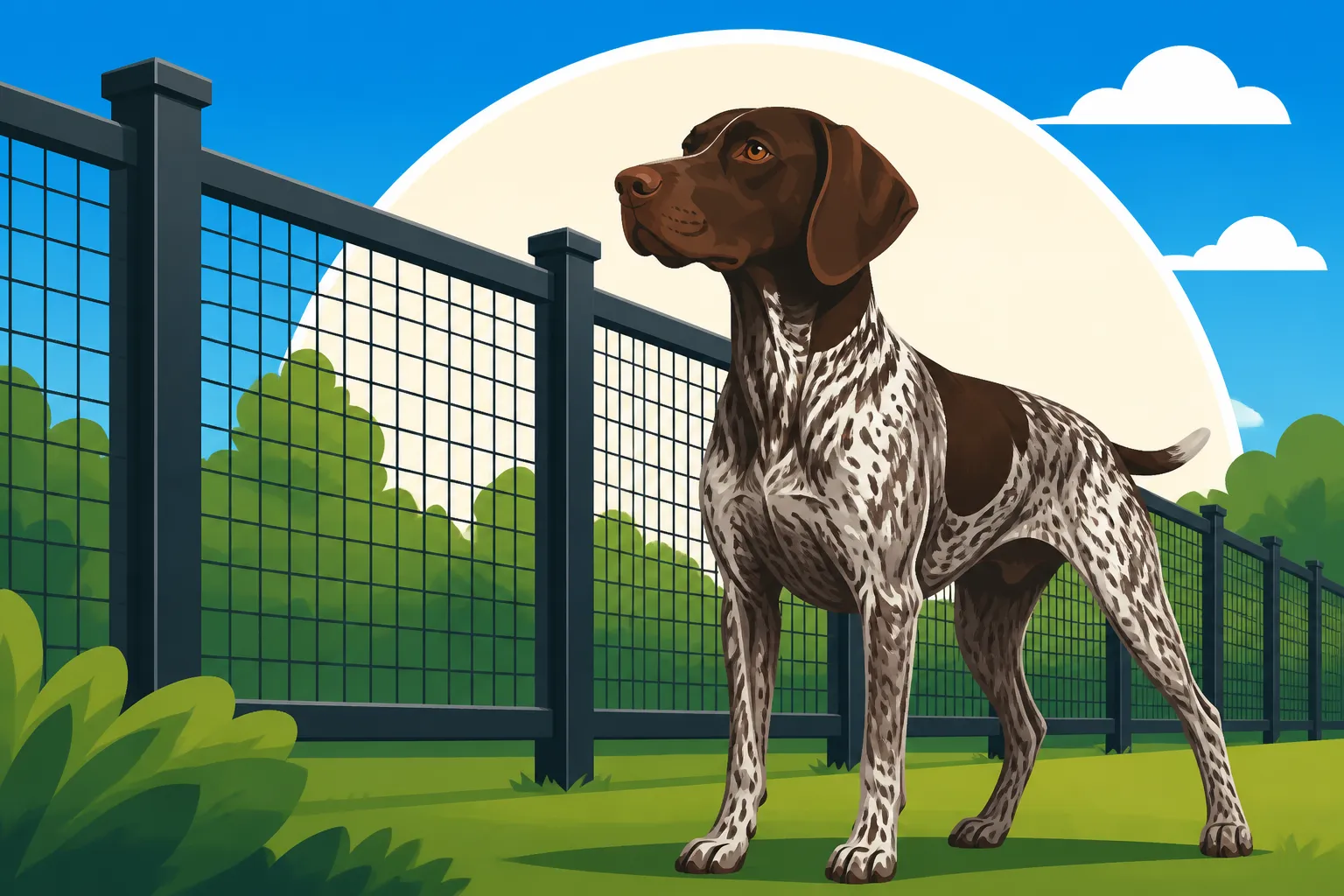
For a German Shorthaired Pointer, a minimum fence height of 6 feet is often recommended. Even at this height, some exceptional jumpers might still test it, especially if there are objects near the fence they can use as a launchpad (think woodpiles, sturdy bushes, or even snowdrifts in winter). For particularly athletic or motivated escape artists, considering an outward-angling extension at the top can be incredibly effective. This "coyote roller" or lean-in design prevents them from getting a solid grip or leverage to hoist themselves over.
Consider the material too. A solid privacy fence, while blocking visual distractions that might trigger a chase, can also make your GSP feel more isolated, potentially increasing boredom. A chain-link fence, while allowing them to see out (and you to see them), offers footholds that some GSPs might exploit to climb. If using chain link, ensure the mesh is small enough to prevent them from getting a toehold. When planning for a new fence, browsing sites like Chewy might give you an idea of specialized fencing hardware or even heavy-duty outdoor kennels that offer superior containment for specific situations.
Preventing Diggers and Tunnelers
Addressing the digging instinct is critical. Merely burying the fence line a few inches won't deter a determined GSP for long. Here are a few robust strategies:
- L-Footers: This involves attaching a section of fencing material (often galvanized mesh or hardware cloth) horizontally to the bottom of your fence, extending it inward into your yard. You then bury this mesh, either under a layer of soil or even beneath a gravel path. When your GSP starts to dig at the fence line, they quickly encounter this buried L-shaped barrier, which makes it virtually impossible to tunnel out.
- Concrete or Paver Base: Pouring a concrete footer or laying a row of heavy pavers directly along the inside base of your fence offers an impenetrable barrier against digging. This is a more permanent and labor-intensive solution but highly effective.
- Burying the Fence Deep: For a standard fence, burying the bottom 12-18 inches of the fence material itself directly into the ground can deter many casual diggers. If using chain link, consider burying a portion of the actual fence fabric.
It's also crucial to regularly inspect your fence line, especially after heavy rains that might erode soil or if your GSP has shown recent interest in a particular spot. Any small weakness can quickly become an escape route.
Fence Material Considerations
Different fence materials offer varying levels of security and visual appeal.
- Wood Fencing: A solid wood fence can block visual stimuli, which might reduce your GSP's desire to chase something they see on the other side. However, wood can be chewed, splinters can cause injury, and gaps can appear as boards age or shift. The height and dig-proofing are still critical here.
- Chain Link Fencing: While durable, the horizontal and vertical wires provide excellent climbing opportunities for agile GSPs. Choose a heavy gauge, small mesh chain link, and ensure it's at least 6 feet tall. Adding an outward angle at the top is a good idea.
- Welded Wire Fencing: This can be a good option as it doesn't offer the same easy footholds as chain link. Look for sturdy gauges and small openings. Again, 6 feet minimum height and dig prevention are key.
- Invisible Fences (Containment Systems): While not a physical barrier, these systems use a buried wire to deliver a static correction if your dog crosses a boundary. They can be useful for defining large areas or for supplementing a physical fence, but they are NOT foolproof for a GSP. A highly motivated GSP with a strong prey drive can (and often will) "run through" the correction if the reward (the chase) is greater than the deterrent. They also don't prevent other animals from entering your yard. For a German Shorthaired Pointer, an invisible fence should be considered a training tool with a physical fence, not a standalone solution. The importance of Recall on a German Shorthaired Pointer That Is Locked On is paramount if you're even considering such a system, as it's your primary way to prevent them from blowing through the boundary.
Here’s a quick comparison of common fencing types for GSPs:
| Fence Type | Pros for GSPs | Cons for GSPs | Digging Prevention Needed? | Jumping Prevention Needed? |
|---|---|---|---|---|
| Solid Wood | Blocks visual distractions, aesthetically pleasing | Can be chewed, boards can warp, less durable against force | Yes | Yes |
| Chain Link | Durable, allows visibility, relatively affordable | Offers footholds for climbing, can be cut | Yes | Yes (6ft+) |
| Welded Wire | Strong, fewer footholds than chain link | Can be expensive, may still be chewed/bent | Yes | Yes (6ft+) |
| Privacy Mesh | Blends well, can be very tall, flexible | Less durable against chewing or sustained force | Yes | Yes |
| Invisible | Defines large areas, no visual impact | No physical barrier, prey drive can override, doesn't stop ingress | N/A | N/A |
Considering Electronic and Invisible Fencing
I know, the idea of an invisible fence is tempting. It’s discreet, often more affordable for large areas than traditional fencing, and promises freedom for your dog within a defined space. But when it comes to a German Shorthaired Pointer, these systems come with significant caveats.
How Invisible Fences Work and Their Appeal
Invisible fences, often referred to as electronic containment systems, operate by burying a wire around the perimeter of your desired containment area. Your dog wears a special collar that receives a signal from the wire. As they approach the boundary, the collar typically emits an audible warning. If they continue to move closer, the collar delivers a mild static correction. The goal is to condition the dog to avoid the boundary.
The appeal is clear: you don't have to build a visible barrier, which can be great for preserving views or for homes governed by homeowner association rules that restrict physical fences. For some breeds, and for some temperaments within any breed, these systems can be quite effective as a supplemental tool or for a very low-drive dog. However, a GSP is rarely a low-drive dog.
The Major Limitations for a German Shorthaired Pointer
Here's where the reality hits for a German Shorthaired Pointer:
- Prey Drive Override: This is the single biggest issue. If your GSP spots a rabbit, a deer, or even a leaf blowing just outside the boundary, that intense prey drive can completely override the discomfort of the static correction. They'll often take the brief zap to get to what they want, and once they're out, they might be hesitant to come back through the correction to re-enter the yard. This leaves you with a dog that’s outside the boundary, potentially in danger, and stressed about returning. Whether an e-collar belongs on a German Shorthaired Pointer is a debate, but it's important to understand its limitations for containment.
- No Barrier for External Threats: An invisible fence only keeps your dog in; it doesn't keep other animals or people out. This means a stray dog, a curious child, or even a wild animal can still enter your yard, potentially creating dangerous situations for your GSP.
- Reliance on Conditioning: These systems rely entirely on your dog understanding and respecting the boundary through conditioning. This requires consistent training, often with flags initially, and your active participation. It's not a set-it-and-forget-it solution, especially for an intelligent and often stubborn GSP.
- "Fence Fighting" Potential: If your GSP can see other dogs or people just outside their invisible boundary, they might engage in "fence fighting" – barking and lunging at the perceived threat or playmate. This can lead to frustration, aggression, and a stressed dog, and it doesn't teach them appropriate behavior with boundaries.
For a German Shorthaired Pointer, an invisible fence might be an additional layer of security inside a truly secure physical fence, or used in very specific, highly supervised situations, but it should almost never be the primary containment method. Think of it as a helpful reminder, not a solid wall.
Beyond the Fence: Layered Security and Management
Even the best fence can fail if not coupled with smart management and ongoing training. For a German Shorthaired Pointer, a truly secure containment strategy is always multi-faceted, combining physical barriers with mental stimulation, consistent training, and vigilant supervision. This layered approach helps address their innate drives and keeps them happy, healthy, and safely in your yard.
Consistent Training and Recall
A strong recall is non-negotiable for any GSP, but it becomes even more critical as a last line of defense against an escape. Imagine the scenario: your GSP manages to dig under a weak spot you hadn't noticed, and they're bolting after a deer. A reliable recall could be the difference between a safe return and a tragic incident. Start recall training early, make it fun and rewarding, and practice it in increasingly distracting environments. Even with a perfect fence, practice a "come" command daily. Recall on a German Shorthaired Pointer That Is Locked On is a skill worth investing heavily in.
Beyond recall, basic obedience commands like "stay" and "leave it" reinforce your control and help manage their impulsive behaviors around potential escape triggers. Always reward generously when they comply. Consider investing in training resources or even a professional trainer if you're struggling to establish a solid foundation.
Exercise and Mental Stimulation Are Key
An under-exercised German Shorthaired Pointer is a bored German Shorthaired Pointer, and a bored GSP is an escape artist in the making. They need a job, even if that job is just running laps in a large, secure area, playing fetch for an hour, or joining you for a run. Ninety Minutes of Real Exercise for a Shorthair is often the minimum requirement for these energetic dogs.
In addition to physical exertion, mental stimulation is crucial. Puzzle toys, scent work games (like hiding treats in the yard or using a snuffle mat), and regular training sessions can help tire their minds as much as their bodies. A GSP that is mentally and physically satisfied is far less likely to seek excitement beyond the fence. Websites like Chewy offer a fantastic range of enrichment toys and tools that can help keep your GSP's brain engaged, reducing the likelihood of them feeling the need to "create their own fun" by exploring escape routes. Even high-quality food, like that offered by Ollie, contributes to a healthy, well-nourished dog that's less prone to stress-induced behaviors like excessive digging or escaping.
Supervision and Monitoring
No matter how good your fence is, direct supervision is your ultimate backup. Leaving a GSP unattended in a yard, even a well-fenced one, is inviting trouble. Just a few unsupervised minutes are all it takes for a determined dog to exploit a weakness you never knew existed. When your GSP is outside, be outside with them. Actively engage with them, play games, or continue training. This isn't just about containment; it's about building your bond and ensuring their safety.
For times when you absolutely cannot supervise, a secure crate or an indoor space might be a safer option than the yard. When they are in the yard, consider a GPS tracking collar. Devices like these provide real-time location tracking, which can be invaluable if your clever GSP does manage to make a break for it. It's an extra layer of peace of mind, especially for dogs with a high prey drive. You might be surprised at What a GPS Tracking Collar Costs a Shorthair Owner, but for many, it's a small price for security.
Understanding the Financial Commitment
It’s important to acknowledge that keeping a German Shorthaired Pointer safe and healthy, especially one prone to adventure, can come with financial implications. From the cost of robust fencing materials and professional installation to the potential vet bills from an unexpected injury during an escape, the expenses can add up.
For instance, a determined GSP might injure themselves attempting to scale a fence or encounter dangers like barbed wire or wildlife if they do get out. Field Injuries a Hunting German Shorthaired Pointer Comes Home With can be extensive and costly. Having pet insurance, like a policy from Healthy Paws, can provide a much-needed safety net for these unforeseen circumstances, helping to cover emergency care for cuts, broken bones, or other injuries they might sustain during an unscheduled outing. Planning for these possibilities is part of responsible GSP ownership.
Keeping a German Shorthaired Pointer safely contained requires more than just a fence; it requires an understanding of their inherent drives, a commitment to rigorous exercise and training, and a multi-layered approach to security. By combining a robust physical barrier with consistent training and active supervision, you can create an environment where your GSP can thrive without succumbing to their adventurous impulses. It's an investment in their safety and your peace of mind.
Disclaimer
This article is for general informational purposes only and does not constitute professional advice. Laws, prices and regulations vary by location and change over time. Consult a qualified professional for guidance on your specific situation.