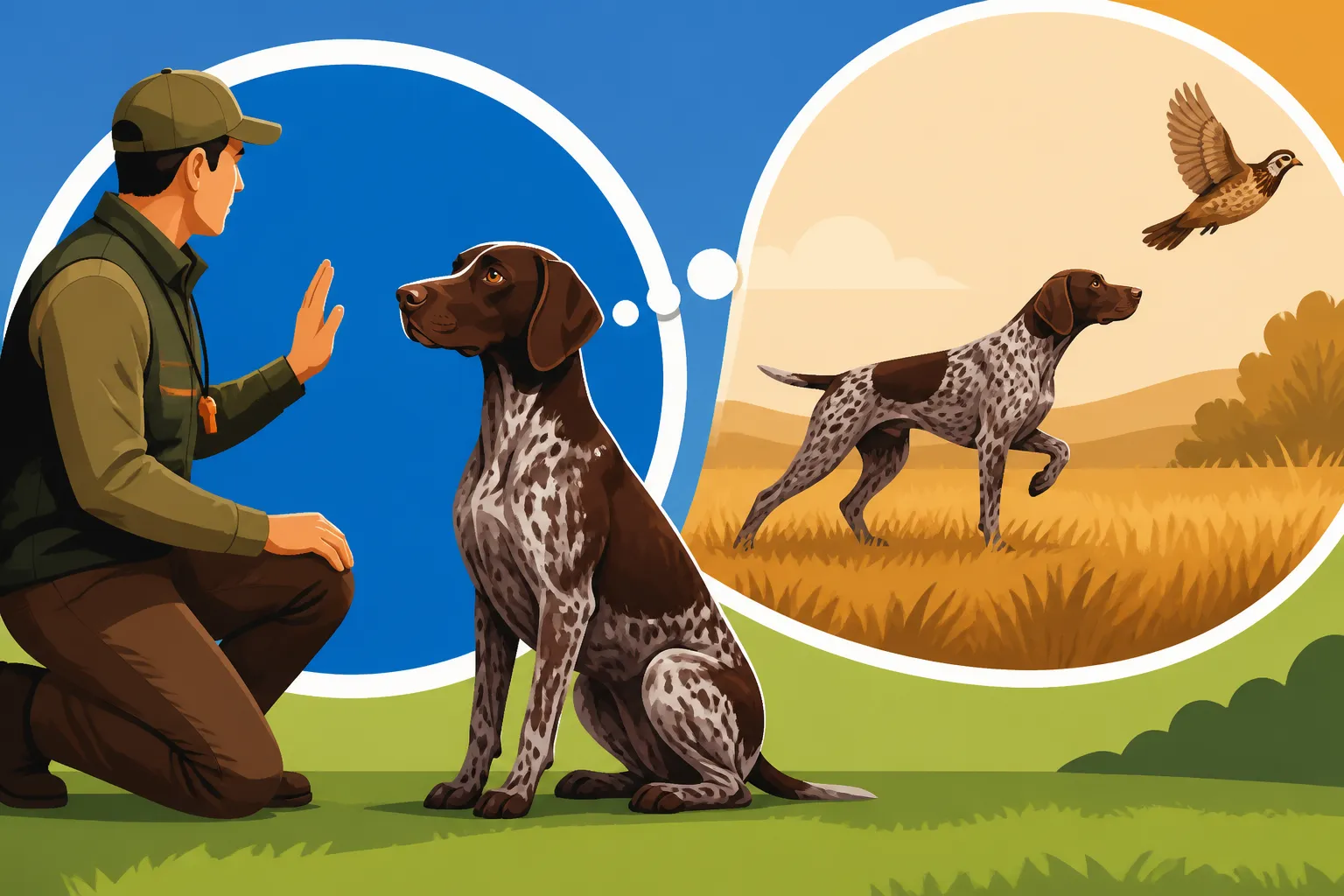
Group Obedience Before a Shorthair Starts Birds
It's incredibly exciting to bring a new German Shorthaired Pointer puppy home, or even welcome an adolescent into your life, especially if your dream is to have a phenomenal bird dog. There's a natural urge to get them out into the field, smelling birds, and learning the ropes of hunting right away. But many new owners quickly find that a dog without basic manners can be a handful, even a danger, when the real work begins. This guide will walk you through why foundational group obedience classes are not just a good idea, but an essential step before you even think about introducing your spirited Shorthair to birds, ensuring a more successful and harmonious partnership in the long run.
Why Group Obedience is Non-Negotiable for a Shorthair
Let's be real: German Shorthaired Pointers are bundles of intelligent, high-energy drive. Their instincts are powerful, and while that's exactly what makes them incredible hunting partners, those instincts, unchecked, can easily lead to chaos in the field or at home. Group obedience isn't about stifling that drive; it's about channeling it, giving your dog the communication tools it needs to understand your expectations, and ultimately, making them a more effective and happier companion.
Building a Foundation Beyond Instinct
You know that famous GSP intensity, right? It's what we love about them! But that same intensity can mean they're so laser-focused on a bird, or even a blowing leaf, that they completely tune you out. Relying solely on instinct in a hunting scenario is a recipe for frustration, not to mention potentially dangerous situations. Imagine your dog locking onto a pheasant scent and bolting across a busy road, or flushing birds out of range because they simply couldn't hold still.
Group obedience classes provide the critical groundwork for basic commands like "sit," "stay," "come," and "heel" in a structured environment. These aren't just parlor tricks; they're the building blocks for safety and control. When a dog learns to respond reliably to these commands, even with distractions, it creates a crucial communication channel between you and your Shorthair. It teaches them that while their instincts are important, listening to you is paramount. Without this foundation, you'll constantly be battling their natural exuberance, rather than working with it. Trying to teach a German Shorthaired Pointer to "whoa" in the field, for example, becomes infinitely harder if they haven't first mastered a simple "stay" in a less stimulating environment. Think of it like teaching a child to read before asking them to write a novel. The steps have to happen in order.
Socialization and Environmental Acclimation
One often overlooked benefit of group obedience is the intense socialization it provides. German Shorthaired Pointers are often described as "velcro dogs," deeply attached to their families. But their boundless energy and sometimes intense focus can make them wary or overly excited around unfamiliar dogs or people if they aren't properly socialized early on. A class setting exposes them to a variety of sights, sounds, smells, and other dogs of different breeds and temperaments.
This exposure helps prevent potential reactivity or fear issues down the line, both of which can be detrimental in a hunting environment. A dog that's constantly barking at other hunters' dogs, or cowering at the sound of a distant gunshot (which you'll tackle specifically later), isn't going to be an effective partner. Moreover, these classes often take place in different locations—a community hall, a park, even sometimes a pet supply store like Chewy offers training services. This varying environment teaches your Shorthair to focus on you regardless of the surroundings, a skill that is absolutely invaluable when you're hunting in unfamiliar cover, dealing with different weather conditions, or encountering unexpected wildlife. A well-socialized and environmentally acclimated dog is a confident dog, and a confident dog is a better learner and a more reliable hunting companion. They won't be overwhelmed by the myriad new sensations that come with a day in the field because they've already learned to process novel stimuli in a controlled, positive setting.
Core Skills Learned in Group Obedience Classes
The curriculum of a good group obedience class is designed to instill skills that go far beyond just sitting on command. For a German Shorthaired Pointer, these skills are directly transferable to the demands of hunting, making the transition to specialized bird dog training smoother and more effective.
Leash Manners and Distraction Training
Let's face it, a German Shorthaired Pointer on a leash can be a force of nature. Their power and drive mean that if they haven't learned to walk politely, they'll drag you wherever their nose takes them. Group obedience focuses heavily on loose-leash walking, teaching your dog to stay by your side even when fascinating smells and other dogs are nearby. This isn't just about pleasant walks around the neighborhood; it's about control in high-stakes situations. Imagine walking into a hunting preserve with several other dogs and handlers, or navigating dense cover. A dog that's constantly pulling or tangling you in the leash is a liability.
These classes are specifically designed with distractions in mind. Other dogs barking, people moving around, dropped leashes, even the sound of treats hitting the floor—these all mimic the unexpected chaos of a hunting scenario. Your Shorthair learns to maintain focus on you despite these external stimuli. This builds the foundation for a reliable recall, too. While a "come" command in your quiet backyard might be perfect, can your Shorthair execute it when they're twenty yards away, nose to the ground, convinced a rabbit just hopped by? Group class helps bridge that gap, making that recall far more dependable when it truly matters, like when you need to call them off an out-of-bounds area or away from another hunter's dog. The Structure a German Shorthaired Pointer Needs Daily often includes these fundamental lessons.
Impulse Control and Patience
German Shorthaired Pointers are bred to go, go, go! Their natural enthusiasm can be a challenge when you need them to be still and quiet. Group obedience teaches crucial impulse control through exercises like extended "sit-stays" and "down-stays." These aren't just for showing off; they're vital for a bird dog. Picture your Shorthair holding a solid point, or waiting patiently at your side while you load your gun, or even sitting calmly in a duck blind. These scenarios demand a level of self-control that doesn't come naturally to most high-drive dogs.
The patience cultivated in group classes translates directly to the field. It teaches your dog that sometimes, they have to wait for your command, even when every fiber of their being is screaming to chase that bird or retrieve that bumper. This mental discipline is as important as physical conditioning. A dog that breaks early, flushes birds out of range, or retrieves without being sent can quickly ruin a hunt. By mastering these foundational behaviors, you're not just training a dog; you're developing a patient, controllable hunting partner. This is a critical step even before you begin to introduce specific concepts like Whoa and Why Every Shorthair Starts There.
Respect for the Handler and Communication
One of the most profound benefits of consistent group obedience training is the strengthening of the bond and communication between you and your German Shorthaired Pointer. In a class, you are actively working together, solving problems, and celebrating successes. This reinforces your role as the leader and primary source of information and reward. Your Shorthair learns to look to you for guidance, understanding that you are the one who will direct their immense energy and drive.
This mutual understanding is critical for complex tasks in the field. When you introduce birds, the gun, or new cover, your Shorthair needs to implicitly trust your commands and cues. They learn to read your body language, listen to your tone, and respond consistently. This consistent communication reduces confusion and frustration for both of you. It's about building a language that goes beyond basic words, forging a partnership where your dog understands what's expected in various situations. It ensures that when you move into more advanced training, like Introducing a German Shorthaired Pointer to Birds or Introducing the Gun Without Ruining a Shorthair, your dog is already primed to receive and respond to your instructions.
Choosing the Right Group Obedience Class for Your Future Bird Dog
Not all obedience classes are created equal, especially when you have a German Shorthaired Pointer destined for the field. You're looking for something more than just basic manners; you need a program that understands the unique drive and needs of a gun dog and sets them up for success in their future career.
Looking for Experienced Trainers and Appropriate Curriculum
When you're searching for a class, don't be afraid to interview potential trainers. Ask them about their experience with sporting breeds, particularly GSPs or similar high-drive dogs. A trainer who understands the instincts of a bird dog will structure their lessons differently than someone accustomed to, say, a lapdog. They'll appreciate the intensity of your Shorthair's drive and know how to use it to your advantage, rather than trying to suppress it. Look for trainers who emphasize positive reinforcement, clear communication, and reward-based methods, as this builds confidence and a desire to work, rather than just compliance.
The curriculum should go beyond simply teaching commands in a sterile environment. Look for classes that incorporate real-world scenarios and distractions. Do they work on recalls in open spaces? Do they simulate common outdoor noises? A good class will stress the importance of proofing commands in varied settings, ensuring that your dog listens whether you're in a quiet classroom or a bustling park. Some trainers even offer specialized "field foundations" or "gun dog prep" courses that build upon basic obedience, directly addressing skills needed for hunting. You might find resources at a local pet store, or explore online options like Ollie for dog food or other supplies, but for training, look for hands-on, local expertise.
Class Structure and Size
Smaller class sizes are generally more beneficial, especially for a high-energy, easily distracted breed like the German Shorthaired Pointer. With fewer dogs, the trainer can provide more individualized attention, observe each dog's learning style, and offer tailored advice. Large classes can be overwhelming for some dogs and make it harder for the trainer to catch subtle cues or correct mistakes effectively.
Also, consider the progression of the classes. Many training facilities offer a series: puppy kindergarten, basic obedience, intermediate, and advanced. Starting with a puppy class (if your dog is young enough) is fantastic for early socialization and building confidence. As your Shorthair progresses, the intermediate and advanced classes will introduce more complex challenges, longer durations for stays, and increased distractions, all of which are invaluable for a future bird dog. Some places might even have specific "Canine Good Citizen" classes, which, while not directly bird-related, focus on public manners and reliability—skills every good hunting dog should possess when they're not in the field.
Integrating Obedience with Early Bird Work Concepts
While the primary goal of these initial group obedience classes isn't bird work, a savvy owner can begin to subtly integrate concepts that will be critical later. For instance, once your Shorthair has a solid "stay," you can practice having them hold that stay while you walk away with a bumper or a training dummy. Or, when practicing "come," you might incorporate a whistle, conditioning them to respond to a consistent sound cue, which will be essential for handling them at range in the field.
It's about building positive associations. Keep training fun, engaging, and rewarding. The last thing you want to do is put so much pressure on your young German Shorthaired Pointer that they lose their drive or become "sour" to training. Use high-value treats (perhaps some from a brand like Healthy Paws, which is typically pet insurance, but the name reminds me of healthy dog treats) and enthusiastic praise. This early obedience is about creating a dog that wants to work with you, not just one that has to. Think about exercises like Wing on a String for a Shorthair Puppy as a way to engage their natural prey drive in a controlled manner, once basic obedience is firm. The table below outlines how some general obedience skills directly apply to bird work:
| Obedience Skill | Description | Application in Bird Work |
|---|---|---|
| Sit/Stay | Dog holds position until released. | Holding point, waiting at the line, staying in a blind, waiting while you reload or scout. |
| Recall (Come) | Dog immediately returns to handler. | Calling off out-of-bounds birds, preventing accidental flushes, ensuring safety near roads/hazards. |
| Heel | Dog walks politely beside handler on leash. | Navigating thick cover, moving between hunting spots, walking respectfully with other hunters. |
| Down | Dog lies down and stays. | Useful for long waits in blinds, resting during breaks, or for steadying under shot. |
| Leave It | Dog disengages from a tempting item. | Ignoring non-target game, old scent, preventing scavenging of dangerous items, leaving another dog's retrieve. |
| Focused Attention | Dog maintains eye contact/focus on handler. | Receiving hand signals at a distance, understanding subtle cues, ignoring distractions in the field. |
| Controlled Retrieve | Dog picks up and delivers an item on command. | Delivering a bird gently to hand, even when highly excited, without chewing or dropping. |
| Socialization | Positive interactions with diverse environments, people, and dogs. | Calmly interacting with other hunting dogs, unfamiliar people, new sounds, and varied terrain without stress or aggression. |
The Long-Term Benefits on and Off the Field
Investing the time and effort into group obedience before your German Shorthaired Pointer ever smells a wild bird might seem like an extra step, but it's truly an investment that pays dividends for the entire lifespan of your dog, both as a hunting machine and as a beloved family member.
A Safer, More Enjoyable Hunting Partner
A well-trained German Shorthaired Pointer is not just a more effective hunting dog; they are a safer one. Reliable obedience means you have control in critical moments, whether it's preventing an accidental flush, stopping them from running onto private property, or calling them back from a potentially dangerous situation like a snake or a barbed wire fence. You'll worry less about losing your dog or them getting into trouble, allowing you to focus on the hunt itself.
The joy of hunting with a dog that understands and responds to your commands is immeasurable. There's a profound satisfaction in watching your Shorthair work, knowing that their intense drive is tempered by the discipline you've instilled. It reduces the frustration that can often accompany a poorly trained dog in the field, making every outing more enjoyable for both of you. It's about developing a harmonious partnership where you and your dog are truly working as a team, building success upon a solid foundation. Consider how much easier it will be to check your dog over for Foxtails and Grass Awns in a Hunting Shorthair after a long day if they will patiently stand still for you.
A Better-Behaved Household Companion
The benefits of group obedience extend far beyond the hunting grounds. German Shorthaired Pointers, with their "velcro dog" tendencies and endless energy, can sometimes be a handful in the home if they lack structure and manners. All those skills learned in class—impulse control, politeness, focus—make them much more pleasant to live with. You'll find they're less likely to jump on guests, counter-surf (a common Shorthair pastime, especially if they're food-motivated!), or bark excessively.
This foundation of good behavior contributes to a stronger, more positive bond with your dog in all aspects of life. An obedient German Shorthaired Pointer is a joy to have around children, can be taken to public places with confidence, and simply fits better into your family's routine. It helps prevent common reasons why so many Shorthairs end up rehomed at eighteen months—because their owners weren't prepared for their energy and lacked the tools to manage it. Training, in essence, helps manage What an Under Exercised Shorthair Does to a House by providing mental stimulation and structured activity. When you spend the time shaping their behavior early on, you're not just creating a hunting champion; you're nurturing a well-adjusted, loyal, and happy family member who thrives both in the field and curled up at your feet at the end of a long day.
Disclaimer
This article is for general informational purposes only and does not constitute professional advice. Laws, prices and regulations vary by location and change over time. Consult a qualified professional for guidance on your specific situation.