Signs a German Shorthaired Pointer’s Day Vision Is Failing
It's incredibly heartbreaking and worrisome to notice your lively German Shorthaired Pointer, usually so fearless and full of zest, starting to hesitate in bright sunlight or bumping into familiar objects. These subtle shifts can trigger a wave of anxiety, making you wonder if their once-sharp vision is beginning to fail. This comprehensive guide is here to walk you through the tell-tale signs that your beloved Shorthair might be experiencing day vision loss, help you understand the potential causes, and offer practical steps for supporting them.
Understanding the Roots of Day Blindness in German Shorthaired Pointers
When we talk about day vision failing in a German Shorthaired Pointer, we're often looking at a specific inherited condition known as Cone Degeneration. This isn't just about getting a bit older; it's a genetic predisposition that can impact their quality of life significantly if not understood and managed.
What Exactly is Cone Degeneration?
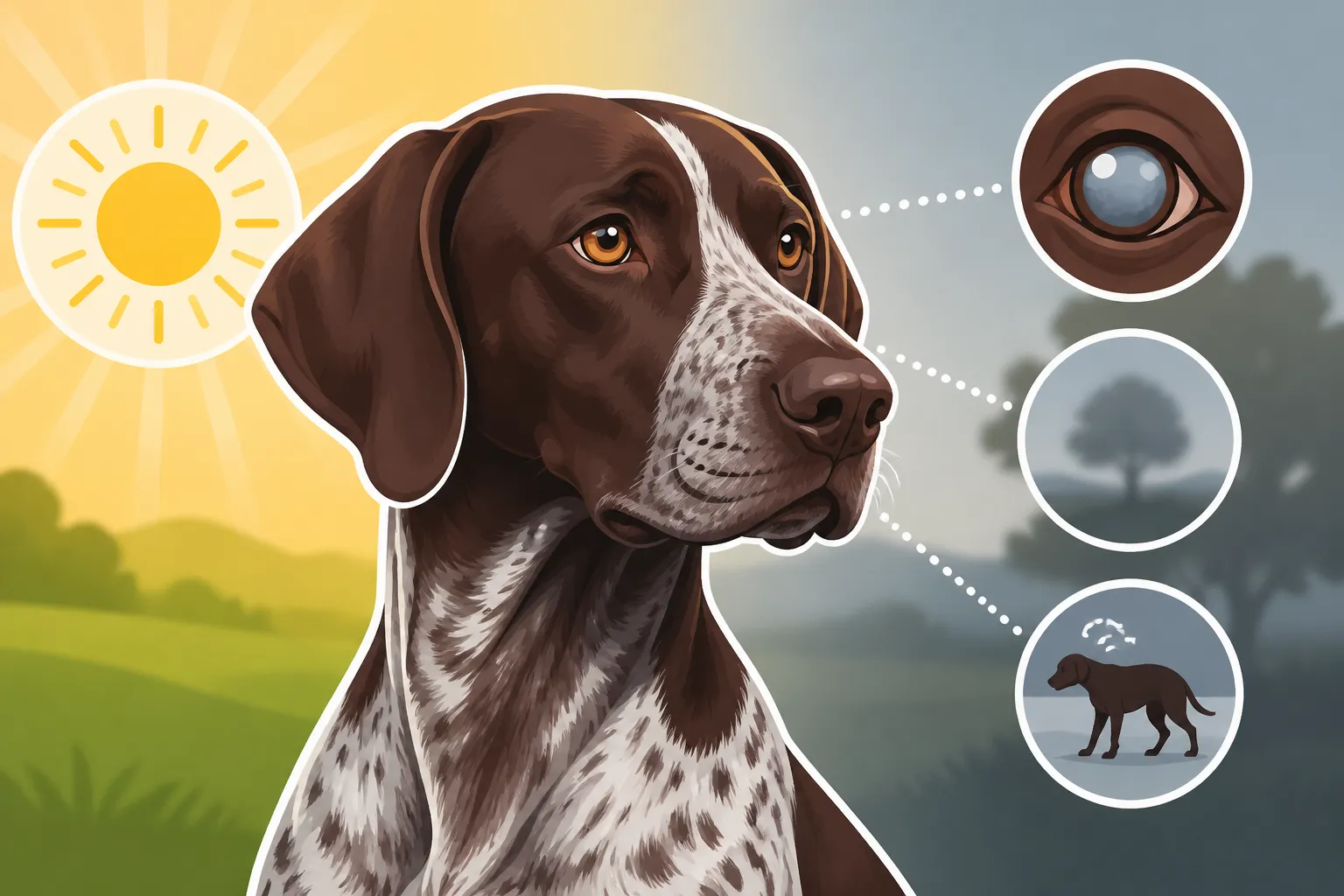
Imagine a world where bright sunshine feels like a blinding fog, and vivid colors blur into indistinct shapes. That's a bit like what a GSP with Cone Degeneration experiences. This condition specifically affects the cone photoreceptor cells in the retina of the eye. Cones are responsible for detecting bright light, color vision, and fine details. Rods, on the other hand, handle low light vision. So, when the cones degenerate, dogs primarily lose their ability to see clearly in well-lit environments, hence the term "day blindness."
This isn't just a random occurrence; it's an autosomal recessive genetic disorder, meaning a dog must inherit two copies of the faulty gene (one from each parent) to be affected. If they inherit only one copy, they are considered a carrier but usually won't show symptoms. The good news is that advancements in veterinary genetics mean we understand more about The Gene Behind Cone Degeneration in Shorthairs and can test for it. This knowledge is crucial for breeders aiming to reduce the prevalence of this condition in their lines. It's a progressive disease, meaning it tends to worsen over time, but typically stabilizes rather than leading to complete blindness, as the rod cells remain functional, preserving their night vision.
When Day Blindness Typically Appears
One of the most distressing aspects of Cone Degeneration is its early onset. Unlike age-related vision changes that often manifest in a dog's senior years, this condition typically reveals itself much earlier. Most German Shorthaired Pointers affected by Cone Degeneration will start showing signs of day vision problems as young puppies, often between 8 to 12 weeks of age. Some may even show symptoms slightly earlier or later, but it's almost always within their first year of life.
This early presentation means that owners might first notice their seemingly clumsy puppy struggling to navigate a brightly lit yard, or becoming particularly anxious when taken out on a sunny day. This timing is a key indicator, distinguishing it from other types of vision impairment that usually appear in older dogs. If you're observing these behaviors in a young pup, it’s worth investigating, as early intervention and management strategies can significantly improve their quality of life. Understanding The Age Day Blindness Shows in a Shorthair Puppy can help owners recognize the problem sooner and seek appropriate veterinary guidance.
Key Observable Signs of Failing Day Vision
Noticing changes in your German Shorthaired Pointer's behavior is often the first step in identifying vision issues. These active, intelligent dogs rely heavily on their sight, and any impairment can lead to clear, though sometimes subtle, behavioral shifts. It’s about more than just bumping into things; it’s a whole new way of interacting with their world.
Behavioral Changes in Bright Light
One of the most striking indicators of day blindness is how your Shorthair reacts to bright environments. Typically, GSPs are bold and eager to explore, but a dog with failing day vision might become hesitant or even fearful when stepping out into direct sunlight. You might observe them actively seeking out shaded areas, preferring to walk along the shadowy edges of a path, or even refusing to go outside on a particularly sunny day. Their eyes might squint excessively, and they may rub their faces with their paws, as if trying to clear away an irritating blur or glare.
Think about a typical field scenario for a GSP: running across an open field, tracking a bird. A dog with day blindness might suddenly slow down, hesitate, or veer off course unexpectedly when moving from a shaded treeline into a sun-drenched expanse. They might appear disoriented, bumping into low-lying objects they would normally clear easily, like bushes or fallen branches. Their usually precise retrieving might become clumsy, dropping birds or struggling to locate them in bright, open areas. It's truly heartbreaking to watch their natural instincts be hampered by something they can't control. This behavior is a direct manifestation of How a Day Blind Shorthair Behaves in Bright Sun, and it’s one of the most reliable early signs.
Navigational Difficulties and Increased Anxiety
Beyond direct reactions to light, a GSP experiencing day vision loss will often exhibit more generalized navigational difficulties. Indoors, they might start to trip over rugs, misjudge steps on stairs, or walk into furniture they usually navigate with ease. When moved to an unfamiliar environment, these difficulties can become even more pronounced, leading to increased anxiety or apprehension. They might stick very close to their owner, reluctant to explore on their own, or become visibly stressed when encountering new obstacles.
This isn't just clumsiness; it's a dog trying to compensate for a crucial missing sense. They may start relying more heavily on their hearing and sense of smell, sometimes startling easily if touched unexpectedly from a direction they couldn’t see. Their confidence, usually a hallmark of the breed, can take a hit, making them more prone to nervousness or even aggression if they feel threatened or disoriented. Imagine your typically confident Shorthair, who used to bound through the woods, now hugging the side of the trail, head low, moving much more cautiously. It's a clear signal that something is amiss, impacting not just their physical ability but their emotional well-being too.
Diagnosing and Managing Day Vision Loss in Your GSP
Discovering that your German Shorthaired Pointer is losing its day vision can be a shock, but getting a proper diagnosis and understanding the management options available can make a huge difference for both you and your dog. It's about empowering yourself with knowledge and finding ways to ensure their comfort and happiness.
Veterinary Diagnosis and Genetic Testing
The first crucial step when you suspect day vision loss is a visit to your veterinarian. They will likely start with a thorough general physical exam and then move on to an ophthalmic examination. This might involve checking pupillary light reflexes, examining the internal structures of the eye, and looking for any obvious physical abnormalities. However, for conditions like Cone Degeneration, a more specialized approach is often needed. Your vet may recommend a referral to a veterinary ophthalmologist who can perform advanced diagnostic tests.
One of the most definitive tests is an electroretinogram (ERG), which measures the electrical responses of the cells in the retina when exposed to light. An ERG can differentiate between rod and cone function, providing clear evidence of cone degeneration. Beyond that, genetic testing is paramount. Since Cone Degeneration is an inherited condition, a simple DNA test can confirm the presence of the specific gene mutation responsible. This is a non-invasive test, usually done with a cheek swab. Knowing the genetic status is vital not only for your dog’s diagnosis but also for breeders to prevent passing on the gene. You can learn more about Ordering a Cone Degeneration Test on a Shorthair Puppy and understand its implications. For breeding animals, regular specialized eye exams, like The ACVO Eye Exam a Shorthair Needs Each Year, are often recommended to monitor overall eye health.
Adapting Your Home and Routine for a Day Blind GSP
Once a diagnosis of day vision loss is confirmed, the focus shifts to adapting your German Shorthaired Pointer's environment and routine to maximize their comfort and safety. The good news is that dogs are incredibly resilient and adapt remarkably well to vision impairment, especially if their owners are proactive and consistent. The goal isn't to "fix" their vision, but to help them navigate their world with confidence.
Maintaining a consistent home environment is perhaps the most important thing you can do. Avoid rearranging furniture frequently, as your GSP will create a mental map of their surroundings. If you must move something, guide them around the new setup several times. Use consistent verbal cues and commands to signal changes in direction, approaching obstacles, or upcoming steps. For instance, a cheerful "step up!" before a curb or a "slow down!" before a tight corner can be incredibly helpful. Using contrasting colors for their food and water bowls, or placing textured mats at the top and bottom of stairs, can also provide sensory cues. While it might seem challenging, even Whether a Day Blind German Shorthaired Pointer Can Still Hunt is a question of careful adaptation and understanding their limitations, focusing on scent work and close-range retrieves in varied light conditions.
It's also worth considering how a pet insurance policy might assist. Many families find peace of mind with pet insurance providers like Healthy Paws, knowing that unexpected veterinary costs, especially for conditions requiring specialized diagnostics and ongoing care, can be substantially offset. Planning for these eventualities can make a real difference in long-term management.
Supporting Your GSP's Quality of Life
Living with a day blind German Shorthaired Pointer requires patience, understanding, and a commitment to maintaining their quality of life. Since they won't see as well in bright light, you'll need to become their eyes in many situations. This means taking extra precautions outdoors, perhaps keeping them on a leash more often, especially in unfamiliar or busy areas, and being mindful of sudden movements or loud noises that could startle them. Always approach them vocally, letting them know you're there before reaching out.
Enrichment activities become even more important. Focus on games that engage their powerful sense of smell, like "hide and seek" with treats or scent work puzzles. Interactive toys that make noise can also be very stimulating. Regular, gentle exercise is still crucial, but adjust the time of day to suit them – perhaps early mornings or evenings when the light is softer. Consistency in feeding times, walks, and bedtime routines helps them feel secure and reduces anxiety. When dealing with a progressive condition, regular visits to a veterinary ophthalmologist become crucial for monitoring their eyes and overall health, and having a plan, perhaps even with pet insurance like Healthy Paws, can make these specialist consultations more manageable. They may not be able to chase a ball across a sunny field like they used to, but with your love and adaptations, they can still lead a rich and fulfilling life. For those curious about the genetic implications, understanding Whether a Carrier Shorthair Ever Loses Its Sight provides valuable context for managing breed health.
| Sign of Day Vision Failure | Description | Why It Happens | Action to Take |
|---|---|---|---|
| Hesitation in Bright Sun | Reluctance to go outdoors, seeking shade immediately, or refusal to move from shaded areas when sun is present. | Cones (daylight receptors) are degenerating, making bright light uncomfortable or blinding. | Observe pattern, try different times of day for walks, provide ample shade. |
| Squinting/Eye Rubbing | Excessive squinting, blinking, or rubbing their eyes with paws when exposed to sunlight. | Attempting to reduce glare or discomfort from bright light due to impaired vision. | Provide dog-safe sunglasses (doggles) if tolerated, keep them out of direct harsh sun. |
| Bumping into Objects | Tripping over familiar obstacles, misjudging steps, or colliding with furniture, especially in well-lit rooms. | Difficulty perceiving depth, contrast, and fine details in bright conditions. | Keep home layout consistent, use verbal cues for obstacles, consider tactile markers. |
| Increased Anxiety/Clinginess | Becoming nervous, startled, or staying very close to owners, particularly in new or brightly lit environments. | Loss of visual input leads to disorientation and reduced confidence, heightening stress. | Offer reassurance, maintain routines, increase verbal communication, build confidence with scent games. |
| Decreased Interest in Games | Less enthusiasm for fetch or other visually-driven games, especially outdoors during the day. | Unable to track moving objects or see them clearly in bright conditions. | Shift to scent-based games, audible toys, or play in softer light. |
| Changes in Navigation | Hugging walls, walking slowly, or appearing disoriented when moving from light to shadow or vice-versa. | Difficulty adapting to changes in light intensity and processing visual information. | Maintain predictable routes, use clear verbal commands, illuminate dark transitions. |
Disclaimer
The information provided in this article is for general informational purposes only and is not intended as a substitute for professional veterinary advice. Always consult with a qualified veterinarian or veterinary ophthalmologist for any health concerns or before making any decisions related to your German Shorthaired Pointer's care and health.