Lumps Worth Removing on a German Shorthaired Pointer
There's nothing quite like the heart-stopping moment you're petting your beloved German Shorthaired Pointer, running your hands over their sleek, muscular body, and suddenly, your fingers brush against a lump. That immediate wave of fear and uncertainty is something every dog owner understands. It's an awful feeling, wondering what it is, if it's serious, and what you need to do next. This guide is here to walk you through understanding the various lumps and bumps that can appear on your GSP, helping you know when to worry, when to act, and what to expect from your veterinarian.
That Sinking Feeling: Initial Steps When You Discover a Lump
Finding a lump on your German Shorthaired Pointer can immediately send your mind reeling with worst-case scenarios. It's a natural reaction, especially given how prone some breeds, including our energetic GSPs, can be to various growths. But before panic sets in, take a deep breath. Not every lump is a death sentence, and many are entirely benign. Your first reaction should be observation, not outright dread, though a call to the vet should certainly be on your immediate to-do list.
The Immediate Assessment: Is It an Emergency?
Once you've found a lump, your initial goal is to gather as much information as possible without causing your dog stress or pain. Gently feel the lump. Is it soft or hard? Does it move freely under the skin, or does it feel fixed to underlying tissue? Is your dog reacting negatively when you touch it, indicating pain or discomfort? Note its size – think about comparing it to a pea, a marble, or a golf ball. Also, pay attention to the skin covering the lump: Is it red, inflamed, losing hair, or ulcerated? These details, particularly rapid growth, tenderness, or changes in the skin, can help your veterinarian triage the urgency of your visit. A fast-growing, painful, or open wound-like lump warrants a much quicker appointment than a small, soft, freely movable one that's been there for a while without change. Staying on top of The Vet Schedule a Working Shorthair Should Keep is crucial for catching these things early.
Consider the location too. A lump on a paw pad might be a simple cyst or an embedded foreign body, while a lump in the armpit or groin area could be a swollen lymph node, which can sometimes indicate a more systemic issue. While it might feel like a frantic moment, collecting these initial observations calmly will be incredibly helpful for your vet and can sometimes alleviate some of your own immediate anxiety.
Documenting Your Discovery for the Vet
When you call your vet, they'll want to know the "who, what, when, and where" of the lump. This is where your careful observation comes into play. Take clear photos of the lump from different angles. Use a ruler or a coin next to the lump in your photos to give a sense of scale. Measure its dimensions (length, width, and height/depth if possible) and record these measurements, along with the date. Keeping a small journal or a note on your phone is perfect for this. Did it appear suddenly, or has it been growing slowly over weeks or months? Has its appearance changed? Is your dog behaving differently? Is their appetite normal? Are they still as eager for their runs?
This detailed history provides valuable context for your vet. They can see if it's grown between your discovery and the appointment, which is a key indicator of potential malignancy. For instance, a lump that doubles in size in a week is far more concerning than one that's been stable for months. This thorough documentation helps your vet decide on the most appropriate diagnostic steps and ensures you don't forget any crucial details when you're in the examination room, feeling a bit overwhelmed.
Unpacking Benign Lumps in German Shorthaired Pointers
It’s easy to jump to the worst conclusion when you find an unexpected bump on your GSP, but thankfully, many lumps are harmless. Understanding the common types of benign growths can help you approach your vet visit with a bit more information and a calmer mindset.
Lipomas: The Common Fatty Deposits
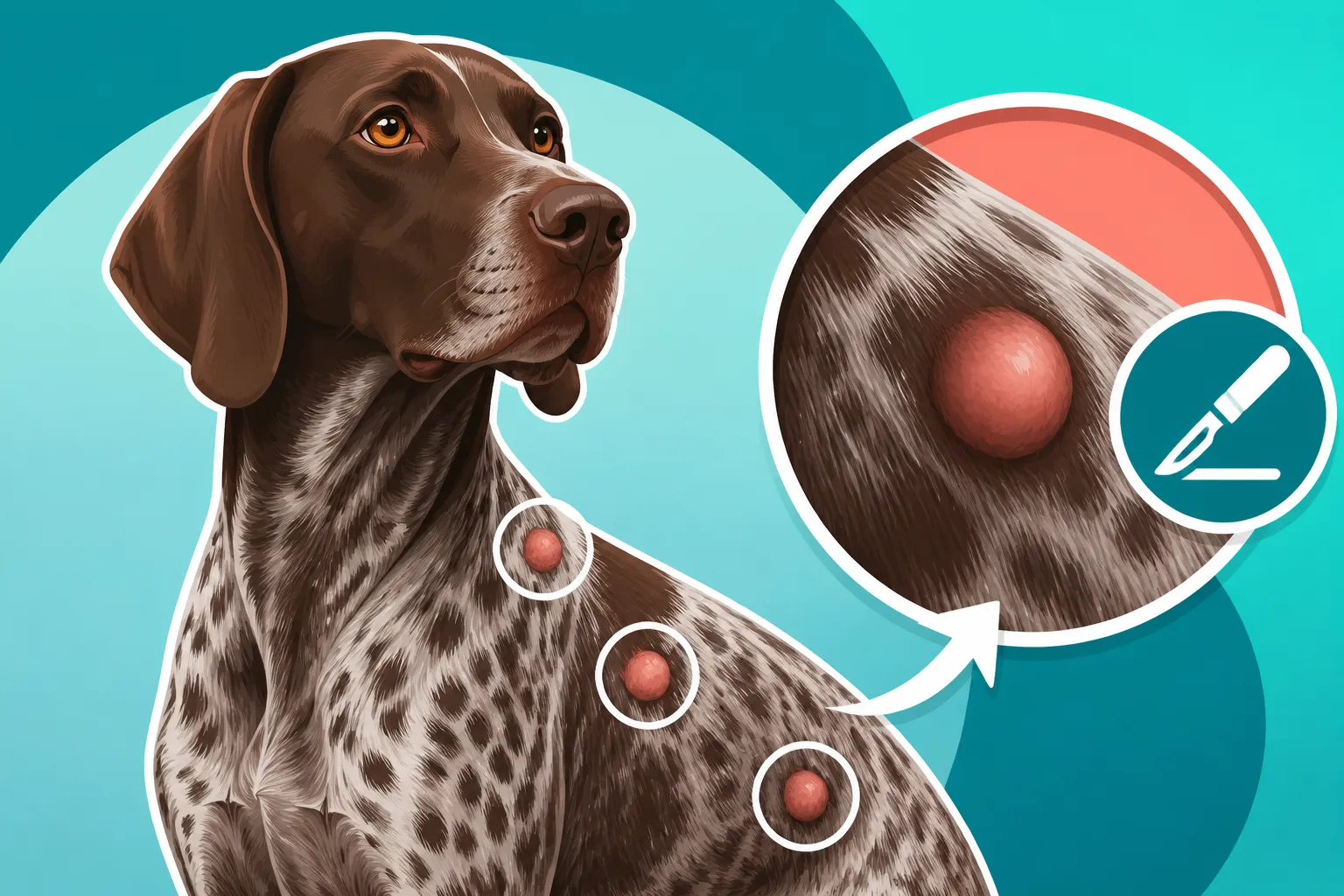
Lipomas are one of the most frequently diagnosed types of lumps in dogs, particularly as they age. They are benign collections of fat cells, typically soft to the touch, and usually, you can move them around easily under the skin. Think of them like a small, soft rubber ball just beneath the surface. They can appear anywhere on the body, but are often found on the chest, abdomen, or limbs. In a German Shorthaired Pointer, whose short coat offers little concealment, these can be quite noticeable.
While lipomas are harmless, they can grow large. If a lipoma becomes very large or is in a location that interferes with movement – say, in the armpit or groin – your vet might suggest removal. Otherwise, they are often left alone, simply monitored for any changes. It's still crucial to have your vet confirm any suspected lipoma with a diagnostic test, as some malignant tumors can mimic their appearance. You never want to assume without a professional opinion, especially with a breed known for its robust activity levels where a growing mass could eventually impede their lifestyle.
Cysts, Warts, and Other Superficial Bumps
Beyond lipomas, GSPs can develop several other types of benign skin growths that are usually nothing to fret over, though they always warrant a vet check.
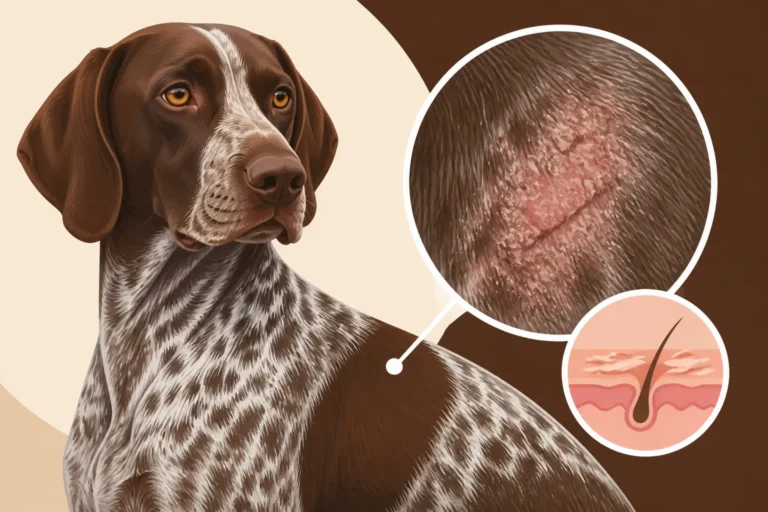
Sebaceous cysts are incredibly common. These occur when a sebaceous gland, responsible for producing the skin's oily secretions, becomes blocked. The cyst fills with this oily, cheesy, or pasty material. They can sometimes rupture, leading to a localized infection or inflammation, and you might notice a foul odor or a discharge. While usually harmless, if they repeatedly rupture or become infected, surgical removal might be recommended to prevent ongoing issues. These are distinct from The Scaling Skin That Starts on a Shorthair's Back, which is more related to widespread skin conditions.
Warts, also known as papillomas, are caused by a virus and are more common in young dogs, though older GSPs can get them too. They often look like small, cauliflower-like growths and can appear anywhere, especially around the mouth or eyelids. In puppies, they often resolve on their own as their immune system matures. Skin tags are small, fleshy growths that can occur in areas of friction or where the skin folds. They are typically harmless, though they can sometimes get irritated or snagged, leading to bleeding. Again, while these are generally benign, any new skin growth should always be checked by your veterinarian to rule out anything more serious.
Histiocytomas are another common benign lump, particularly in young German Shorthaired Pointers, usually under two years old. These often appear suddenly as small, firm, dome-shaped, hairless red lumps, most commonly on the head, ears, or limbs. They are a benign tumor of immune cells and usually regress on their own within a few months, typically disappearing as quickly as they appeared. While their self-resolving nature is a relief, getting a definitive diagnosis is important to differentiate them from more aggressive growths, especially since The Skin Tumors Shorthairs Get Younger Than Most can sometimes be more serious.
When Lumps Signal Something More Serious: Malignant Growths
While it’s a relief to hear about benign lumps, the reality is that German Shorthaired Pointers, like all dogs, are susceptible to malignant growths, or cancers. Recognizing the signs and understanding the more serious types is paramount for early intervention and better outcomes. It’s a hard truth, but staying informed can be your GSP’s best defense. Indeed, Why Shorthairs Get Cancer Younger Than Other Breeds is a topic that worries many of us.
Mast Cell Tumors: The Chameleon of Canine Cancer
Mast cell tumors are notorious in the veterinary world for being "the great pretenders." They are one of the most common skin tumors in dogs, and unfortunately, German Shorthaired Pointers are among the breeds with an increased risk. What makes them so tricky is their highly variable appearance. A mast cell tumor can look like almost anything: a small, innocent-looking bump, a rapidly growing red and itchy lesion, or even a soft, fatty lump that mimics a benign lipoma. They can be firm or soft, raised or flat, and some even change size periodically due to the release of histamine from the mast cells within the tumor. This unpredictability is precisely why every lump, no matter how benign it seems, needs a professional assessment.
These tumors can appear anywhere on the body, both on or under the skin, and sometimes internally. Identifying Mast Cell Tumors and Where They Appear on a Shorthair is crucial for your vet. Their behavior can also vary wildly; some are low-grade and slow-growing, while others are aggressive and can spread rapidly. Early diagnosis and surgical removal with wide, clean margins are often the best course of action. Following a diagnosis like this, the associated costs for specialized treatment can be substantial, which is where a robust pet insurance policy from providers like Healthy Paws can truly provide peace of mind, helping cover those unexpected veterinary expenses.
Hemangiosarcoma: A Silent, Aggressive Foe
Hemangiosarcoma is a particularly insidious and aggressive form of cancer that originates from the cells lining blood vessels. While often found internally on organs like the spleen or heart, it can also appear on or under the skin, especially in areas with sparse hair, like the abdomen or inner thigh. When it presents as a subcutaneous lump, it might look like a dark red or purple mass, sometimes resembling a bruise or a blood blister. These lumps can be soft and spongy to the touch, but again, their appearance is not always definitive.
The danger of hemangiosarcoma, whether internal or external, is its propensity to bleed and spread quickly. If an external lump appears, it demands immediate veterinary attention, as early detection is critical for any chance of successful treatment. The internal form is often silent until a catastrophic event, like a ruptured spleen, occurs. For this reason, if your German Shorthaired Pointer is older, keep a vigilant eye out for any new, discolored lumps, and discuss Hemangiosarcoma in an Older German Shorthaired Pointer with your vet during routine check-ups.
Lymphoma: Often Hidden, Sometimes Visible
Lymphoma is a cancer of the lymphatic system, a vital part of your dog's immune system. While it often manifests as generalized swelling of lymph nodes throughout the body (which might not feel like distinct "lumps" but rather enlarged glands in the neck, armpits, or behind the knees), it can occasionally present as a solitary mass in the skin. This cutaneous form of lymphoma is less common but can appear as a firm nodule, plaque, or even a widespread scaling skin condition.
If you feel enlarged lymph nodes or a suspicious skin mass, particularly if accompanied by other signs like lethargy, weight loss, or decreased appetite, it's essential to consult your vet. Early diagnosis of lymphoma, even if it's the more visible cutaneous type, is crucial for establishing a treatment plan, which often involves chemotherapy. It's a devastating diagnosis, especially when Lymphoma Turning Up Early in a Shorthair can be a concern. Understanding the various ways this disease can present itself helps you be a more proactive advocate for your dog's health.
Navigating the Diagnostic Journey for GSP Lumps
Once you've discovered a lump on your German Shorthaired Pointer and brought it to your vet's attention, the real work of diagnosis begins. This phase can feel anxious, as you wait for answers, but it's a critical step in determining the best course of action.
Fine Needle Aspirate (FNA): The First Look
For many suspicious lumps, the first diagnostic tool your veterinarian will likely recommend is a Fine Needle Aspirate, or FNA. This procedure is generally quick, minimally invasive, and often can be done right in the exam room without sedation. The vet uses a very fine needle, similar to those used for vaccinations, to collect a small sample of cells from the lump. These cells are then spread onto a slide and examined under a microscope, either by your vet or by a veterinary pathologist.
An FNA can often provide a rapid preliminary diagnosis, distinguishing between common benign growths like lipomas (fat cells) or cysts (fluid/cellular debris) and potentially more concerning cells, such as those indicative of mast cell tumors or lymphoma. However, it's important to understand the limitations. Because only a small sample is taken, an FNA can sometimes miss cancerous cells if they are not evenly distributed within the lump, or it might not provide enough information for a definitive diagnosis, especially with complex tumors. Your vet might recommend When a Lump on a Shorthair Needs a Needle Aspirate to be repeated or move on to a biopsy if the results are inconclusive or raise significant suspicion.
Biopsy: The Definitive Answer
If the FNA is inconclusive, or if the lump's characteristics (size, location, rapid growth) strongly suggest malignancy, your vet will likely recommend a biopsy. A biopsy involves surgically removing a larger piece of tissue from the lump for detailed pathological examination. There are generally two types:
- Incisional Biopsy: This involves removing only a small portion of the lump. It's useful when the lump is very large, or when the location makes complete removal difficult without a definitive diagnosis first. The goal here is to get enough tissue for an accurate diagnosis without performing major surgery upfront.
- Excisional Biopsy: This involves surgically removing the entire lump, along with a margin of healthy tissue around it. If the lump is small and easily accessible, an excisional biopsy serves both diagnostic and therapeutic purposes—if it's malignant, removing it completely with clear margins is often the best treatment.
Biopsies require sedation or general anesthesia, depending on the size and location of the lump and your dog's temperament. The tissue sample is then sent to a specialized veterinary pathologist who will examine it in detail to determine if it's benign or malignant, and if malignant, to grade the tumor (assess its aggressiveness) and confirm the type of cancer. This detailed information is crucial for guiding treatment decisions. The cost of such procedures, including anesthesia and lab fees, can be significant, making insurance from providers like Healthy Paws a valuable asset for many owners.
Understanding the Pathology Report
Once the biopsy results are in, your vet will go over the pathology report with you. This document can be dense and filled with medical jargon, so don't hesitate to ask for clarification on anything you don't understand. Key information in the report will include:
- Diagnosis: Is the lump benign or malignant? What specific type of tumor is it?
- Grade (for malignant tumors): This indicates how aggressive the cancer is likely to be. Low-grade tumors are generally less aggressive, while high-grade tumors are more so.
- Margins (for excisional biopsies): This refers to the ring of healthy tissue around the removed tumor. "Clean margins" mean no cancer cells were found at the edges of the removed tissue, suggesting the entire tumor was removed. "Dirty" or "incomplete margins" mean cancer cells were present at the edges, indicating that some cancerous tissue might still remain and further surgery or treatment may be needed.
- Mitotic Index: This is a count of cells undergoing division, which helps assess how quickly the tumor is growing.
This report is the blueprint for your German Shorthaired Pointer's treatment plan. It guides decisions on whether further surgery is needed, if chemotherapy or radiation therapy would be beneficial, or if simply monitoring the area is appropriate.
Here's a quick comparison of diagnostic methods:
| Diagnostic Method | Pros | Cons | Best For |
|---|---|---|---|
| Fine Needle Aspirate | Quick, minimally invasive, often no sedation | Small sample, can miss cells, may be inconclusive | Initial screening, differentiating fatty lumps/cysts from solid masses |
| Incisional Biopsy | Larger tissue sample than FNA, more definitive | Requires sedation/anesthesia, small surgical procedure | Large or sensitive lumps where complete removal is not yet warranted |
| Excisional Biopsy | Diagnostic and potentially curative (removes lump) | Requires sedation/anesthesia, more extensive surgery, higher cost | Small, easily accessible lumps, or when malignancy is highly suspected |
Treatment and Management of Concerning Growths
Receiving a diagnosis of a malignant lump can feel devastating, but it's important to remember that many cancers are treatable, especially with early detection. The path forward for your German Shorthaired Pointer will depend heavily on the type of lump, its location, stage, and your dog's overall health.
Surgical Removal: The Primary Approach
For many types of malignant skin and subcutaneous tumors, surgical removal remains the cornerstone of treatment. The goal of surgery isn't just to cut out the visible lump; it's to remove the entire tumor with a generous margin of healthy tissue around it. This "clean margin" is absolutely critical, particularly for aggressive cancers like mast cell tumors. If the pathology report from an excisional biopsy shows "dirty" or "incomplete margins," it means cancer cells were found at the very edge of the removed tissue, indicating that some cancerous cells likely remain in your dog's body. In such cases, your vet might recommend a second surgery to remove more tissue, or suggest follow-up treatments. Removing a Mast Cell Tumor From a German Shorthaired Pointer specifically highlights the importance of wide margins for these tricky tumors.
The recovery period after surgery will vary depending on the size and location of the incision. Your GSP will need time to heal, which means restricting their usual high-energy activities. This can be a challenge for an active breed, but strict adherence to post-operative instructions is vital to prevent complications like incision dehiscence (the incision opening up) or infection. Pain management and often antibiotics will be prescribed to ensure comfort and prevent infection during the healing process.
Beyond Surgery: Chemo, Radiation, and Palliative Care
For certain types of cancer, or if surgery alone isn't enough to achieve a cure (e.g., if the cancer has spread or has very aggressive characteristics), your veterinarian might recommend additional therapies.
Chemotherapy uses drugs to kill cancer cells throughout the body. It's often used for systemic cancers like lymphoma, or as an adjuvant therapy (additional treatment) after surgery for highly aggressive tumors to reduce the risk of recurrence or metastasis (spread). Unlike in humans, veterinary chemotherapy protocols are generally designed to maximize quality of life, meaning side effects are usually milder and more manageable. However, the costs can be substantial, as discussed in Chemotherapy Costs for a German Shorthaired Pointer.
Radiation therapy uses high-energy rays to damage and kill cancer cells. It's typically used for local control of tumors, especially those that are difficult to remove surgically or when surgical margins are incomplete. It requires multiple treatments, often under sedation, and can be quite expensive and only available at specialty veterinary oncology centers.
Palliative care focuses on managing symptoms and improving your GSP's quality of life when a cure isn't possible, or if the owner chooses not to pursue aggressive treatments. This can include pain medication, anti-inflammatory drugs, nutritional support, and other interventions to keep your dog comfortable and happy for as long as possible. The decision to pursue extensive treatment or to opt for palliative care is a deeply personal one, and your vet will help you weigh all the options, considering your dog's prognosis, potential side effects, and the financial and emotional commitment involved. Again, for owners managing the costs of such care, a pet insurance plan from a company like Healthy Paws can significantly ease the financial burden.
Proactive Monitoring and Lifelong Health for Your Shorthair
As German Shorthaired Pointer owners, we know our dogs thrive on routine and attention. This extends to their health, particularly when it comes to vigilance for lumps and bumps. Being proactive is truly the best defense against serious health issues.
The Daily Touch: Regular At-Home Checks
One of the most powerful tools you have is your own hands. Regularly performing a thorough, head-to-tail physical exam on your German Shorthaired Pointer can make all the difference in catching lumps early. This isn't just about looking; it's about feeling. Get into the habit of petting your GSP with a purpose, gently running your hands over every inch of their body – their head, neck, chest, abdomen, legs, and even their tail and paws. Feel for anything new: any bumps, masses, skin changes, or areas of tenderness. Pay special attention to areas like the armpits, groin, and under the jaw, where lymph nodes are located.
Doing this routinely, perhaps once a week while they're relaxing on the couch or after a bath, helps you become intimately familiar with your dog's normal body contours. That way, any new development will stand out. This routine also provides a wonderful bonding experience for you and your GSP. Don't forget to check their ears, mouth, and paws for anything unusual as well. For example, knowing the feel of their normal skin can help you spot The Skin Tumors Shorthairs Get Younger Than Most if they appear.
Partnering with Your Veterinarian
While at-home checks are crucial, they are not a substitute for regular veterinary examinations. Your vet has trained hands and eyes, and access to diagnostic tools that can detect issues you might miss. Regular wellness check-ups are essential, even if your GSP seems perfectly healthy. During these appointments, your vet will perform a comprehensive physical exam, which includes palpating for lumps, checking lymph nodes, and assessing overall health.
Open communication with your vet is key. Don't hesitate to point out anything you've found or any concerns you have, no matter how minor they may seem. Your observations, combined with your vet's expertise, form the strongest team for your GSP's health. For long-term peace of mind, especially with a breed known for its energy and potential for various health challenges, discussing a pet insurance plan can be incredibly beneficial. Providers like Healthy Paws offer coverage that can help offset the costs of diagnostics, treatments, and even ongoing care for unexpected illnesses, ensuring you can make healthcare decisions based on what's best for your dog, not just your wallet. Understanding your pet insurance options is a vital part of responsible GSP ownership, especially as they get older and the potential for lumps and other health issues increases, impacting their The Median Age a German Shorthaired Pointer Reaches.
Disclaimer
The information provided in this article is for general informational purposes only and is not a substitute for professional veterinary advice, diagnosis, or treatment. Always seek the advice of your veterinarian or other qualified animal health provider with any questions you may have regarding a medical condition. Never disregard professional veterinary advice or delay in seeking it because of something you have read in this article.