Mast Cell Tumors and Where They Appear on a Shorthair
Finding an unexpected lump on your German Shorthaired Pointer can send a cold shiver down any owner's spine. The worry, the uncertainty, the immediate fear that it could be something serious – it's a moment we all dread. For our energetic shorthairs, these mysterious bumps sometimes turn out to be mast cell tumors, a type of cancer that can show up in places you might not expect. This guide is dedicated to shedding light on what these tumors are, where they commonly appear on GSPs, and the crucial steps you need to take if you ever encounter one.
Understanding Mast Cell Tumors in German Shorthaired Pointers
It’s easy to feel overwhelmed by medical jargon when you hear the word "tumor." Let's break down what a mast cell tumor actually is, and why our beloved German Shorthaired Pointers seem to have a particular predisposition to them. Knowledge, after all, is power when it comes to advocating for our dogs' health.
What Exactly is a Mast Cell Tumor?
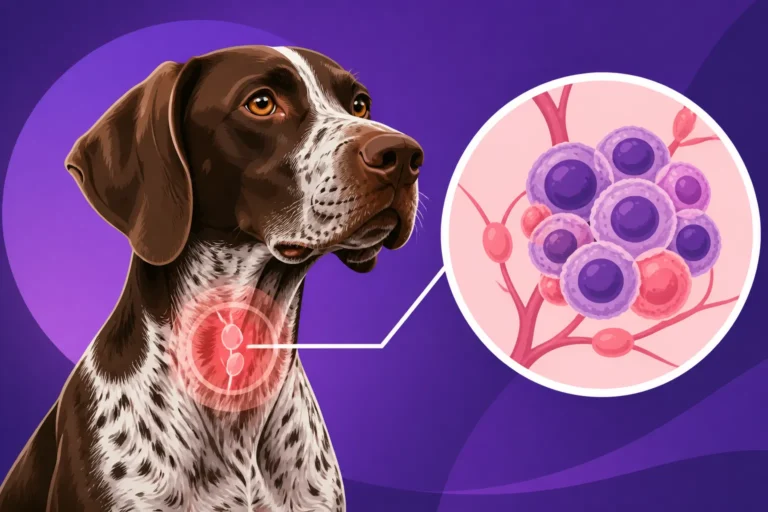
First off, let's talk about what "mast cells" are. These are a normal, important part of your dog's immune system. Think of them as little alarm bells, packed with chemicals like histamine, that rush to the scene when your dog experiences allergies, inflammation, or an injury. They play a crucial role in healing and defending the body.
The problem arises when these mast cells start to grow abnormally and uncontrollably. This uncontrolled growth is what forms a mast cell tumor. What makes these tumors so tricky and often terrifying is their unpredictable nature. They can appear as small, benign-looking bumps that don't seem like much, only to be highly aggressive internally. Conversely, a rapidly growing, angry-looking mass might turn out to be a lower grade. They can feel soft, like a fatty lipoma, or firm and fixed. They can even change size, appearing to swell and then shrink, which is often called "Darier's sign" due to the release of histamine. This variability is why any lump should be taken seriously.
Why German Shorthaired Pointers Are Prone to Them
It feels unfair, doesn't it, when a breed known for its robust athleticism and boundless energy is also prone to serious health issues? Unfortunately, German Shorthaired Pointers, alongside breeds like Boxers, Bulldogs, Boston Terriers, and Labradors, are genetically predisposed to developing mast cell tumors. While scientists are still working to pinpoint the exact genetic markers, it's widely accepted that certain breed lines carry a higher risk. This isn't your fault or a reflection of your care; it's simply a genetic lottery that sometimes goes awry.
This predisposition means that as a GSP owner, you need to be extra vigilant. While we all know that our shorthairs can be prone to things like Hip Dysplasia in a Hard Running German Shorthaired Pointer, the risk of cancer, including mast cell tumors, is also a significant concern. Many owners notice these lumps when their dogs are still relatively young, sometimes even before they reach their senior years, which leads to the heartbreaking question of Why Shorthairs Get Cancer Younger Than Other Breeds. This makes regular, thorough checks of your dog's skin and body a non-negotiable part of your routine, especially if you want to catch potential issues early.
The Different Grades of Mast Cell Tumors
When a vet diagnoses a mast cell tumor, one of the most critical pieces of information you'll receive is its "grade." This isn't just a number; it's a vital indicator of how aggressive the tumor is and how likely it is to spread. Understanding these grades is key to grasping your dog's prognosis and treatment plan.
- Grade I (Low Grade): These are generally the "good news" tumors, relatively well-differentiated, meaning their cells still look somewhat normal under a microscope. They are typically localized and have a lower chance of metastasizing (spreading) to other parts of the body. Surgical removal is often curative for these.
- Grade II (Intermediate Grade): This is where things get a bit more ambiguous. Grade II tumors can be a mixed bag. Some are less aggressive, acting almost like Grade I, while others lean towards the more aggressive end of the spectrum. They might have some abnormal cellular features and a moderate risk of local recurrence or metastasis. Depending on specific histological features, a Grade II might require more aggressive treatment than just surgery, such as radiation or chemotherapy.
- Grade III (High Grade): These are the most aggressive and concerning tumors. The cells are poorly differentiated, meaning they look very abnormal and are rapidly dividing. Grade III tumors have a high potential for local recurrence, meaning they come back quickly even after removal, and a significant risk of spreading to regional lymph nodes and distant organs like the spleen, liver, or bone marrow. These often require a multi-modal approach to treatment, combining surgery with chemotherapy and/or radiation.
There's also a newer, two-tier grading system (low grade vs. high grade) that many pathologists now use, which can simplify the prognosis, but the underlying principle remains the same: the more aggressive the cells, the higher the grade, and the more urgent and extensive the treatment usually needs to be.
Common Locations for Mast Cell Tumors on a Shorthair
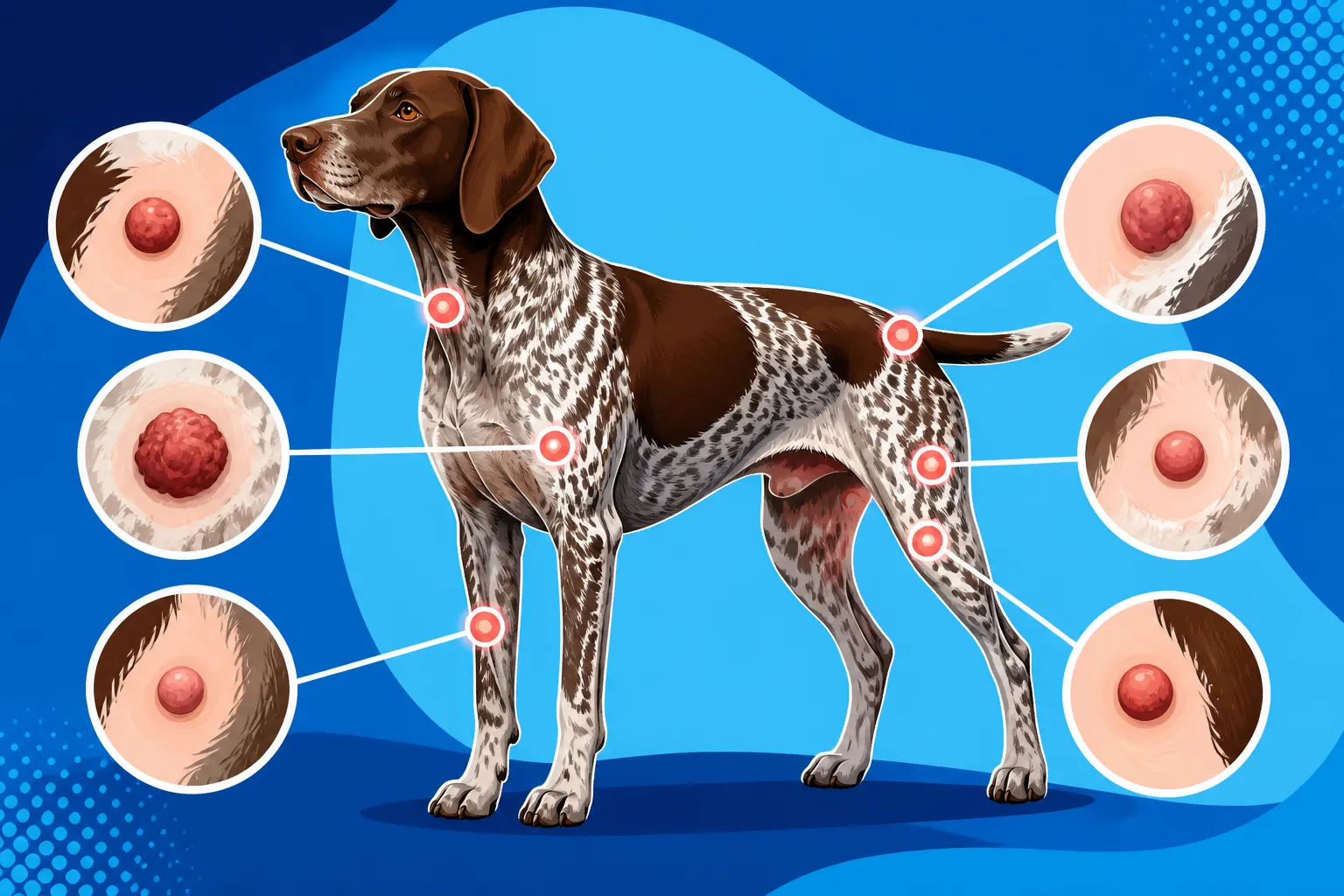
One of the frustrating aspects of mast cell tumors is that they don't pick a favorite spot. They can pop up almost anywhere on your GSP's body. However, certain areas are more common, and knowing these can help you be more diligent during your regular health checks.
Skin and Subcutaneous Tissue
The vast majority of mast cell tumors, around 60-70%, are found in or just under the skin. For a German Shorthaired Pointer, with their short, sleek coat, these can sometimes be easier to spot than on a long-haired breed, but that doesn't mean they're always obvious. You might feel a lump while you're petting them, or notice a change in the texture of their skin during grooming.
Common locations on the skin and subcutaneous tissue include:
- Limbs: These are frequently affected, especially the legs and paws. A mast cell tumor on a leg might be mistaken for a bug bite, a cyst, or even just a wart, especially if it's small and not irritating your dog. However, if it persists, changes, or bothers your GSP, it's vital to get it checked.
- Trunk: The chest, abdomen, and back are also common sites. Again, these can vary greatly in appearance. Some might be small, firm nodules, while others might be softer, broader masses. I’ve known several GSP owners in the Minnesota Pheasants Forever chapter whose dogs developed lumps on their ribs or flanks. One even thought it was just a fatty deposit for months before it suddenly grew and became irritated.
- Head and Neck: While less frequent than the limbs or trunk, mast cell tumors can appear on the head, including the ears, muzzle, and around the eyes. These areas can be particularly challenging for surgical removal due to the limited amount of excess skin.
The key takeaway here is to perform regular "pat downs" of your dog, paying close attention to any new bumps, scabs, or areas of irritation. Remember, Lumps Worth Removing on a German Shorthaired Pointer should always be investigated, regardless of how innocent they seem.
Internal Organs and Lymph Nodes
While the skin is the most common site, mast cell tumors aren't always visible. Sometimes, these insidious growths can develop internally, making them much harder to detect until they've grown quite large or are causing systemic symptoms. This is why regular veterinary check-ups are so crucial, even if your GSP seems perfectly healthy on the outside.
Internal locations can include:
- Spleen: The spleen is a frequent target for internal mast cell tumors. Symptoms might be vague, such as lethargy, loss of appetite, or an enlarged abdomen. In severe cases, a splenic tumor can rupture, leading to acute collapse and a life-threatening emergency.
- Liver: The liver can also be affected, sometimes alongside splenic involvement. Signs of a liver tumor might include jaundice (yellowing of the skin or eyes), vomiting, diarrhea, or significant weight loss.
- Lymph Nodes: Mast cell tumors can metastasize (spread) to the regional lymph nodes closest to an external tumor, or they can originate directly within lymph nodes. Enlarged lymph nodes, especially if firm and non-painful, should raise a red flag.
- Bone Marrow: In rare but very aggressive cases, mast cell tumors can spread to the bone marrow, affecting blood cell production.
Detecting internal tumors often requires more advanced diagnostics, such as ultrasound, X-rays, or even a bone marrow aspirate. If your GSP is showing signs of general malaise, unexplained weight loss, or changes in energy levels, don't dismiss it. It could be an early indicator of something more serious, even if you can't see a lump.
Oral Cavity and Mucous Membranes
The mouth might not be the first place you think to check for tumors, but mast cell tumors can absolutely develop there, as well as on other mucous membranes. These can be particularly problematic because they can interfere with eating and drinking, and they can be quite aggressive.
Locations in the oral cavity and on mucous membranes include:
- Gums and Lips: Tumors can appear as raised, often reddish or irritated masses on the gums or inner lips. They might be mistaken for dental issues or a simple irritation, especially if your GSP chews on things or sniffs around in the field.
- Tongue: While less common, mast cell tumors can also form on the tongue. This can lead to difficulty eating, drooling, or a reluctance to pick up objects.
- Other Mucous Membranes: Though rarer, these tumors can also show up in areas like the conjunctiva of the eye or around the anus.
Regular dental checks and simply taking a moment to look inside your GSP's mouth are important. A quick peek at their gums and teeth isn't just for dental health; it's a chance to catch other issues, too. If you notice any unusual growths, bleeding, or changes in their mouth, it’s time for a vet visit.
What to Do If You Find a Lump on Your German Shorthaired Pointer
Finding a lump is scary, but panic doesn't help. What does help is prompt action, clear communication with your vet, and being prepared for the potential journey ahead.
The Importance of Early Veterinary Examination
This cannot be stressed enough: do not wait. Every day counts when dealing with potential cancer. Even if the lump seems small, even if it hasn't changed, even if your GSP isn't bothered by it, get it examined by your veterinarian immediately. It’s better to be over-cautious than to regret delaying.
When you bring your GSP in, your vet will likely perform a thorough physical exam. For any suspicious lump, the first diagnostic step is almost always a Fine Needle Aspirate (FNA). This involves using a small needle to collect a sample of cells from the lump. It's a quick procedure, often done during the visit, and many dogs tolerate it without sedation. The cells are then examined under a microscope by your vet or sent to a cytologist for evaluation.
If the FNA suggests a mast cell tumor, or if the results are inconclusive but still suspicious, the next step is usually a biopsy. A biopsy provides a larger tissue sample, which is then sent to a veterinary pathologist. This is where the tumor is officially diagnosed and, crucially, where it's graded (Grade I, II, or III) according to the histological features. This grade is paramount for determining the best course of action and prognosis. Remember, a full diagnostic workup is essential for Removing a Mast Cell Tumor From a German Shorthaired Pointer successfully.
Managing the Emotional Toll and Financial Preparedness
The word "cancer" hits hard. It's perfectly normal to feel a wave of emotions – fear, sadness, anger, confusion. Allow yourself to feel these, but then redirect that energy into being your GSP's best advocate. Talk to your vet, ask all your questions, and seek support from fellow GSP owners or online communities. You are not alone in this journey.
Beyond the emotional challenge, there's the very real financial aspect. Treating cancer can be expensive, involving diagnostics, surgery, pathology, potentially chemotherapy or radiation, and ongoing monitoring. This is where being financially prepared can make a world of difference. Many owners find peace of mind with pet insurance. Companies like Healthy Paws offer comprehensive plans that can help cover a significant portion of unexpected veterinary expenses, including cancer treatments. Looking into Monthly Insurance Premiums on a German Shorthaired Pointer or exploring Whether a Shorthair Owner Should Self Insure Instead before a health crisis hits is a proactive step that can save you immense stress down the line. Even if you don't have insurance, discussing payment options, potential costs, and charity assistance with your vet's office is crucial.
Treatment Options for German Shorthaired Pointer Mast Cell Tumors
The treatment plan for a mast cell tumor is highly individualized and depends heavily on its location, size, and most importantly, its grade. Your veterinary oncologist (a vet specializing in cancer) will be your best resource for navigating these choices.
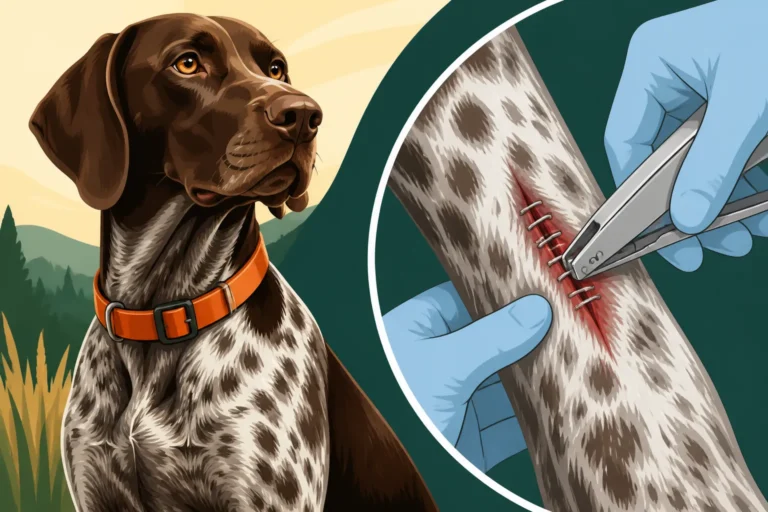
- Surgery: This is often the primary and most effective treatment for mast cell tumors, especially lower-grade ones. The goal is "wide surgical margins," meaning the surgeon removes not just the visible tumor but also a significant amount of healthy tissue around it. This helps ensure that all cancerous cells are removed. For certain locations, like on a leg or muzzle, achieving wide margins can be challenging, which may necessitate further treatments. The cost implications for Mast Cell Tumor Removal Prices for a Shorthair can vary widely based on location and complexity.
- Chemotherapy: For higher-grade tumors, those with incomplete surgical margins, or those that have spread (metastasized), chemotherapy is often recommended. Chemotherapy aims to kill any remaining cancer cells in the body or to slow down the progression of metastatic disease. Unlike human chemo, veterinary chemo is usually designed to be palliative, aiming for quality of life rather than a complete cure, and side effects are generally much milder.
- Radiation Therapy: This treatment uses high-energy rays to kill cancer cells. It's often used when a tumor cannot be completely removed surgically (e.g., if it's in a difficult location) or to target microscopic disease that might remain after surgery. Radiation is typically performed by a veterinary radiation oncologist and requires multiple sessions under anesthesia.
- Targeted Therapies: In recent years, specific oral medications have been developed that target certain receptors on mast cell tumors (e.g., Palladia, Kinavet). These can be very effective for certain types of mast cell tumors, particularly those with specific genetic mutations, and can be used alone or in conjunction with other treatments.
Choosing the right treatment path for your GSP involves careful consideration of the prognosis, potential side effects, your dog's overall health, and your financial resources. This is a journey that no one hopes for, but with informed decisions and unwavering love, you can provide the best possible care for your shorthair.
Here’s a quick overview of common mast cell tumor scenarios:
| Location | Appearance | Urgency of Vet Visit | Typical Treatment Considerations |
|---|---|---|---|
| Skin/Subcutaneous (Limbs, Trunk, Head) | Varied: firm, soft, irritated, rapidly changing lump | Immediate | Surgical removal (wide margins), possibly chemo/radiation |
| Internal Organs (Spleen, Liver) | Not visible externally; vague symptoms (lethargy, weight loss, distension) | Urgent | Surgery (splenectomy), chemotherapy, possibly radiation |
| Lymph Nodes | Enlarged, firm, non-painful nodes | Immediate | Biopsy, surgery to remove affected nodes, chemotherapy |
| Oral Cavity (Gums, Lips, Tongue) | Raised, reddish, irritated mass; difficulty eating | Urgent | Surgery (often challenging), radiation, chemotherapy |
| Mucous Membranes | Irritated, raised lesions | Urgent | Localized treatment, often surgery, depending on site |
Remember, your vigilance is the first line of defense. Regular head-to-tail checks, especially given the GSP's predisposition, can make all the difference. Early detection, thanks to careful owners like you and support from professionals and potentially Healthy Paws for financial aid, truly improves outcomes for these wonderful dogs.
Disclaimer
The information provided in this article is for educational and informational purposes only, and does not constitute veterinary medical advice. Always consult with a qualified veterinarian for any health concerns or before making any decisions related to your pet's health or treatment.