Grass Awns in a German Shorthaired Pointer’s Nose
Few things are quite as worrying for a German Shorthaired Pointer owner as watching your otherwise robust, energetic hunting companion suddenly struggle with persistent sneezing, snorting, or pawing at their nose. This frantic behavior often points to one of the stealthiest and most uncomfortable hazards of the field: grass awns. This guide is here to walk you through understanding these tiny menaces, recognizing the tell-tale signs they've invaded your GSP's nose, and what crucial steps to take for their removal and prevention.
What Exactly Are Grass Awns and Why Are They Such a Problem for GSPs?
Ah, grass awns. These seemingly innocent botanical structures are actually a huge headache for us dog owners, especially those of us with active German Shorthaired Pointers who love to dive headfirst into dense cover. Understanding what they are and why our particular breed is so susceptible is the first step in protecting our furry partners.
The Insidious Nature of Grass Awns
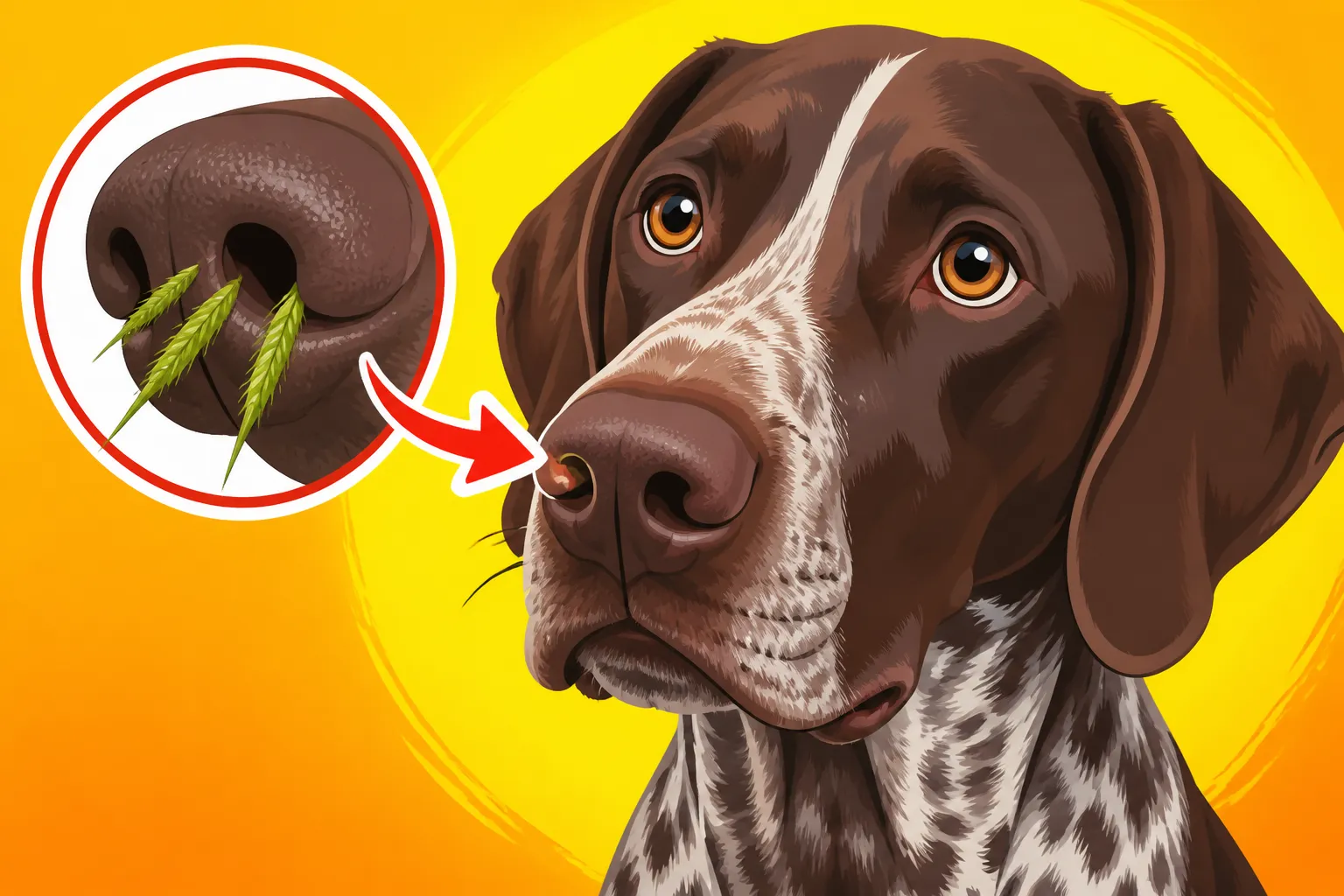
Grass awns are essentially the sharp, bristly, sometimes barbed seed heads of certain types of grasses. Think foxtails, cheatgrass, wild oats, or even some common ryegrass varieties. They’re designed by nature to latch onto passing animals, aiding in seed dispersal. The problem is, once they latch, their one-way design (those little barbs) makes them incredibly difficult to dislodge. They can only move forward, burrowing deeper with every movement your dog makes – every shake of the head, every rub of the nose, every breath.
These tiny plant parts are a true danger. They’re not just an irritant; they can migrate. Imagine a tiny, barbed spear working its way into soft tissue. In the nose, they can cause inflammation, infection, and in severe cases, even penetrate the nasal cavity wall into the sinuses, throat, or beyond. The thought alone is enough to make any GSP owner shudder. They’re especially prevalent in dry, late summer and fall conditions, when these grasses have gone to seed and are brittle, ready to break off and hitch a ride.
Why German Shorthaired Pointers Are Prime Targets
Our beloved German Shorthaired Pointers are, by their very nature and design, perfectly engineered to encounter and pick up grass awns. They are high-energy, driven hunting dogs, often plunging through tall grasses, dense brush, and stubble fields with boundless enthusiasm. Their incredible noses, which are their greatest asset in the field, unfortunately, also make them exceptionally vulnerable entry points for these insidious seeds.
Consider how a GSP hunts: nose to the ground, sniffing intensely, often pushing through thick cover. They're inhaling deeply, sampling scents, which makes it all too easy for a minuscule awn to be sucked right up a nostril. Their short, dense coats offer some protection against larger debris, but those delicate nasal passages are exposed. Combine this with their relentless drive—they often ignore minor discomforts in pursuit of game—and you have a recipe for a deeply embedded awn before you even notice a problem. Unlike some breeds with longer hair around their faces that might catch these seeds, our GSPs have streamlined profiles that offer little barrier to entry directly into the nose. It's truly a catch-22; their superb hunting ability is also their biggest risk factor for this particular ailment.
Recognizing the Signs of a Grass Awn in Your German Shorthaired Pointer's Nose
Spotting a grass awn isn't always as obvious as finding a burr in their coat. These tiny intruders often announce their presence with a specific set of symptoms that, once you know what to look for, can help you act quickly. Early detection can make a world of difference in your GSP's comfort and the ease of removal.
Early Warning Signs and Subtle Cues
The first signs of a grass awn in your GSP's nose can be quite subtle, easily mistaken for a simple allergy or a passing irritant. You might notice an isolated, forceful sneeze, perhaps a few times in a row, often after your dog has been running through tall grass. This is their body's attempt to expel the foreign object. Don't dismiss these early sneezes, especially if they are more violent or persistent than typical.
Following the initial sneezing, you might see your GSP pawing at their nose, rubbing their face along the ground, or pressing their nose into furniture or your leg. They're trying to relieve the intense irritation. You might also observe a clear, watery discharge from one nostril, which can sometimes escalate to a bloody tinge. This unilateral discharge is a key indicator – if it's only coming from one side, it strongly suggests a localized irritant. Their breathing might become slightly labored or noisy, particularly when resting, as the awn can partially obstruct the airway. A good habit is to always give your GSP a thorough once-over after any outing, paying close attention to these areas. Consider checking your dog thoroughly after a hunt for other common issues like Cut Pads on a German Shorthaired Pointer After a Long Day.
When Symptoms Escalate
If the grass awn is not dislodged, the symptoms will almost certainly intensify and become more alarming. The pawing and rubbing will become more frequent and frantic, indicating significant discomfort. The nasal discharge, initially clear or lightly bloody, can progress to a thicker, purulent (pus-like) discharge, often tinged with dark blood, and may develop a foul odor. This indicates an infection has taken hold, which is a serious complication.
Your GSP might become lethargic, lose their appetite, and show general signs of malaise due to the pain and infection. Swelling around the affected nostril or even the entire side of the face can occur as the foreign body migrates or causes deeper tissue inflammation. In some cases, the awn can migrate further into the sinus cavity, leading to chronic infections that are notoriously difficult to treat without removal. You might even notice your dog having reverse sneezes or gagging, especially if the awn irritates the back of the throat. If you observe any of these escalating symptoms, it’s a clear sign that immediate veterinary attention is required. Waiting can lead to much more complex and invasive procedures, and a longer, more uncomfortable recovery for your pointer.
Here's a quick reference table for recognizing symptoms:
| Symptom Category | Early/Mild Signs | Moderate/Persistent Signs | Severe/Chronic Signs |
|---|---|---|---|
| Nasal Discharge | Occasional clear, watery discharge (one nostril) | Persistent clear/bloody discharge (one nostril) | Thick, purulent, foul-smelling discharge (one nostril) |
| Sneezing/Snorting | Isolated, forceful sneezes post-outing | Frequent, violent sneezing bouts; persistent snorting | Chronic snorting; occasional reverse sneezes |
| Behavioral Changes | Pawing at nose, rubbing face on ground/furniture | More frantic pawing/rubbing; discomfort when touched | Lethargy, loss of appetite, reluctance to play |
| Other | Slight noise when breathing, minor facial swelling | Visible redness around nostril; chronic gagging | Significant facial swelling; persistent coughing |
Immediate Steps and Veterinary Intervention for Nasal Awns
Finding a grass awn in your GSP's nose is a scary situation, and your first instinct might be to panic. But a calm, swift response is critical. While some minor irritations might resolve on their own, the nature of grass awns means professional help is almost always necessary to ensure complete and safe removal.
First Aid at Home: What You Can (and Can't) Do
When you suspect a grass awn, your immediate impulse might be to try and remove it yourself. However, for a nasal awn, this is generally ill-advised. The nasal passages are delicate, and attempting to pull out a barbed awn without proper visualization and tools can push it deeper, cause further trauma, or even break it, leaving fragments behind. This can turn a relatively simple procedure into a much more complicated one.
What you can do at home is observe your dog closely. Note the specific symptoms, which nostril is affected, and when the symptoms started. Keep your GSP calm and prevent them from excessively rubbing or pawing at their nose, which could further embed the awn. If you see any part of the awn clearly visible just inside the nostril and it appears loose, you might be able to gently pluck it out with sterile tweezers, but only if you are absolutely certain you can grasp the entire thing without pushing it in. Most often, the awn is already too far in. It's always best to err on the side of caution and consider veterinary intervention promptly.
The Vet's Role: Diagnosis and Removal
Once you've identified the signs, a trip to your veterinarian is the crucial next step. Don't delay; the longer the awn is present, the greater the chance of migration and infection. Your vet will first conduct a thorough examination, listening to your description of the symptoms and observing your GSP's distress. They'll typically start by sedating your dog. This isn't just to keep your GSP still; it's essential for a pain-free and thorough examination of the sensitive nasal passages.
Under sedation, the vet will use a specialized instrument called a rhinoscope – a small, flexible scope with a light and camera – to visualize the inside of the nasal passage. This allows them to locate the awn, assess any damage, and then, using tiny forceps or graspers, carefully extract it. This procedure often requires significant skill and patience due to the awn's barbs and the limited working space. Sometimes, if the awn is too far back or if there's significant inflammation, imaging like X-rays or even a CT scan might be necessary to pinpoint its exact location, especially if it's suspected to have migrated into the sinuses or beyond. The procedure, including sedation and potential imaging, can lead to unexpected bills, so having robust pet insurance like Healthy Paws can truly alleviate financial stress during such emergencies. For information on costs, you might find our guide on What Sedating a Shorthair for a Foxtail Costs helpful.
Potential Complications and Follow-Up Care
While most grass awns are successfully removed, there can be complications, especially if treatment is delayed. The most common complication is a secondary bacterial infection in the nasal passages or sinuses, which will require a course of antibiotics. In rare but serious cases, the awn can migrate into the brain, lungs, or other organs, leading to life-threatening conditions. This is why addressing the issue quickly is paramount.
After the awn is removed, your vet will likely prescribe antibiotics and anti-inflammatory medications to help your GSP recover. You'll need to monitor your dog closely for continued sneezing, discharge, or any signs of pain. A follow-up visit may be necessary to ensure the infection has cleared and the nasal passage has healed properly. In the unfortunate event of further complications or if the awn caused significant damage, specialized care might be needed. Dealing with these unforeseen vet bills can be stressful, but many owners find peace of mind with a comprehensive pet insurance plan. Companies like Healthy Paws are known for their strong coverage, which can be invaluable when facing emergency procedures or unexpected long-term care. It’s also wise to be aware of general The Vet Bills a Hunting German Shorthaired Pointer Earns.
Prevention and Post-Hunt Routine to Protect Your GSP
As the old saying goes, an ounce of prevention is worth a pound of cure, and that couldn't be truer when it comes to grass awns. For German Shorthaired Pointers, who live for the field, minimizing exposure and implementing a rigorous post-hunt routine is your best defense against these troublesome invaders.
Pre-Hunt Preparation and Gear
Before heading out to hunt or even just for a romp in tall grass, a little preparation can go a long way. Start by familiarizing yourself with the types of grasses in your hunting areas. If you know there's a lot of foxtail or cheatgrass, you can be extra vigilant. Consider alternative hunting spots if a particular area is heavily infested with dangerous awn-producing grasses.
While it might seem counterintuitive for a short-coated breed, some owners opt for protective gear like neck gaiters or snoods to cover the muzzle and ears, particularly in areas known for a high concentration of awns. It’s not always practical for active hunting, but for less intense retrieves or training in grassy areas, it can offer a barrier. Always ensure any gear fits well and doesn't impede breathing or vision. Moreover, ensure your GSP is well-conditioned for the field, as a tired dog might be less agile in avoiding dense patches. Proper hydration and nutrition, like that discussed in What Performance Kibble Costs for a Shorthair, play a role in overall health, helping them recover from any minor scrapes quicker.
Thorough Post-Hunt Checks
This is arguably the most critical step in preventing grass awns from becoming a serious problem. Every single time your GSP comes in from the field, especially after running through tall grass or dry stubble, you need to conduct a meticulous head-to-tail check. This isn't just a quick pat down; it's a systematic inspection.
Start with the obvious problem areas: the paws (especially between the toes), armpits, groin, and ears. For the nose, however, you need to be particularly diligent. Get your GSP in a well-lit area and gently lift their muzzle, looking directly into each nostril with a small flashlight. Look for any redness, swelling, or visible foreign objects. Pay attention to any dried discharge or crusting around the nostril openings. Feel along the bridge of their nose for any tenderness or unusual lumps. If your GSP suddenly sneezes or snorts during this inspection, it's a huge red flag. This post-hunt routine should be as ingrained as putting your gun away safely. It's also important to remember to Checking a German Shorthaired Pointer Over After a Hunt includes checking their ears and eyes for similar foreign bodies. Also, be mindful of issues like Ear Infections in a Shorthair That Swims, as foreign material can easily get lodged there too.
Managing High-Risk Environments
Sometimes, completely avoiding grass awns isn't feasible, especially for active hunting dogs. So, managing the risk in high-exposure environments becomes paramount. If you have your own property, regularly mow areas where your GSP plays, especially during late summer and fall when grasses are seeding. Keep an eye out for common culprits like foxtail.
When you're out in the field, try to guide your dog away from overly dense patches of dry, seedy grass when possible. Of course, this is easier said than done with a driven GSP on a hot scent! However, being aware of the environment and choosing your path more carefully can reduce exposure. After any hunt, regardless of how short, commit to that thorough physical examination. Make it part of the ritual. Many owners find value in discussing these preventative measures with their vet during their regular The Vet Schedule a Working Shorthair Should Keep appointments. Remember, vigilance is your best friend when it comes to keeping your high-drive German Shorthaired Pointer safe and healthy in the field.
Disclaimer
The information provided in this article is for general informational purposes only and is not a substitute for professional veterinary advice. Always consult with a qualified veterinarian for any health concerns or before making any decisions related to your pet's health and treatment.