Airline Rules for Flying a Shorthair to a Hunt
Taking your German Shorthaired Pointer on a plane for a hunting trip can feel like trying to solve a complex puzzle while juggling a dozen raw eggs. The rules are stringent, they change, and the stakes are high when it comes to your beloved hunting partner's safety and well-being. This guide aims to demystify the airline rules and provide practical, empathetic advice for successfully flying your Shorthair to ensure they arrive ready for the field.
Navigating the Complexities of Air Travel with Your German Shorthaired Pointer
The idea of flying your German Shorthaired Pointer to a distant hunting ground is often born out of necessity or a desire for new experiences. Perhaps you've got a fantastic opportunity to hunt chukar in Idaho, or pheasants in the Dakotas, and driving just isn't feasible with your limited vacation time. However, the moment you start looking into airline policies, a wave of anxiety can hit. It's not just about booking a ticket; it's about understanding a labyrinth of regulations designed primarily for pet transport, not specifically for a high-drive, intensely athletic hunting dog that needs to be in peak condition upon arrival.
Many GSP owners feel a pang of guilt or worry at the thought of putting their dog in cargo. These dogs are our companions, often sleeping at our feet or even in our beds, and the idea of them being out of sight, in a loud, unfamiliar environment, is tough. It’s a genuine concern, and it’s valid. Your German Shorthaired Pointer thrives on routine and connection, and air travel disrupts both significantly. The challenges extend beyond the emotional, touching on health, logistics, and ensuring your dog is still a happy, effective hunting partner when their paws hit the new ground.
The reality is that while flying your Shorthair can be done, it requires meticulous planning, an understanding of the potential risks, and a commitment to preparing your dog for the experience. You can't just show up at the airport with a crate and a prayer. Every airline has its own specific set of rules, and these rules are often updated. What was acceptable last year might not be this year, making it a constantly evolving landscape you need to stay on top of.
Why Flying a GSP is Different from Flying a Lapdog
Let's be real, a German Shorthaired Pointer isn't your average carry-on companion. Their size alone means they'll almost certainly travel in cargo, which brings a whole different set of regulations and considerations. While smaller breeds might fit under the seat or be allowed in the cabin, your GSP, with its boundless energy and substantial build, is destined for the belly of the plane. This isn't a judgment; it's simply a practical reality.
Beyond size, GSPs are bred to be intense working dogs. They are sensitive, intelligent, and deeply attuned to their environment. A stressful travel experience can genuinely impact their performance and behavior, not just during the flight, but potentially for days or even weeks afterward. Imagine putting in all that training, all that time preparing for a hunt, only for your dog to be too rattled by travel to perform. It's a frustrating prospect that every hunting dog owner dreads.
Furthermore, these dogs are prone to certain health concerns that can be exacerbated by stress or changes in routine, such as bloat – a critical condition where the stomach twists. The last thing you want is a health emergency far from your trusted vet, all while trying to prepare for a hunt. This isn't meant to scare you, but to highlight why a German Shorthaired Pointer, more than many other breeds, demands a thoroughly thought-out travel plan.
Essential Pre-Flight Preparations for Your Hunting Shorthair
Preparation is your absolute best friend when flying your German Shorthaired Pointer. Think of it like training for a big hunt: you wouldn't just show up and expect your dog to perform flawlessly without conditioning, right? The same goes for air travel. There are several critical steps you need to take long before you even think about buying a ticket.
This initial phase involves not just physical checks but also mental conditioning for your dog, ensuring they view their travel crate as a safe haven rather than a confinement chamber. It’s about being proactive with health, documentation, and even researching your destination’s requirements. Missing even one small detail could lead to your dog being denied boarding, or worse, facing unnecessary stress during their journey.
Many of these steps are things you should already be doing for your hunting dog anyway, like regular vet check-ups. But for air travel, the timing and specific requirements become much more rigid and non-negotiable. It's about dotting every 'i' and crossing every 't' to mitigate risk and ensure a smooth experience for both of you.
Health Certificates and Vet Visits
A comprehensive health check-up is non-negotiable. Most airlines, and certainly all international destinations, require a health certificate issued by a licensed veterinarian within a specific timeframe – often 10 days, but sometimes even less, before travel. This certificate confirms your German Shorthaired Pointer is healthy enough to fly and is free from any contagious diseases. It’s not just a formality; it’s a safeguard. You'll want to schedule your appointment with your vet well in advance, letting them know it's for air travel. They’ll know exactly what to look for and what paperwork needs to be filled out. This is also a good time to discuss any travel anxiety medication options, though sedatives are generally discouraged by airlines due to respiratory risks at altitude.
Your vet will also ensure all vaccinations are up to date. This often includes rabies, distemper, parvovirus, and adenovirus. Depending on your destination, additional vaccines or treatments, such as for parasites, might be required. For a hunting dog, ensuring they are up-to-date on The Vaccines a Hunting Shorthair Needs Beyond the Core is already standard practice, but for air travel, the records must be impeccable and easily accessible. Don't assume anything; confirm every requirement with your airline and destination country’s agricultural department.
Beyond the formal certificate, consider your GSP's overall health. Is their weight appropriate for their frame? Are there any underlying issues that could be exacerbated by travel? You want your dog in peak condition. If you use a brand like Ollie for your dog's food, you might consider pre-portioning meals for the travel period and the first few days at your destination, ensuring no sudden diet changes add to travel stress.
Crate Training and Acclimatization
The travel crate isn't just a container; it's your German Shorthaired Pointer's temporary home in the sky. It needs to be a place of comfort and security, not a source of fear. This is where diligent crate training comes into play. Start weeks, if not months, before your travel date. Your GSP should willingly enter the crate, be able to turn around comfortably, stand up, and lie down in a natural position. It should be large enough to meet airline requirements, which often specify these exact dimensions based on your dog's height and length.
Familiarize your dog with the crate by feeding meals inside it, providing high-value chew toys, and even having them sleep in it overnight. The goal is for the crate to be a positive space. Crating a Shorthair That Has Energy to Burn is a skill many GSP owners already master for everyday life, but for flying, the stakes are higher. You might even consider simulated travel, putting the crated dog in your car for short drives, then longer ones, to get them used to movement while confined.
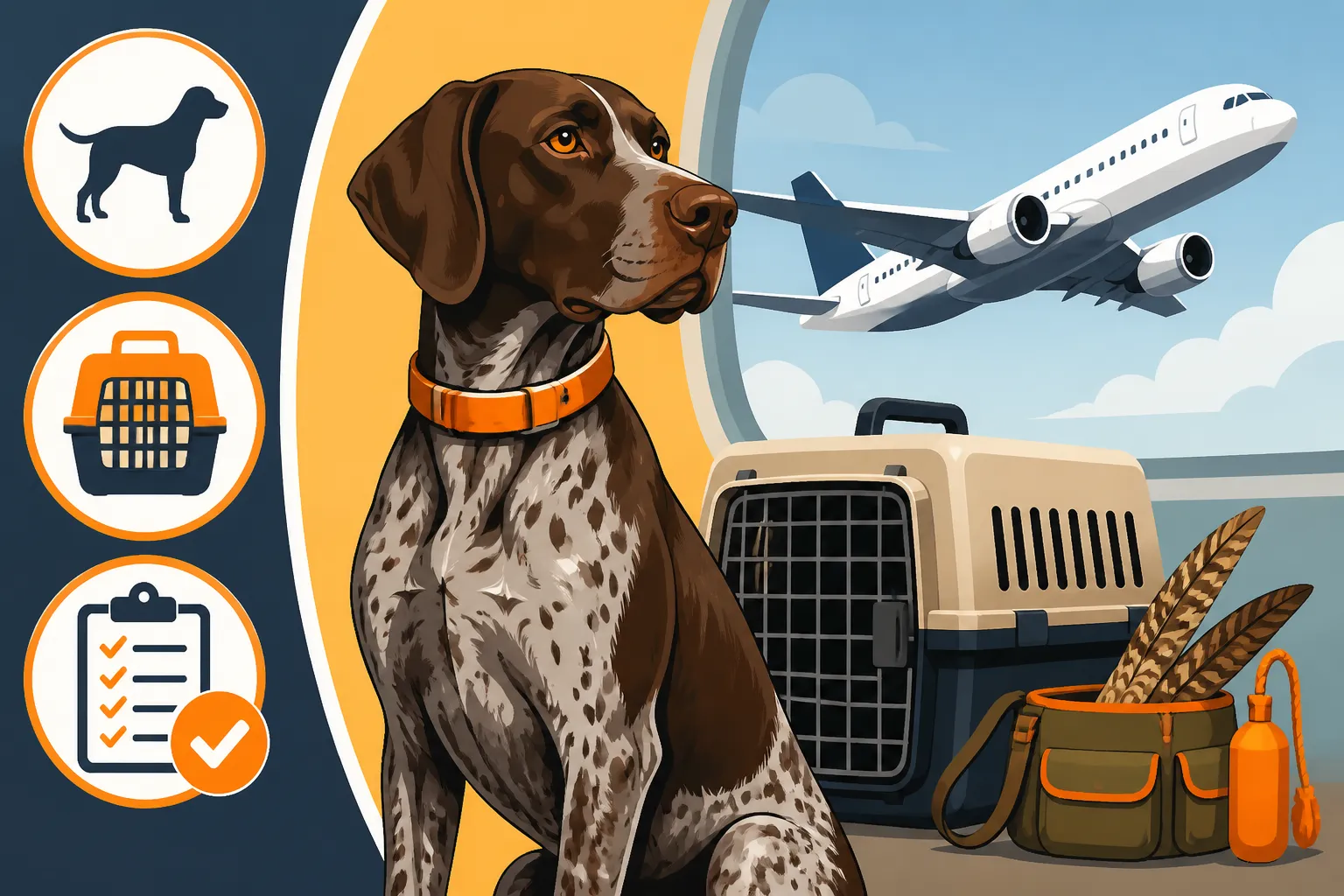
Ensure the crate meets IATA (International Air Transport Association) specifications. This means solid construction (often plastic or wood, never wire), proper ventilation on all four sides, a leak-proof bottom, and a secure door. Attach "LIVE ANIMAL" labels, "THIS END UP" arrows, and your contact information clearly to the outside. Also, include a "comfort kit" with food, a leash, and documentation taped to the top of the crate, just in case of unexpected delays. A frozen water bowl (so it doesn't spill) is also a good idea.
Understanding Airline Cargo Regulations and Requirements
Once your German Shorthaired Pointer is healthy and crate-ready, the real fun begins: deciphering airline policies. This is where details matter most, and where a single oversight can derail your entire trip. Airlines are notoriously strict when it comes to live animal transport, and for good reason—they prioritize safety.
Each airline has its own specific set of rules, often published on their cargo or pet travel sections of their website. Do not rely on third-party websites for this critical information; go directly to the source. You'll need to confirm everything from accepted crate types to breed restrictions, temperature embargoes, and reservation processes. It’s a painstaking process, but absolutely necessary.
This section will dive into the nitty-gritty of what airlines demand, helping you navigate these complex waters with your hunting companion. Understanding these rules isn't just about compliance; it's about making the journey as safe and stress-free as possible for your Shorthair.
Airline-Specific Rules and Restrictions
First and foremost, contact the airline's cargo department directly. Don't just call the general customer service line; ask for the live animal or pet cargo specialist. They can provide the most accurate and up-to-date information. Inquire about their specific crate requirements, documentation needed, and any breed-specific policies. While German Shorthaired Pointers are not typically considered "brachycephalic" (snub-nosed) breeds that face extensive restrictions, some airlines may have their own unique rules.
Pay close attention to temperature restrictions. Most airlines have strict upper and lower temperature limits for live animal transport, both at the departure, transit, and arrival airports. If the temperature is too hot or too cold, your dog could be denied boarding. This is especially relevant if you're flying to or from regions with extreme climates, or during certain seasons. This can significantly impact your travel dates, so factor it into your hunt planning. Think about how hot it can get during Heat Exhaustion in an Early Season Shorthair – those same conditions at an airport could be prohibitive.
Make your booking well in advance and confirm it multiple times. Space for live animals in cargo is often limited, and you don't want to be scrambling at the last minute. Some airlines require separate reservations for your pet cargo, distinct from your own passenger ticket. Keep all confirmation numbers and contact details readily available.
Required Documentation and Identification
Beyond the health certificate, airlines will typically require proof of rabies vaccination, an import permit (if traveling internationally), and potentially other specific documents depending on the country or state of destination. Keep multiple copies of all paperwork—physical copies attached to the crate and carried with you, and digital copies on your phone or email. This redundant approach can save you a lot of grief if something gets lost or damaged.
Your German Shorthaired Pointer also needs to be clearly identified. This means a collar with an ID tag showing your name and phone number, and ideally, a microchip with up-to-date registration information. Having a photo of your dog with you, both current and clearly showing any unique markings, can also be helpful in case of an emergency. Think of it like all the care you take to avoid losing your dog in the field; the same diligence applies to travel.
Labeling the crate thoroughly is paramount. Clearly marked "LIVE ANIMAL" stickers on all sides, "THIS END UP" arrows, and your name, address, and phone number, as well as the destination contact information, should all be securely affixed. Even writing "GSP, NEEDS WATER" in large, clear letters can make a difference. These visual cues help ground staff handle your dog with the appropriate care and direction.
Table: General Airline Pet Cargo Requirements
| Requirement | Description | Key Considerations for GSP Owners |
|---|---|---|
| Crate Type | IATA-compliant, rigid plastic or wood, proper ventilation (metal grates), leak-proof bottom, secure door. | Must allow GSP to stand, turn, and lie comfortably. Measure carefully! Consider durability for an active dog. What a Truck Bed Dog Box Costs for a Shorthair might be a good comparison for crate quality. |
| Crate Labeling | "LIVE ANIMAL" stickers, "THIS END UP" arrows, owner contact info, destination contact info, dog's name. | Use large, clear lettering. Include "GSP" for breed recognition. |
| Water/Food | Bowls securely attached to the inside of the door, accessible from outside without opening the crate. Often recommend a frozen water bowl. | Ensure your GSP knows how to use this type of bowl. Attach securely to prevent spillage from an active dog. |
| Health Cert. | Issued by a licensed vet, typically within 10 days of travel. Confirms fitness to fly and lack of disease. | Schedule well in advance. Discuss any needed The Cardiologist Exam a Breeding Shorthair Needs or Von Willebrand Testing Before a German Shorthaired Pointer Is Bred if relevant for peace of mind. |
| Vaccinations | Up-to-date rabies and other core vaccines. Proof required. | Ensure records are clear and dated. Check destination-specific requirements. |
| Microchip | Recommended or required for international travel. Registration details must be current. | Essential for reunification if your GSP gets separated from you. |
| Temperature | Strict limits at origin, transit, and destination airports (e.g., 20-85°F). Embargoes during extreme heat/cold. | Critical for GSPs with their short coats. Plan travel during moderate weather. Be flexible with travel dates. |
| Food & Meds | Small amount of food taped to crate; necessary medications with instructions. | Portion out your GSP's regular food from Chewy or Ollie to avoid digestive upset. |
Ensuring a Smooth Journey and Post-Flight Recovery
The day of travel itself is often the most nerve-wracking part. Despite all your meticulous planning, there’s an element of surrender involved as you hand your German Shorthaired Pointer over to the airline. However, there are still steps you can take to make that day, and the days immediately following, as smooth as possible for your valuable hunting partner.
Your role doesn’t end when your dog is checked in; it continues through monitoring their journey (if possible) and, crucially, providing a calm and supportive environment upon arrival. A successful flight isn’t just about getting from point A to point B; it’s about your GSP arriving in good spirits, ready to rebound quickly, and get back to being the energetic, focused hunting dog you know and love.
Remember, a tired, stressed dog won't hunt well. Your focus should be on minimizing discomfort and maximizing recovery time before expecting any field performance. This phase is about prioritizing their well-being above all else, acknowledging that air travel is an unnatural experience for any dog, especially one bred for endless outdoor activity.
Day-of Travel Logistics
On travel day, exercise your German Shorthaired Pointer thoroughly a few hours before drop-off, but allow ample time for them to cool down and relieve themselves. A tired dog is a calmer traveler, but an overheated or overstimulated one will be more stressed. Limit food intake in the hours leading up to the flight to minimize the risk of an upset stomach or accidents in the crate. Water should be offered freely until close to departure, then provided via the frozen bowl in the crate.
Arrive at the cargo facility well in advance of the scheduled drop-off time. This allows you to handle any unexpected paperwork or inspections without rushing, which can add to your stress and, by extension, your dog’s. Confirm all details with the cargo agents, including the flight number, routing, and estimated arrival time. Make sure they understand your GSP is a hunting dog and ensure all their kennel labels are clearly visible.
While your dog is in transit, try to track the flight if your airline offers this service. It provides peace of mind. Upon arrival at your destination, head directly to the cargo pick-up area. Having all your documentation organized will expedite the release process. Inspect your GSP thoroughly upon retrieval for any injuries or signs of distress. It’s an unlikely scenario, but checking for Field Injuries a Hunting German Shorthaired Pointer Comes Home With is second nature to you, and the same careful inspection applies here.
Post-Flight Recovery and Acclimatization
Once you've reunited with your German Shorthaired Pointer, resist the urge to immediately hit the field. Your dog has just experienced a significant amount of stress, noise, and confinement. Their body clock might be off, they might be dehydrated, and they'll definitely need to decompress. Give them immediate access to fresh water and a quiet place to relieve themselves.
The first 24-48 hours should be dedicated to rest, hydration, and gentle decompression. Offer a smaller meal of their regular food, perhaps something from Chewy that's easily digestible. Monitor their appetite, water intake, and elimination. Watch for any signs of illness or unusual behavior. Don't be surprised if they are a little subdued or clingy initially; this is a normal response to stress. This is where pet insurance, like Healthy Paws, can offer peace of mind, knowing that if any travel-related health issues arise, you have support for vet bills. Emergency Care for a Bloating German Shorthaired Pointer is a major concern, and stress can contribute, so careful monitoring is key.
Once they've had adequate rest, slowly reintroduce them to exercise and the new environment. Short, leashed walks in a quiet area are ideal before letting them off-leash in unfamiliar territory. Gradually increase activity over several days, easing them back into their hunting routine. Their sense of smell and focus might be dulled temporarily, so patience is paramount. Building them back up, physically and mentally, will ensure they are ready to shine when it’s time to hunt.
Disclaimer
This article is for general informational purposes only and does not constitute professional advice. Laws, prices and regulations vary by location and change over time. Consult a qualified professional for guidance on your specific situation.