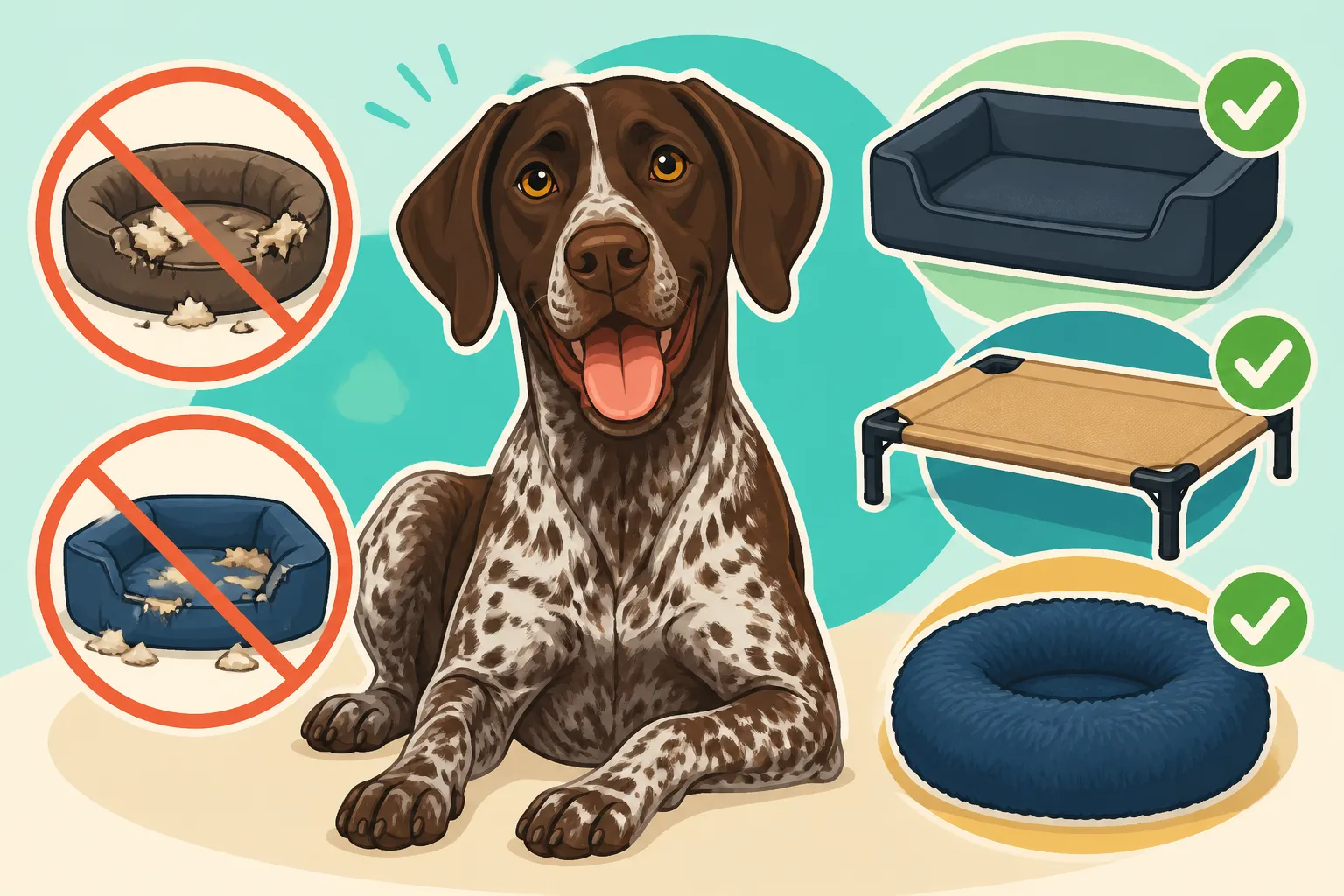
Beds a German Shorthaired Pointer Will Not Shred
If you're a German Shorthaired Pointer owner, you know the drill: you buy a beautiful, plush dog bed, convinced this time it will last, only to come home to a scene resembling a snowstorm of shredded stuffing. It's incredibly frustrating, and frankly, expensive, trying to find a bed that can stand up to a GSP's determination. This guide is here to help you navigate the world of durable dog beds, explaining why our beloved Shorthairs become bed destroyers and what features truly make a difference in a bed that lasts.
Why German Shorthaired Pointers Shred Beds
Let's be honest, it's not just "being a dog." German Shorthaired Pointers have a special kind of energy and intelligence that, when misdirected, can turn your living room into a pillow factory explosion. Understanding why they do it is the first step toward finding a solution that sticks. It's rarely out of malice; it's usually deeply ingrained in their nature or a sign they need something more.
The Endless Energy Outlet
German Shorthaired Pointers are incredible athletes, bred for hours upon hours of hard work in the field. They require a significant amount of exercise, not just a casual stroll around the block. If that boundless energy isn't properly channeled, it has to go somewhere, and often, that somewhere is your furniture, your shoes, or, yes, their bed. A GSP that hasn't had ample opportunity to run, hunt, swim, or engage in vigorous play is essentially a coiled spring. That pent-up energy often manifests as destructive chewing and tearing. You might think your hour-long walk was sufficient, but for a true working dog, it might just be a warm-up. Consider how much energy they burn when you're out chasing pheasants all day; that's the level of output they crave. If they're regularly tearing up their beds, it's worth taking a hard look at their daily exercise routine. The Two Hours a Day a German Shorthaired Pointer Needs is not an exaggeration for this breed, especially when they are younger.
Anxiety and Comfort Seeking
Believe it or not, sometimes shredding isn't about excess energy at all, but about discomfort or anxiety. A German Shorthaired Pointer is often described as a "Velcro dog" because they thrive on being close to their people. When left alone, especially for long periods or if they haven't been properly accustomed to solitude, some GSPs can develop separation anxiety. This distress can lead to destructive behaviors as a coping mechanism. Chewing and tearing can be self-soothing actions for an anxious dog, and unfortunately, their bed is often the easiest target. They might try to create a den-like space or simply vent their stress through physical exertion. It's a heartbreaking situation for both dog and owner. A Shorthair That Panics Alone in the House might be destroying beds not because they're bad, but because they're genuinely distressed.
Furthermore, some GSPs might chew at their beds if they're not actually comfortable. A thin, lumpy bed might be acceptable for a short nap, but for proper rest after a hard day, they need supportive cushioning. If they're constantly trying to "rearrange" their bed by digging and tearing, it could be their way of trying to make it more appealing.
Instinctual Behavior and Boredom
Let's not forget that German Shorthaired Pointers are, at their core, hunting dogs. Their instincts drive them to dig, tear, and "kill" things. For a puppy, especially, exploring the world with their mouth is entirely normal. They're teething, learning about textures, and figuring out what they can manipulate. An older GSP might revert to these behaviors if they're simply bored. A lack of mental stimulation can be just as detrimental as a lack of physical exercise. If they don't have interesting chew toys, puzzle feeders, or engaging activities, a soft, plush bed becomes a prime target for entertainment. What a German Shorthaired Pointer destroys in its first year is often directly linked to this exploratory, instinctual chewing phase. For a GSP, a bed can be a stand-in for prey they might instinctively want to "dispatch" if they aren't given appropriate outlets.
What to Look For in a Durable German Shorthaired Pointer Bed
Okay, so we know why they do it. Now, how do we outsmart them? Choosing the right bed means looking beyond the pretty covers and focusing on construction, materials, and design. You need a bed built to withstand the rigorous attentions of a strong, determined chewer.
Indestructible Materials
This is where the rubber meets the road, or rather, where the bed meets the teeth. Forget flimsy cotton or thin fleece. You need materials that are designed for serious abuse.
- Ballistic Nylon: This is often the gold standard for chew-proof dog beds. Ballistic nylon is the same material used in bulletproof vests (though not, of course, bulletproof in a dog bed!). It's incredibly tightly woven, making it difficult for teeth to penetrate and tear. It's also very resistant to scratches and snags. When you see a bed advertised as "chew-proof" or "indestructible," it's often made with a high denier count of ballistic nylon.
- Ripstop Fabric: Similar to ballistic nylon, ripstop fabrics are engineered to prevent small tears from becoming large rips. They often have a grid-like pattern of stronger threads woven into the fabric, so if a small puncture occurs, it's contained within a square and doesn't spread easily. This makes it much harder for a GSP to get a good purchase and shred the material.
- Heavy-Duty Canvas: While not as impenetrable as ballistic nylon, a thick, industrial-grade canvas can also offer significant resistance. Look for canvas that feels stiff and dense, not thin and pliable. Some companies double-layer their canvas for extra protection.
- Aluminum/Steel Frames (for elevated beds): If you're considering an elevated cot, the frame itself needs to be robust. Look for powder-coated steel or aluminum, which can stand up to a GSP's weight and won't easily bend or break if they try to chew on the edges.
Superior Construction and Design
Even the strongest material can fail if the construction is poor. German Shorthaired Pointers are clever and will find the weak points.
- Reinforced Seams: Seams are often the first point of failure. Look for beds with double-stitched or reinforced seams. Some high-quality beds even hide their seams within the design, making them less accessible to curious teeth.
- Hidden Zippers: A visible zipper is an open invitation for a GSP to investigate, and likely, to chew. Look for beds that have internal zippers or zipper flaps that completely cover and protect the zipper pull. The fewer external "handles" for them to grab, the better.
- Minimal Protrusions: Any loops, tags, decorative elements, or easily gripped edges are potential targets. The best chew-resistant beds are often very streamlined and simple in design, offering nothing tempting to latch onto.
- Elevated Design: Elevated beds, often called "cots," are excellent because they remove the plush, stuffable material that many GSPs love to destroy. The fabric is tautly stretched across a frame, offering no loose edges or deep pockets to dig into. This design also offers excellent ventilation, which our active Shorthairs often appreciate, especially after a long run.
- Bolster-Free or Reinforced Bolsters: Many dogs love beds with bolsters (raised edges), but for a GSP who likes to shred, these are often the first casualties. If you choose a bed with bolsters, ensure they are exceptionally well-reinforced and made of the same heavy-duty, chew-resistant material as the main sleeping surface.
Easy to Clean and Maintain
Let's face it, German Shorthaired Pointers can get dirty. Whether they've been out in the field, splashing in a pond, or just tracking mud from the yard, their beds will bear the brunt of it. A truly durable bed isn't just chew-resistant; it's also easy to clean.
- Waterproof or Water-Resistant Covers: This is a huge benefit. A waterproof liner or cover means that spills, accidents, or wet dog smell don't soak into the core of the bed. This extends the life of the bed and makes cleaning a breeze.
- Machine Washable: The ideal durable bed will have a removable cover that you can simply toss in the washing machine. This is far more convenient than spot cleaning or trying to wrestle a massive bed into a commercial washer. Some beds even allow you to wash the entire thing, though these tend to be elevated cot styles.
- Stain and Odor Resistant: Some advanced fabrics are treated to resist stains and odors, which is a blessing for active GSPs. This keeps the bed smelling fresher for longer and makes it easier to keep looking good.
- Durability Beyond Chewing: A bed isn't truly durable if it falls apart after a few washes. The same quality materials and stitching that resist chewing should also stand up to regular laundering without fraying, shrinking, or losing their integrity. This is where brands like Healthy Paws might come in, not for the bed itself, but by helping cover costs if your GSP manages to ingest part of a bed, leading to vet visits. It’s always good to be prepared.
Types of Shred-Resistant Beds for German Shorthaired Pointers
Now that we know what features to prioritize, let's look at the actual types of beds that stand a chance against your energetic German Shorthaired Pointer. There are a few main categories that excel in durability.
Elevated and Chew-Proof Cots
These are a fantastic option for GSPs, especially if shredding is a major issue. Elevated cots consist of a sturdy frame, usually made of steel or aluminum, with a durable fabric stretched taut across it.
- How they work: The key is that there's no stuffing to pull out, no deep edges to dig into, and nothing soft and plush to tear apart. The fabric is suspended, making it hard for dogs to get a good grip to chew. If they do manage to chew the fabric, it's often replaceable, which is a huge bonus.
- Benefits for GSPs: Beyond their chew-resistance, elevated cots offer excellent air circulation, keeping your GSP cool in warmer weather – a big plus for an active dog that can easily overheat. They also provide firm, even support, which can be great for joints. Many GSP owners use these year-round, especially if their dogs are prone to heat exhaustion. Heat Exhaustion in an Early Season Shorthair is a serious concern, and proper cooling options, like an elevated bed, can make a difference.
- Considerations: Some dogs might take a little time to adjust to an elevated bed if they're used to plush, soft surfaces. You can always add a thin, durable blanket for comfort once they accept the cot. Look for models where the fabric attaches securely and is made of heavy-duty materials like vinyl-coated polyester or even the aforementioned ballistic nylon. Many online retailers, including Chewy, offer a wide selection of these elevated beds designed for durability.
Heavy-Duty Fabric Beds with Reinforced Linings
If your German Shorthaired Pointer insists on a traditional "bed" experience, but you need it to last, focus on beds made with the toughest fabrics and smart internal construction.
- The "Fortress" Approach: These beds are essentially a fortress against chewing. They use multiple layers of extremely durable fabric, often with a ballistic nylon or ripstop outer shell, and sometimes an even tougher internal liner. The idea is that even if your GSP manages to get through the first layer, there's another formidable barrier underneath to protect the stuffing.
- Internal Stitching and Compartments: Look for beds where the stuffing is contained in separate internal compartments. This prevents your GSP from pulling all the stuffing out in one go if they breach the outer layer. It also helps the bed maintain its shape and support over time, even with a lot of digging and nesting.
- Orthopedic Support: Many of these heavy-duty beds also come with orthopedic foam inserts, which are fantastic for supporting a GSP's active joints. A comfortable dog is often a less destructive dog. If a bed is truly comfortable and supportive, they might be less inclined to try and "improve" it through shredding. Just make sure the orthopedic core itself is well-protected by those chew-resistant layers.
- Brands and Features: When shopping, look for brands that specifically market their beds as "chew-proof," "indestructible," or "tough." Read reviews carefully, paying attention to what other owners of high-energy, powerful chewers say. You'll find a range of options on platforms like Chewy, offering different sizes and styles to fit your GSP.
Orthopedic Beds with Chew-Resistant Covers
For older German Shorthaired Pointers, or those with joint issues, orthopedic support is paramount. The challenge is combining that comfort with chew resistance.
- Focus on the Cover: The key here is an extremely durable, replaceable cover. The internal foam, whether it's memory foam or another supportive material, is typically not chew-resistant itself. Therefore, the cover must be the first line of defense.
- Material Matters: Again, ballistic nylon or heavy-duty ripstop fabric is your best bet for the cover. Look for covers that are thick, tightly woven, and have reinforced stitching. A hidden zipper is non-negotiable to prevent easy access to the foam.
- Layered Protection: Some high-quality orthopedic beds offer a two-layer cover system: an inner water-resistant liner to protect the foam from accidents, and an outer chew-resistant shell. This is an ideal setup for comprehensive protection.
- Comfort for Aging Joints: As our GSPs get older, their joints can really start to feel the effects of all those years of running and hunting. An orthopedic bed provides critical support, relieving pressure points and promoting better sleep. Just ensure that comfort isn't sacrificed for durability, or vice versa. For a GSP who is Helping a Stiff Old German Shorthaired Pointer Get Up, an orthopedic bed can make a world of difference in their daily comfort and mobility. Even with premium dog food brands like Ollie that focus on joint health from within, external support from a good bed is still vital.
Here's a quick comparison of bed types for your GSP:
| Bed Type | Key Feature | Durability Against Shredding | Comfort Level | Best For |
|---|---|---|---|---|
| Elevated Cot | Sturdy frame, taut fabric | Very High | Moderate to High | Extreme chewers, hot climates, easy cleaning |
| Heavy-Duty Fabric Bed | Ballistic nylon, reinforced | High | Moderate to High | Dogs needing more cushion, moderate chewers |
| Orthopedic Bed w/ Tough Cover | Memory foam, durable outer cover | High | Very High | Older GSPs, joint issues, moderate chewers |
| K9 Ballistics Chew Proof Armored | Patented chew-proof design | Extremely High | Moderate | Determined shredders, institutional settings |
| Kuranda Dog Bed | Aluminum frame, heavy-duty fabric | Very High | Moderate | Escape artists, heavy chewers, outdoor use |
Note: The specific brand names K9 Ballistics and Kuranda are examples of types of beds known for their durability, often found on platforms like Chewy.
Training and Management to Prevent Bed Shredding
Buying the toughest bed on the market is a huge step, but it's not always a magic bullet. Addressing the root causes of the shredding behavior through training and management is equally important. Think of it as a multi-pronged approach to creating a peaceful, bed-intact home.
Exhaustion as the Best Defense
This is probably the single most important factor for a German Shorthaired Pointer. A tired GSP is a good GSP, and a good GSP is usually not a destructive GSP. They simply don't have the excess energy to channel into tearing apart their bed.
- Tailored Exercise: Don't just "exercise" your GSP; exhaust them. This means more than a walk. Think intense fetch sessions, long runs off-leash in a safe area, swimming, or even biking with your dog. Aim for at least 90 minutes of vigorous activity daily, broken into two sessions. A field-bred GSP often needs even more. If your GSP is still destroying beds, increase the intensity and duration of their exercise. Running a Shorthair Beside a Bike Safely can be a great way to provide serious mileage and burn off that energy.
- Mental Stimulation: Physical exercise isn't enough on its own. GSPs are intelligent dogs that need their brains worked too. Incorporate training sessions, puzzle feeders, scent work, or even just teaching them new tricks. A mentally tired dog is less likely to resort to destructive behaviors out of boredom. Puzzle Feeders and Scent Games for a Shorthair can be a lifesaver on days when you can't get out for a full run.
- Consistency is Key: German Shorthaired Pointers thrive on routine. Stick to a consistent exercise and training schedule. They learn to anticipate their outlets, which can help reduce anxiety and frustration.
Redirecting Chewing Behavior
When your GSP does feel the urge to chew, you want them to chew on appropriate items, not their bed.
- Provide Abundant Chew Toys: Always have a variety of durable, interesting chew toys available. Rotate them to keep things fresh. Look for toys made from tough rubber, nylon, or natural antlers. Some GSPs prefer textured toys, others solid ones. Find what your dog loves and make sure they always have access to it. This is especially crucial for puppies going through their Chews Safe for a Teething German Shorthaired Pointer phase.
- Reinforce Good Choices: When you see your GSP chewing on an appropriate toy, praise them enthusiastically! You can even offer a small treat. This positive reinforcement teaches them what to chew, rather than just punishing what not to chew.
- Bitter Sprays (with caution): For persistent bed chewers, a bitter apple spray or similar non-toxic deterrent can be applied to the bed. Many dogs find the taste unpleasant and will choose to chew something else. Always test a small, inconspicuous area first to ensure it doesn't stain the fabric.
Addressing Underlying Issues
If exercise and redirection aren't enough, you might need to dig a little deeper into why your GSP is destroying beds.
- Crate Training: A properly crate-trained German Shorthaired Pointer views their crate as a safe, secure den. If they're prone to destroying beds when unsupervised, a crate with a super durable bed (like an elevated cot or a truly chew-proof mat) can be a temporary solution until the behavior improves. Never use the crate as punishment, and ensure it's a positive space. Crating a Shorthair That Has Energy to Burn is a skill worth mastering for many reasons, including protecting your home.
- Separation Anxiety Protocol: If you suspect separation anxiety is the culprit, consult with a professional dog trainer or veterinary behaviorist. They can help you implement a desensitization and counter-conditioning protocol. This might involve gradually increasing alone time, using calming aids, or even medication in severe cases. Building a Shorthair's Tolerance for Being Alone] is a slow process but can yield great results.
- Vet Check-up: Rarely, a medical issue could be contributing to destructive behavior or discomfort. A GSP in pain or experiencing other health problems might act out. A visit to your veterinarian can rule out any underlying medical causes, especially if the behavior is new or sudden.
- Consistency from All Family Members: Everyone in the household needs to be on the same page regarding rules and training. If one person allows the GSP to chew the bed and another doesn't, it creates confusion and hinders progress. The Structure a German Shorthaired Pointer Needs Daily extends to consistency in rules and training from everyone they interact with.
By combining the right bed with a comprehensive approach to exercise, mental stimulation, and addressing any behavioral issues, you can turn that shredding habit into a thing of the past. It takes dedication, but seeing your GSP happy and your home intact is well worth the effort.
Disclaimer
This article is for general informational purposes only and does not constitute professional advice. Laws, prices and regulations vary by location and change over time. Consult a qualified professional for guidance on your specific situation.