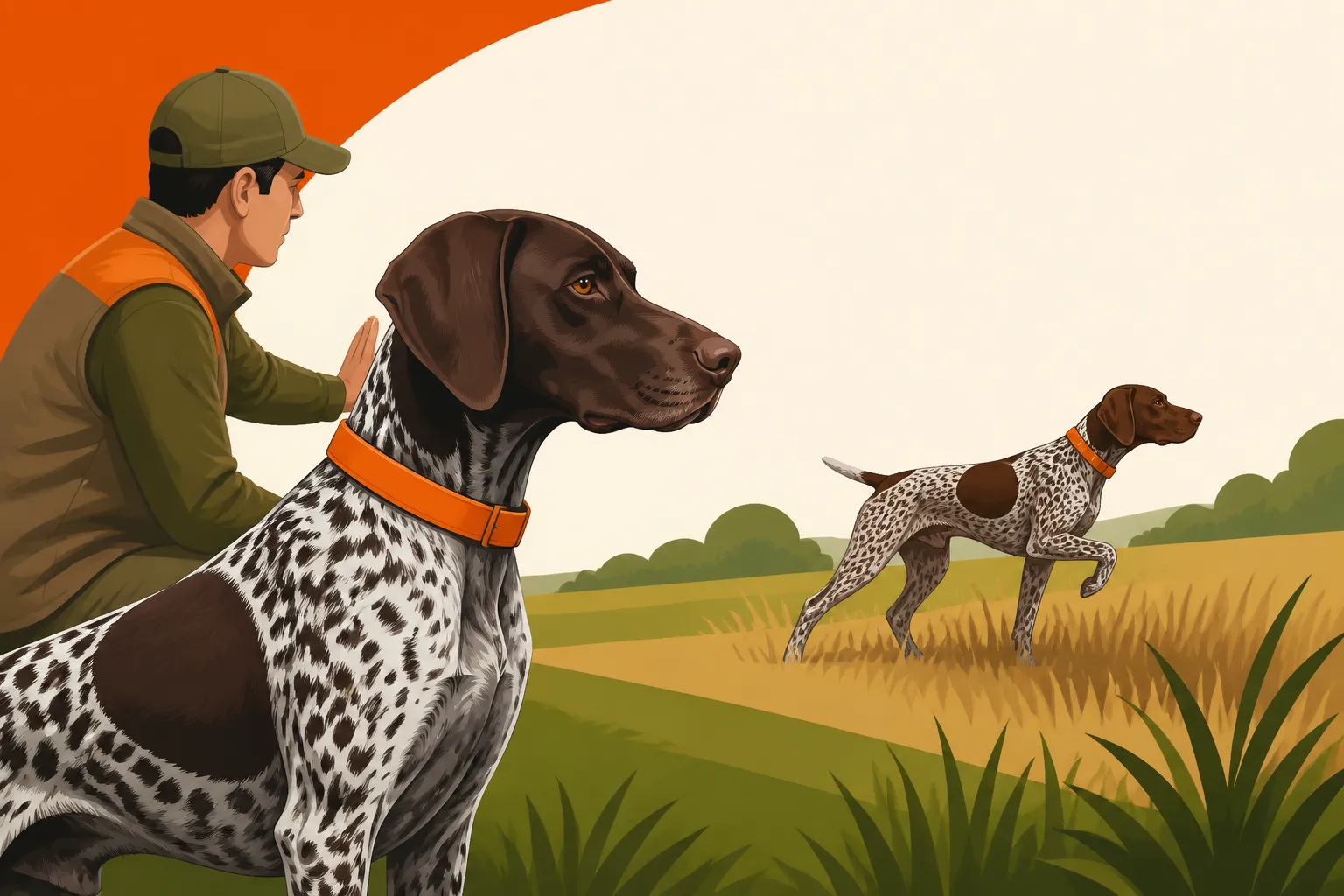
Teaching a Shorthair to Back Another Dog’s Point
It's incredibly frustrating when you're out in the field, your primary dog locks up on a solid point, and then your second German Shorthaired Pointer comes barreling in, flushing the birds before anyone can even think about shooting. This guide is all about tackling that common headache, helping you teach your energetic Shorthair the critical skill of backing another dog's point, ensuring smoother hunts and a much more harmonious brace in the field.
Understanding the "Why" Behind Backing
For many German Shorthaired Pointer owners, the idea of having two dogs work in concert, with one honoring the other's point, feels like a distant dream. It's not just about looking good in the field; it's about practical hunting success, safety, and developing a truly disciplined gun dog. Backing isn't an innate instinct for every dog, especially not for a breed as driven and independent as the GSP.
The Instinct to Point vs. Back
German Shorthaired Pointers are, by their very nature, born to point. It's etched into their DNA, a primal response to the scent of game. When they hit that scent cone, their bodies lock up, often with an intensity that can make them oblivious to everything else around them. This strong pointing instinct is fantastic when they're working solo, but it becomes a challenge when another dog is already doing the job. Your GSP's brain says, "Birds! Must find birds! Must point!" and it can override any subtlety about respecting another dog's discovery. They often see another dog on point not as a sign to stop, but as a giant arrow pointing them directly to the action, leading to a race to the front that can blow up the whole scenario. This isn't naughtiness; it's just pure, unadulterated prey drive mixed with a dash of "first dibs" mentality.
The idea of backing requires them to suppress that powerful instinct and instead defer to their bracemate. It's a learned behavior, an act of trust and discipline that goes against their natural inclination to be the one finding and pointing the game. This is why just taking two untrained dogs out together rarely results in a beautiful brace. Without specific training, you're more likely to get two dogs competing for the point, often resulting in chaos, flushed birds, and a lot of muttered curses under your breath.
Safety and Etiquette in the Field
Beyond the efficiency of the hunt, teaching your German Shorthaired Pointer to back another dog is crucial for safety and overall good etiquette. Imagine a scenario where one dog is locked up tight on a rooster pheasant, and your GSP, untrained to back, plows in right next to it. Not only does this risk flushing the bird prematurely, but it also places both dogs in potentially dangerous proximity to the shot. When a gun goes off, you want your dogs to be steady, predictable, and out of the line of fire. A dog that's constantly trying to steal a point or surge ahead can put itself or its bracemate in harm's way.
Furthermore, if you ever hunt with friends or in a guided scenario, a dog that consistently breaks another dog's point can quickly become a nuisance. It shows a lack of control and respect, not just for the game, but for the other hunters and their dogs. Being able to confidently hunt with two dogs, knowing they will honor each other, makes the experience far more enjoyable and productive for everyone involved. It's a mark of a truly finished gun dog and a testament to the dedication of its owner.
Foundation Training: Building Steadiness First
Before you even think about teaching your German Shorthaired Pointer to back another dog's point, you absolutely must have a rock-solid foundation of obedience and steadiness with your individual dog. Trying to teach backing without a reliable "whoa" or steady-to-shot command is like trying to build a house without a foundation – it's just going to crumble. The discipline required to stop and hold still when another dog is on point is an extension of these fundamental commands.
Reinforcing the "Whoa" Command
The "whoa" command is the cornerstone of all advanced gun dog training, and it's doubly important for teaching a GSP to back. "Whoa" means "stop, and stand still, no matter what." It's not just a pause; it's a complete freeze, maintaining position until released. Your German Shorthaired Pointer needs to understand this command implicitly, in all environments and under increasing distraction. If your dog breaks its "whoa" when a bird flushes or a rabbit bolts, it certainly won't hold still when another dog is pointing.
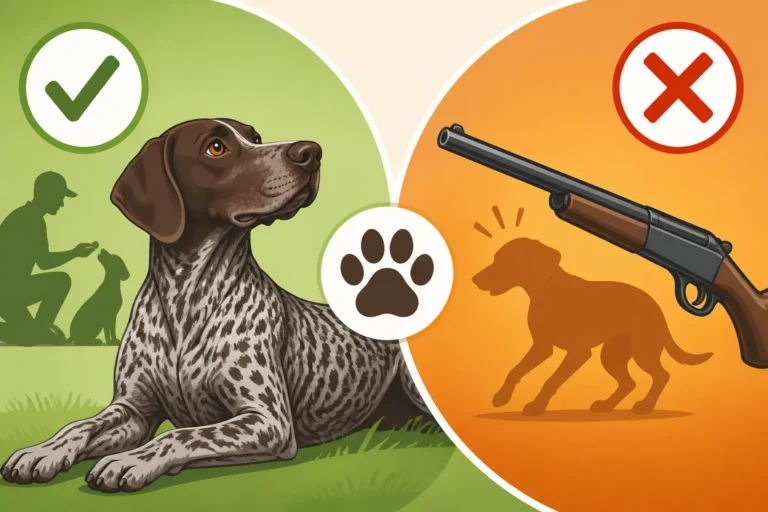
Start by practicing "whoa" daily in a distraction-free environment, then gradually introduce distractions. Use a check cord for control and immediate correction. When your GSP breaks, a firm "whoa!" followed by a gentle, consistent pull on the check cord to put them back in position reinforces the meaning. Reward heavily when they hold. Many trainers find success using a whoa post or a barrel, where the dog is elevated and cannot easily move forward, allowing for clear communication of the command. The goal is for your GSP to respond to "whoa" instantly and remain still, even if a bird flies or another dog runs by. Think of "whoa" as the ultimate "stop button" for all that drive and energy. You can read more about this foundational skill in Whoa and Why Every Shorthair Starts There.
Steadying to Wing and Shot
Beyond just holding still, your German Shorthaired Pointer needs to be "steady to wing and shot." This means they remain perfectly still when a bird flushes ("to wing") and when a gun is fired ("to shot"). A dog that bolts after a flushed bird or scrambles at the sound of a gun will never successfully back another dog. The impulse to chase is incredibly strong in a GSP, and overcoming it requires immense patience and consistent training.
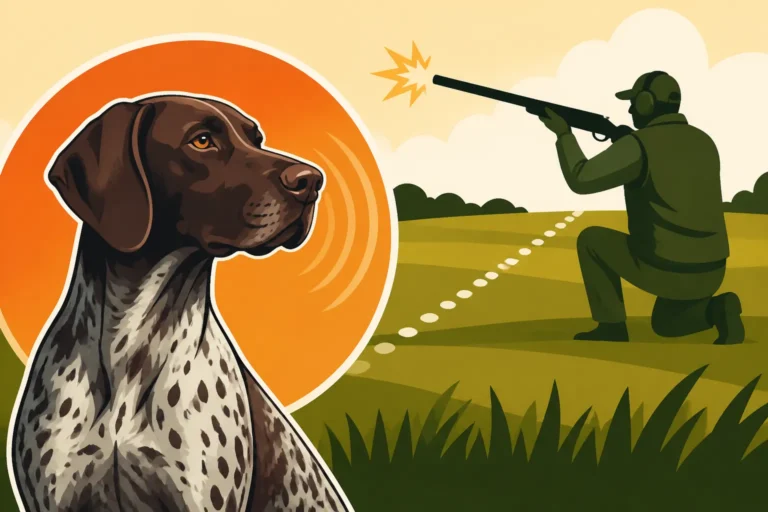
This training typically begins with planted birds (pigeons or chukar work great) on a check cord. As the bird flushes, your dog should remain on "whoa." If they try to move, the check cord prevents it, and you reinforce the "whoa" command. Only after they are rock-solid steady to the flush do you introduce the gun, starting with very distant, quiet shots and gradually bringing the sound closer and increasing volume. The key is to never let them chase. Ever. Every time they chase, they reinforce the wrong behavior. This systematic approach is vital to building the discipline needed for backing, as it teaches your GSP that the exciting events of flushing birds and gunshots do not mean they get to move. A detailed guide on this process can be found in Steadying a Shorthair to Wing and Shot.
Introducing the Concept of Backing
Once your German Shorthaired Pointer has a reliable "whoa" and is steady to wing and shot, you can start introducing the concept of backing another dog. This is where the magic begins, turning two individual hunters into a cohesive team. The goal is for your dog to recognize another dog's point and automatically "whoa" and honor it.
Using a Well-Trained Bracemate
The easiest and most effective way to teach backing is by leveraging a well-trained, experienced bracemate. This "mentor dog" should be steady on point and accustomed to having other dogs around. Your young GSP will learn a tremendous amount by observing and experiencing the proper behavior.
Start by taking both dogs out, with your GSP on a long check cord and possibly an electronic collar for safety and clear communication. The ideal scenario is for the mentor dog to go on point. As your mentor dog locks up, bring your GSP into view, but keep a significant distance at first. As your GSP notices the pointing dog, immediately issue your "whoa" command. The check cord helps prevent them from breaking. If they try to push past or run in, gently but firmly apply pressure with the check cord and repeat "whoa," guiding them to stop and stand still behind the pointing dog. The goal is for your GSP to register the pointing dog's body language as an indicator that they too must freeze. Repeat this many times, gradually decreasing the distance your GSP starts from the pointing dog, until they consistently "whoa" behind the bracemate. This might take several sessions, and patience is absolutely key.
The Check Cord and Electronic Collar for Guidance
These tools are invaluable when teaching backing, providing the control and communication necessary to guide your German Shorthaired Pointer through this complex behavior. The check cord, a long piece of rope (often 20-30 feet), allows you to keep physical control of your dog even when they are ranging out a bit. It’s perfect for those initial stages when you need to prevent breaking point or rushing the bracemate. When your mentor dog goes on point, and your GSP starts to advance, a gentle but firm pull on the check cord, combined with your "whoa" command, helps them understand they need to stop.
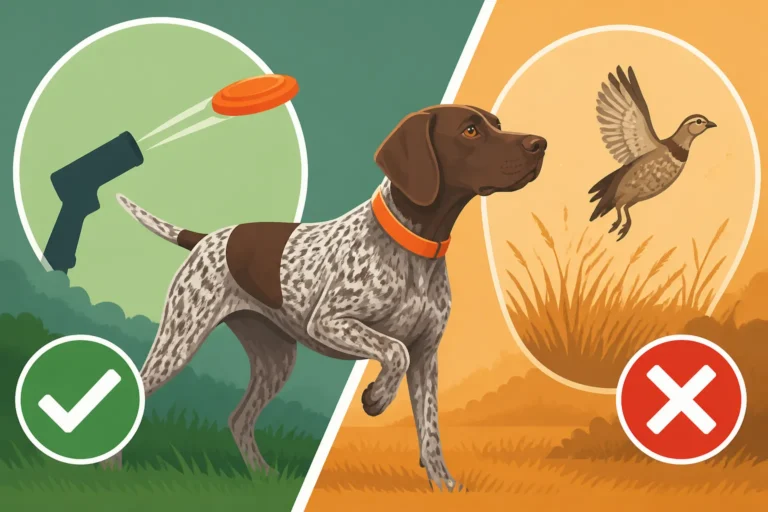
The electronic collar (e-collar) can be introduced once your GSP understands the concept of backing and the "whoa" command, but sometimes needs a little more encouragement to generalize the behavior to new situations or with increased distractions. It acts as an extension of your voice and leash, providing a "long-distance leash" to reinforce commands. Set the collar to a low, perceptible level. When your GSP sees the pointing dog and you give your "whoa" command, if they hesitate or try to move forward, a mild stimulation can be applied simultaneously with the verbal command and a gesture to stop. Release the stimulation the instant they comply. It's crucial that the e-collar is used as a communication tool, not a punishment, and only after the dog understands the command. For more on using this tool responsibly, see When an E-Collar Belongs on a German Shorthaired Pointer. You can find various types of reliable e-collars on platforms like Amazon, but always research and choose one with multiple stimulation levels and a good reputation for safety and effectiveness.
Simulating a Backing Scenario
What if you don't have access to a well-trained bracemate, or you want to practice more frequently? You can simulate backing scenarios. This often involves a "planted" dog or even a prop. Some trainers use a taxidermied dog mount or a life-sized dog dummy placed in a pointing posture over a bird scent. You can also have a friend act as the "other handler" with their dog, even if their dog isn't perfectly steady, as long as it will hold a point for a short duration.
The setup is similar: place the "pointing dog" (real or fake) over a hidden bird, so your GSP can get the scent. Bring your GSP in on a check cord. As they approach and see the pointing dog or pick up the intense scent, give your "whoa" command. Use the check cord to prevent them from breaking the point or moving past the "pointing dog." Reward lavishly for holding still and honoring the imaginary or static point. This practice helps your GSP generalize the behavior of stopping and honoring a visual cue of a pointing dog, even without the dynamic interaction of a truly experienced bracemate. It’s a stepping stone to real-world scenarios, allowing for repetitive, controlled practice.
Common Challenges and Troubleshooting
Teaching a German Shorthaired Pointer to back isn't always a smooth path. Their high drive, intelligence, and often mischievous nature can lead to a few common pitfalls. Understanding these challenges and knowing how to troubleshoot them will save you a lot of frustration and help your GSP become a better hunting companion.
The GSP That Creeps or Bumps
One of the most common frustrations is the GSP that almost backs, but then starts to creep forward, subtly trying to get closer to the birds, or worse, bumps them entirely. This isn't usually a malicious act; it's that intense prey drive bubbling over. Your dog knows the birds are there, and their instinct is to secure the point themselves. This behavior indicates that their "whoa" isn't quite strong enough under high-pressure scenarios, or they haven't fully grasped that backing means stopping completely.
To address creeping, you need to return to the basics and reinforce the absolute meaning of "whoa." Use your check cord and e-collar more assertively. As soon as you see the slightest forward motion, issue a sharp "whoa!" and use the check cord or e-collar to immediately correct the movement. Put them back in the exact spot they were supposed to be. Don't release them until they have held a solid "whoa" for an extended period, even if it feels tedious. You might need to increase the distance between your GSP and the pointing dog initially, gradually closing the gap as their steadiness improves. It's about teaching them that any forward movement, no matter how small, is unacceptable when backing. Consistency is paramount here; even one allowed creep can set back weeks of training. For more on this specific issue, check out A Shorthair That Creeps Once It Points.
Dealing with Distractions
German Shorthaired Pointers are incredibly intelligent and keenly aware of their surroundings. This makes them great hunters, but also means they can be easily distracted, especially by things that don't involve the immediate bird scent. A squirrel running by, another dog barking in the distance, or even a sudden change in wind direction can break their concentration when they are trying to back.
The key to overcoming distractions is gradual exposure and repetition. Start training in low-distraction environments and slowly introduce more stimuli. Practice backing in different fields, near roads, with other people around, and even with different types of game birds (though stick to captive birds initially for controlled flushes). Each time, reinforce the "whoa" and the backing behavior. If a distraction causes them to break, calmly guide them back to position and repeat the exercise. Don't let them "get away" with breaking due to a distraction; consistency teaches them that the command applies regardless of what else is happening. Sometimes, it helps to pause the training, walk them away from the distraction, and then re-approach the backing scenario. This teaches them to refocus on the task at hand. Utilizing your e-collar to gain their attention back to you and the command can be very effective in these situations.
Maintaining the Back Over Time
Training isn't a one-and-done deal, especially with a breed like the German Shorthaired Pointer that thrives on consistency and activity. If you don't regularly reinforce the backing command, your GSP might start to revert to old habits, creeping or bumping again. Life happens, seasons end, and dogs get less field time. Without maintenance, even the best-trained dog can get a little rusty.
Integrate short backing refreshers into your regular training routine, even in the off-season. This could involve setting up a quick practice session with a planted bird and a "pointing dog" (even a stuffed toy can work for a quick reminder). If you have access to other hunting companions and their dogs, arrange for practice braces where backing is explicitly worked on. When hunting season comes, make sure to reinforce good behavior on every single hunt. Don't take it for granted. Praise and reward your GSP for good backs, even if it's just a verbal "Good whoa!" and a pat. Consistency in expectation and reinforcement is the secret to a long-lasting, reliable backing dog. Regularly brushing up on foundational skills, like the "whoa" command as outlined in The Structure a German Shorthaired Pointer Needs Daily, will keep your dog sharp.
Integrating Backing into Real-World Hunts
The ultimate goal of teaching your German Shorthaired Pointer to back is to have them perform flawlessly in actual hunting situations. The transition from controlled training scenarios to the dynamic, unpredictable environment of the field requires careful planning and a commitment to continued reinforcement.
Gradual Exposure to Hunting Situations
You wouldn't throw a rookie baseball player into the World Series without any prior game experience, right? The same principle applies to your GSP and real-world hunting. After mastering backing in controlled environments, it's crucial to gradually introduce them to actual hunting conditions. Start with smaller, less crowded hunting areas where distractions are minimal. Perhaps an early-season hunt where bird numbers are predictable.
Initially, consider hunting your GSP with only one other dog, preferably the steady bracemate you used in training. Keep your GSP on a check cord for the first few real hunts, even if you feel confident. This gives you that essential safety net to correct any lapses immediately. Monitor their behavior closely. Does your GSP honor the point consistently? Does it get overwhelmed by the excitement? If they struggle, scale back to more controlled training before re-entering the field. This incremental approach builds confidence and reinforces the learned behavior under increasing pressure. Think of it as slowly turning up the volume on the hunting experience, ensuring your dog can handle each new level.
Practice with Different Dogs and Environments
Your German Shorthaired Pointer might be perfect at backing your trusty old lab, but what about a different breed, or a dog they've never met? Just like people, dogs have different communication styles, and a truly reliable backing dog needs to be able to honor any pointing dog, regardless of size, breed, or intensity of point. It's also vital for them to perform consistently in various terrains – dense cover, open fields, hills, and flat ground.
Actively seek out opportunities to train and hunt with a variety of dogs and in diverse locations. Arrange informal training sessions with friends who have different breeds of pointing dogs. Observe how your GSP reacts. Do they get confused by a different point style? Do they try to challenge a new dog? Each new interaction is a learning opportunity. Similarly, expose them to different types of cover and terrain. A dog that backs perfectly in an open prairie might struggle when navigating dense cattails or thorny thickets. The more varied the experiences, the more thoroughly your GSP will generalize the backing behavior, understanding that the command applies universally. Consider joining a local NAVHDA chapter or field trial club to expose your dog to more varied scenarios and partners, as discussed in What NAVHDA Scores Raise a Shorthair Litter's Price.
Celebrating Success and Consistency
It's easy to get focused on correcting mistakes, but don't forget to celebrate your German Shorthaired Pointer's successes! Every time your GSP performs a perfect back, acknowledge it. A clear, enthusiastic "Good whoa!" or "Good back!" followed by a happy pat, or a favorite treat, reinforces the behavior. Positive reinforcement makes the training experience enjoyable for your dog and strengthens the bond between you. They learn that backing makes you happy, and that's a powerful motivator for a people-oriented breed like the GSP.
Consistency in your expectations is also key. Don't allow your dog to back sometimes and get away with bumping birds other times. Every instance of breaking a point, whether it's their own or a bracemate's, is a step backward. If you find yourself in a situation where your GSP is failing, don't get frustrated; simply revert to a more controlled training environment to reinforce the behavior. A successful backing dog is a reflection of consistent training, patience, and a deep understanding of your GSP's drive. With time and dedication, you'll enjoy many seasons of perfectly orchestrated points and backs, turning your individual hunters into a formidable team.
Disclaimer
This article is for general informational purposes only and does not constitute professional advice. Laws, prices and regulations vary by location and change over time. Consult a qualified professional for guidance on your specific situation.