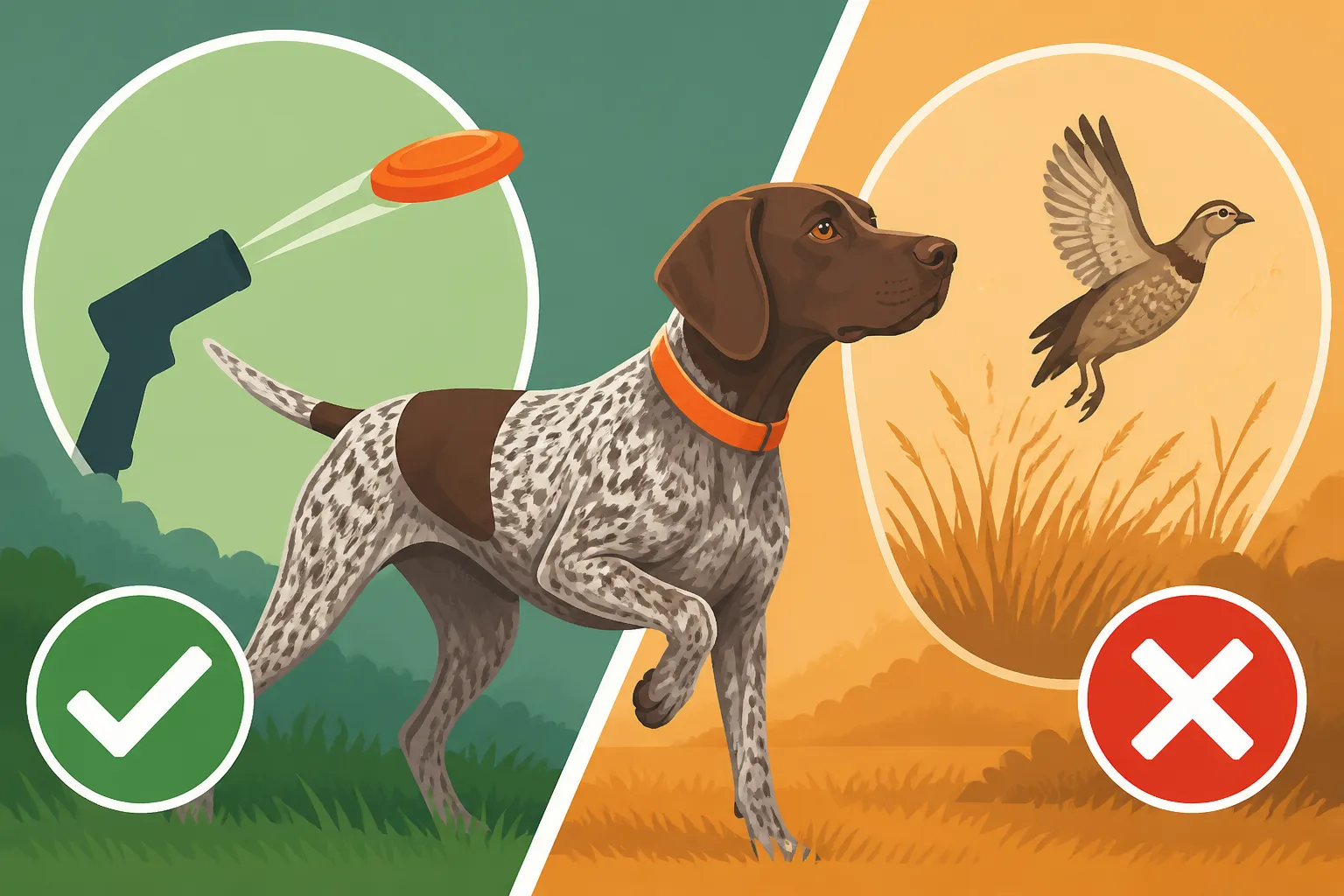
Whether a Launcher Helps a Bumping Shorthair
There's nothing quite as deflating for a German Shorthaired Pointer owner as watching their magnificent dog charge right into a covey of birds, flushing them prematurely instead of holding that beautiful, rock-solid point we all dream of. This frustrating "bumping" behavior can feel like a setback, making you wonder if your Shorthair will ever truly learn steadiness. But don't despair; this guide will walk you through how a simple yet incredibly effective tool—the bird launcher—can be your secret weapon in turning that energetic flusher into a disciplined pointing machine.
Understanding the "Bumping" Behavior in German Shorthaired Pointers
Many GSP owners come to the same realization: their dog has a natural prey drive and an incredible nose, but when it comes to holding a point and not breaking, that's where the real challenge often lies. It's easy to get frustrated, thinking your dog is being disobedient, but in most cases, "bumping" birds is simply a natural, instinctual response from a dog that hasn't fully understood its job in that moment.
The Instinct to Chase and Flush
German Shorthaired Pointers were bred for versatility, and that includes a strong desire to find and retrieve game. Part of their inherent drive is to get to the bird. When they hit scent, their brains often tell them, "Bird! Get it!" This powerful urge can override any nascent training for steadiness, especially in young or highly excitable dogs. They feel the thrill of the hunt, the intense smell, and they want to pounce. It’s not malice; it’s instinct.
Think about it from their perspective: they've located the bird, their senses are on fire, and the most natural thing in the world is to move in and flush it. If they haven't been taught how to channel that energy and hold steady, they'll simply follow their genetic programming. This is why just taking them to the field and hoping they'll figure it out often leads to disappointment and reinforces the undesirable bumping habit. You’re asking them to override millennia of selective breeding, and that takes specific, consistent training.
Why Traditional Methods Sometimes Fall Short
For years, many trainers relied on methods like tying a dog to a stake or using a long check cord to enforce steadiness. While these tools have their place, they often lack the "aha!" moment for the dog. A dog tied to a stake might learn not to move when tied, but as soon as the stake is removed, the instinct to chase kicks back in. It creates a dependence on the physical restraint rather than an internal understanding of the command.
The problem with just a check cord, if not used precisely, is that it can still allow the dog to associate the flush with a reward (even if momentary chase) before being corrected. It's hard to replicate the suddenness of a wild flush with a hand-thrown bird, making consistency a real struggle. Plus, it’s tough to simulate a true hunting scenario where the bird is unknown and unexpected until the dog finds it. This is where more advanced tools, like launchers, become invaluable in providing that controlled surprise that helps a GSP truly learn.
How Bird Launchers Revolutionize Steadiness Training
Bird launchers offer a controlled, repeatable, and realistic training scenario that is difficult to achieve with hand-thrown birds or other methods. They allow you to introduce birds and gunshots in a way that builds confidence and understanding without creating fear or reinforcing bad habits. This control is absolutely paramount when you're trying to teach a high-drive dog like a German Shorthaired Pointer.
The Power of Controlled Exposures
The beauty of a bird launcher lies in its ability to present a bird unexpectedly, yet on your terms. Instead of your Shorthair flushing a bird and being rewarded by the chase, the launcher allows you to control when the bird flushes. You can place the launcher, walk your dog in, allow them to point, and then, only when they are holding steady, you release the bird. This allows you to reinforce the desired behavior—the solid point—before the bird takes flight. This sequence is critical: point, steadiness, flush, retrieve (if desired).
This controlled exposure minimizes the chance for your dog to practice the bumping behavior. Every repetition becomes a chance to get it right. You can gradually increase the distance, the type of cover, and the distractions, all while maintaining the core lesson: you hold steady until the command. This systematic approach builds a dog's understanding and confidence, rather than just forcing compliance. It helps them internalize the lesson.
Building Confidence and Trust
A well-used bird launcher helps build immense confidence in your GSP. The dog learns that pointing a bird doesn't mean the bird disappears forever, or that they get corrected for trying to flush it. Instead, they learn that holding still actually precedes the action, and that good things happen when they listen. They learn to trust your commands, even when their instincts are screaming otherwise. This trust is crucial for a strong hunting partnership.
Imagine your dog hits a hot scent, locks up, and you can see the tremble of excitement. Instead of immediately charging, they look back at you, waiting for the signal. When you give the command, the bird flushes, and then they retrieve. This sequence, practiced with a launcher, teaches them patience and reinforces their bond with you as the leader of the hunt. It shifts their focus from solely the bird to the partnership, knowing you’ll direct them to the reward. This is also why having a strong foundation in basic obedience, perhaps even from a program like BAXTER & Bella, can make a huge difference in how quickly your dog catches on.
Types of Bird Launchers and Choosing the Right One
There's a variety of bird launchers available, ranging in complexity and cost. Choosing the right one depends on your budget, your training goals, and the specific needs of your German Shorthaired Pointer. Each type offers different advantages for various stages of training.
Manual vs. Remote Launchers
Manual launchers are typically spring-loaded or designed to be kicked to launch the bird. They are more affordable and a great starting point for many. You set the bird, place the launcher, and then either activate it with your foot or a pull-cord once your dog is steady. These work well for teaching the initial concept of a stationary bird that flushes on command.
Remote-controlled launchers are the gold standard for serious field training. These allow you to be at a distance from the launcher (and your dog), operating it with a remote control. This creates a much more realistic hunting scenario, as your dog doesn't associate your presence right next to the launcher with the bird's launch. You can find a wide variety of bird launchers, from basic throwers to advanced remote-controlled systems, on platforms like Amazon, allowing you to compare features and prices easily. The ability to launch from afar means you can position yourself as if you were truly hunting, walking into the point and then triggering the flush when you're ready. This greatly enhances the dog's understanding that your command, not your movement, dictates the flush.
Other Considerations: Launcher Size, Noise, and Bird Type
Consider the size of the birds you'll be using. Some launchers are designed for pigeons and quail, while others can accommodate larger birds like pheasants. Make sure the launcher you choose matches your game. The noise level of the launch mechanism can also be a factor. Some are relatively quiet, while others have a more pronounced "thump" or "clack." For a sensitive dog, starting with a quieter launcher might be beneficial, especially if you're also working on Building a Shorthair's Gun Tolerance From a Distance.
You'll also want to think about durability and ease of use. These tools are often used outdoors in various conditions, so robust construction is key. Look for models that are easy to load, clean, and transport. Some launchers come with additional features like adjustable spring tension to control the height and distance of the bird's flight, which can be useful as your dog progresses.
Here's a quick comparison of common launcher types:
| Feature | Manual Hand-Thrower (e.g., bumper launcher) | Manual Foot-Activated Launcher | Remote-Controlled Launcher |
|---|---|---|---|
| Cost | Low | Medium | High |
| Control | Least (relies on human throw) | Good (stationary) | Excellent (from a distance) |
| Realism | Low (dog sees handler throw) | Medium (bird appears stationary) | High (bird appears unexpectedly) |
| Bird Types | Bumper/dummy only | Quail, pigeon, chukar | Quail, pigeon, chukar, pheasant |
| Best For | Early retrieve training, basic mark work | Initial steadiness, simple drills | Advanced steadiness, marking, gun-shy work |
| Pros | Inexpensive, simple | Affordable, good for "whoa" | Highly realistic, efficient |
| Cons | Limited bird use, less realistic | Still requires handler proximity | Expensive, requires batteries |
Step-by-Step Training with a Bird Launcher for a Steady Point
Training a German Shorthaired Pointer to be steady to wing and shot using a launcher requires patience, consistency, and a systematic approach. Don't rush any steps; your goal is a confident, steady dog, not a fast one.
1. Introduction to "Whoa" and the Launcher (Without Birds)
Before you even think about birds, your GSP needs a solid understanding of the "whoa" command. This means holding still, no matter what. Start with Teaching a Shorthair Whoa on a Table or Barrel in a calm environment. Once proficient, move to the field with a long check cord. Practice walking with your dog, giving the "whoa" command, and having them stop and remain still until released.
Next, introduce the launcher itself, but without any birds. Place the launcher in the field, let your dog see it, and walk them past it while practicing "whoa." Fire the launcher (empty or with a dummy) while your dog is on a check cord at a distance, gradually moving closer. This desensitizes them to the sound and movement of the launcher, associating it with remaining "whoa." This is crucial for preventing a negative association later on.
2. First Live Birds and Controlled Flushes
Once "whoa" is solid and your dog is comfortable with the launcher, it's time for the real deal. Place a live bird (quail or pigeon are excellent starters) in the launcher. Bring your GSP into the area on a long check cord. Let them catch the scent and lock onto point. As soon as they hit that beautiful, solid point, give your "whoa" command. Hold them there for a few seconds.
Then, and this is key, trigger the launcher. As the bird flushes, your dog must remain "whoa." If they try to break, use the check cord for a firm but fair correction to keep them steady. Immediately praise them for holding. Do not allow them to chase the bird. Repeat this multiple times, always ensuring the dog remains steady until you release them. This teaches them that the flush is not their cue to chase. This is where Steadying a Shorthair to Wing and Shot truly begins.
3. Adding the Retrieve and Gunfire
Once your German Shorthaired Pointer is consistently holding steady to wing with the launcher, you can introduce the retrieve. After they've held steady as the bird flushes, release them with an "okay" or "fetch" command to retrieve the downed bird. This reinforces the idea that their patience and steadiness lead to the reward of the retrieve.
Simultaneously, you can start introducing gunfire. When the bird launches, have a helper fire a blank pistol or a very light gauge shotgun at a significant distance from your dog. Gradually decrease the distance over multiple sessions as your dog remains calm and focused. Never force a dog to tolerate gunfire; always pair it with the positive experience of the bird and the retrieve. This process is how you develop a confident, gun-steady retriever, preventing issues like Signs a German Shorthaired Pointer Has Gone Gun Shy.
4. Progressing to Field Scenarios
As your GSP masters these steps, start varying the training environment. Move to different types of cover, different field conditions, and introduce light distractions. Work towards removing the check cord entirely, trusting your dog's internalized understanding of "whoa." You should also be working on Holding a Shorthair's Point Until You Walk In during this phase.
The goal is for your dog to point, hold steady, wait for your signal to flush (or for you to flush it if hunting), and then retrieve on command. The launcher makes this systematic progression possible, ensuring that each step builds on a solid foundation. Remember, this isn't a race. Each GSP learns at its own pace, and consistent, positive reinforcement is far more effective than rushing.
Common Pitfalls and Troubleshooting When Using a Launcher
Even with the best intentions and the right tools, training can hit snags. Knowing common issues and how to address them can save you a lot of frustration and help keep your German Shorthaired Pointer on the right track.
Dog Anticipates the Launch
One of the most common issues is a dog that starts to anticipate the launch. They might twitch, creep forward, or even break point just before you hit the remote. This usually happens if you’re becoming too predictable in your timing or if you're standing too close to the launcher when you trigger it.
To fix this, vary your timing. Sometimes launch immediately, sometimes make them hold for a longer period. Walk away from the launcher after placing it and before you bring the dog in. Use multiple launchers if you have them, so the dog never knows exactly which one will release a bird. Incorporate blank launcher drills where nothing happens, or use the launcher to throw a bumper instead of a bird. This unpredictability keeps them honest and waiting for your command, rather than trying to guess when the bird will fly.
Fear or Disinterest in the Launcher
Occasionally, a Shorthair might show fear of the launcher's sound or movement, or simply be uninterested. Fear can sometimes stem from an improper introduction to gunfire or loud noises. If your dog shows fear, go back to basics. Reintroduce the launcher empty and from a great distance, making it a positive experience with treats and praise. Slowly decrease the distance over many sessions. For puppies, the journey often starts with Wing on a String for a Shorthair Puppy to build prey drive before moving to launchers.
Disinterest is less common with a GSP, given their natural drive, but if it occurs, it often means the dog hasn't had enough positive experiences with birds or that the birds aren't "hot" enough (meaning they don't have enough scent). Use fresh, lively birds. If your dog is struggling, consider working with a seasoned trainer who can help identify and reignite their natural bird drive. Sometimes, underlying issues like What an Under Exercised Shorthair Does to a House can manifest as lack of focus in training, so ensure your dog's energy needs are met.
Inconsistent Steadiness and Breaking Point
If your GSP is inconsistent, holding steady some times and bumping others, it’s usually a sign that the lesson hasn't fully "clicked" or that you're not being consistent enough in your corrections or praise. Every time your dog bumps, it reinforces the wrong behavior. Go back to the check cord. Every single time they point, enforce "whoa" with the check cord if necessary.
Make sure your praise is enthusiastic and immediate when they do hold steady. If they break, the correction should be firm but not overly harsh, and it should happen as they break, not after they've chased the bird for a while. You want them to associate the correction directly with the act of breaking point. Increase the number of successful repetitions. Don't move on to more complex scenarios until steadiness is consistently solid. Remember, the goal isn't just to stop them from bumping, but to instill a deep, reliable understanding of the "whoa" command that lasts in the chaos of a real hunt. Consistent training, even for just The Two Hours a Day a German Shorthaired Pointer Needs of focused work, can make all the difference.
Disclaimer
This article is for general informational purposes only and does not constitute professional advice. Laws, prices and regulations vary by location and change over time. Consult a qualified professional for guidance on your specific situation.