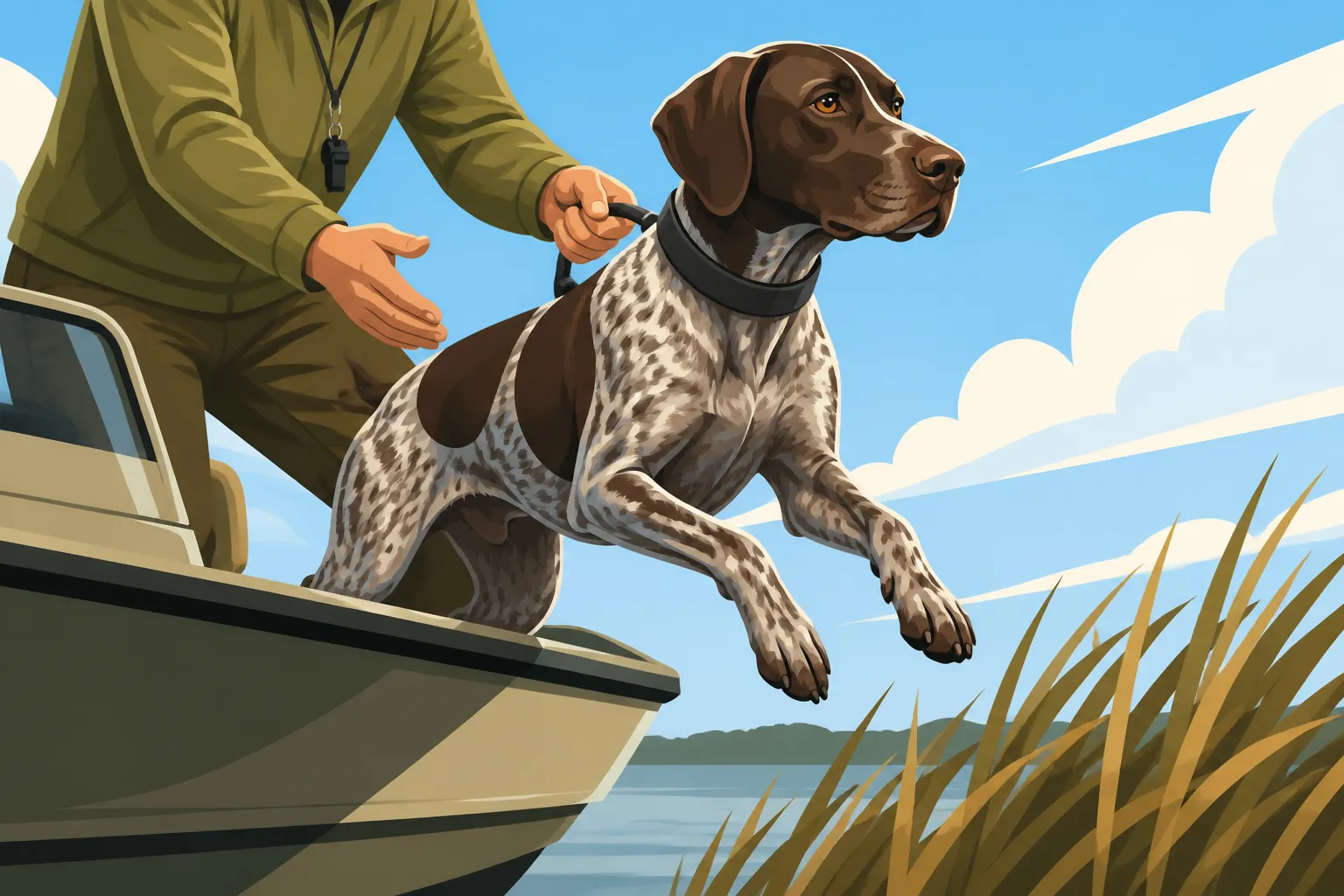
Handling a Shorthair Off a Boat
Managing an excited German Shorthaired Pointer on and off a boat can feel like trying to herd a wild current – challenging, chaotic, and sometimes downright dangerous when their instincts kick in. That boundless energy and unwavering desire to retrieve can lead to unsafe leaps or tangled situations, leaving you feeling frustrated and worried. This comprehensive guide is here to help, offering practical strategies and detailed advice to teach your GSP proper boat manners, ensuring safer and more enjoyable adventures on the water for both of you.
The Unique Challenges of Boat Handling with a German Shorthaired Pointer
Let's be real, a German Shorthaired Pointer on a boat is like a kid in a candy store that also happens to be a swimming pool with toys. Their entire being is geared towards finding birds, retrieving, and working water. This combination of high drive, keen senses, and explosive energy can make boat handling a unique endeavor, often feeling less like a leisurely cruise and more like a constant vigilance mission. Understanding these innate tendencies is the first step in managing them effectively.
Overwhelming Excitement and Drive
Anyone who lives with a German Shorthaired Pointer knows their enthusiasm is contagious, but it can also be overwhelming, especially in novel or stimulating environments like a boat on the water. The sheer sensory input—the smell of the water, the distant scent of waterfowl, the sight of a retrieve dummy, or even just the rush of air—can send their drive into overdrive. For a GSP, a boat isn't just transportation; it's a launchpad for adventure, and they are usually ready to blast off at a moment's notice. This intense focus can make them seemingly deaf to commands they would normally obey without a second thought.
Their prey drive is hardwired, and when you combine that with their love for water, a boat becomes a prime spot for their instincts to take over. You might have the most obedient dog on dry land, but put them on a boat, and suddenly, they're a blur of liver and white, ready to plunge into the lake after a leaf, a ripple, or a phantom bird. This isn't disobedience as much as it is instinct taking precedence over learned behavior, and it’s a frustration many GSP owners have faced. It’s a classic scenario where their excitement overwhelms their manners, posing a real safety risk. This is precisely why building a solid foundation of control, even in distracting environments, is so critical before ever stepping paw onto a boat. We're talking about really nailing down those "stay" and "wait" commands.
Navigating Unstable Surfaces and Confined Spaces
Unlike solid ground, a boat deck is a dynamic environment. It rocks, it sways, and the surface can be slick from water or fish slime. For a German Shorthaired Pointer, who relies on agility and balance for explosive movements in the field, this unstable footing can be a real challenge to adapt to. They might stumble, misjudge a jump, or simply feel off-kilter, which can lead to anxiety or, conversely, an overcompensation of energy as they try to regain control, making them even more prone to sudden movements. It’s not just about getting them on the boat, but about making sure they are comfortable and secure while the boat is in motion, or even just tethered at the dock.
Furthermore, boats, by their very nature, often involve confined spaces. Even a seemingly spacious fishing boat can feel cramped when you add gear, other people, and an excited, sixty-pound bundle of muscle. A GSP's natural inclination to patrol, investigate, and move freely clashes with the limited deck space, creating potential hazards. They could trip someone, get tangled in fishing lines or anchor ropes, or accidentally knock something valuable overboard. The challenge lies in teaching them spatial awareness and polite boat etiquette, even when every fiber of their being is screaming "go, go, go!" Establishing a designated "spot" where they are expected to lie down and relax is a game-changer for maintaining safety and sanity.
Essential Gear and Safety Measures for Boat Trips
Taking your German Shorthaired Pointer out on the water isn't just about fun; it's about safety. Just as you wouldn a life jacket, your GSP needs appropriate gear to ensure their well-being. Thinking ahead and investing in the right equipment can make all the difference between a stressful outing and a truly enjoyable adventure. No one wants to spend their day fishing a panicking dog out of the water or worrying about them falling overboard.
Life Vests and Safety Harnesses
Even if your German Shorthaired Pointer is an Olympic-level swimmer, a life vest is non-negotiable for boat trips. Water can be unpredictable, currents can be strong, and accidents happen. A dog can be knocked unconscious, become disoriented, or simply exhaust itself struggling against a current or trying to get back into a boat. A well-fitting life vest provides crucial buoyancy, keeping their head above water and conserving their energy. More importantly for a GSP owner, most quality life vests come with a sturdy handle on the back, which is an absolute godsend when you need to quickly lift your dog out of the water and back onto the boat. Imagine trying to haul a soaked, sixty-pound, scrambling dog back in without one—it's nearly impossible.
When choosing a life vest, look for bright colors that make your dog highly visible in the water, especially if they are primarily liver-colored and blend into dark water. Adjustable straps are key to ensure a snug, comfortable fit that won't chafe and can't be wiggled out of. A D-ring for leash attachment is also a handy feature. You'll find a wide variety of options on platforms like Amazon, so take the time to read reviews and measure your dog carefully to get the right size. Never assume one size fits all, especially with the deep chest of a German Shorthaired Pointer. Test the vest in shallow water first to make sure it doesn't impede their swimming motion and that your dog is comfortable wearing it. Starting this introduction at home, long before the boat trip, will ensure it's not a source of added stress.
Training Aids and Containment Options
Effective handling on a boat requires more than just a life vest; it demands control. This is where your land-based training transitions to the water, often with the help of specialized aids. A long line or check cord, for instance, can be invaluable during initial boat introductions or when practicing retrieves from the boat. It allows you to maintain a physical connection and prevent impulsive leaps while still giving your dog a sense of freedom. Remember, a long line isn't a substitute for training, but a tool to reinforce it. For dogs with a very high prey drive or those prone to ignoring commands when highly stimulated, a properly conditioned e-collar can provide a reliable means of communication and correction, even at a distance. However, it cannot be stressed enough: an e-collar is a nuanced tool that requires careful, consistent conditioning before it's ever used in a high-distraction environment. Improper use can ruin a dog. Check out resources from training experts like BAXTER & Bella, who often provide guidance on positive reinforcement and proper tool usage.
Beyond direct control, consider containment. A portable soft crate or a designated, non-slip mat in a specific area of the boat can serve as a "safe zone" or "kennel up" spot for your GSP. This gives them a place to settle down, out of the way, when the boat is in motion or when you need them to be calm. It also helps prevent them from pacing or getting underfoot. For younger dogs or those still learning boundaries, the security of a crate can be very reassuring, both for them and for you. The key is to teach them that this spot is a place for quiet relaxation, not punishment, and reinforce it with calm praise and occasional treats. This can be especially useful on longer trips or when the boat is docked and you're just relaxing.
Step-by-Step Training for Boat Entry and Exit
Getting your German Shorthaired Pointer comfortable with a boat is a process, not a one-time event. Rushing it can create negative associations, making future attempts even harder. The secret lies in breaking down the experience into small, manageable steps, always prioritizing positive reinforcement and your dog's comfort. Remember, consistency and patience are your best friends here.
Gradual Introduction to the Boat and Water's Edge
Begin the entire boat training process on dry land. Introduce your GSP to the boat while it's still on its trailer or parked near your home. Let them sniff it, explore it at their own pace, and offer plenty of high-value treats and calm praise. The goal is to build a positive association with the boat itself, making it seem like a fun, safe place. Don't even think about water yet. Just let them get used to the strange smells and textures.
Once they're comfortable with the boat on land, move it to the water's edge, but still keep it out of the water if possible, or at least in very shallow, calm water. Practice walking them around the boat, rewarding them for calm behavior. If your boat has a ramp, introduce that. Lay it flat on the ground first, letting them walk over it. Then, gradually raise one end, so they get used to the incline and the feeling of the ramp. Use treats to lure them up and down, making it a fun game. For boats without a ramp, simply practice stepping on and off the gunwale (the upper edge of the side of the boat) from shore, rewarding every successful, calm step. This early, positive exposure to the boat environment and the transition surfaces will pay dividends when you're ready for the real thing. It helps them build confidence in navigating new and potentially wobbly footing.
Practicing Controlled Boarding and Disembarking
Once your GSP is comfortable with the ramp or steps on land, and the boat near the water, it's time to practice controlled boarding and disembarking with the boat actually in the water. This is where your "Wait" and "Off" commands become critically important. Approach the boat on a leash, ask your dog to "Wait" before they jump on, and reward them for holding that position. Then, give a clear command like "Boat" or "Load Up" and guide them on. Reward them heavily once they're on board and settled. The same goes for getting off: never let them just leap off. Ask for a "Wait," then give an "Off" command, guiding them calmly.
Repetition is key here. Practice this sequence multiple times in a calm, distraction-free environment, like a quiet dock or a very still body of water. Use a physical leash and your body language to provide clear boundaries. If your GSP tries to rush or leap prematurely, calmly correct them and restart the process. The goal is for them to understand that you control the boarding and disembarking, not their enthusiasm. This disciplined approach not only ensures safety by preventing accidental falls or slips but also reinforces your leadership, which is vital when you're in a high-stakes environment like open water. Patience during these initial sessions will save you a lot of headaches down the line.
Managing Excitement While on the Water
The true test comes when the boat leaves the dock. Your German Shorthaired Pointer's excitement levels can skyrocket. Start with very short, calm boat rides. Don't immediately head to prime hunting grounds or a known retrieve spot. The first few trips should be purely about getting them accustomed to the motion, the sounds, and the feeling of being on the water. Keep the atmosphere calm and reassuring. Many owners find it helpful to start with a designated spot for the dog to lie down – perhaps a comfortable mat or a soft crate. Use a "Place" or "Settle" command, rewarding them for remaining calm in their spot.
Bring along some high-value, long-lasting chews or puzzle toys to redirect their energy and give them something constructive to do while waiting. This can be particularly helpful if they tend to whine or pace. Over time, as they become more relaxed during these calm cruises, you can gradually increase the duration of your trips and introduce more distractions. Only when they are consistently calm during uneventful rides should you start integrating actual hunting or retrieving activities. This systematic approach ensures that the boat itself becomes a familiar and safe environment, rather than just an immediate gateway to high-octane fun, which can lead to over-arousal and poor decisions. You want them to learn to settle before the real action begins. You might find some useful techniques for keeping a high-energy dog focused even when distractions are present in articles like Recall on a German Shorthaired Pointer That Is Locked On.
Common Scenarios and Troubleshooting
Even with the best preparation, German Shorthaired Pointers are, well, German Shorthaired Pointers. Their enthusiasm can sometimes override their manners, leading to specific challenges on the water. Knowing how to troubleshoot these common scenarios can prevent accidents and ensure everyone, including your GSP, has a better time.
The Overly Enthusiastic Jumper
This is perhaps the most common (and most dangerous) scenario with a GSP on a boat: the uncontrolled leap into the water. Whether it's after a bird, a duck, a piece of floating debris, or just pure exuberance, a sudden jump can catch you off guard, potentially causing injury to the dog or even capsizing a smaller craft. The key to preventing this is unwavering reinforcement of your "Wait" or "Stay" command. Practice this extensively on land with increasing distractions before ever attempting it on the water.
On the boat, always keep your GSP on a lead during initial stages, or use a check cord if you need a little more length for a controlled retrieve. When a bird flushes or a dummy is thrown, hold your dog firmly, asking for the "Wait" command. Reward them heavily for holding their position, even for a split second, before you give the release command to retrieve. This teaches them that you give permission to enter the water. For dogs that are truly impulsive, a properly conditioned e-collar can be invaluable for interrupting an undesirable behavior before it fully manifests, but again, only if you've done the pre-work. The goal is to instill that moment of hesitation, that split second where they check in with you before acting on instinct. Consistency here is paramount.
Retrieving from the Boat
Once your GSP understands controlled entry, retrieving from the boat can be a natural progression. This is where their instincts truly shine, but it still requires structure. When you're ready to send your dog for a retrieve, ensure the boat is in a safe location, away from heavy traffic or obstacles. Give your "Mark" command, followed by your release command ("Fetch" or "Go Back"), and allow them to enter the water. Pay close attention to their line and ensure they are moving toward the target.
Getting them back into the boat can sometimes be trickier than getting them out. This is where that sturdy handle on their life vest becomes your best friend. Guide them to the side of the boat where they are expected to re-enter. You might need to physically lift them by the handle if they struggle, especially if the boat sits high in the water. Practice this entry multiple times, rewarding them for calmly approaching the boat and allowing you to assist them. Always be mindful of the conditions; strong currents or choppy water can make retrieving and re-entry much more difficult and dangerous. For tips on refining their retrieve and delivery, you might find valuable insights in Water Retrieves With a German Shorthaired Pointer.
Post-Boat Care and Cool Down
After a fun (and likely exhausting) day on the water, your German Shorthaired Pointer needs a thorough once-over. Their short coat offers little protection against the elements, and their adventurous spirit can lead to minor injuries. First, check their paws for any cuts, scrapes, or embedded debris from climbing in and out of the boat or from the shore. Burrs, foxtails, or small splinters can easily get lodged between their toes or in their pads. Also inspect their ears thoroughly, especially if they've been swimming. German Shorthaired Pointers are prone to ear infections, and damp ears create a perfect breeding ground for bacteria. Drying their ears thoroughly with a cotton ball or soft cloth, and using an ear-drying solution, is a crucial preventative step. You can find more specific advice on this in Drying a Shorthair's Ears After Every Swim.
Finally, ensure your GSP rehydrates properly after a day of activity, even if they've been swimming. Offer fresh water liberally. Provide a quiet, comfortable place for them to rest and recover. Just like athletes, they need time to decompress and let their bodies recuperate. Their enthusiasm in the field or water often masks fatigue, and pushing them too hard without adequate recovery can lead to problems. A proper cool-down routine isn't just about comfort; it's about preventing injury and ensuring they're ready for the next adventure.
| Feature | Importance for GSP on Boat | Key Considerations |
|---|---|---|
| Buoyancy | Essential for safety, prevents drowning, conserves energy. | Full flotation, supports head above water, doesn't restrict movement. |
| Handle on Back | CRITICAL for lifting dog back into boat quickly and safely. | Sturdy, easy to grab, securely stitched, comfortable for lifting. |
| Visibility | Helps locate dog in water, especially in low light or choppy conditions. | Bright colors (neon, blaze orange), reflective strips. |
| Fit & Adjustability | Prevents chafing, ensures vest stays on, allows full range of motion. | Multiple adjustable straps (neck, chest, belly), snug but not tight. |
| Durability | Withstands saltwater, sun, and GSP's vigorous activity. | Ripstop nylon, strong buckles, reinforced stitching. |
| D-Ring for Leash | Convenient for leash attachment at the dock or on deck. | Securely attached, metal D-ring for reliability. |
| Underbelly Support | Helps distribute weight, preventing strain when lifting. | Wide, comfortable strap that doesn't cut into sensitive areas. |
Disclaimer
This article is for general informational purposes only and does not constitute professional advice. Laws, prices and regulations vary by location and change over time. Consult a qualified professional for guidance on your specific situation.