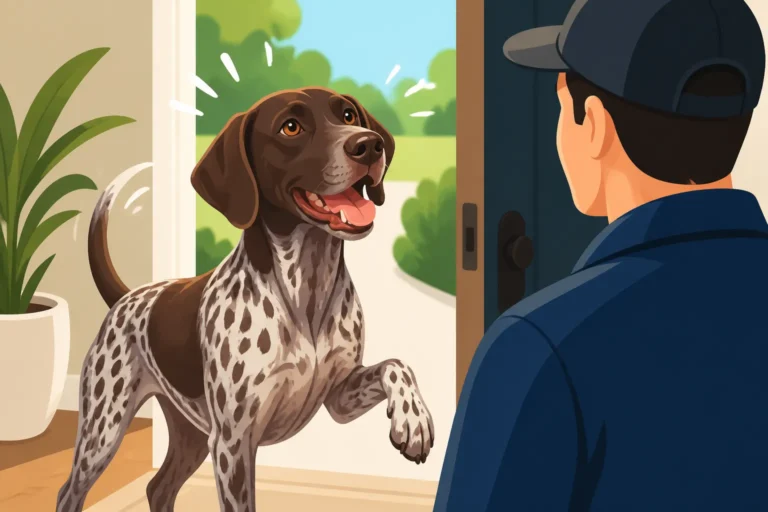
Introducing a Shorthair to a Resident Dog
Bringing a new German Shorthaired Pointer into a home where another dog already reigns supreme can feel like walking a tightrope. You're trying to balance the excitement of a new family member with the very real anxiety of disrupting your existing dog's world. This comprehensive guide will walk you through the careful steps to introduce your GSP to your resident dog, aiming for a peaceful, harmonious coexistence from day one.
Setting the Stage for a Successful First Impression
Before you even think about letting those two beautiful creatures meet face-to-face, a lot of groundwork needs to be laid. This isn't just about the moment of introduction; it's about setting up an environment where both dogs feel secure, respected, and ready to accept a new dynamic. Rushing this initial phase is one of the biggest pitfalls, leading to unnecessary stress, territorial squabbles, and a much longer path to peace.
Understanding Your Resident Dog's Temperament
This might seem obvious, but it's critically important to honestly assess your current dog. Is Buster, your beloved Labrador, a social butterfly who happily greets every dog at the park with a wagging tail and an open invitation to play? Or is he more of a reserved, "I prefer my own space" kind of guy who tolerates other dogs but doesn't actively seek them out? Maybe he’s even a bit grumpy with newcomers, preferring humans to canine companions. Your resident dog's baseline personality will dictate much of your strategy.
Consider his past experiences. Has he lived with other dogs successfully before? How does he react when a strange dog enters his personal space, like on a walk or at the vet's office? Signs of stress can be subtle: a stiff body, lip licking, yawning when not tired, turning his head away, or a tightly tucked tail. If your resident dog shows any signs of anxiety or aggression towards new dogs, you'll need to proceed with extreme caution and possibly even consult a professional dog trainer or behaviorist before the GSP even sets a paw in your home. Preparing your resident dog mentally might involve giving him extra attention, special treats, and reinforcing his "safe spaces" in the home so he feels secure in his established routine.
Preparing Your German Shorthaired Pointer
Just as you've assessed your resident dog, you need to consider your German Shorthaired Pointer's background. Is this a GSP puppy, full of boundless, sometimes oblivious, energy? Or is it a rescue adult with an unknown history, perhaps with past experiences that make them shy or overly boisterous around other dogs? Their prior socialization experiences will heavily influence how they approach a new dog. A GSP's natural exuberance can sometimes be misinterpreted as rude by a more reserved dog, leading to conflict.
Before the meeting, ensure your GSP has had a recent vet check and is up-to-date on all vaccinations and parasite prevention. This is not only for their health but also for the health of your resident dog. Basic obedience is also a huge asset. Can your GSP reliably sit, stay, and come when called, especially in distracting environments? If not, a little pre-introduction training can go a long way. This could involve enrolling in an online program, like those offered by BAXTER & Bella, to brush up on foundational skills. Remember, a tired GSP is a much more manageable GSP. Ensure they've had a good, long exercise session—a run, a vigorous game of fetch, or even some stimulating Puzzle Feeders and Scent Games for a Shorthair —before any planned introduction. This helps burn off excess energy that might otherwise translate into pushy or overwhelming behavior.
Creating a Neutral Meeting Ground
This is arguably one of the most critical steps, and it’s where many introductions go wrong. Your home is your resident dog's castle, his territory. Introducing a new dog directly into his domain can trigger territorial instincts, leading to defensiveness and potential conflict. Instead, aim for a completely neutral location for the first few encounters. This could be a quiet local park, a friend's fenced yard that neither dog has claimed as their own, or even a deserted hiking trail. The key is that it's a space where neither dog feels the need to defend resources or territory.
Avoid dog parks, as these can be overwhelming and unpredictable environments for a first meeting. The goal is a controlled, low-stress interaction. If an outdoor space isn't feasible due to weather or availability, consider asking a friend if you can use their living room, cleared of all toys and beds, for a very brief, supervised encounter. The less "stuff" around that could be seen as a resource to guard, the better. Always ensure both dogs are on leashes and that you have plenty of distance and space to move them apart if needed.
The Art of the Controlled Introduction
With the preliminary groundwork laid and mental preparations made, it's time to facilitate the actual meeting. This phase is all about slow, controlled exposure, allowing the dogs to acknowledge each other without direct pressure or forced interaction. Think of it as a series of gentle steps, not one giant leap. Patience is your most valuable tool here.
Parallel Walking: The "Non-Meeting" Meeting
The parallel walk is a tried-and-true method for a reason. It allows dogs to become aware of each other's presence, to smell each other on the breeze, and to observe each other's movements from a safe distance, all without the pressure of direct eye contact or nose-to-nose greetings. You and your resident dog, and your partner or a friend with your GSP, should walk side-by-side, maintaining enough distance so that both dogs are relaxed and comfortable. This might be twenty feet, fifty feet, or even across a street.
The key is to keep moving forward. Don't stop to let them stare or fixate on each other. The goal is for them to learn that the other dog's presence isn't threatening. As they seem more comfortable, you can gradually decrease the distance between you, still walking in parallel. Offer calm praise and small, high-value treats to both dogs when they ignore the other or show calm, relaxed body language. The dogs should be focused on their handlers, not each other. If either dog shows signs of tension—stiffening, growling, lunging, or excessive pulling—increase the distance immediately. Take your time with this step; you might need several parallel walks over a few days before progressing. How Far a German Shorthaired Pointer Runs in an Hour might give you an idea of how much distance you can cover to make these walks productive.
Managed Scent Swapping and Crate Introductions
Before they ever clap eyes on each other, scent swapping is a fantastic way to introduce them indirectly. Dogs gather an enormous amount of information through smell. Take a blanket or a toy that your resident dog has used and place it in your GSP’s area, and vice versa. Let them sniff and investigate at their leisure. Observe their reactions: a relaxed sniff is good; growling, fearful avoidance, or attempts to destroy the item are red flags. This helps them acclimatize to each other's unique scent signature without the visual or physical pressure of a direct meeting.
When you bring your GSP home, having separate, secure spaces for both dogs is paramount. This is where crates shine. Place crates in separate rooms or at least far enough apart that they can't see each other but can still hear and smell each other. For example, your GSP could be crated in the living room while your resident dog relaxes in the bedroom. Then, you can swap them, allowing each dog to investigate the other's "space" and scent. This allows for controlled, positive exposure. Products found on Amazon, like durable crates and cozy beds, can be invaluable here for creating these safe, personal zones for each dog. Remember, Crating a Shorthair That Has Energy to Burn is also an effective way to manage their energy during alone time.
Supervised On-Leash Greetings
Once the parallel walks are consistently calm and the scent swapping yields no negative reactions, you can attempt brief, controlled on-leash greetings in your chosen neutral space. Keep these interactions extremely short—just a few seconds at first. Two handlers are essential, one for each dog, ensuring a loose leash (no tension, but ready to intervene) and that both dogs are calm. Allow a brief sniff, perhaps a quick sniff of the rear end, and then calmly walk them away from each other. The goal is to end on a positive note, before any tension has a chance to build.
Watch their body language intently. Look for soft eyes, relaxed mouths, loose tails (not tucked or stiffly wagging), and fluid body movements. Avoid direct head-on approaches, as these can be perceived as confrontational. Sideways or arcing approaches are generally better. Again, reward calm behavior with praise and treats. Gradually increase the duration of these greetings as long as both dogs remain relaxed. If you notice any stiffness, growling, raised hackles, or attempts to lunge, immediately separate them and go back to parallel walking or scent swapping. It's always better to take a step back than to push forward too quickly and create a negative association.
Here's a quick comparison of effective vs. ineffective introduction practices:
| Effective Practices | Ineffective Practices |
|---|---|
| Neutral Territory First | Home First (Resident dog's turf) |
| Parallel Walks | Immediate Face-to-Face |
| Scent Swapping | No Scent Introduction |
| Loose Leashes | Taut Leashes (Creates tension) |
| Short, Positive Interactions | Long, Unsupervised Meetings |
| Calm, Confident Handlers | Anxious, Hesitant Handlers |
| Separate Resources | Shared Food/Toys Immediately |
| High-Value Rewards for Calmness | Ignoring Calm Behavior |
| Supervised, Brief Play Sessions | Uncontrolled Rumbles |
| Consistent Structure/Routine | No Clear Expectations |
Integrating Them Into the Household Routine
Congratulations, you've made it past the initial introductions! But the work isn't over. The real challenge often lies in integrating them smoothly into daily life, ensuring that both dogs feel secure and that peace is maintained long-term. This requires consistent management, continued training, and a keen eye for subtle signals.
Establishing Separate Spaces and Resources
Even after successful initial introductions, it is absolutely vital to establish separate spaces and resources for each dog within your home. This cannot be overstated, especially with a breed as keen on resources as a German Shorthaired Pointer. Each dog should have their own food bowl, water bowl, bed, crate, and toys. Feed them in separate rooms, or at least far enough apart that they can't see or reach each other while eating. This prevents potential resource guarding, which can lead to fights and unravel all your hard work.
Their resting areas should also be distinct. Crates can be a lifesaver here, providing a safe, personal den for each dog where they can retreat and be undisturbed. You can find excellent quality crates and comfortable beds on Amazon that will stand up to a GSP's energy. Even if they become the best of friends, maintaining separate feeding stations and giving them individual downtime in their own spaces will go a long way in preventing tension. Remember, Whether Two Shorthairs Are Easier Than One depends heavily on how well you manage these dynamics.
Consistent Training and Continued Exercise
A well-exercised and well-trained German Shorthaired Pointer is a much calmer and more compliant GSP, which is crucial when integrating them with another dog. These are high-energy dogs, and if they're not getting enough physical and mental stimulation, that pent-up energy can manifest as unruly behavior, overwhelming play, or even aggression towards their housemate. Commit to providing ample Ninety Minutes of Real Exercise for a Shorthair daily, and supplement that with mental enrichment like puzzle toys, training sessions, or scent work.
Continue to work on individual obedience with both dogs. This means separate training sessions where each dog gets your undivided attention and reinforces their bond with you. Then, you can gradually introduce joint training sessions, starting with simple commands like "sit" and "stay" with distance between them, rewarding them for maintaining focus despite the other dog's presence. The Structure a German Shorthaired Pointer Needs Daily is not just about keeping them out of trouble; it's about building confidence and good habits. If you need a refresher or want to introduce new skills, online platforms like BAXTER & Bella can offer structured courses that you can do at your own pace, ensuring both dogs learn to respect boundaries and cues.
Recognizing and Managing Conflict
Even with the most careful introduction and ongoing management, moments of tension can arise. It's crucial to be vigilant and learn to "read" your dogs' body language. Subtle signs of discomfort or impending conflict include:
- Stiffening: A dog becomes rigid, tail held still.
- Hard Stare: Direct, unwavering eye contact.
- Lip Licking / Yawning: Out of context, these are stress signals.
- Whale Eye: The whites of their eyes are visible.
- Growling / Snapping: Obvious warnings that should never be ignored or punished, but rather heeded as a sign to intervene.
- Resource Guarding: One dog becoming possessive over a toy, bed, food, or even your attention.
If you see these signs, calmly and immediately separate the dogs. Don't yell or punish, as this can escalate the tension and make future interactions worse. Instead, redirect their attention, lead them to separate areas, or distract them with a sudden noise. Your role is to be a consistent, calm leader who manages their environment to prevent conflict. Never leave newly introduced dogs unsupervised, especially for the first several weeks or even months. Gradually increase supervised time, always being ready to step in. If serious aggression occurs, or if you feel overwhelmed, do not hesitate to seek help from a certified professional dog trainer or veterinary behaviorist. Their expertise can be invaluable in navigating complex canine social dynamics and ensuring Reading a German Shorthaired Pointer's Stress Signals correctly to maintain a peaceful home.
Disclaimer
This article is for general informational purposes only and does not constitute professional advice. Laws, prices and regulations vary by location and change over time. Consult a qualified professional for guidance on your specific situation.