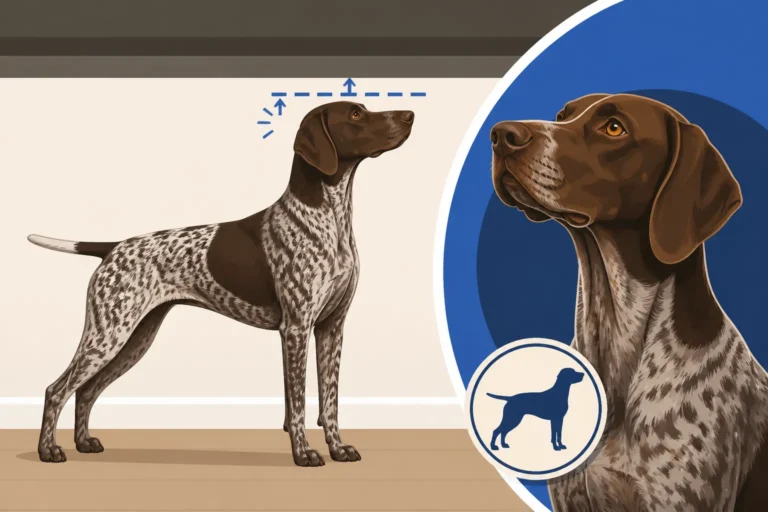
Whether a Vizsla Is Calmer Than a German Shorthaired Pointer
A Vizsla may seem calmer than a German Shorthaired Pointer in some homes, but breed labels alone won’t predict which dog will settle beside you after a walk. Both are athletic, people-oriented hunting breeds that need more than a quick trip around the block. This guide compares their energy, indoor behavior, training needs, and the household routines that make a genuine difference.
Is a Vizsla Usually Calmer Than a German Shorthaired Pointer
“Calmer” can mean different things: less running, less excitement at the door, a better off-switch indoors, or simply a dog that stays close. A Vizsla may feel calmer to one owner because it tends to be very people-focused. A German Shorthaired Pointer may feel calmer to another because its individual dog is less clingy or more content with a predictable routine. Neither breed is reliably low-energy.
Compare the kind of energy, not just the amount
German Shorthaired Pointers are bred to work across varied terrain, search widely, and switch between pointing, retrieving, and tracking. That background can show up at home as a dog that scans the environment, reacts quickly to movement, or invents an activity when its needs have not been met. Some Shorthairs are especially intense, while others are comparatively easy to live with when their routines suit them.
Vizslas are also built for sustained activity, and many are enthusiastic runners and sporting dogs. Their energy can look different: instead of ranging farther away, a Vizsla may stay close to its person, shadow them around the house, and ask for interaction. That closeness can be mistaken for calmness, even when the dog is restless, under-stimulated, or struggling to relax alone.
The comparison is less “Which breed is lazy?” and more “What does this dog do when it needs something?” A Shorthair might patrol the windows or bring you a toy. A Vizsla might lean against your leg, follow you from room to room, or whine for company. Either behavior can be demanding, even if it looks less boisterous than a dog racing around the room.
For a broader look at differences in build, background, and temperament, see The German Shorthaired Pointer Against the Vizsla. It helps to remember that breed tendencies describe patterns, not guarantees about an individual dog.
A useful comparison of everyday behavior
| Trait | German Shorthaired Pointer | Vizsla | What it means at home |
|---|---|---|---|
| Exercise needs | High; often thrives on sustained physical activity and purposeful work | High; also needs regular exercise and engagement | Neither is a sensible choice for a mostly sedentary routine |
| Working style | Often ranges, searches, and explores | Often works closely with its person | A Vizsla may look less independent without being less energetic |
| Indoor settling | Depends heavily on training, age, and daily routine | Also depends on training, age, and routine | Teach both breeds how to rest rather than waiting for maturity to solve it |
| Human attachment | Often affectionate and connected | Frequently very people-oriented and physically close | A close-following dog can still be anxious or under-stimulated |
| Common challenge | Strong hunting interests, excitement, or self-directed activity | Clinginess, sensitivity, or difficulty being alone | Choose for the behavior you can manage, not the stereotype |
The table is a starting point, not a ranking. A calm adult from an active line may be easier to live with than a young dog from either breed. Likewise, a dog that has been taught to settle may seem “calmer” than a dog with less drive but no routine or boundaries.
Why Some Dogs Seem Easier to Settle Indoors
A dog’s ability to relax is shaped by more than miles covered. Exercise, sleep, training, age, health, and the household’s daily rhythm all matter. If a dog is constantly wound up, adding more intense activity can sometimes create a fitter dog who is still restless. A balanced plan includes movement, mental work, rest, and calm habits.
Exercise helps, but exhausting a dog is not the whole plan
Both breeds need substantial regular activity, but their needs vary with age, health, conditioning, and individual temperament. A young Shorthair that has been sprinting around a fenced yard may still need a structured walk, scent work, or training. A Vizsla that ran beside its owner may still want to engage with the family afterward. Exercise should meet the dog’s needs without turning every day into a competition to burn off more energy.
A useful routine mixes activities. A brisk walk or safe run may provide physical exercise; short obedience sessions, scent games, retrieving, and exploring new places add mental engagement. Some days can include more demanding work, while others focus on relaxed leash walking and quiet time. For ideas on building an appropriate routine, The Two Hours a Day a German Shorthaired Pointer Needs and Mental Work That Tires a Shorthair Out offer useful starting points.
It is also important to build exercise gradually. Puppies and adolescents are still developing, so repetitive, high-impact running is not automatically the best way to tire them out. If you are unsure what activity suits your dog’s age or health, ask your veterinarian. For adult dogs, notice how the dog behaves later in the day: a healthy routine should leave them satisfied, not sore, frantic, or unable to switch off.
Teach an off-switch instead of waiting for one
Dogs do not automatically understand that the end of a walk means it is time to rest. If every moment of quiet is followed by a new game, attention, or another trip outside, a dog can learn to keep asking for activity. A simple settle routine can help: offer a comfortable resting spot, reward the dog for lying quietly, and keep the household calm while the dog learns what downtime feels like.
For example, after a morning walk, you might give your dog water, take a few minutes for a calm sniffing game, and then guide them to a bed while you make breakfast. At first, reward even brief moments of relaxed behavior. Gradually build the time. This is not about forcing a dog to be still for hours; it is about helping an active dog learn that resting is part of the daily rhythm.
Food puzzles or scent activities can help occupy a dog without escalating play. If you need practical enrichment supplies or food rewards, Chewy is one place owners may look for puzzle feeders and training treats. Choose items suited to your dog’s size and chewing style, supervise new toys, and count treats as part of the overall diet.
The Differences Owners Notice in Real Life
A breed may have plenty of energy and still behave quite differently from another breed. The everyday friction often comes from attachment, sensitivity, prey interest, and how a dog handles being left alone. These traits can matter as much as exercise when you are deciding which dog will fit your household.
A Vizsla’s closeness can feel calm or demanding
Many Vizslas want to be near their people. That can make them seem easier to guide around the house: they check in, follow their owner, and may be highly responsive to attention. For a person who wants a close companion, that connection can be lovely. For someone who needs a dog to spend long stretches alone, the same tendency can create a real challenge.
A dog that lies against you while you work is not necessarily relaxed if it becomes distressed as soon as you leave the room. Watch for patterns such as persistent whining, pacing, destructive behavior, or an inability to settle when separated. These signs should not be dismissed as a breed being “dramatic.” Build alone-time skills gradually, and seek professional support if distress is significant. Building a Shorthair's Tolerance for Being Alone describes practical steps that can also help owners thinking about separation skills more generally.
Shorthairs can be affectionate too, but some are more inclined to investigate the surroundings or follow a scent than to stay glued to a person. This is not a fixed rule. A dog’s breeding, early experiences, and training all contribute to how much independence or closeness you see.
A Shorthair’s drive may be more visible outside
German Shorthaired Pointers often bring strong hunting interests into ordinary walks. Birds, rabbits, and scent trails can quickly become more compelling than a person holding a leash. That can make the dog feel intense or difficult to manage, especially in a neighborhood with wildlife. Reliable recall and leash skills take practice; a high-drive dog should not be trusted off leash in an unsafe area simply because it behaves well at home.
Vizslas are hunting dogs too, so they are not exempt from chasing, scanning, or becoming absorbed in scent. The difference may be more about the individual dog’s working style than the breed name. If you plan to hike, run, or spend time near wildlife, train for those situations deliberately and use a leash or long line where needed.
For either breed, one walk a day may not be enough if it is short, repetitive, or offers little chance to explore. Why One Walk a Day Fails a German Shorthaired Pointer explains why simply checking off a walk does not always meet an active dog’s needs. A long line, sniff breaks, and short training exercises can make an outing more satisfying without turning it into nonstop running.
Choosing the Better Fit for Your Household
The best match depends on what you want from a dog and what your ordinary week actually looks like. It is easy to imagine weekend hikes and open fields; it is harder to plan for a rainy Tuesday, a busy workday, or a young dog that needs help learning to rest. Be honest about the routine you can sustain.
Match the dog to your schedule and expectations
If you want a close, affectionate companion and have time to build independence, a Vizsla may appeal to you. If you enjoy training, outdoor work, and managing a dog with strong environmental interests, a German Shorthaired Pointer may be a better fit. Neither breed is a low-maintenance option simply because one may appear more affectionate or less likely to range away.
Consider the hours the dog will be alone, your access to safe exercise areas, and whether you can provide training consistently. A full-time work schedule does not automatically rule out either breed, but it does require a realistic plan for exercise, company, and enrichment. Whether a Shorthair Suits an Owner Who Works Full Time can help you think through that commitment.
If you are choosing a puppy, ask the breeder about the parents’ temperaments and how their dogs behave indoors, not only how they perform in the field. If adopting an adult dog, ask about the dog’s history with being alone, settling in a home, living with other animals, and responding to wildlife. Meet the dog more than once when possible, and look for behavior that matches your household rather than relying on a general breed description.
Age and routine can change the picture
Puppies and adolescent dogs are often much harder to live with than mature adults. They have limited impulse control, need frequent training, and may struggle to rest even after an active day. A young Vizsla that follows you everywhere may not yet know how to relax independently; a young Shorthair may be learning that birds and scents do not always mean it can dash off.
Many dogs become easier to manage as they mature, but maturity does not remove their basic exercise and training needs. Owners sometimes expect a dog to “grow out of” high energy and are disappointed when the dog simply becomes a stronger, more conditioned adult. Settle skills, recall, calm greetings, and comfortable alone time are habits to teach, not milestones to wait for.
When comparing dogs, think about the specific problem you most want to avoid. If you cannot manage a dog that is strongly attached and struggles alone, ask careful questions about separation behavior. If you cannot safely manage a dog that chases wildlife or pulls toward birds, focus on leash control and prey drive. The Age a German Shorthaired Pointer Finally Settles offers more context on how age may affect a Shorthair’s behavior, while still leaving room for individual differences.
A practical way to prepare is to write down a weekday schedule before choosing. Include exercise, training, meals, rest, and time alone. You can also plan low-key options for bad weather, such as indoor scent games or food puzzles. Chewy may be useful for finding suitable enrichment items, but the important part is using them safely and pairing them with training rather than expecting a toy to replace interaction.
For food-based training, measure rewards into the dog’s daily ration or adjust meals so treats do not quietly add up. Chewy may also be a place to browse training treats that suit your dog’s needs; check ingredients and introduce new foods gradually, especially if your dog has a sensitive stomach. If a dog suddenly becomes unusually restless or less able to settle, consider whether discomfort, illness, or a change in routine could be involved and consult a veterinarian as appropriate.
Disclaimer
This article is for general informational purposes only and does not constitute professional advice. Laws, prices and regulations vary by location and change over time. Consult a qualified professional for guidance on your specific situation.