Whether a German Shorthaired Pointer Is a One Person Dog
A German Shorthaired Pointer may follow one person from room to room, but that doesn’t automatically make the dog a one-person dog. The breed is often affectionate and people-focused, and its energy and training needs can make that closeness feel intense. This guide explains why a Shorthair may choose a favorite, how to build a bond with the whole household, and when clinginess needs extra attention.
Is a German Shorthaired Pointer Really a One Person Dog
Why Shorthairs often pick a favorite
German Shorthaired Pointers are bred to work closely with people. In the field, they need to notice a handler’s direction, range out to search, and stay responsive across changing conditions. At home, that working partnership can look like shadowing one person, checking where they are, or settling close to the family member who most often provides exercise and training.
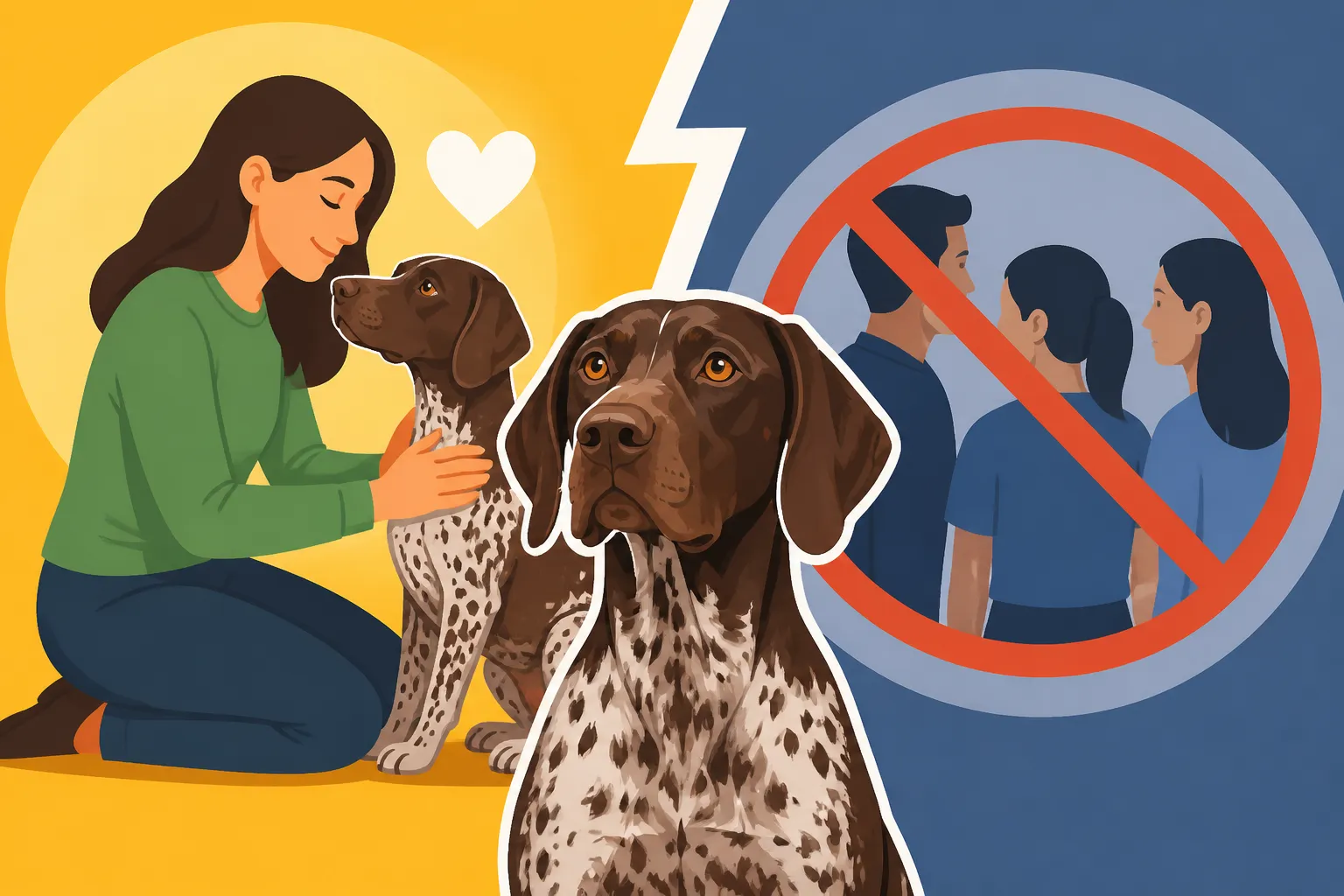
A favorite person is often the one who does the most predictable, rewarding things: prepares meals, clips on the lead, practices recall, takes the dog hunting, or invites it onto the sofa. This isn’t necessarily a sign that the dog loves everyone else less. It may simply reflect who has built the strongest routine and the clearest communication.
The breed’s affectionate side can also be very physical. Some Shorthairs lean against their people, rest their chin on a knee, or move from room to room behind them. If yours follows you into the bathroom, it can feel like you’ve acquired a furry shadow. For many dogs, though, this is ordinary social behavior rather than evidence of a problem. For more on that close-quarters personality, see The Velcro Side of a German Shorthaired Pointer.
How routines and temperament shape the bond
Individual personality matters. One Shorthair may greet every visitor as a potential best friend, while another takes time to warm up and stays closest to familiar people. Early experiences, socialization, past changes in home, and the dog’s own temperament all influence how it responds to different household members.
Routines matter, too. If one adult handles nearly every walk and training session, the dog may look to that person first, especially when excited or unsure. A child who plays with the dog but doesn’t provide calm guidance may be loved enthusiastically without becoming the person the dog seeks out for reassurance. Likewise, a partner who only appears at high-energy moments may become associated with excitement rather than settling.
A German Shorthaired Pointer’s strong attachment is easiest to live with when the household agrees on basic expectations. Decide together which cues to use, how to reward calm behavior, and what the dog is allowed to do around furniture and doors. Consistency helps the dog understand that several people can be trusted and that it doesn’t need to monitor one person constantly.
How to Help Your Shorthair Bond With the Whole Household
Share the rewarding parts of daily care
If your dog gravitates toward one person, don’t try to force a dramatic change. Instead, give other household members regular, positive roles. One person can prepare breakfast, another can take the lead on a sniff-filled walk, and someone else can practice a short recall game in the yard. Keep the interactions enjoyable and appropriate for each person’s experience.
Training is an especially useful way to build trust. Ask each adult to practice familiar cues such as “come,” “sit,” or going to a mat, rewarding the dog for responding calmly. Start in a quiet room before asking for the same behavior in a busier setting. Short, successful sessions are more useful than a long session that leaves the dog frustrated or overstimulated.
Children should not be asked to manage a powerful, excited dog on their own. Adults can supervise simple activities, such as tossing a treat for a hand-target game or helping scatter kibble for a sniffing search. If you use food puzzles or sniffing toys, choose options that suit your dog’s size and chewing habits. Chewy is one place owners may browse for enrichment supplies, but the activity and safe supervision matter more than the retailer.
Create calm, positive time with more than one person
A bond isn’t built only through high-energy play. Quiet companionship counts, too. A family member can sit nearby while the dog rests, offer a chew in an appropriate space, or calmly reward the dog for settling on a bed. This teaches the Shorthair that being with different people can feel safe and comfortable, not just exciting.
Make handovers gradual. If the favorite person usually takes every walk, have another adult join them for part of the route. Later, that person can take a familiar, short walk alone. For a dog that seems uncertain, keep the setting predictable and begin with a time of day when it is already relaxed. Don’t turn every interaction into a test of whether the dog will choose someone new.
A household’s lifestyle also affects how easy this is. The breed needs meaningful exercise, training, and companionship; simply having several people at home doesn’t guarantee those needs are met. If you’re deciding whether the breed’s daily demands fit your family, The Household a German Shorthaired Pointer Actually Fits and The Two Hours a Day a German Shorthaired Pointer Needs offer useful context.
Build engagement without making one person the only source of fun
A dog that relies on one person for every activity may struggle when that person is busy, away, or unwell. Spread enjoyable, low-pressure activities across the household. A short scent search, a few minutes of reward-based training, or a quiet decompression walk can give another person a natural way to connect.
For indoor enrichment, hide a few pieces of the dog’s daily food around a safe room and invite someone else to help the dog search. A food puzzle can also occupy a dog while its favorite person is in another part of the home. If you’re selecting one, Chewy may offer a range of puzzle and sniffing products to compare; check that the design matches your dog’s chewing style and supervise its first uses.
Keep expectations realistic. Your Shorthair may continue to have a preferred person even after becoming comfortable with everyone. The goal is not to make affection perfectly equal. It is to help the dog feel safe, responsive, and content with different trusted people.
Favorite Person or Separation Problem
What ordinary attachment can look like
Following a person from room to room, choosing to nap nearby, or getting especially excited when that person returns can all be normal. A dog can be strongly attached and still settle when left with another familiar adult. It may also be able to rest alone for a while, enjoy a chew, and recover from everyday changes in routine.
Look at the whole pattern rather than one behavior. Does the dog relax when the favorite person steps outside briefly? Can another adult feed or walk it without a major struggle? Does it return to normal after a greeting? Those details help distinguish a close bond from distress that affects the dog’s wellbeing.
A Shorthair who wants to be near people may need thoughtful practice with alone time, even if it is not showing a serious anxiety problem. Build independence in small steps: reward the dog for settling on a bed while you move around the room, then briefly step out of sight and return before the dog becomes upset. For a more structured approach, see Building a Shorthair's Tolerance for Being Alone.
Signs that deserve closer attention
A dog that cannot cope when separated may bark or howl persistently, pace, pant, drool, scratch at doors, attempt to escape, or damage areas around exits. Some dogs refuse food when alone or appear unusually distressed before the person has even left. A single chewed cushion doesn’t prove separation anxiety, but repeated distress tied to departures is worth taking seriously.
Avoid punishing the dog for damage or vocalizing after the fact. The behavior may be happening because the dog is distressed, not because it is being spiteful. Punishment can make departures feel more frightening and won’t teach the dog how to relax. A camera can sometimes help you understand whether the dog settles after you leave or remains upset, but it should not replace professional guidance when the distress is significant.
If the behavior is new, severe, or getting worse, talk with your veterinarian. Changes in behavior can have medical or environmental contributors, and a veterinarian can help determine what support is appropriate. A qualified reward-based trainer or veterinary behavior professional may help create a gradual plan. Avoid deliberately leaving a panicked dog alone for longer periods in the hope it will simply get used to it.
Help the dog cope with ordinary separations
Practice when you are not rushed. Start with brief, easy separations within the home. Give the dog a comfortable resting area, then step behind a gate or leave the room for a moment. Return calmly while the dog is still coping. Gradually adjust the time and distance based on the dog’s response rather than following a fixed schedule.
A stuffed food toy or chew can be useful for some dogs, but it is not a cure for panic. If the dog ignores food when alone or becomes distressed as soon as the door closes, make the practice easier and get professional advice. Chewy can be a convenient place to look for food toys and chews, but choose products appropriate to your dog and avoid leaving an item unsupervised if you’re unsure how safely the dog uses it.
If the dog is comfortable with another household member, that person can help provide company during early practice. Keep the handoff calm and familiar: a short walk, a settled rest in a known room, or a simple scent game may be easier than an abrupt change in routine. For more ideas that meet a high-energy dog’s need for purposeful activity, see Mental Work That Tires a Shorthair Out.
Making the Breed Work for Your Household
When a favorite person is not a problem
There’s no need to correct a dog simply for preferring one person. If the Shorthair is relaxed with other trusted people, responds to them, and copes with ordinary separations, a favorite may just be part of its personality. The more useful question is whether the dog can function comfortably with the whole household.
It also helps to be honest about the family’s routine. A German Shorthaired Pointer that spends most of the day with one person may naturally become especially tuned in to that person. That closeness can be lovely, but it shouldn’t mean one adult is solely responsible for exercise, training, and companionship every day. Sharing those jobs can help both the dog and the person it shadows.
If there are cats or other dogs at home, affection for people doesn’t tell you everything about how the Shorthair will behave with them. Introductions, supervision, and management matter. Related guides include Whether a Shorthair Lives With a House Cat and Introducing a Shorthair to a Resident Dog. If you’re considering a quieter, non-hunting home, Whether a German Shorthaired Pointer Suits a Non Hunting Home can help you think through the breed’s needs.
A practical plan for the first few weeks
Use a simple household plan to distribute care without overwhelming the dog:
- Choose shared cues. Agree on consistent words for everyday requests, such as coming when called or settling on a bed.
- Rotate manageable tasks. Let different people handle meals, short walks, calm play, and brief training sessions.
- Reward relaxed behavior. Notice and reward the dog when it settles near someone other than its favorite person.
- Practice small separations. Build alone-time skills gradually, staying below the point where the dog becomes distressed.
- Track what happens. Note when the dog settles, when it becomes uneasy, and which routines make transitions easier.
- Get help when needed. If there is persistent panic, destructive escape behavior, or sudden change, consult a veterinarian and an appropriately qualified behavior professional.
A German Shorthaired Pointer may always have a special person. That doesn’t mean it cannot form warm relationships with other people or learn to be comfortable when its favorite is unavailable. Shared routines, calm training, and realistic expectations can turn a one-person-looking attachment into a secure household bond.
Disclaimer
This article is for general informational purposes only and does not constitute professional advice. Laws, prices and regulations vary by location and change over time. Consult a qualified professional for guidance on your specific situation.