Whether a Wirehair Handles Cold Better Than a Shorthair
A German Shorthaired Pointer shivering on a windy walk can make winter outings stressful, especially when a German Wirehaired Pointer seems perfectly comfortable beside them. The Wirehair’s harsher coat often gives it an advantage in cold, wet conditions, but neither dog is automatically suited to every winter day. This guide explains what coat type can—and cannot—tell you, and how to keep either dog comfortable.
How the two coats handle cold
Why a Wirehair often has the edge
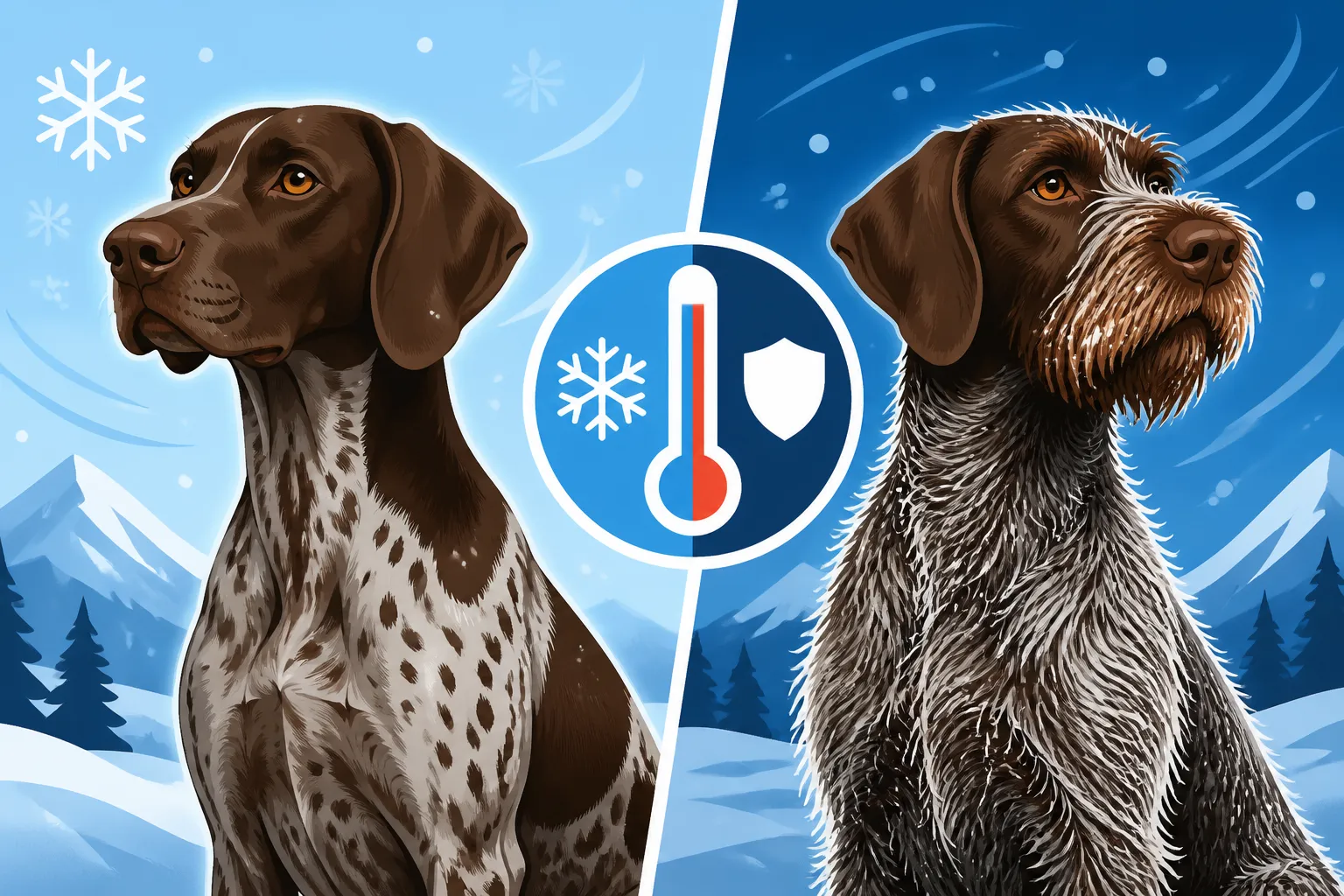
The German Wirehaired Pointer’s coat is typically harsh and wiry, with a dense undercoat that can add insulation. Its furnishings—such as the beard and eyebrows—also give it a noticeably different appearance from the German Shorthaired Pointer. In general, that coat can provide more protection from cold air, wind, and damp cover than a Shorthair’s close-lying coat.
That advantage can matter when a dog is moving through chilly fields or working in light rain. A Wirehair may stay comfortable longer while actively moving, particularly if it has had time to acclimate to the season. Still, a rough coat is not a substitute for shelter or attentive handling. Wind, wet fur, prolonged exposure, and long stretches of inactivity can make a Wirehair cold too.
Coat differences are only one part of what separates these related breeds. If you’re weighing the broader differences in build and working style as well as winter comfort, The German Shorthaired Pointer Against the Wirehair offers a useful comparison.
Why a Shorthair can feel the cold sooner
The German Shorthaired Pointer’s coat is short and dense, but it provides less insulation than the Wirehair’s typical coat. That doesn’t mean every Shorthair is uncomfortable outdoors in cool weather. A fit, healthy dog that is running and moving may stay warm in conditions that would leave it chilly while standing still. The problem often shows up during pauses: waiting in a truck, sitting beside you on a walk, or drying off after retrieving from cold water.
Shorthairs can also be exposed to wind and moisture more quickly because their coat offers less of a barrier. A dog that seems fine while charging through cover may begin shivering once it stops. Owners sometimes mistake that change for stubbornness or excitement, but it can be a sign the dog needs warmth, movement, or a break indoors.
For a closer look at how the breed’s coat and body affect weather comfort, see Cold and Heat on a Shorthair With Almost No Coat. The Shorthair’s coat is also water resistant, but water resistance doesn’t mean waterproof or warm when soaked; The Water Resistant Coat a Shorthair Carries explains that distinction.
The coat is not the whole answer
Individual dogs vary. Age, body condition, health, coat density, recent grooming, and how gradually a dog has adjusted to colder weather can all change how well it tolerates the same conditions. A lean, elderly, sick, or very young dog may need extra protection compared with a healthy adult that has been conditioned gradually.
Activity changes the picture too. A dog running continuously generates body heat. A dog waiting in a blind, riding in an unheated vehicle, or standing at the water’s edge has fewer opportunities to stay warm through movement. That’s why “my dog was fine on the hike” doesn’t always predict how they’ll feel during a long, still break afterward.
| Situation | Wirehair tendency | Shorthair tendency | Practical response |
|---|---|---|---|
| Active movement in cool, dry weather | Often better insulated | May be comfortable while moving | Watch the individual dog, not just the breed |
| Windy or damp conditions | Coat may offer more protection, but can still get wet | More likely to need an added layer | Shorten exposure and provide a dry place to rest |
| Waiting in a vehicle or blind | Can become cold when inactive | Often loses warmth sooner | Use a warm, dry resting area and check often |
| Cold-water retrieving | Coat advantage is limited once wet | Can lose warmth quickly | Keep sessions appropriate and dry the dog promptly |
| Snow and rough ground | Furnishings may collect debris or ice | Exposed skin and paws still need attention | Check feet, belly, and coat after outings |
When cold becomes a problem
Look for changes in behavior, not just shivering
Shivering is an obvious signal, but it isn’t the only one. A cold dog might become reluctant to keep walking, tuck its tail, hunch its body, lift its paws, seek shelter, or press close to you. Some dogs become unusually quiet; others seem restless and keep moving as if they can’t settle. A Shorthair that suddenly wants to turn back may not be disobedient—it may be uncomfortable.
Pay attention to the sequence of events. If your dog was energetic while running but starts trembling once you stop, the inactivity may be revealing how chilly they are. If the dog is wet, tired, or exposed to wind, take that change seriously. Move to a sheltered place, dry the coat, and warm the dog gradually. Don’t wait for dramatic symptoms before acting.
Owners often want a simple temperature cutoff, but one number cannot account for coat, wind, wetness, activity, and the dog’s health. A damp dog in a strong breeze may become uncomfortable in conditions that a dry dog handles easily. If you’re unsure whether a Shorthair’s trembling is ordinary cold sensitivity or a reason to stop the outing, Whether a German Shorthaired Pointer Shivers Easily explores the signs to watch for.
Cold water and wet coats need extra care
Cold-water retrieving deserves particular caution, especially for a Shorthair. Repeated swims, wet fur, wind, and breaks between retrieves can drain warmth even when the dog is eager to keep going. Enthusiasm is not a dependable measure of comfort; a driven dog may continue working well past the point when a more cautious dog would stop.
Keep an eye on how your dog moves and behaves after leaving the water. If they are shivering, slowing down, repeatedly seeking contact, or struggling to settle, end the session and get them somewhere warm and dry. Dry the coat and paws, and allow the dog to recover in a sheltered space. A vest may help in some situations, but it cannot make unsafe water or prolonged exposure safe.
Before taking a dog into cold water, consider its fitness, coat, experience, and the conditions on that particular day. There is no reason to push through a session simply because a dog retrieved willingly at the start. For more on the risks of cold water, see The Water Temperature a Shorthair Should Not Enter.
Know when exposure is an emergency
Prolonged cold exposure can become dangerous. Severe weakness, confusion, poor coordination, unusual drowsiness, or a dog that is difficult to rouse calls for urgent veterinary help. Don’t assume that warming the dog at home is enough if they seem seriously unwell. Contact a veterinarian or emergency clinic and follow their instructions.
Frostbite is another concern during harsh conditions, particularly on exposed areas such as ear tips, tail, and paws. Skin may look pale, grayish, or unusually painful, but visible signs can take time to develop. Avoid rubbing affected areas or applying intense heat; seek veterinary advice instead. For more detail about late-season exposure, read Frostbite on a Late Season German Shorthaired Pointer.
Keeping either breed comfortable outdoors
Use layers and shelter strategically
A well-fitting dog coat can help a Shorthair during cold walks, time spent waiting, or recovery after outdoor activity. It may also help a Wirehair in severe weather or during long inactive periods. Look for a design that allows free movement through the shoulders and chest, stays in place when the dog trots, and doesn’t rub under the front legs. A coat that is too tight can restrict movement; one that shifts or hangs loose can snag on brush.
Match the layer to the activity. A dog working hard may not need the same insulation as one riding in a cold vehicle, and too much warmth during vigorous exercise can be uncomfortable. Bring a dry layer for breaks rather than leaving a damp coat on the dog. When comparing options at Chewy or another pet retailer, check the sizing guidance and measure your dog rather than guessing from breed or weight alone.
Shelter matters as much as clothing. On a hunt or hike, plan for a dry resting place that blocks wind. In a vehicle, don’t assume a crate or dog box will stay warm simply because it is enclosed; ventilation, insulation, and temperature all matter. Keeping a Shorthair Warm in a Truck Box covers the practical details of keeping a Shorthair comfortable during travel and downtime.
Protect paws and check the coat
Cold-weather outings can be hard on paws even when the dog’s body seems warm. Ice, packed snow, rough ground, and road salt can irritate pads and collect between toes. Check the feet during breaks and after the outing. Remove packed snow or debris gently, and dry the paws before the dog settles indoors. If your dog is limping or the pads appear cracked or injured, stop activity and assess the problem rather than asking them to keep moving.
Boots can provide a barrier on rough or salted surfaces, but many dogs need gradual practice to accept them. Let your dog wear them briefly indoors before expecting a long walk. A coat or pair of boots should never be treated as a reason to extend an outing when the dog is already showing signs of discomfort. Chewy and similar retailers can be one place to compare boot styles, but fit and your dog’s willingness to wear them matter more than the brand name.
After time in brush or snow, run your hands over the dog’s legs, belly, and feet. A Wirehair’s longer furnishings may pick up burrs or ice, while a Shorthair’s close coat can make small scrapes easier to spot. If a dog has trouble tolerating foot checks, practice calmly at home with short sessions and rewards. For a broader after-outing routine, Checking a German Shorthaired Pointer Over After a Hunt is a helpful companion read.
Adjust the outing to the dog in front of you
Start with shorter outings when the weather changes, especially if the dog has been mostly indoors or the season has turned suddenly cold. Build up gradually, take breaks somewhere sheltered, and notice how quickly the dog recovers after coming inside. A comfortable dog should settle normally; persistent shivering, stiffness, or unusual fatigue deserves attention.
For an older dog, a puppy, or one with a health condition, ask your veterinarian how to adapt winter activity. Keep an eye on body condition too. A dog that is very lean may have less insulation, but adding weight is not a safe shortcut to cold tolerance. Regular exercise, appropriate food, dry bedding, and sensible exposure are better foundations.
The most useful rule is simple: judge your dog, not the label on the coat. The Wirehair generally has a natural insulation advantage, while the Shorthair may need more help when it’s wet, windy, or inactive. But a comfortable Wirehair can still get cold, and a Shorthair can enjoy plenty of cool-weather activity when the outing is managed well. If you’re still comparing the Shorthair’s coat and seasonal needs, Whether a Shorthair's Coat Needs Brushing at All and Vests and Coats a German Shorthaired Pointer Actually Needs can help you plan the right routine.
Disclaimer
This article is for general informational purposes only and does not constitute professional advice. Laws, prices and regulations vary by location and change over time. Consult a qualified professional for guidance on your specific situation.