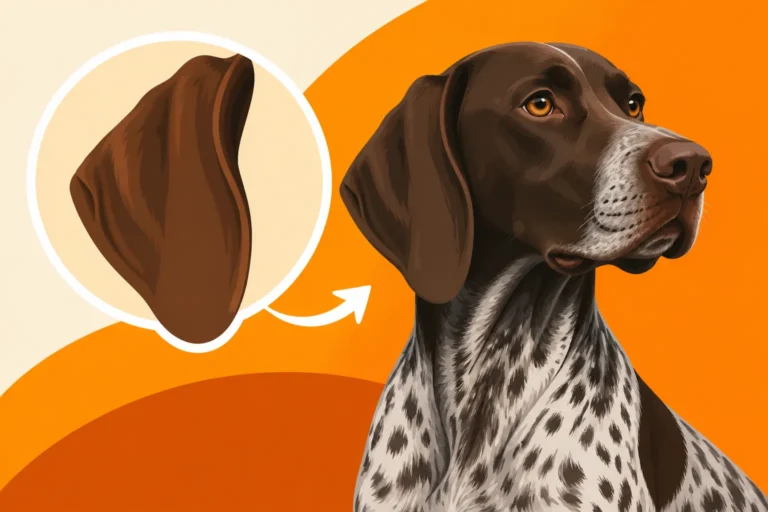
Why Tan Markings Disqualify a German Shorthaired Pointer
It can be incredibly confusing and even a little disheartening when you’re looking at German Shorthaired Pointer puppies or researching the breed, only to discover that certain color patterns, specifically tan markings, are considered disqualifying faults in the show ring. Many prospective owners fall in love with a dog's looks, but then wonder if there's something "wrong" with a GSP sporting tan points. This guide will unravel the mystery behind why tan markings disqualify a German Shorthaired Pointer, explaining the historical context, genetic reasons, and what it means for the breed standard, all while reassuring you that a loving companion is a loving companion, regardless of color.
The Foundation of Breed Standards: More Than Just Aesthetics
When you delve into the world of purebred dogs, you quickly encounter the concept of a "breed standard." For many, it seems like an arbitrary list of cosmetic preferences, but it's actually much more profound than that. For a breed like the German Shorthaired Pointer, whose very purpose was meticulously designed, the standard is a blueprint for function, health, and temperament, distilled over generations.
The Purpose of a Breed Standard: Maintaining Breed Integrity
A breed standard isn't just about what color coat looks prettiest or which tail set is most elegant; it's a detailed description of the ideal specimen of that particular breed. Think of it as the original mission statement for the dog, outlining the physical traits, temperament, and even the movement that define it and allow it to perform its intended job. For the German Shorthaired Pointer, that job was to be a versatile hunting dog – able to point game, retrieve on land and in water, and track. Every aspect of the standard, from coat type to musculature, gait, and even color, is theoretically tied back to maintaining those capabilities.
If a dog deviates too far from the standard, especially in significant ways, it can compromise its ability to perform the work it was bred for, or it might introduce traits that are undesirable for health or temperament. While a small deviation might be a "fault," a major one becomes a "disqualification," signaling that this particular dog does not conform to the established ideal to a degree that makes it unsuitable for showing or breeding within the purebred registry’s guidelines. It's a way for breed clubs to protect the breed's heritage and future.
Historical Context of GSP Standards: How They Evolved
The German Shorthaired Pointer, as we know it today, didn't just spontaneously appear. It was the result of deliberate and careful breeding efforts in Germany during the 19th century. Hunters wanted a dog that could do it all: locate game, point steadfastly, retrieve shot birds, and even track wounded animals through diverse terrain. They took existing German bird dogs, often heavy and slow, and systematically introduced new bloodlines, including perhaps Spanish Pointers and English Pointers, to refine them. This long history of intentional development meant that every trait was considered for its utility and contribution to the overall goal of a "versatile" gun dog. You can read more about The German Kennels the Shorthair Was Built In to understand this rich history.
The standard evolved alongside the breed itself. Early breeders meticulously documented which crosses produced the most effective dogs, and these observations gradually formed the basis of what became the breed standard. Color and markings, while seemingly minor, were often considered indicative of certain lines or influences. If a particular color pattern was associated with an undesirable trait, or simply wasn't part of the ideal aesthetic and functional package they were trying to create, it was excluded from the standard. The breeders aimed for uniformity and predictability, and color was one visible aspect of that.
The Role of Breed Clubs: AKC, Deutsch Kurzhaar, and Others
Breed clubs are the custodians of breed standards. In the United States, the American Kennel Club (AKC) sets the standard for the German Shorthaired Pointer, working in conjunction with the German Shorthaired Pointer Club of America. In Germany, the breed is known as the Deutsch Kurzhaar, and their breed club, the JGHV (Jagdgebrauchshundverband e.V.), has its own rigorous standards, often with a stronger emphasis on actual hunting performance. This is why some people wonder Whether the Deutsch Kurzhaar and the Shorthair Are One Breed.
These clubs regularly review and refine the standard, ensuring it reflects both the historical purpose of the breed and contemporary understanding of genetics and canine health. They also provide guidance for breeders and judges, ensuring consistency across the breed. For a dog to be shown or to have its offspring registered as purebred within these organizations, it must conform to the established standard. Any deviation deemed a "disqualification" means the dog cannot compete in conformation events, although it can certainly still participate in performance events like hunt tests if it has the skill.
The GSP Color Standard: What's Accepted, What Isn't
Understanding what constitutes an "acceptable" color and pattern for a German Shorthaired Pointer within the breed standard is key to grasping why tan markings are a disqualifying fault. The standard is quite specific, painting a clear picture of the expected appearance.
Accepted Colors and Patterns: Liver, Black, Roan, Ticked, Solid
The official AKC breed standard for the German Shorthaired Pointer outlines a range of acceptable colors and patterns, all rooted in the breed's history and functional requirements. Primarily, the colors revolve around shades of brown, known as "liver," and black. These are often combined with white.
Here's a breakdown of what you'll typically see and what's allowed:
- Solid Liver: A uniform, dark brown coat with no white markings. This is less common but certainly allowed.
- Liver and White: This is perhaps the most iconic GSP look. It can manifest in several patterns:
- Liver Patched and White: Large, distinct patches of liver color on a white background. Think of it like a piebald pattern.
- Liver Roan: A fine, even mixture of liver and white hairs throughout the coat, giving a mottled or blended appearance. This can range from light to very dark roan.
- Liver Ticked: Small, distinct liver spots or flecks on the white areas of the coat. Often, roan and ticking can appear together, or one might be more dominant.
- Solid Black: Like solid liver, this is a uniform black coat with no white markings. Historically, black was less common or accepted in some lines, but it is now fully recognized by the AKC.
- Black and White: Just like liver and white, black can appear in patched, roan, or ticked patterns with white. This offers a striking contrast and is increasingly popular.
The standard is quite precise, outlining that any combinations of liver, black, and white are permissible. The coat should be short and dense, providing protection in the field without being cumbersome.
What is "Liver" Anyway?: Describing the Brown Shades
The term "liver" can sometimes be a bit ambiguous if you're not familiar with dog genetics and breed standards. In the context of German Shorthaired Pointers, "liver" refers to a rich, dark reddish-brown color. It's not a light tan, a chocolate brown, or a faded reddish hue, but a deep, often luminous brown that can appear almost black in certain lights. This coloration is a key characteristic of the breed and is tied to specific genetic markers.
Beyond the coat, "liver" also dictates other pigmentations in a GSP. A liver-colored dog will have a liver-colored nose, eye rims, and paw pads. Similarly, a black-colored GSP will have black nose, eye rims, and paw pads. This consistency in pigmentation is part of the breed's genetic blueprint and contributes to the overall recognized appearance. It’s an interesting detail how specific genetics dictate not just the coat, but also these other subtle but important physical characteristics, all part of maintaining the breed's integrity.
The Absence of Tan Points in the Standard: Explicitly Stating It
Now, to the core of our discussion: the standard explicitly excludes tan markings or points. While the standard details what is acceptable, the absence of tan points is understood as a fundamental part of the GSP's genetic makeup and visual identity. You won't find a line that says, "Tan points are disallowed," because the standard implicitly defines the acceptable colors, and tan points simply aren't among them. This is often covered under broader disqualification clauses about "any other color or combination of colors not described."
This means any dog presenting with tan eyebrows, tan muzzle, tan chest markings, or tan on the legs or vent area (often referred to as "tan points" or "tri-color" markings, similar to a Doberman Pinscher or Rottweiler) would be disqualified in the conformation show ring. It's a clear line in the sand drawn by the breed's founders and upheld by the clubs. For a quick visual, think of the popular products on Chewy for German Shorthaired Pointers; you’ll almost exclusively see images of dogs in the accepted liver/black and white patterns, not with tan points, reflecting the breed’s official look.
Tan Markings: The "Why" Behind the Disqualification
It might seem unfair or even arbitrary that a dog could be disqualified for something as seemingly innocuous as a color pattern. However, for a breed with such a specific historical purpose and carefully curated genetic lineage as the German Shorthaired Pointer, these disqualifications are taken very seriously.
Disqualifying Faults Explained: More Than Just Cosmetic
A disqualifying fault in a breed standard isn't just about what looks "pretty" or "unpretty." It's about maintaining the purity and predictability of a breed. For the GSP, the disqualification of tan markings goes beyond mere aesthetics for several reasons:
- Breed Purity and Identity: The GSP was meticulously developed in Germany to be a specific type of versatile hunting dog. The colors and patterns allowed in the standard are those that were present in the foundational dogs and consistently produced in the successful lines. The introduction of tan points would suggest an outcross or a genetic lineage that deviates from the established norm for the breed. It would essentially dilute the visual identity that breeders have worked for over a century. Liver, Black and the Colors That Disqualify a Shorthair directly addresses these color nuances.
- Predictability in Breeding: When breeders strive to produce dogs that consistently meet the standard in terms of health, temperament, and working ability, they rely on predictable genetic outcomes. A disqualifying color pattern suggests a genetic anomaly or an outside influence that could introduce other, less desirable traits into the gene pool, traits that might affect performance or health.
- Distinction from Other Breeds: Many breeds have distinct color patterns. Tan points are characteristic of breeds like Doberman Pinschers, Rottweilers, Beagles, and some terriers. By disqualifying tan points, the GSP standard ensures that the breed maintains its unique visual identity and isn't confused with other breeds, particularly in the show ring or in conversations about its history.
It's a strict approach, but it underscores the seriousness with which breed preservationists view the standard.
Genetic Implications: What Tan Points Might Suggest About Ancestry
From a genetic standpoint, the presence of tan points in a German Shorthaired Pointer can be quite telling. Dog coat color genetics are complex, but generally, tan points (often called "black and tan" or "liver and tan") are determined by a specific gene at the "A" locus, which controls the distribution of pigment. For a dog to express tan points, it typically needs to inherit two copies of the "at" allele (tan points) or one "at" and one "a" (recessive black) allele, with "at" being dominant over "a" but recessive to "Ay" (sable/fawn) and "Aw" (agouti/wild sable).
If a German Shorthaired Pointer, whose standard dictates only solid liver, black, or combinations with white (often related to the "K" and "E" loci, and sometimes the "S" locus for spotting), suddenly produces puppies with tan points, it implies one of two things:
- Recessive Genes: Somewhere in the ancestry, there was a dog carrying the recessive "at" allele, even if it didn't express it itself. If two carriers are bred, there's a 25% chance of producing tan-pointed offspring. This isn't common in purebred GSP lines because responsible breeders select against it, but recessive genes can hide for generations.
- Recent Outcross: More significantly, it could suggest a more recent, undocumented outcross to another breed that does carry and express tan points. While this is less likely in registered purebred lines, it's a possibility that breed clubs actively try to prevent to maintain the integrity of the GSP gene pool.
Breeders committed to the standard, who prioritize their lines and the health guarantees in a shorthair contract, will often use genetic testing to ensure their breeding dogs do not carry undesirable color genes that could produce disqualified offspring.
Distinguishing from Other Breeds: Avoiding Confusion
Imagine a judge in a conformation ring. They need to quickly assess if a dog meets the breed's ideal. If a German Shorthaired Pointer presented with tan points, it would immediately make it look remarkably similar to other breeds that naturally have these markings. This confusion undermines the distinct identity of the GSP.
Consider the following breeds:
- Doberman Pinscher: Famous for its sleek black or liver coat with sharply defined tan (rust) points.
- Rottweiler: Known for its black coat with mahogany or rust markings.
- Small Munsterlander: A German cousin often mistaken for a smaller GSP, which can exhibit lighter brown or tan markings, but generally not the distinct "points" pattern.
- Vizsla: While often a solid rust, they sometimes have lighter shading that might be confused with tan if not carefully observed, but they lack distinct points. The German Shorthaired Pointer Against the Vizsla highlights their differences.
By having such a strict color standard, the German Shorthaired Pointer stands out visually. Its specific palette of liver, black, and white (in roan, ticked, or patched patterns) is a hallmark that distinguishes it from other hunting breeds and general canine companions. This clear distinction is crucial for brand identity, if you will, ensuring that when someone sees a GSP, they recognize it as such, reinforcing its unique place in the sporting dog world.
Understanding Genetic Expression and Color in Dogs
To truly appreciate why tan markings are a disqualifying fault, it helps to have a basic grasp of how dog coat colors are determined by genetics. It’s a fascinating, albeit complex, field, and understanding the 'how' makes the 'why' of breed standards much clearer.
Basic Genetics of Dog Coat Color: A Simple Overview
Dog coat color is determined by interactions between multiple genes at different locations (called loci) on a dog's chromosomes. Think of each locus as a specific "switch" that controls a particular aspect of color or pattern.
The two main pigments found in dog coats are:
- Eumelanin: This produces black pigment. When modified by other genes, it can also appear as liver (brown), blue (slate grey), or isabella (fawn/lilac).
- Phaeomelanin: This produces red or yellow pigment. This can range from a light cream to deep red, tan, or gold.
The expression of these pigments is controlled by various genes, often denoted by letters (e.g., A, B, D, E, K, M, S, T). Each dog inherits two copies of each gene (alleles), one from each parent. How these alleles combine determines the final color and pattern you see. For example, if a German Shorthaired Pointer’s parents are both carriers of a certain gene, they may not show it, but their puppies might. This is why reading a pedigree and knowing The Five Tests Behind a German Shorthaired Pointer CHIC Number are so crucial for breeders.
The "A" Locus and Tan Points: Explaining How Tan Points Appear
The "A" locus (Agouti series) is particularly important for understanding tan points. This gene primarily controls how eumelanin (black/brown) and phaeomelanin (red/tan) are distributed on the hair shaft and over the dog's body.
Here are some common alleles at the "A" locus, in order of dominance (most dominant at the top):
- Ay (Fawn/Sable): Causes a yellow or red coat, often with black tipping.
- aw (Agouti/Wild Sable): Produces a banded hair shaft, seen in wolf-like patterns.
- at (Tan Points): This is the allele responsible for the classic "black and tan" or "liver and tan" pattern. Dogs with at/at or at/a will have a solid black or liver body with distinct tan markings on their eyebrows, muzzle, chest, legs, and under the tail.
- a (Recessive Black): Causes a solid black coat, suppressing phaeomelanin entirely.
For a dog to have tan points, it typically needs to inherit at least one "at" allele, often expressed as at/at or at/a. The German Shorthaired Pointer breed standard, by not allowing tan points, implies that the "at" allele is generally not present in the purebred GSP gene pool, or at least, not expressed. The focus for GSP colors tends to be more on the "B" locus (liver vs. black), the "E" locus (masking/extending pigment), and the "S" locus (white spotting).
How Tan Points Might Arise in a GSP: Recessive Genes, Historical Outcrosses
So, if tan points aren't part of the GSP standard, how might they even show up?
- Undetected Recessive Carriers: It's possible that a very small percentage of GSPs, particularly in less rigorously screened lines, might carry a recessive "at" allele without expressing it themselves. If two such carriers were bred, a quarter of their offspring, on average, could theoretically exhibit tan points. This is why ethical breeders pay attention to Reading a Shorthair's OFA and Eye Results Before Paying and genetic testing, to avoid propagating such hidden traits. If a dog with an unexpected color is born, breeders often test the parents to understand the genetic implications for future breeding decisions.
- Historical Outcrosses: While breed standards aim for purity, historical outcrosses, sometimes deliberate, sometimes accidental, could have introduced different genetic material into a developing breed centuries ago. If such an outcross occurred with a breed carrying the "at" allele, that gene could have persisted in a very low frequency, only surfacing rarely if the right genetic combination occurred. However, for a breed as carefully curated as the GSP, this is considered highly unlikely in modern, registered lines.
- Crossbreeding or Misrepresentation: The most straightforward explanation for a dog strongly resembling a GSP but with clear tan points is that it's a crossbreed, or its lineage has been misrepresented. While a mixed-breed dog can be a wonderful companion, it wouldn't be a purebred German Shorthaired Pointer under official breed standards. It's vital to choose a reputable breeder who can provide transparent lineage and health information, as discussed in The Contract a German Shorthaired Pointer Breeder Uses.
Ultimately, the disqualification of tan points is a safeguard against the dilution of the GSP's genetic and visual identity. It's a testament to the breed's carefully controlled development and the desire to maintain its distinctive appearance.
Impact on Breeding and Showing
The implications of tan markings on a German Shorthaired Pointer are most keenly felt in the realms of breeding and showing. For owners whose primary interest is a family companion, the color might be a minor detail, but for those involved in preserving and exhibiting the breed, it's a fundamental issue.
The Show Ring Reality: Why a Tan-Pointed GSP Can't Compete
The conformation show ring is where dogs are judged against their breed's written standard. This isn't a beauty contest in the conventional sense, but rather an assessment of how closely an individual dog conforms to the ideal specimen described in the standard, reflecting its ability to perform its original function.
For a German Shorthaired Pointer with tan markings, the show ring reality is unequivocal: it cannot compete. Period. The presence of tan points is a disqualifying fault. This means that even if the dog is otherwise flawless in terms of structure, movement, and temperament – the exact size and build the shorthair standard asks for, for example – the color alone will prevent it from earning championship points or titles in conformation. A judge, upon recognizing the tan points, must excuse the dog from the ring.
This strict adherence to the standard ensures that the dogs recognized and awarded in the show ring are representative of the breed's established appearance. It reinforces the criteria for what constitutes a "purebred" GSP in terms of its visual characteristics and helps guide future breeding decisions. The goal is to maintain the distinct look of the breed that was formalized around the time of The 1930 AKC Entry of the German Shorthaired Pointer.
Breeding Considerations: Removing Affected Dogs from Breeding Programs
For dedicated GSP breeders, the appearance of tan points in their lines is a serious concern, prompting immediate action and careful consideration.
- Ethical Breeding Practices: Responsible breeders prioritize the health, temperament, and adherence to the breed standard in their litters. If a tan-pointed puppy were to unexpectedly appear, an ethical breeder would understand its disqualifying status and ensure it is not bred. They would also investigate the genetic background of the parents to understand how the recessive trait might have surfaced and make informed decisions about future pairings. This could involve genetic testing for color alleles.
- Maintaining Breed Integrity: Introducing or continuing a line that produces disqualified colors undermines the collective effort to maintain breed integrity. Breeders work hard to produce dogs that conform to the standard, not just for show but also because the standard is intrinsically linked to the dog's functional purpose as a versatile hunting dog. You often see dual champion breeders striving to maintain working ability and conformation, which touches on How a Field Bred Shorthair Differs in Build and Whether a Show Bred Shorthair Can Still Hunt.
- Buyer Expectations: Buyers looking for a purebred GSP expect a dog that visually matches the breed standard. Reputable breeders include health guarantees and often specify color in their contracts. Selling a tan-pointed GSP as a show-quality dog would be misleading and unethical. Such puppies are usually sold as "pet only" with spay/neuter contracts to ensure they don't contribute to the gene pool of disqualifying traits.
Breeders who are dedicated to the German Shorthaired Pointer understand that every breeding decision impacts the future of the breed. Strict adherence to the color standard is part of that commitment.
The "Pet Only" Reality: What it Means for Owners
If you happen to acquire a German Shorthaired Pointer with tan markings, or if a tan-pointed puppy is born in a litter you're considering, it's important to understand what "pet only" truly means.
First and foremost, "pet only" absolutely does not mean "less of a dog." A GSP with tan points is still 100% a German Shorthaired Pointer in terms of its genetic makeup (minus the specific color allele that caused the tan points), its potential for health, its incredible energy, its intelligence, and its loving temperament. Its ability to be a fantastic hunting companion, family pet, or running partner is completely unaffected by its non-standard color. What it does mean is:
- No Conformation Showing: As established, the dog cannot compete in AKC (or similar national club) conformation shows.
- Breeding Restrictions: Reputable breeders will sell such a puppy on a limited registration or with a spay/neuter agreement, meaning it cannot be officially bred or have its offspring registered as purebreds. This is a crucial step in preventing the spread of disqualifying traits in the purebred line.
- Love and Companionship: For most families, a dog's color is far less important than its health, personality, and ability to integrate into their lives. A tan-pointed GSP will offer all the same joy, loyalty, and boundless energy as its standard-colored siblings. It will still have The Velcro Side of a German Shorthaired Pointer and need The Two Hours a Day a German Shorthaired Pointer Needs of exercise.
Many families specifically look for a pet companion and have no interest in showing or breeding, making a "pet only" GSP a perfectly wonderful choice. The only difference is its appearance compared to the breed's ideal.
Living with a "Non-Standard" GSP
The discussion around disqualifying colors can sometimes make people feel like a dog that doesn't fit the standard is somehow "lesser." This couldn't be further from the truth, especially when it comes to the heart of a German Shorthaired Pointer. A non-standard color impacts the show ring and breeding programs, but it has no bearing on the dog's ability to be a fantastic companion.
A Pet's Love Knows No Color: Emphasizing Their Value as Companions
Let's be absolutely clear: a German Shorthaired Pointer with tan markings is still a magnificent dog. Its vibrant personality, unwavering loyalty, and boundless energy are not dictated by the color of its coat. These dogs are intelligent, affectionate, and thrive on being an active part of their families. Whether your GSP is solid liver, liver roan, black and white, or surprisingly sporting tan points, it will still greet you with an enthusiastic tail wag, demand its daily dose of exercise, and snuggle up beside you on the couch after a long day.
Their love and companionship are invaluable, and that's something a breed standard can never measure. If you've welcomed a tan-pointed GSP into your home, you know this firsthand. They are just as capable of pointing pheasants in the field (if trained, of course!), excelling in agility, or simply being your best friend on a long hike. Their unique coloring might even make them a conversation starter at the dog park. What truly matters is the bond you share, the care you provide, and the joy they bring into your life.
Health and Temperament Unaffected: Color is Just Color
One of the most important takeaways is that the presence of tan points in a GSP does not inherently correlate with health or temperament issues. Coat color, in most cases, is a cosmetic trait controlled by specific genes that typically have no link to a dog's overall health or behavioral predispositions.
Unless the tan points are part of a broader genetic anomaly (which is rare and would likely involve other, more serious symptoms), a tan-pointed GSP should be just as healthy and well-adjusted as any other GSP from the same reputable breeding line. They still carry the genetic predispositions of the breed, both good and bad, which is why it's so important to source from breeders who conduct health clearances for conditions like Hips and the CHIC Panel a German Shorthaired Pointer Needs or The Bleeding Disorder in German Shorthaired Pointer Lines.
Their famously intelligent, biddable, and energetic temperament remains intact, regardless of their coat. You'll still get that classic "Velcro dog" personality and the unyielding drive that makes GSPs such incredible athletes. The focus should always be on the individual dog's health history, the health of its parents, and the training and socialization it receives, rather than an aesthetic detail like a disqualifying color. Products from Chewy, for instance, are designed for the health and happiness of all dogs, regardless of their coat color or whether they conform to show standards.
Finding Responsible Breeders: Ensuring Health Clearances Are Paramount
If you're looking for a German Shorthaired Pointer, whether you care about show ring eligibility or not, finding a responsible breeder is paramount. A responsible breeder will:
- Prioritize Health and Temperament: They will perform all recommended health clearances for the breed (hips, elbows, eyes, cardiac, etc.) and be transparent about the results. They aim to produce physically and mentally sound puppies.
- Be Knowledgeable About Genetics: They understand the breed standard, the genetics behind coat colors, and why certain traits are disqualifying. They can explain their breeding decisions clearly.
- Be Transparent About Litters: If a non-standard color puppy appears, they will be upfront about it, explain why it's a disqualifying fault, and sell it on a limited registration or spay/neuter contract. They will never try to pass off a disqualified dog as suitable for show.
- Provide a Health Guarantee and Support: They stand behind their puppies and are available to answer questions and offer support throughout the dog's life.
- Not Breed for Disqualifying Traits: A responsible breeder will not intentionally breed dogs to produce non-standard colors or features just because some buyers might find them "unique" or "rare." Their focus is on the betterment and preservation of the breed as defined by the standard.
When considering a puppy, ask about the parents' health clearances, their pedigrees, and the breeder's philosophy. A great breeder is proud of their lineage and is eager to share details, making sure you understand what a German Shorthaired Pointer needs.
Summary of GSP Color Standards
To help clarify the acceptable and disqualifying colors and patterns for the German Shorthaired Pointer, here's a quick overview:
| Category | Acceptable Colors/Patterns | Disqualifying Colors/Patterns | Notes |
|---|---|---|---|
| Primary Colors | Liver (dark reddish-brown), Black | Any color not described in the standard (e.g., solid white, blue, Isabella/lilac). | Both liver and black are accepted as base colors, often with white markings. Pigmentation (nose, eye rims) should match the primary coat color (liver or black). |
| Patterns | Solid (uniform color), Patched (large distinct patches of color on white), Roan (fine, even mixture of colored and white hairs), Ticked (small distinct spots/flecks of color on white). Combinations of these are common (e.g., liver roan and ticked). | Tan Markings/Points: Distinct tan markings on eyebrows, muzzle, chest, legs, vent, etc. This includes any "tri-color" appearance. | The intensity of roaning or ticking can vary widely. The standard values the distinct appearance provided by these traditional patterns, which contribute to the GSP's unique look and help distinguish it from other breeds, even those found on Chewy's dog food bags. |
| Other Faults | Yellow or self-colored eyes (not brown), Flesh-colored nose on a liver dog (should be liver), Black nose on a liver dog (should be liver), Any other color or combination of colors not described in the standard, such as cream or solid white. | Severe structural faults that impede movement or function (though not strictly color-related, these are also disqualifications). | Disqualifications ensure breed purity and adherence to the historical design. A dog with tan markings, while still a GSP by lineage, cannot be shown in conformation. |
This table highlights the clear boundaries set by the breed standard. While a dog with a disqualifying color is still a beloved pet, understanding these distinctions is crucial for anyone involved in showing or breeding German Shorthaired Pointers. It speaks to the rigorous dedication that goes into maintaining what versatile actually means for a shorthair.
Disclaimer
This article is for general informational purposes only and does not constitute professional advice. Laws, prices and regulations vary by location and change over time. Consult a qualified professional for guidance on your specific situation.