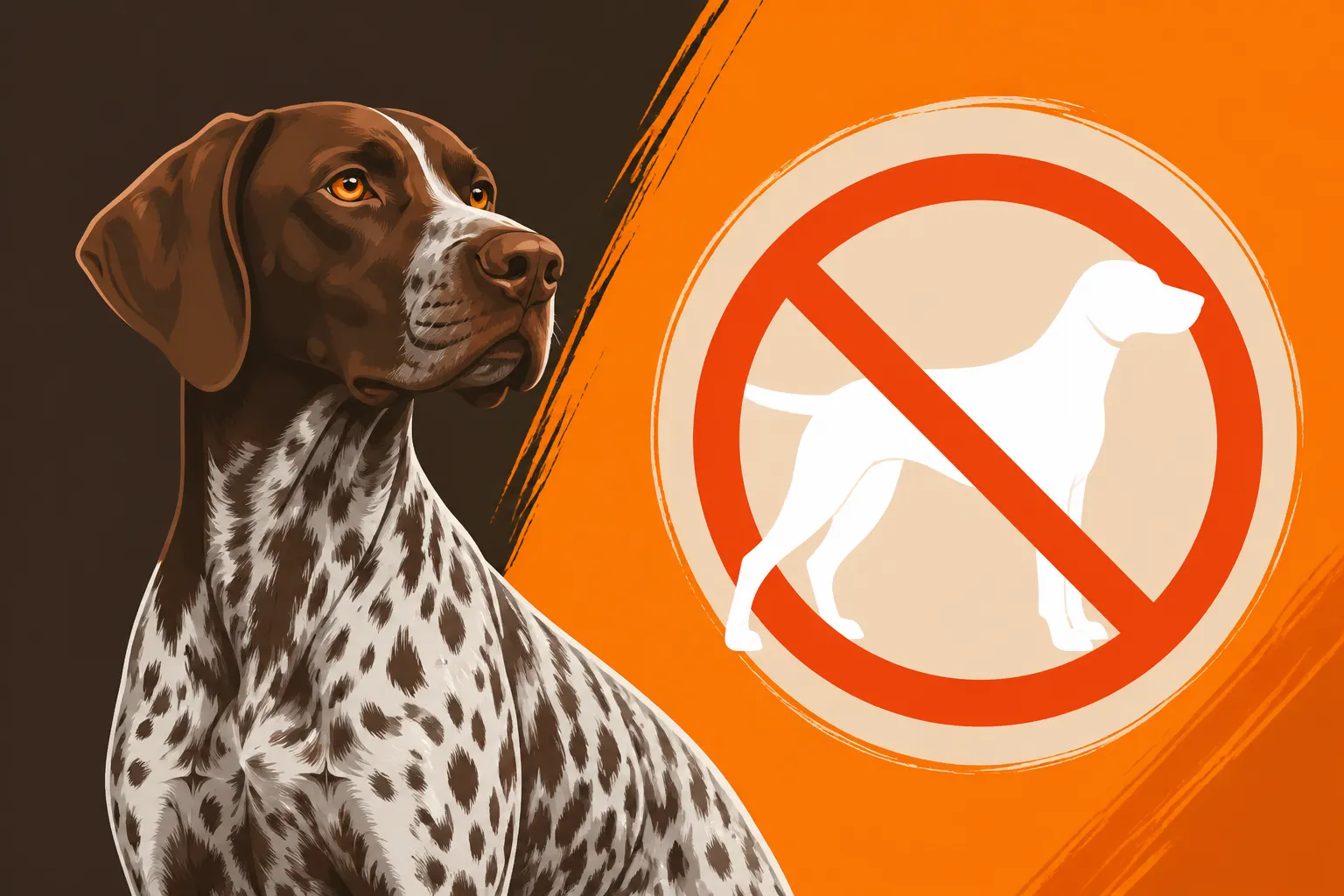
Why a Solid White Shorthair Cannot Be Shown
It can be incredibly disheartening for someone who loves the German Shorthaired Pointer breed to discover that a solid white GSP, despite its stunning appearance and undeniable GSP spirit, simply isn't permitted in the conformation show ring. Many hopeful owners, charmed by a unique-looking pup, envision a future of ribbons and accolades, only to learn that the breed standard has specific rules about color. This guide will walk you through the reasons behind this disqualification, delving into the breed's history and purpose, and reassuring you that a solid white GSP can still be an absolutely incredible companion.
Understanding the German Shorthaired Pointer Breed Standard
The breed standard for any purebred dog is essentially its blueprint – a detailed description of the ideal specimen that encompasses everything from temperament and movement to coat color and structure. For the German Shorthaired Pointer, this standard is carefully maintained to ensure the breed's integrity, health, and, crucially, its renowned working ability.
The Purpose of a Breed Standard
Think of the breed standard as the historical document that guides breeders in their efforts to produce German Shorthaired Pointers that are true to their heritage. It's not just about aesthetics; every aspect described in the standard, from bone structure to coat texture, is meant to contribute to the dog's overall function and health as a versatile hunting companion. Breeders strive to adhere to this standard, not to win arbitrary beauty contests, but to preserve the qualities that make a GSP so special. For example, a GSP's strong, muscular build, as outlined in The Size and Build the Shorthair Standard Asks For, is directly linked to its endurance in the field, allowing it to cover vast distances without tiring.
Without a consistent standard, a breed could quickly diverge, losing the very characteristics that define it. Imagine a breeder who focuses only on exaggerated traits, or another who doesn't prioritize the robust health necessary for a working dog. The standard acts as a common goal, ensuring that when you see a German Shorthaired Pointer, you recognize those defining features that make it such a capable and beloved breed. It's about maintaining type and ensuring that future generations carry on the legacy of their ancestors.
This adherence to standard isn't just for show dogs; it affects the entire breed's health and temperament. Breeders aiming for the standard typically also prioritize health clearances and stable dispositions, because a true GSP isn't just pretty; it's a sound, intelligent, and biddable partner. Even for those of us who don't show, knowing our dogs come from lines carefully bred to standard gives us confidence in their overall quality.
Acceptable Coat Colors and Markings
When it comes to the German Shorthaired Pointer, the acceptable coat colors are quite specific, and they all have a practical root in the breed's hunting heritage. Traditionally, GSPs were bred in Germany to be efficient, camouflaged hunters, able to blend into various natural environments while working. This is why you primarily see colors like liver, black, and various combinations with white.
The most common and universally accepted colors include solid liver, solid black, liver and white, or black and white. These can appear as liver patched and ticked, black patched and ticked, liver roan, or black roan. Ticking refers to small, isolated spots of color on a white background, while roan means the white hairs are intermingled with colored hairs, giving a salt-and-pepper effect. Understanding The Difference Between Ticked and Roan on a Shorthair can be quite fascinating, as these patterns are truly distinctive and beautiful. These colors and patterns were historically valued because they allowed the dogs to blend seamlessly into dense cover, tall grasses, and wooded areas, providing effective camouflage while hunting fowl or small game.
For a hunter in the field, a dog that blends in can be a huge advantage, allowing the GSP to approach game without being easily spotted. A liver roan dog might disappear into a field of dried cornstalks in the fall, making it harder for birds to spot the incoming predator. The practical application of these coats was paramount in the breed's development, emphasizing function over pure aesthetics. Every single accepted color and pattern serves a purpose, reflecting centuries of careful breeding for a specific working role.
The Disqualification Clause for Solid White
Here's where the dream of showing a solid white German Shorthaired Pointer hits a roadblock: the breed standard explicitly lists "solid white" as a disqualifying fault. This means that if a dog is presented in the conformation ring and is deemed to be solid white, it cannot place in any class, cannot earn championship points, and cannot be awarded any titles. It's an immediate exclusion, regardless of how perfectly structured or temperamentally sound the dog might be otherwise.
Beyond solid white, other colors are also disqualifying, such as solid yellow, or any dog with tan points (like a Doberman or Rottweiler). In fact, Why Tan Markings Disqualify a German Shorthaired Pointer is another important distinction in the standard. The standard states, "Any color or combination of colors other than those listed above is a disqualification. Any dog with tan points is a disqualification." This strictness isn't arbitrary; it reflects a deep commitment to the traditional appearance and functional purpose of the GSP as envisioned by its founders.
Imagine the scenario: a breeder proudly brings a magnificent solid white GSP into the ring, a dog with perfect gait, powerful muscles, and an alert, intelligent expression. The judge, after a thorough examination, would still have no choice but to dismiss it. It's a tough pill to swallow for owners and breeders who adore their dogs, but the rules are clear. For the integrity of the breed standard, such deviations in color are considered too significant to overlook, pushing these dogs out of contention for formal conformation recognition.
Historical Context: Why White Was Excluded
To understand why solid white is a disqualification, we need to take a step back in time and look at the origins of the German Shorthaired Pointer. The breed was developed in Germany with a very clear, pragmatic purpose: to create a versatile hunting dog that could excel at pointing, retrieving, and tracking across various terrains.
Early German Breeding Goals
The German Shorthaired Pointer wasn't just any hunting dog; it was painstakingly developed in the late 19th and early 20th centuries to be a multi-purpose workhorse in the field. German breeders, unlike some of their English counterparts who often specialized breeds for single tasks, wanted a "do-it-all" dog. They needed a dog that could point upland game, retrieve fallen birds from land or water, and even track wounded deer. This intense focus on utility and versatility shaped every aspect of the breed, including its physical appearance. We explore more about this rich history in The German Kennels the Shorthair Was Built In.
The coat, therefore, wasn't merely about looking pretty; it was a functional piece of equipment. Breeders prioritized colors and patterns that would offer camouflage in the diverse landscapes where they hunted – from dense forests to open fields and marshes. A dog that blended in would be less likely to spook game, giving the hunter a better chance at success. Solid white, in many of these environments, would be too conspicuous, making the dog stand out like a beacon rather than a hidden hunter. This wasn't a matter of fashion; it was about the dog's effectiveness in its primary role.
Imagine a traditional German hunter, carefully working their dog through a field. If the dog were solid white, every twitch or movement would be easily visible to the quarry. The subtle, broken patterns of liver and white, or black and white, provided much better natural concealment. This historical emphasis on practical hunting utility, rather than pure aesthetic novelty, led directly to the exclusion of solid white coats from the breed standard.
Genetic Factors and Potential Associations
While the primary reason for excluding solid white was likely rooted in functional camouflage, there have also been historical considerations, perhaps even misconceptions, around the genetics of extreme white coloration in dogs. In some breeds, excessive white can be genetically linked to certain health issues, most notably deafness (as seen in certain lines of Dalmatians, Boxers, or merle-patterned breeds with a lot of white).
It’s crucial to state that in German Shorthaired Pointers, a solid white coat is not widely recognized as being inherently linked to widespread health problems like deafness, as it might be in some other breeds with different genetic backgrounds. A solid white GSP is typically as healthy as its liver or black counterparts. However, the early breeders, operating with less scientific understanding of genetics than we have today, might have had general concerns about extreme white, or simply preferred to avoid any trait that could potentially introduce vulnerabilities or dilute the established gene pool.
This isn't to say a solid white GSP is unhealthy; far from it. It's more about the historical decisions made by breed founders who were incredibly meticulous about maintaining a robust, healthy, and functional working dog. They aimed to select for vigor and performance, and any deviation, especially one as visually striking as solid white, might have been viewed with caution or simply outside the established norm for what a "German Shorthaired Pointer" should look like for its intended purpose. The standard, once set, often remains very difficult to change, reflecting these foundational decisions.
The Impact of a Solid White Coat on a German Shorthaired Pointer
While a solid white coat makes a German Shorthaired Pointer ineligible for the show ring, it's worth considering the practical implications and how it might genuinely affect a dog, both in and out of the field.
Field Performance and Practicality
For a hunting dog, camouflage is often key. A dog needs to be able to move through cover without drawing undue attention from game birds. A liver and white GSP, with its broken color patterns, has a natural advantage here, melting into the landscape of dried grasses, brush, and dappled sunlight. Imagine a solid white German Shorthaired Pointer in an open field, working a pheasant. That dog would be strikingly visible, a bright beacon against most natural backdrops. This increased visibility to game birds could potentially make the dog less effective at pinning birds down or getting into a good position for a point without flushing them prematurely.
While a solid white coat makes the dog incredibly easy for the hunter to spot, which is a positive from a safety and handling perspective, it could compromise the element of surprise needed for successful hunting. A hunter might value the ease of spotting their dog, especially in dense cover, but if that same visibility spooks the birds, it defeats the purpose of the hunt. This trade-off was likely a significant factor in the breed's formative years when every trait was scrutinized for its contribution to hunting prowess.
Furthermore, a dog's coat also offers a degree of protection. While a GSP's coat is already quite short, extremely light or white coats can sometimes offer less protection against environmental factors. For example, Sun Protection for a White Marked Shorthair is often a concern, as dogs with large white areas, especially on their noses and ears, can be more susceptible to sunburn and skin cancers. While this isn't solely limited to solid white dogs, the absence of pigmented hairs across the entire body could exacerbate these risks, meaning an owner would need to be extra diligent about protecting their dog's skin.
Health Considerations (Real vs. Perceived)
As touched on earlier, while some breeds with excessive white have documented genetic links to health issues like deafness or specific eye problems, this isn't broadly the case for solid white German Shorthaired Pointers. The disqualification of solid white in the GSP standard is primarily a historical and functional decision, not typically a direct indicator of immediate health concerns for the individual dog.
However, there are some general considerations related to a lack of pigment. Dogs with largely white or unpigmented skin are often more vulnerable to the sun's harmful UV rays. Areas like the bridge of the nose, ear tips, and thin-skinned bellies are particularly susceptible. Owners of white-coated dogs, regardless of breed, often need to be more proactive in applying Sunscreen on a German Shorthaired Pointer's Nose or ensuring their dog has ample shade during peak sun hours. This isn't a "fault" of the dog, but rather an increased management need for the owner.
It's important to reiterate: a solid white GSP is not inherently "unhealthy" because of its color. These dogs can be robust, vigorous, and free from genetic predispositions tied to their coat color. The health aspect of the breed standard often focuses on more critical genetic conditions like hip and elbow dysplasia, cardiac issues, or eye diseases, for which responsible breeders screen extensively. A solid white GSP, from reputable parents who have undergone appropriate health testing, can be just as healthy and long-lived as its standard-colored littermates.
Life Beyond the Show Ring for a Solid White GSP
So, your heart is set on a German Shorthaired Pointer, and perhaps you've even fallen for a solid white pup. Or maybe you already own one and just learned about the show ring rules. Don't despair! A solid white GSP is still a German Shorthaired Pointer through and through, meaning they possess all the incredible qualities that make this breed so cherished, even if they're not destined for Westminster.
A Fantastic Companion Animal
Let's be clear: a disqualifying color has absolutely no bearing on a dog's temperament, intelligence, loyalty, or athletic ability. A solid white German Shorthaired Pointer is just as energetic, intelligent, and affectionate as any liver or black GSP. They will still possess that famous "Velcro" personality, often earning the nickname The Velcro Side of a German Shorthaired Pointer for their desire to be constantly by your side. They are loyal, eager to please, and incredibly smart, making them fantastic family pets for active households.
These dogs are brimming with the GSP zest for life. They thrive on human companionship, consistent training, and plenty of exercise. They'll still need their daily runs, their puzzle toys, and their opportunities to explore and use their keen noses. Their enthusiasm for life, their playful antics, and their unwavering devotion will enrich any home. Whether it's a game of fetch in the yard, a long hike on a trail, or simply snuggling on the couch after a busy day, a solid white GSP will bring joy and boundless energy to your life.
They'll still learn commands quickly, often surprising owners with their cleverness and problem-solving skills. Their drive and desire to work are inherent to the breed, regardless of coat color. If you're looking for a devoted, active, and intelligent companion who will eagerly participate in all your adventures, a solid white GSP is every bit as capable and loving as their more conventionally colored brethren.
Alternative Activities and Sports
Just because a dog can't compete in conformation doesn't mean they can't be a champion in other arenas! Many dog sports and activities welcome dogs of all colors and backgrounds, focusing purely on their abilities and partnership with their owner. A solid white GSP can absolutely excel in a myriad of competitive and recreational pursuits.
Consider these exciting options:
- Agility: GSPs are naturally athletic, agile, and love to run and jump. Agility courses are a fantastic outlet for their energy and intelligence.
- Obedience and Rally: These sports showcase a dog's trainability and their bond with their handler, with no aesthetic requirements.
- Dock Diving: If your GSP loves water (and most do!), Running a Shorthair in a Dock Diving Event is a thrilling sport where dogs leap from a dock into a pool to retrieve a toy.
- Scent Work/Nose Work: GSPs have incredible noses. These sports capitalize on their natural scenting abilities, providing a mentally stimulating challenge.
- Canine Good Citizen (CGC) and Therapy Dog Work: These programs focus on good manners and a stable temperament, allowing GSPs of any color to shine as community ambassadors or comfort providers.
- Hunting/Field Work (for personal enjoyment): While strict field trials might have certain standards, many informal hunting groups or individual hunters simply want a good, working dog. A solid white GSP can still be an outstanding bird dog for personal hunting, demonstrating its innate pointing and retrieving skills. You might even consider introductory NAVHDA tests, and while color might be noted, the focus is on natural ability. Whether a Pet Shorthair Should Be NAVHDA Tested might be a good read if you're curious about this.
The world of dog sports is vast and inclusive, offering endless opportunities for a solid white GSP to prove its worth, engage its mind and body, and strengthen its bond with you.
Finding a Solid White German Shorthaired Pointer
If a solid white German Shorthaired Pointer sounds like the perfect fit for your active lifestyle, where can you find one? These dogs are typically not intentionally bred for their solid white color, as it's not a desired trait within the breed standard. However, genetics can sometimes produce unexpected results, and a solid white pup might occasionally appear in a litter.
Reputable breeders who prioritize health and temperament will still place these puppies in loving pet homes, often with a spay/neuter contract, knowing they won't be suitable for the show ring. If you are looking for a GSP for companionship and not showing, it's always worth discussing color variations with breeders you are considering. They can sometimes have "pet quality" puppies that might not fit the aesthetic standard but are otherwise healthy and sound.
Another excellent avenue is German Shorthaired Pointer rescue organizations. These groups are often wonderful resources for finding GSPs in need of homes, and they sometimes have dogs with non-standard colors or markings. German Shorthaired Pointer Rescue Fees are often much lower than purchasing a puppy from a breeder, and you'll be giving a deserving dog a second chance. Rescue organizations focus on finding the right match for each dog, prioritizing temperament and compatibility over show ring eligibility. Regardless of where you find your solid white GSP, always ensure you're adopting from a responsible source that values health testing and proper care for their dogs.
Acceptable vs. Disqualifying GSP Coat Colors
To help clarify the differences, here's a quick overview of acceptable German Shorthaired Pointer coat colors versus those that would lead to disqualification in the show ring.
| Category | Acceptable Colors/Patterns | Disqualifying Colors/Patterns |
|---|---|---|
| Solid Colors | Liver, Black | Solid White (no liver/black patches or ticking) |
| Bi-Colors (w/ White) | Liver and White, Black and White (can be patched, ticked, or roan) | Any color or combination of colors other than those listed as acceptable. |
| Patterns | Liver Roan (intermingled liver and white hairs), Black Roan (intermingled black and white hairs), Liver Patched and Ticked (larger liver patches with ticking on white areas), Black Patched and Ticked | Any dog with Tan Points (e.g., black with tan eyebrows/legs, similar to a Doberman or Rottweiler marking – this is an immediate disqualification). Solid yellow, solid orange, or any other unlisted color. |
| Nose Color | Brown (for liver dogs), Black (for black dogs) | Flesh-colored nose (pink nose) is a disqualification. |
This table clearly illustrates that while many variations of liver, black, and white are accepted, a completely solid white coat, or any hint of tan points, falls outside the parameters of the breed standard for conformation purposes.
Disclaimer
This article is for general informational purposes only and does not constitute professional advice. Laws, prices and regulations vary by location and change over time. Consult a qualified professional for guidance on your specific situation.