What a Shorthair Puppy Should Weigh at Four Months
Bringing home a German Shorthaired Pointer puppy is an absolute joy, but it also comes with a lot of questions, especially when you’re trying to make sure they’re growing up strong and healthy. One common worry I hear from new GSP owners is, "Is my puppy growing correctly? What should they weigh at four months?" It's a natural concern because a GSP's early development is crucial for their athletic future. This guide will walk you through what to expect regarding your German Shorthaired Pointer puppy’s weight at four months, how to assess their overall health, and how to support their optimal growth during this vital period.
Understanding German Shorthaired Pointer Growth Stages
A German Shorthaired Pointer isn't just a puppy for long; they are fast-growing, highly energetic athletes in the making. Understanding their general growth pattern helps you appreciate the rapid changes happening in those first few months.
The Rapid Early Months
From the moment they're born, GSP puppies are on an incredible growth trajectory. Those tiny, helpless bundles quickly transform into wobbly, then bounding, little explorers. The first few months are characterized by rapid bone and muscle development, setting the foundation for the powerful, agile dog they will become. At birth, they might only weigh a pound or two, but by eight weeks when they typically go to their new homes, they've often quadrupled or quintupled in size. This explosive growth phase means that changes in weight and height can seem dramatic week to week. You're not just watching a puppy grow; you're watching a finely tuned machine assemble itself right before your eyes. It’s a period where good nutrition and appropriate care are paramount, as mistakes made now can have lasting impacts. For a broader overview, take a look at The Growth Year of a German Shorthaired Pointer Puppy.
Factors Influencing Puppy Weight
It’s important to remember that not all GSP puppies will hit the exact same numbers at four months, and that’s perfectly normal. Several factors play a significant role in their individual weight and growth rate.
- Genetics: This is huge. Just like people, puppies inherit traits from their parents, including their potential size and build. If both parents are on the larger, more robust side of the GSP standard, your puppy is likely to follow suit. Conversely, if the parents are smaller and lighter, your puppy might also be on the leaner side. This isn’t just about the parents, either; look at grandparents and even great-grandparents in the pedigree for a clearer picture of potential size.
- Gender: Typically, male German Shorthaired Pointers are larger and heavier than females at maturity, and this difference often begins to show during puppyhood. A four-month-old male puppy will usually outweigh a female of the same age.
- Diet and Nutrition: This is one of the most controllable factors. A puppy receiving a high-quality, balanced diet specifically formulated for large-breed puppies will grow differently than one on a sub-par diet. Overfeeding can lead to rapid, unhealthy growth, putting strain on developing joints, while underfeeding can stunt growth and lead to nutritional deficiencies. We'll delve deeper into this shortly.
- Litter Size and Birth Order: Puppies from smaller litters sometimes get more access to milk and may have a slight head start. Also, within a litter, there are often "runts" or smaller puppies, and larger, more dominant ones. These early differences can persist, though a smaller puppy can certainly catch up with good care.
- Activity Level: Even at four months, a GSP puppy is typically a dynamo. An active puppy burns more calories, which influences how their body utilizes nutrients for growth versus fat storage. However, excessive or inappropriate exercise can also be detrimental to growth and joint health.
The Four-Month Benchmark: What to Expect
When your GSP puppy hits the four-month mark, they're typically past the initial whirlwind of puppy vaccines and are really starting to show their personality – and their size! This is a crucial checkpoint for their development.
Typical Weight Range for a Four-Month-Old GSP
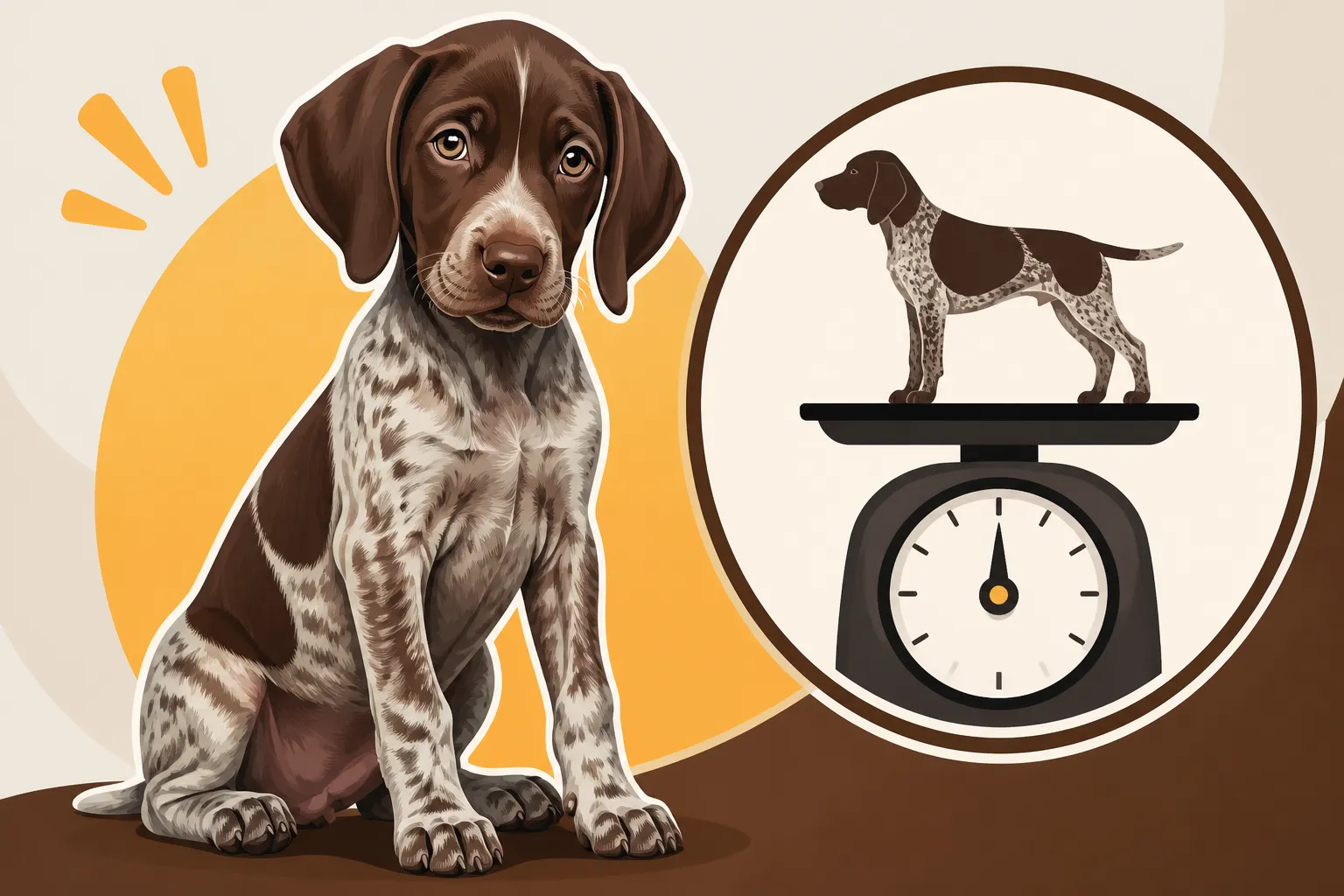
At four months old, your German Shorthaired Pointer puppy is still very much a baby, but they've grown considerably from their eight-week departure weight. While there's a range, you can generally expect a healthy four-month-old GSP puppy to fall within these approximate weight guidelines:
- Male German Shorthaired Pointer Puppy (4 months): Around 30 to 45 pounds.
- Female German Shorthaired Pointer Puppy (4 months): Around 25 to 40 pounds.
Now, these are general guidelines, and your puppy might be a little above or below these figures. What's more important than hitting an exact number is consistent, steady growth. A puppy who gains weight steadily and appears healthy is generally doing well, even if they don't perfectly align with the middle of the range. For instance, a very lean, energetic male from smaller parents might be on the lower end, while a more solidly built male from larger lines could easily be at the upper end. It's not about being the biggest, but about healthy development.
Beyond the Scale: Assessing Overall Health
While the number on the scale offers a quick snapshot, it tells only part of the story. You can have a puppy right in the "target" weight range who isn't conditioned well, or one slightly outside who is perfectly healthy. The Body Condition Score (BCS) is a much more valuable tool for assessing your GSP's overall health and whether they are at an appropriate weight.
Think of it like this: your puppy should look lean and athletic, not chubby. Here's how to do a quick check:
- Ribs: You should be able to easily feel your puppy's ribs when you run your hands along their sides, but you shouldn't be able to see them protruding sharply without applying any pressure. If you can see ribs without trying, your puppy might be too thin. If you have to press hard to feel them, they might be carrying too much weight.
- Spine: Similarly, you should be able to feel the bony protrusions of their spine along their back with light pressure, but they shouldn't be sharply prominent.
- Waistline: When you look down at your puppy from above, you should see a noticeable "tuck" or narrowing of their waist behind their ribs. From the side, their abdomen should tuck up slightly from their chest, not hang low.
- Energy and Disposition: A healthy four-month-old GSP puppy should be brimming with energy, playful, and alert. They should have bright eyes and a shiny coat. If your puppy seems lethargic, has a dull coat, or is uninterested in play, these are bigger red flags than a slight deviation in weight.
- Joints: Watch how your puppy moves. Their gait should be fluid and even. Any limping, stiffness, or reluctance to move should be discussed with your vet immediately. Rapid growth or excessive weight can put undue stress on developing joints.
Comparing your puppy to a growth chart can be helpful, but always pair that with a hands-on assessment. Your vet will also use these methods during your regular check-ups to ensure your GSP is thriving.
Nurturing Healthy Growth in Your GSP Puppy
Ensuring your German Shorthaired Pointer puppy grows into a healthy, robust adult involves a careful balance of diet, exercise, and preventative care. This isn't just about hitting a number on the scale; it's about building a strong foundation.
Proper Nutrition for Growing Pointers
Feeding a growing GSP puppy properly is critical. They need a diet that supports their rapid development without pushing them to grow too quickly, which can lead to orthopedic problems.
- Choose a High-Quality Large Breed Puppy Food: This is probably the most important decision. Look for puppy foods specifically formulated for "large breeds" or "large breed puppies." These formulas are designed with a controlled calcium-to-phosphorus ratio and lower calorie density than regular puppy foods. This helps prevent excessively fast growth, which can contribute to conditions like hip and elbow dysplasia later in life. Brands available through retailers like Chewy or Amazon often clearly label their large breed puppy formulas.
- Follow Feeding Guidelines (and Adjust as Needed): The bag will have a feeding chart, usually based on your puppy's current weight and anticipated adult weight. Start there, but watch your puppy's body condition. If they're looking too thin, you might need to increase slightly; if they're getting a bit round, cut back. Every puppy's metabolism is different. Divide their daily ration into three meals at four months of age to help with digestion and maintain steady energy levels.
- Avoid Overfeeding: This is a common mistake owners make out of love, thinking a bigger puppy is a healthier puppy. For GSPs, excessive weight gain during puppyhood can stress their developing joints and lead to issues. Resist the urge to free-feed or give too many treats. Treats should be high-value, small, and used for training, not as a significant portion of their diet. If you're exploring fresh food options, services like Ollie provide carefully balanced recipes that can be excellent, but portion control remains key.
- Water is Essential: Always ensure your puppy has access to fresh, clean water. Growing puppies are highly active and can dehydrate quickly.
Understanding Calcium Levels in a Shorthair Puppy's Diet is also vital, as imbalances can directly impact bone development during these crucial months.
Balancing Exercise and Rest
GSPs are known for their boundless energy, even as puppies. While exercise is vital for their physical and mental development, it must be managed carefully during their rapid growth phase to protect their developing joints.
- Controlled, Age-Appropriate Exercise: At four months, free play in a safely enclosed yard is wonderful. Short, structured walks on a leash are also beneficial for socialization and basic manners. However, avoid forced, repetitive activities like long-distance running, jumping off high objects, or excessive stair climbing. Their growth plates (areas of cartilage at the ends of long bones) are still open and vulnerable to injury. Over-exercising a young GSP can cause irreversible damage.
- "Puppy Rules" for Play: Let your puppy dictate the pace of play. If they lie down or wander off, they're likely done. Supervise play with other dogs to ensure it doesn't get too rough or prolonged. High-impact games like frisbee or intense fetch sessions should be saved for when your GSP is older and their growth plates have closed, usually around 12-18 months. You might find our article How Much Exercise a Shorthair Puppy Should Get helpful in planning your puppy’s routine, and also consider Whether a Shorthair Puppy Should Run on Hard Ground when choosing play environments.
- Plenty of Rest: Just as important as exercise is rest. Growing puppies need a lot of sleep to process all the new experiences and allow their bodies to grow and repair. Ensure your puppy has a quiet, comfortable crate or bed where they can retreat for uninterrupted naps. A well-rested puppy is a happier, healthier, and better-behaved puppy.
- Mental Stimulation: Don't forget their minds! GSPs are incredibly intelligent and need mental challenges to prevent boredom. Puzzle toys, short training sessions, and scent games can tire them out without putting stress on their bodies. This mental engagement also contributes to a well-rounded, balanced temperament as they mature.
When to Consult Your Vet About Puppy Weight
While you're the one seeing your GSP puppy every day, your veterinarian is your best partner in monitoring their growth and overall health. Knowing when to seek their advice is important for your puppy's well-being.
Signs of Underweight or Overweight
Being diligent about observing your puppy's physical condition can help you catch potential issues early.
Signs your GSP puppy might be underweight:
- Ribs, spine, and hip bones are easily visible and prominent: You can see them without even touching, or they feel very sharp.
- Lack of energy: While some puppies might be naturally calmer, a consistently lethargic puppy, especially one who should be high-energy like a GSP, is a concern.
- Poor coat condition: A dull, dry, or sparse coat can sometimes indicate nutritional deficiencies.
- Trouble gaining weight: If your puppy seems to be stuck at a certain weight despite eating appropriately, or is losing weight, it's time to call the vet. This could signal underlying health issues like parasites or a malabsorption problem.
Signs your GSP puppy might be overweight:
- Unable to easily feel ribs, spine, or hip bones: You have to press hard to locate them, or they feel padded.
- No discernible waistline: When viewed from above, your puppy's body looks like a straight line or even bulges out at the sides, rather than tucking in.
- Abdomen hangs low: There's no tuck-up from the side; instead, the belly looks full or saggy.
- Labored breathing or reluctance to play: While GSPs are usually bursting with energy, an overweight puppy might tire easily, pant excessively with minimal exertion, or be less enthusiastic about movement.
- Rapid, "chunky" growth: While GSPs grow fast, they should grow up and out proportionately, not just out. If they look short and stout for their age, they might be carrying too much puppy fat, which could mean their skeleton isn't keeping pace with the weight.
Any of these signs warrant a discussion with your veterinarian. It’s always better to be safe and address concerns promptly rather than wait for a problem to worsen.
Regular Vet Check-ups and Growth Monitoring
Regular veterinary visits are non-negotiable for a growing GSP puppy. These appointments are essential for vaccinations, deworming, and, crucially, monitoring their growth and development.
- Scheduled Appointments: Your puppy will have a series of vet visits for their initial vaccinations and deworming treatments. These are perfect opportunities for your vet to assess their growth. They’ll weigh your puppy, perform a thorough physical exam, and evaluate their body condition score. Don't forget that What a German Shorthaired Pointer Puppy's First Shots Cost is an investment in these early, vital checks.
- Open Communication: Don't hesitate to voice any concerns you have about your puppy's weight or general health during these visits. Bring questions about diet, exercise, and any changes you've observed. Your vet can offer tailored advice based on your puppy's individual needs.
- Growth Plate Monitoring: Your vet will be particularly mindful of healthy bone development, especially in a fast-growing, active breed like the GSP. They can advise you on appropriate activity levels and nutritional adjustments to ensure those vulnerable growth plates are protected as much as possible.
- Addressing Concerns Proactively: If your vet notes that your puppy is outside the healthy weight range, either too thin or too heavy, they can help you formulate a plan. This might involve dietary changes, investigating potential medical issues, or adjusting their exercise regimen. Early intervention is key to preventing long-term health problems.
Being proactive and relying on your vet's expertise ensures your German Shorthaired Pointer puppy has the best possible start in life, setting them up for a long, active, and healthy future.
German Shorthaired Pointer Puppy Weight at Four Months
To give you a clearer picture, here’s a general overview of what you might expect for your German Shorthaired Pointer puppy’s weight at four months, alongside a couple of other key developmental milestones. Remember, these are averages, and individual variations are expected.
| Age | Male GSP Puppy (Approx. Weight) | Female GSP Puppy (Approx. Weight) | Key Developmental Milestones |
|---|---|---|---|
| 2 Months | 12 – 20 lbs | 10 – 18 lbs | Fully weaned, first round of vaccinations, primary socialization period. |
| 3 Months | 20 – 35 lbs | 18 – 30 lbs | Puppy classes often starting, second round of shots, gaining coordination rapidly. |
| 4 Months | 30 – 45 lbs | 25 – 40 lbs | House training progressing, showing strong prey drive, chewing intensely, growth plates still open. |
| 5 Months | 40 – 55 lbs | 35 – 50 lbs | Adolescence approaching, increased independence, continued skeletal development. |
This table serves as a general guide. If your puppy is a bit outside these ranges but your vet says they have a good body condition score and are thriving, there's usually no need to worry. Every puppy is unique!
Disclaimer
This article is for general informational purposes only and does not constitute professional advice. Laws, prices and regulations vary by location and change over time. Consult a qualified professional for guidance on your specific situation.