Whether a Cooling Vest Helps a Shorthair in September
That persistent September warmth can really throw a wrench in your plans with your high-energy German Shorthaired Pointer, especially when you're itching to get back into the field or just enjoy a long, vigorous outing. Owners often wonder how to keep their dedicated partners comfortable and safe when the air still feels like summer. This guide dives deep into whether a cooling vest is truly a game-changer for your GSP in those lingering warm days of early autumn and how to best manage their comfort and safety.
Understanding Heat Stress in September for German Shorthaired Pointers
September might signal the start of autumn on the calendar, but for many of us, especially those living in warmer climates or experiencing extended summer weather, it often feels like a continuation of hot days. This can be particularly challenging for a German Shorthaired Pointer, a breed built for intense, sustained activity. Their incredible drive means they’ll often push themselves past their limits, sometimes ignoring the internal cues of overheating, all in the name of pleasing you or chasing that scent. It's our responsibility as their owners to be their advocate and understand when the conditions are too much.
The Lingering Summer Heat and GSP Physiology
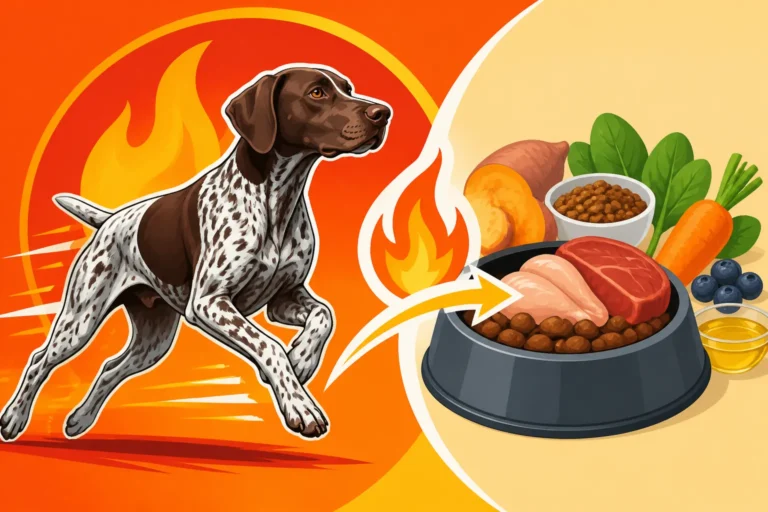
While we might be pulling out light jackets, many regions still experience significant heat and humidity well into September. Think about those crisp mornings that quickly turn into sweltering afternoons by 10 AM. Your GSP, with their incredibly high metabolism and boundless energy, generates a lot of internal heat when they're active. Unlike humans who sweat profusely to cool down, dogs primarily rely on panting. They have sweat glands in their paw pads, but these aren't efficient for whole-body cooling. Their short, dense coat, while protective against brush, doesn't offer much insulation from heat, and in some ways, can trap it close to the body, especially if they are heavily muscled. This combination of high internal heat production and inefficient cooling mechanisms makes them incredibly susceptible to overheating, even when the thermometer isn't at its summer peak.
Imagine you're out for an early morning walk or training session. The air feels pleasant, maybe 65 degrees Fahrenheit. But by the time your GSP has been retrieving bumpers or working a field for an hour, their internal temperature can easily climb. The ground temperature can also be significantly hotter than the air, radiating heat back up at them. This hidden heat can be a silent danger, especially for a dog whose genetics scream "go, go, go!" Understanding this physiological reality is the first step in ensuring their safety in those transitional weather periods.
Recognizing the Early Signs of Overheating
Catching overheating signs early is absolutely crucial for your German Shorthaired Pointer. These dogs are so stoic and driven that they'll often try to push through discomfort, which can quickly escalate a mild issue into a dangerous emergency. The very first signs might be subtle. Your usually relentless GSP might start to slow their pace a little, perhaps lagging slightly behind on a retrieve or needing more encouragement to keep quartering. They might also begin panting more intensely than usual, with their mouth wide open and tongue extended further. Pay close attention to their gums; normally a healthy bubble-gum pink, they might appear brighter red or even dark brick red if they are getting too hot. This indicates increased blood flow as their body tries to dissipate heat.
Other early warning signs include seeking out shade more frequently, even if it's just for a moment, or looking for water to stand in. Their eyes might seem a little more glazed or distressed. You might notice their skin feels unusually hot to the touch, especially on their belly or inner thighs where blood vessels are closer to the surface. Don't dismiss these cues as just tiredness. If your GSP is typically a tireless machine, any deviation from their norm, especially on a warm day, warrants immediate investigation and a break. Ignoring these whispers can quickly lead to more severe symptoms. If you want to delve deeper into identifying these crucial signals, read our guide on Signs a Shorthair Is Overheating in the Field.
The Dangers of Heat Stroke and Exertional Collapse
If those early warning signs of overheating are missed or ignored, the situation can rapidly deteriorate into a life-threatening emergency: heat stroke. German Shorthaired Pointers, being such high-drive athletes, are unfortunately at a higher risk for this, especially when they're pushed during strenuous activity in warm conditions. Their powerful engines run hot, and if they can't shed that heat fast enough, their core body temperature rises to dangerous levels, typically above 104 degrees Fahrenheit. This extreme heat literally starts to cook their internal organs, leading to widespread cellular damage.
The symptoms of heat stroke are severe and require immediate veterinary attention. These include uncontrollable, frantic panting, excessive drooling, wobbly or uncoordinated movements, vomiting, diarrhea (sometimes bloody), seizures, and eventually collapse or loss of consciousness. Heat Stroke in a September Shorthair is a real and terrifying risk. This isn't just about discomfort; it's about organ failure, brain damage, and potential death. Another related concern is exertional collapse, which, while not always involving extreme hyperthermia, often happens during intense exercise in heat and presents similarly with sudden weakness and an inability to continue. For a GSP owner, understanding these severe risks means taking every precaution to prevent your dog from reaching such a critical state.
How Cooling Vests Work and Their Design for Active Dogs
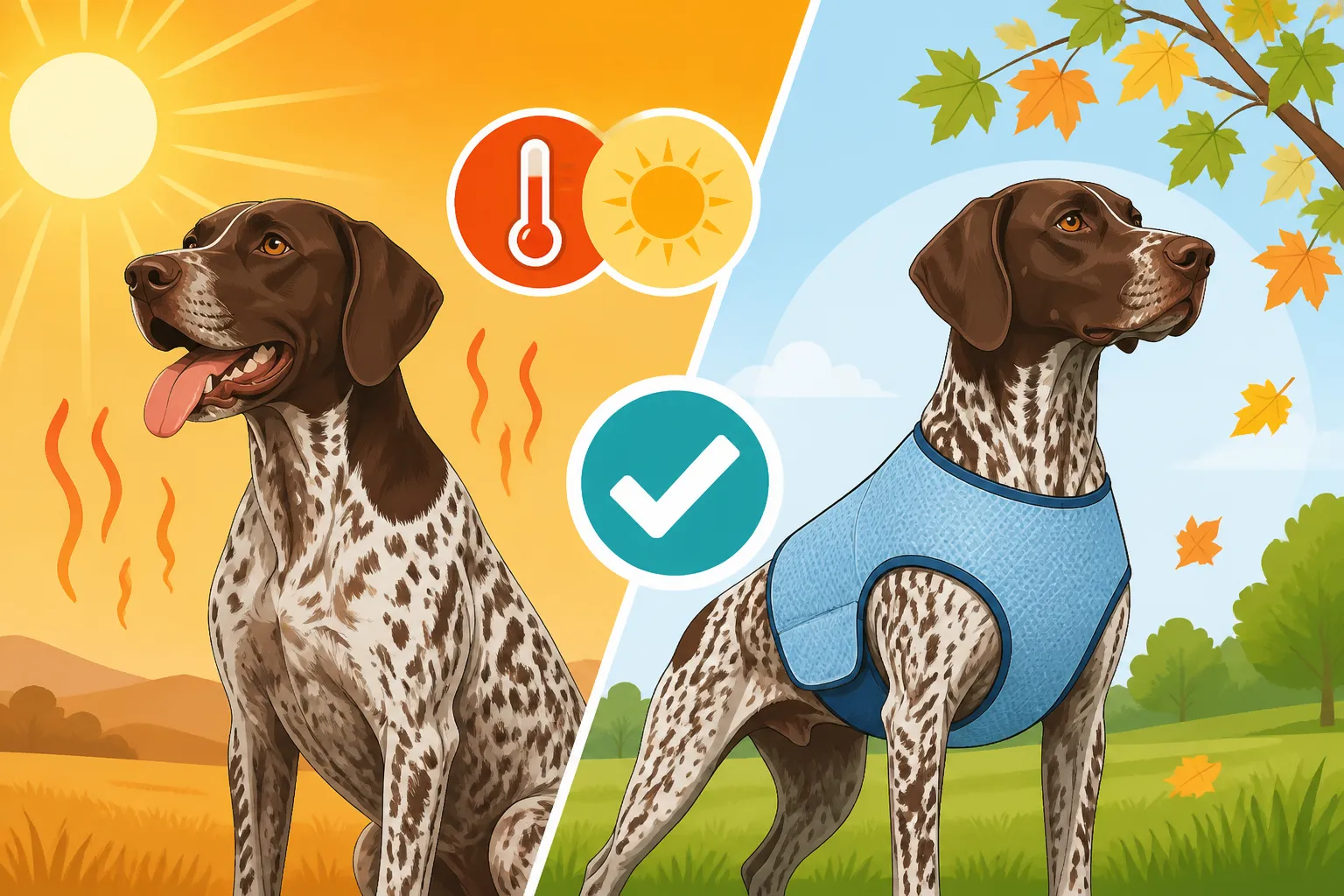
With the genuine risk of heat stress, many GSP owners look for every tool available to keep their dogs safe and comfortable. Cooling vests have emerged as a popular option, designed to actively help dogs regulate their body temperature. But not all vests are created equal, and understanding how they work is key to choosing the right one for your energetic companion. They aren't magic shields, but rather a valuable part of a comprehensive heat management strategy, especially when those September days are still kicking up the mercury.
Principles of Evaporative Cooling and Phase Change Materials
Cooling vests for dogs primarily utilize one of two scientific principles to lower body temperature: evaporative cooling or phase change materials. Evaporative cooling vests are typically made from highly absorbent fabrics that you soak in cold water before putting them on your dog. As the water slowly evaporates from the vest's surface, it draws heat away from your dog's body, much like how sweating cools humans. The larger the surface area of the vest and the better the airflow, the more effective this process generally is. These vests need to be re-wetted periodically, depending on ambient temperature and humidity. They are often lighter and less bulky.
Phase change material (PCM) vests, on the other hand, contain special gel packs that you freeze or chill before insertion. These gels are designed to maintain a specific low temperature for an extended period without becoming "too cold" (like ice packs, which can cause frostbite or discomfort). As the gel slowly warms up, it absorbs heat from your dog's body. The benefit here is a longer-lasting, consistent cooling effect that isn't dependent on evaporation, making them potentially better in high-humidity environments where evaporative cooling is less efficient. You can often find replacement gel packs if you're out for a very long day, available on sites like Amazon or through specialty pet retailers. Both types of vests are designed with the intention of cooling the dog without drenching their fur, aiming for comfort and practicality.
Key Features to Look for in a Quality Cooling Vest
Choosing the right cooling vest for your German Shorthaired Pointer means considering their specific needs as an active, driven breed. First and foremost, fit is paramount. A vest that's too loose will shift and chafe, potentially hindering movement or even snagging on brush. One that's too tight will restrict breathing and circulation. Look for adjustable straps and a design that allows for a full range of motion, particularly across the shoulders and chest, essential for their powerful stride. Many brands offer size guides based on chest girth and length, so measure your GSP carefully.
Durability is another non-negotiable feature. Your GSP is going to be running through fields, perhaps ducking under fences, and generally putting any gear through its paces. The fabric should be tough, tear-resistant, and the seams well-stitched. If it’s an evaporative vest, the material should be highly absorbent but also quick-drying on its outer layer to facilitate cooling without making your dog feel soggy. For vests with gel packs, ensure the pockets are secure and the packs themselves are robust. Reflective accents are a huge bonus, enhancing visibility in low light, which is often when we hunt or walk in cooler parts of the day. Finally, consider ease of cleaning. A vest that can be easily rinsed or machine-washed after a muddy outing is far more practical. When browsing for these features, platforms like Chewy often provide detailed product descriptions and customer reviews that can help you gauge real-world performance for active breeds.
Comparing Different Types of Cooling Vests for Shorthairs
When you're looking to help your German Shorthaired Pointer stay cool, especially as those September days still carry a punch, the choice between different types of cooling vests can feel a bit overwhelming. Each has its pros and cons, and what works best really depends on your specific activities and the environment. Let's break down the main types to help you decide for your active GSP.
| Feature | Evaporative Cooling Vests | Phase Change Material (PCM) Vests |
|---|---|---|
| How it Works | Water saturates fabric; evaporation draws heat away from body. | Chillable/freezable gel packs absorb heat from the dog. |
| Key Advantage | Lightweight, less bulky, generally more affordable. | Longer-lasting, consistent cooling; effective in high humidity. |
| Key Disadvantage | Requires re-wetting; less effective in high humidity. | Can be heavier/bulkier; initial cost often higher; gel packs need pre-chilling. |
| Best Use for GSP | Shorter, less intense outings; dry climates; casual walks. | Long hunts, intense training; humid climates; extended outdoor time. |
| Maintenance | Rinse and air dry; re-wet as needed. | Freeze/chill packs; wipe down vest; replace packs if damaged. |
| Common Brands | Ruffwear, Hurtta | TechKewl, Chilly Dogs |
For a GSP, especially one used for hunting or intense field work, the decision often comes down to the duration and intensity of the activity. An evaporative vest might be perfect for a brisk morning walk that extends into a warm afternoon, or for keeping your dog comfortable during short breaks in the field. They are less cumbersome, making them a good choice if your dog is going to be pushing through dense cover where bulk could be a disadvantage. However, if you're planning a full day of upland hunting in a humid environment, or if you need sustained cooling without needing to constantly find water for re-wetting, a PCM vest could offer more reliable performance. Some PCM vests are designed with slimmer profiles to minimize snagging, making them more practical for active dogs. Thinking about where and how you'll use the vest most will guide you to the right type.
Practical Application of Cooling Vests for September Activities
So, you've invested in a cooling vest for your German Shorthaired Pointer, hoping to give them an edge against the lingering September heat. That's a great start! But simply having the vest isn't enough; knowing when and how to use it effectively, and understanding its limitations, is what truly makes it a valuable tool in your dog's heat management arsenal. It's about smart planning and holistic care, not just throwing on a piece of gear and hoping for the best.
When and Where a Cooling Vest Makes a Real Difference
A cooling vest can be incredibly beneficial for your GSP in specific scenarios during September. Think about those early season hunts or training sessions when the morning starts cool but quickly heats up by mid-day. Wearing a vest during breaks, while traveling to and from the field, or even for the first hour of a hunt, can help manage their core temperature before it escalates. For example, if you're driving to a training ground and the truck heats up quickly, putting the vest on beforehand can prevent pre-activity overheating. Similarly, for long walks or runs on sunny trails, especially those with minimal shade, a vest can provide sustained relief. Imagine your GSP, typically a blur of motion, now able to maintain its focus during a retrieve drill because it's not constantly battling rising body heat.
Even for non-hunting activities, like a day out at an outdoor event or simply relaxing in the yard on a warm afternoon, a cooling vest can make a huge difference in your GSP's comfort. It's not just about preventing heat stroke, but also about improving overall well-being and allowing them to enjoy activities they might otherwise struggle with. If you're going to be waiting around at an event, or if your dog just tends to run hot, a vest can keep them from becoming miserable. Remember to factor in your local climate; a vest might be more essential in a humid southern September than a dry northern one.
Combining Vest Use with Other Heat Management Strategies
While a cooling vest is a fantastic piece of gear, it's never a standalone solution for managing heat in a German Shorthaired Pointer. It works best as part of a multi-faceted approach. Think of it as one valuable tool in your toolbox, not the entire kit. The most crucial strategy remains timing your activities. Aim for early mornings or late evenings when the sun's intensity is lower and ambient temperatures are naturally cooler. Even with a vest, pushing your GSP during the hottest part of a September afternoon is simply asking for trouble. Before any outing, check the forecast not just for temperature, but also for humidity and air quality, as these all impact how effectively your dog can cool itself.
Hydration is another non-negotiable component. Always carry plenty of fresh water for your GSP, and offer it frequently. Encourage them to drink, and don't assume a vest means they need less water. Find shady spots for regular breaks, allowing their body to recover naturally. Even a few minutes in the shade can make a significant difference. If you're in an open field, consider bringing a small, portable shade structure or finding natural cover. Remember, the vest helps dissipate heat, but it doesn't eliminate the need for common-sense precautions. For deeper insights on planning your outings, explore Shade and Water for a Shorthair on an Early Hunt.
Potential Limitations and Misconceptions of Cooling Vests
It's easy to fall into the trap of thinking a cooling vest makes your German Shorthaired Pointer invincible to heat, but that's a dangerous misconception. A cooling vest is an aid, not a magic bullet. One significant limitation is that no vest can counteract truly extreme conditions. If the heat index is dangerously high – say, above 80-85 degrees Fahrenheit combined with high humidity – even the best cooling vest won't prevent overheating during intense exercise. In these conditions, the best "vest" is staying home or limiting activity to short, low-impact strolls in the coolest parts of the day. Don't push your GSP just because they're wearing a vest; always defer to common sense and monitor their condition.
Another common misconception is that a vest will keep them perfectly cool indefinitely. Evaporative vests need to be re-wet regularly, and phase-change packs will eventually lose their chill. Neglecting to refresh or replace these elements turns the vest into dead weight or even an insulating layer, trapping heat rather than dissipating it. Furthermore, some vests, especially those that are bulky or don't fit well, can actually hinder natural airflow around the dog's body, or cause chafing, leading to discomfort or hotspots. It's essential to continually monitor your GSP while they're wearing the vest and adjust as needed. Remember, the vest is a tool to support their natural cooling mechanisms, not replace them.
Beyond the Vest: Comprehensive Heat Management for Your GSP
While cooling vests offer a valuable layer of protection against September's lingering heat, they are just one piece of the puzzle. A truly comprehensive approach to keeping your German Shorthaired Pointer safe and comfortable requires a holistic understanding of heat management. This means being proactive, diligent, and always putting your dog's well-being ahead of your desire for a long run or a successful hunt. These dogs live to work, but we have to teach them (and ourselves) when to slow down.
Proactive Planning for September Hunts and Training
Successful and safe September hunts or training sessions with your GSP begin long before you even step out the door. Proactive planning is paramount. Always check the weather forecast for your specific location – and not just the temperature. Pay close attention to the "feels like" temperature, which accounts for humidity, and the UV index. A sunny, humid 70-degree day can feel much hotter and be more dangerous than a dry 75-degree day. Plan your outing for the coolest parts of the day, typically before 9 AM and after 6 PM, or even skip the day altogether if conditions are too extreme. Our guide on The Temperature a German Shorthaired Pointer Should Not Hunt In offers further detail on this.
Scout your chosen location ahead of time if possible. Look for natural shade opportunities – dense tree lines, large boulders, or even tall brush that can offer a respite from direct sun. Identify water sources your GSP can safely drink from or wade into to cool down. If natural water isn't available, plan to carry extra water and a portable bowl. Map out your route to prioritize shaded paths or areas with better airflow. Having a contingency plan for an early exit is also smart; know the nearest routes back to your vehicle or an emergency vet if things go south. Preparation minimizes risk and maximizes your GSP's enjoyment.
Hydration and Electrolytes on Warm Days
Proper hydration is perhaps the single most critical aspect of heat management for a German Shorthaired Pointer, even more so than any cooling vest. Your GSP, with its high drive and intense exercise, can quickly become dehydrated, especially on warm September days. Always carry ample fresh water – more than you think you'll need – and a portable bowl. Offer water frequently, not just when your dog seems thirsty. Small, regular sips are often more effective than guzzling large amounts, which can sometimes lead to bloat, another serious risk for the breed. Don't rely solely on natural water sources, as they may be contaminated or dry.
For particularly long or intense outings, or if your GSP is working hard on consecutive warm days, consider incorporating canine-specific electrolyte supplements into their water. Just like human athletes, working dogs lose essential minerals like sodium and potassium through panting and urination. Replacing these can help maintain proper fluid balance and muscle function, reducing the risk of cramping and fatigue. Products like those found on Ollie often cater to the specific nutritional and hydration needs of active dogs, sometimes including electrolyte formulations. Always follow the manufacturer's directions for dosage. Remember, a well-hydrated dog is better equipped to handle heat, even with the aid of a cooling vest. You can learn more about this by reading Electrolytes for a German Shorthaired Pointer in the Field.
Post-Activity Cooling and Recovery Protocols
Even with careful planning, a cooling vest, and vigilant hydration, your German Shorthaired Pointer will still be warm after a vigorous activity on a warm September day. The post-activity cooling and recovery phase is just as important as the pre-activity preparation. Immediately after your GSP finishes working, find a cool, shaded spot to allow them to rest. Remove their cooling vest, especially if it's an evaporative one that has dried out, as it might start to insulate rather than cool. Offer them fresh water, again in smaller, frequent amounts.
If your dog seems excessively hot, gently pour or sponge cool (not ice cold) water over their head, neck, armpits, and groin area. These are areas where major blood vessels are close to the surface, allowing for more efficient heat exchange. You can even use a small fan if available. Avoid drenching their entire body with ice-cold water, as this can cause peripheral blood vessels to constrict, trapping heat in the core. Continue to monitor their breathing and gum color until they return to normal. Avoid putting them directly into a hot kennel or vehicle right away; allow them to cool down naturally first. This careful approach to recovery helps prevent delayed heat-related issues and ensures your GSP is ready for their next adventure. Our guide, Getting a Shorthair's Temperature Down After a Run, offers more insights into this critical recovery period.
Disclaimer
This article is for general informational purposes only and does not constitute professional advice. Laws, prices and regulations vary by location and change over time. Consult a qualified professional for guidance on your specific situation.