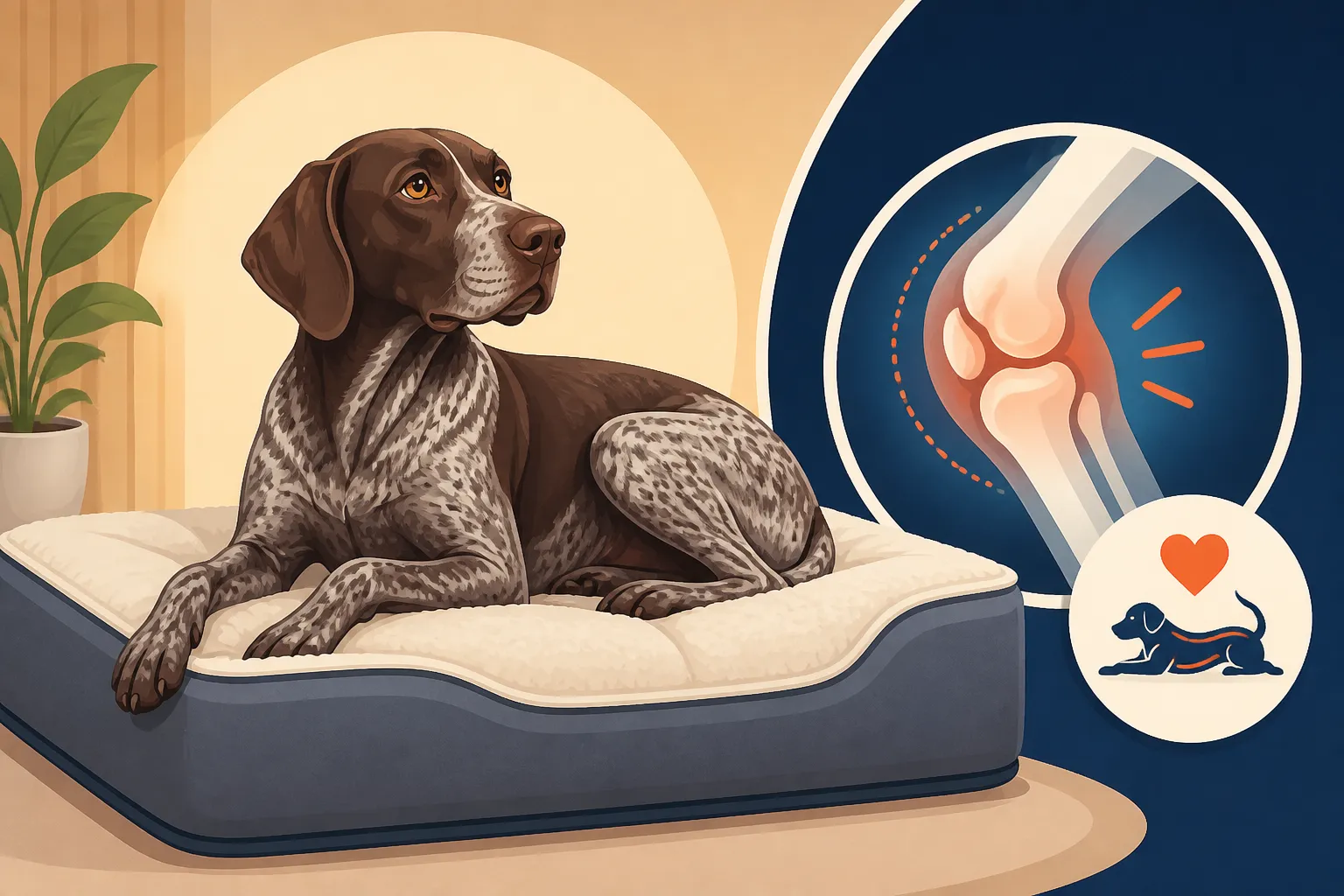
Beds for a Shorthair With Worn Out Joints
It's truly heartbreaking to watch our once boundless German Shorthaired Pointers, who ran like the wind and leaped through fields with effortless grace, start to struggle with everyday movements. That stiffness in the morning, the hesitant climb onto the couch, or the outright refusal to jump into the truck are undeniable signs that their joints are feeling the toll of a lifetime of adventure. This guide is all about finding the perfect bed to provide comfort, support, and a little relief for your aging GSP's worn-out joints, helping them rest easier and perhaps even find a bit more spring in their step.
The Unspoken Toll: Why Your GSP's Joints Start Aching
German Shorthaired Pointers are athletes, plain and simple. From chasing pheasants across wide-open prairies to retrieving ducks from icy marshes, their bodies are built for movement, speed, and endurance. But just like any high-performance machine, decades of relentless action, whether in the field or simply in an active home, eventually lead to wear and tear. It's not a failure on your part, nor is it necessarily a sign of neglect; it's often the inevitable consequence of a life lived to the fullest.
The Impact of a Lifetime of Activity
Think about all the miles your GSP has logged. Every sharp turn, every high jump over a downed log, every sudden stop and start in pursuit of a scent – it all adds up. The cartilage that cushions their joints slowly erodes, ligaments and tendons can weaken, and inflammation can become a chronic companion. This isn't just an abstract medical concept; it translates into real, tangible discomfort for your dog. They might hesitate before taking stairs, struggle to get up after a nap, or even become irritable when touched in certain areas. It's a tough reality to face, but acknowledging it is the first step toward providing meaningful relief. This persistent discomfort can lead to a noticeable change in their willingness to engage, impacting their quality of life.
Many owners notice their once tireless hunting partners starting to slow down around The Age a German Shorthaired Pointer Slows in the Field, and this often coincides with the onset of more pronounced joint issues. Their boundless energy might still be there in spirit, but their body just can't keep up like it used to.
Common Joint Ailments in Aging GSPs
While "worn-out joints" is a good general term, several specific conditions often contribute to a German Shorthaired Pointer's discomfort as they age. Arthritis in a German Shorthaired Pointer at Eight is incredibly common, manifesting as inflammation and stiffness in the joints. This can make simply lying down and getting back up a painful ordeal. Then there's hip and elbow dysplasia, often genetic predispositions that can worsen with age and activity, leading to significant structural issues. Even past injuries, like a torn cruciate ligament that healed years ago, can come back to haunt them as secondary arthritis develops in the affected joint.
The pain from these conditions isn't always obvious. GSPs are incredibly stoic dogs, often pushing through discomfort to please their owners. It's why paying close attention to subtle changes in their gait, their willingness to move, or even their sleeping positions becomes so crucial. They might favor one side, shift their weight constantly, or sigh deeply when settling down. These are all clues that their body is asking for more support and comfort, especially during their longest periods of rest.
The Essential Features of a Great Orthopedic Dog Bed
When your GSP is dealing with joint pain, their bed isn't just a luxury; it's a vital part of their comfort and care regimen. A truly great orthopedic bed does more than just get them off the cold floor; it provides targeted support, reduces pressure points, and helps promote deeper, more restorative sleep. Choosing the right one can make a huge difference in their daily well-being.
Superior Support and Pressure Relief
The most critical feature of an orthopedic dog bed is its ability to provide firm, yet conforming, support. This typically comes from high-density memory foam, which molds to your dog's body, distributing their weight evenly and alleviating pressure from aching joints like hips, elbows, and shoulders. Cheap foam beds might feel soft initially, but they often flatten quickly, offering no real support and leaving your dog essentially lying on the hard floor again. For an older GSP, this means waking up even stiffer and more sore.
Look for beds with a substantial thickness of quality memory foam – at least 3-4 inches for a breed of the GSP's size and weight. When your dog lies down, their body should be cradled, but they shouldn't sink all the way to the bottom. This proper support helps maintain spinal alignment, reduces strain on inflamed joints, and allows muscles to fully relax. It's about creating an environment where their body can truly rest and recuperate after a long day, or even just a long morning.
Durable, Washable, and Hypoallergenic Materials
Let's be real: dogs are messy. And an older dog, especially one on certain medications or with occasional incontinence, can be even messier. So, a bed that's easy to clean isn't just a convenience; it's a necessity for hygiene and longevity. Look for beds with removable, machine-washable covers that are durable enough to withstand frequent laundering without falling apart. Many quality orthopedic beds use covers made from tough, yet soft, fabrics that resist tears and stains.
Beyond washability, consider the materials themselves. Hypoallergenic covers can be a real blessing, especially for GSPs who might also contend with Managing a German Shorthaired Pointer's Lifelong Skin Disease or environmental allergies. Keeping their sleeping area clean and free of irritants is another way to contribute to their overall comfort. The bed itself should also be well-constructed; stitching should be strong, and zippers sturdy, ensuring that the bed can stand up to years of use and cleaning without losing its integrity. You don't want to invest in a bed only for the cover to fall apart after a few washes.
Types of Orthopedic Beds for German Shorthaired Pointers
The world of orthopedic dog beds has expanded quite a bit, offering a range of options designed to cater to different needs and preferences. While the core principle of joint support remains, how that support is delivered and what additional features are included can vary widely. Understanding these types will help you choose the best sanctuary for your beloved GSP.
Memory Foam and Bolstered Beds: The Gold Standard
For a German Shorthaired Pointer with worn-out joints, memory foam beds are often the top recommendation. These beds use high-density, viscoelastic foam that responds to body heat and pressure, molding perfectly to your dog's contours. This individualized support is crucial because it eliminates painful pressure points, distributing weight evenly across their body. Imagine your dog sinking gently into a cloud of support, rather than lying on a firm, unyielding surface. This allows for better circulation and reduces the morning stiffness that often plagues older GSPs.
Many memory foam beds also come with bolsters, which are raised edges around some or all sides of the bed. For a GSP, these bolsters aren't just decorative; they serve a practical purpose. They provide a comfortable headrest, acting like a pillow, which can be particularly soothing for dogs who like to rest their heads while observing their surroundings. More importantly, bolsters offer a sense of security and a place for your dog to lean against, which can be comforting for aching joints or for those dogs who like to "nest" or feel enclosed. This supportive edge can mimic the feeling of cuddling up against another dog or even a human, offering both physical and emotional comfort. When browsing options on sites like Chewy or Amazon, you'll find a wide array of memory foam beds, often with bolster options.
Cooling and Heated Beds: Tailoring to Temperature Needs
Beyond just support, temperature can play a significant role in an older dog's comfort. Some GSPs, especially those prone to overheating after even moderate exercise or living in warmer climates, might benefit from a cooling bed. These beds are designed with breathable materials, gel-infused memory foam, or even incorporate passive cooling technology to dissipate heat away from their body. A cooler resting surface can reduce inflammation and help a dog relax more deeply, preventing them from seeking out cold, hard floors that offer no joint support. Keeping them cool after activity, especially during the warmer months, can be a real game-changer.
On the flip side, for GSPs with severe arthritis, particularly in colder environments or during winter, a heated bed can provide immense relief. Gentle, consistent heat can increase blood flow, relax stiff muscles, and alleviate joint pain. These beds often have low-voltage heating elements and thermostat controls to ensure safety and comfort. They aren't meant to be scorching hot, but rather to provide a soothing warmth that can penetrate deep into aching tissues. Imagine the relief you feel from a heating pad on a sore muscle; it's the same principle for your dog. Just be sure to always choose a heated bed specifically designed for pets, with safety features to prevent overheating or electrical hazards. Whether an Old Shorthair Feels the Cold More is a common concern, and a heated bed can certainly address that.
Finding the Right Fit and Placement for Maximum Comfort
Once you've zeroed in on the type of orthopedic bed that best suits your GSP's needs, the next critical steps are selecting the right size and finding the ideal spot in your home. Even the best bed won't provide full benefits if it's too small or placed in an inconvenient location.
Sizing Up: Ensuring Adequate Space
When it comes to dog beds, especially for larger breeds like German Shorthaired Pointers, size absolutely matters. A bed that's too small will force your GSP to curl up tightly, which can exacerbate joint stiffness rather than alleviate it. They need enough space to stretch out fully in any position – sprawled on their back, lying on their side with legs extended, or even doing the classic GSP "frog-dog" pose.
To get the right size, measure your dog from the tip of their nose to the base of their tail, and then add at least 8-12 inches to that length. Also, consider their height and width when they are standing. The bed should be wide enough that when they lie on their side, their legs aren't hanging off the edge. If you're looking at a bolstered bed, make sure the internal sleeping area is large enough, not just the overall dimensions including the bolsters. Don't be afraid to go a size up if your GSP is on the cusp between two sizes; more room is almost always better for an older, achy dog. Many pet product retailers, including Chewy and Amazon, provide detailed sizing charts to help you make an informed decision.
Strategic Placement for Ease and Security
The location of the bed is just as important as the bed itself. For an older GSP with mobility issues, ease of access is paramount. Place the bed in an area that's easy for them to get to, away from busy thoroughfares where they might get bumped or jostled. Consider placing it in a quiet corner of a main living area where they can still feel like part of the family without being in the way. They'll appreciate being close to you, especially if their vision is starting to decline or they're experiencing some cognitive changes.
Avoid placing the bed in drafty spots or directly in front of heating/cooling vents unless it's a specialized heated or cooling bed. If you have multiple floors or different areas your dog frequently rests in, you might even consider investing in a second orthopedic bed. This saves them the effort of navigating stairs or slick floors to get to their comfort zone. A primary bed might be in the living room, and a secondary one in your bedroom, allowing them comfortable resting spots wherever they choose to be. Ensuring easy access, especially for those moments when you're Helping a Stiff Old German Shorthaired Pointer Get Up, makes a big difference. Having a comfortable, strategically placed bed can also contribute to reducing slips and falls, especially if you have Flooring That Stops an Old Shorthair Slipping.
Combining Comfort with Other Joint Care
Remember, an orthopedic bed is a fantastic tool, but it's part of a larger picture of senior GSP care. Alongside a supportive bed, consider other measures to support their joint health. Many owners find success with Joint Supplements for a Hunting German Shorthaired Pointer, which can help slow cartilage degradation and reduce inflammation. Maintaining a healthy weight is also crucial, as extra pounds put immense strain on already compromised joints; consider discussing Feeding a Senior Shorthair That Has Slowed Down with your vet to ensure they're getting the right nutrition without excess calories.
Regular, gentle exercise, appropriate for their current mobility, helps keep muscles strong and joints flexible. Short, frequent walks are often better than one long, strenuous outing. And, of course, consistent veterinary care is key. Your vet can provide advice on pain management, physical therapy, and other interventions that, when combined with a truly supportive bed, can significantly improve your GSP's comfort and quality of life as they navigate their golden years. Investing in the right bed is not just buying a piece of furniture; it's investing in their comfort, their dignity, and the precious time you have left together.
| Feature / Bed Type | Memory Foam Bed | Bolstered Memory Foam Bed | Cooling Orthopedic Bed | Heated Orthopedic Bed |
|---|---|---|---|---|
| Primary Benefit | Superior pressure relief, contouring support | Pressure relief, sense of security, head/neck support | Heat dissipation, reduces inflammation | Soothes stiff muscles, increases blood flow |
| Ideal GSP User | Any GSP with joint pain, arthritis, senior dogs | GSPs who like to lean, curl up, or feel enclosed | GSPs who overheat easily, active dogs, warm climates | GSPs with severe arthritis, cold sensitivity, cool climates |
| Pros | Excellent body conformity, durable foam | Added comfort and security, multi-positional support | Prevents overheating, can reduce inflammation | Provides therapeutic warmth, great for pain relief |
| Cons | Can sometimes retain heat (unless specialized) | May take up more floor space, bolsters can flatten over time | Cooling effect may be subtle depending on technology | Requires power outlet, safety features are paramount |
| Washability/Care | Removable, machine-washable cover | Removable, machine-washable cover (bolster covers too) | Removable, machine-washable cover | Removable, machine-washable cover (heating element separate) |
| Considerations | Look for dense foam (4+ inches) | Ensure inner sleeping area is large enough for full stretch | Check reviews for actual cooling effectiveness | Always use pet-specific models with automatic shut-offs |
Disclaimer
This article is for general informational purposes only and does not constitute professional advice. Laws, prices and regulations vary by location and change over time. Consult a qualified professional for guidance on your specific situation.