The Eye and Nose Faults That Disqualify a Shorthair
When you're looking at a German Shorthaired Pointer, whether for sport, companionship, or the show ring, it's easy to get swept up in their boundless energy and striking appearance. But for breeders and owners serious about the integrity and health of the breed, understanding the specific physical traits that can lead to disqualification is paramount. This guide will walk you through the eye and nose faults outlined in the breed standard that can disqualify a German Shorthaired Pointer, helping you understand their significance and what they mean for the dog.
Understanding German Shorthaired Pointer Breed Standards
Breed standards aren't just arbitrary rules dreamt up by dog fanciers; they are blueprints designed to preserve the unique characteristics, temperament, and functional health of a breed. For the German Shorthaired Pointer, a breed renowned for its versatility as a hunting companion, these standards ensure the continuation of traits that make them exceptional in the field and sound in body. Ignoring these guidelines can inadvertently lead to the proliferation of health issues or the dilution of the very qualities that define a Shorthair.
The Purpose of a Breed Standard
At its heart, a breed standard serves as a written description of the ideal specimen of a breed. It covers everything from overall appearance and temperament to specific details about the head, coat, movement, and even the set of the tail. For a German Shorthaired Pointer, this means defining the powerful, athletic body, the intelligent and keen expression, and the distinctive coat that allows them to hunt efficiently on land and in water. These standards are developed by parent clubs, like the German Shorthaired Pointer Club of America, to maintain breed type and prevent undesirable traits from becoming widespread. They are a living document, influenced by historical purpose and evolving understanding of canine health.
When considering a German Shorthaired Pointer, especially a puppy, it’s not just about what you see today, but what those traits predict for the dog's future. A proper understanding of the standard helps you identify a dog that embodies the breed's best attributes, ensuring they can fulfill their potential, whether that's pointing pheasants or being a robust family member. It also offers a framework for breeders to select appropriate pairings, aiming to produce the healthiest and most type-correct offspring possible. The Five Tests Behind a German Shorthaired Pointer CHIC Number provides a good overview of health certifications breeders strive for.
Distinguishing Faults from Disqualifications
Within the breed standard, there's a crucial distinction between a "fault" and a "disqualification." A fault is any deviation from the ideal description in the standard. Faults are typically graded in severity, from minor to serious, and can impact a dog's placement in the show ring, but they don't prevent the dog from being recognized as a German Shorthaired Pointer. For example, a slightly soft back or ears that are a bit too long might be considered faults, affecting a judge's perception but not leading to expulsion from competition.
A disqualification, however, is a severe deviation from the standard, deemed so detrimental to the breed's type, health, or function that the dog is ineligible to compete in conformation events and should ideally not be bred. These are hard lines drawn in the sand, representing traits that fundamentally compromise what it means to be a German Shorthaired Pointer. Understanding these specific disqualifying traits is crucial for anyone involved with the breed, as they often have implications beyond mere aesthetics, pointing to potential genetic issues or functional limitations.
Disqualifying Eye Faults in the German Shorthaired Pointer
The eyes of a German Shorthaired Pointer are often described as intelligent and expressive, reflecting their keen hunting instincts. But beyond expression, the structure, color, and function of a Shorthair's eyes are critical aspects of the breed standard. Several specific eye conditions and characteristics can lead to disqualification in the show ring.
Abnormal Eyelids and Their Health Implications
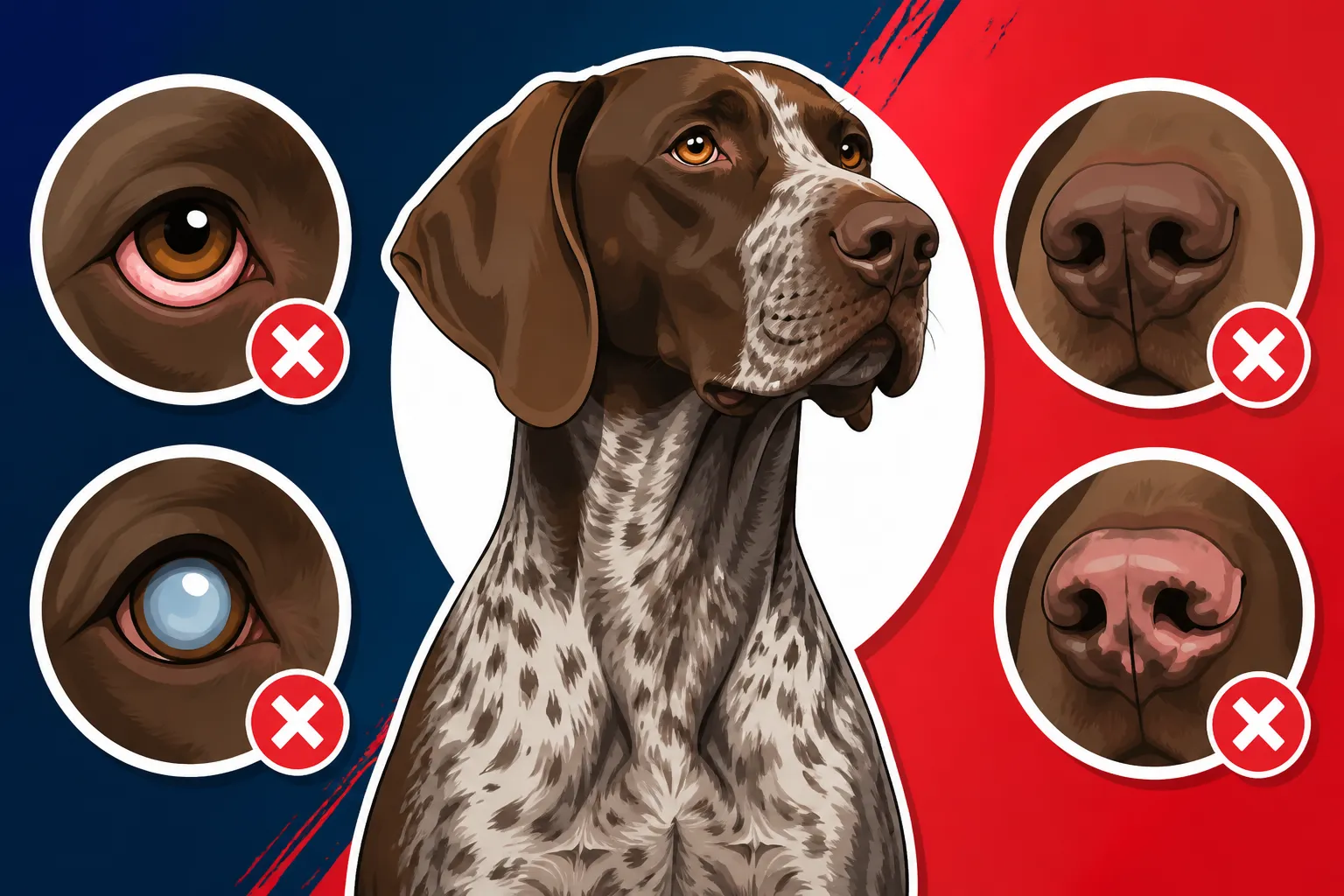
Eyelid abnormalities are a common concern across many breeds, and the German Shorthaired Pointer is no exception. For a Shorthair, conditions like entropion and ectropion are serious. Entropion is where the eyelid rolls inward, causing the eyelashes or hair to rub against the cornea. This constant irritation can lead to pain, corneal ulcers, scarring, and even vision loss if left untreated. Imagine how uncomfortable that would be for a dog trying to push through dense cover!
Conversely, ectropion is when the eyelid rolls outward, exposing the sensitive conjunctiva. This creates a pocket where debris and moisture can collect, making the eye susceptible to chronic irritation, dryness, and recurrent infections. Both conditions are not only painful and detrimental to the dog's comfort and vision but also considered disqualifying faults under the German Shorthaired Pointer breed standard. They compromise the functional integrity of the eye and are often genetic, meaning they can be passed down to offspring. Rolled In Lids on a German Shorthaired Pointer further explores these issues.
Eye Color That Falls Outside the Standard
The breed standard for German Shorthaired Pointers is quite specific about eye color. Typically, Shorthairs should have eyes that are shades of brown, often described as dark brown or hazel. These darker eye colors provide better protection from harsh sunlight and glare in the field, a practical consideration for a hunting dog. Any eye color that deviates significantly from this range can be a disqualifying fault.
One specific disqualification is a "China eye." This term typically refers to an eye with a pale blue or whitish iris, often lacking normal pigmentation. While some breeds may have blue eyes as part of their standard, it is not acceptable for a German Shorthaired Pointer. A china eye is not only an aesthetic deviation but can sometimes be associated with reduced vision or increased light sensitivity, particularly in bright conditions, which would be a significant handicap for a dog expected to work outdoors all day. Likewise, "wall eyes," where one or both eyes are pale blue or white, are also disqualifying. What a China Eye Is on a German Shorthaired Pointer offers more detail on this specific fault.
Vision Impairments and Related Issues
Beyond structural and color faults, any evidence of actual vision impairment or blindness can also lead to disqualification. While it might seem obvious that a blind dog wouldn't be able to compete or function optimally as a hunting dog, the standard ensures that dogs presented for evaluation have sound vision. This includes conditions like day blindness, where the dog struggles to see in bright light, or other inherited vision problems.
For a breed so reliant on keen senses for its work, any compromise to vision is a serious matter. Although some vision issues might not be immediately apparent in a young puppy, reputable breeders will often have their breeding stock undergo regular eye examinations by a veterinary ophthalmologist, with results recorded with organizations like the Orthopedic Foundation for Animals (OFA) or the Canine Health Information Center (CHIC). These clearances help ensure that breeding dogs are free from detectable genetic eye diseases. Reading a German Shorthaired Pointer's Eye Certificate explains these certifications in depth.
Disqualifying Nose and Pigmentation Faults
The nose of a German Shorthaired Pointer is not just for smelling; its color and form are also integral to the breed standard, reflecting both aesthetics and underlying health. Just like the eyes, specific characteristics of the nose and surrounding pigmentation can lead to disqualification.
The Crucial Role of Nose Color
For a German Shorthaired Pointer, the nose leather (the bare skin of the nose) should always be solid brown, typically a shade of liver. This deep, rich brown color is characteristic of the breed and is directly linked to their genetic coat color. A nose that is entirely black, pink, or has unpigmented spots, often called a "butterfly nose," can be a disqualifying fault. A black nose, while common in many dog breeds, is specifically disallowed in the Shorthair standard. Why a Flesh Colored Nose Disqualifies a Shorthair delves deeper into this particular fault.
A "flesh-colored" or pink nose is a lack of pigmentation. While it might seem like a purely cosmetic issue, a lack of pigmentation can sometimes indicate a broader issue with pigment production and can leave the nose more susceptible to sunburn and irritation, especially for a dog spending extensive time outdoors. This exposure can lead to chapping, cracking, or even certain types of skin cancers over time. For a dog that needs its nose to be robust and healthy for relentless sniffing and tracking, this is a significant functional concern.
Other Pigmentation Discrepancies
Beyond the nose itself, other areas of pigmentation around the head can also be subject to disqualification if they deviate from the standard. For German Shorthaired Pointers, the lips and eye rims should also be pigmented to match the liver nose. A lack of pigmentation in these areas, appearing pink or flesh-colored, is also considered a serious fault and can lead to disqualification. This overall lack of dark pigmentation around the muzzle and eyes often goes hand-in-hand with a flesh-colored nose.
These pigmentation standards aren't just about making the dog look "right"; they're often indicators of overall genetic health and consistency within the breed line. Dogs with full, rich pigmentation tend to be hardier and better equipped for the challenges of a hunting environment. Imagine a Shorthair with pink eyelids hunting under a bright sun; the constant exposure could lead to chronic irritation or sun damage. These details, while seemingly small, contribute to the overall soundness and function that the breed standard aims to preserve.
Dental Faults and Their Connection to the Muzzle
While technically a dental fault rather than a nose fault, the structure of the jaw and teeth is intimately connected to the overall muzzle and facial structure, which, in turn, affects the nose's presentation. The German Shorthaired Pointer standard calls for a strong, scissor bite, where the outer side of the lower incisors just touches the inner side of the upper incisors. Any deviation from this, such as an undershot jaw (where the lower jaw protrudes beyond the upper) or an overshot jaw (where the upper jaw protrudes significantly over the lower), is considered a serious fault, potentially leading to disqualification if severe.
These bite faults aren't just cosmetic; they can significantly impact a dog's ability to grasp and hold game gently, which is a critical function for a retrieving dog. An improper bite can also lead to premature tooth wear, dental disease, and difficulty eating comfortably. While not a direct nose fault, it impacts the entire structure of the muzzle and reinforces the importance of genetic soundness in all aspects of the head. Breeders carefully check the bite of their puppies, recognizing its importance. The Bite a German Shorthaired Pointer Should Have provides additional context on this vital aspect of their conformation.
Beyond the Show Ring: Practical Impact of Disqualifying Features
For many German Shorthaired Pointer owners, the show ring isn't their primary concern. They're looking for a loving companion or a capable hunting partner. However, understanding disqualifying faults still holds significant value, as these features often have implications that extend far beyond ribbons and titles, affecting a dog's health, comfort, and ability to perform.
Health Concerns Associated with Structural Faults
Many of the faults that are disqualifying in the show ring are not merely aesthetic quirks; they are often indicators of underlying health concerns. For example, severe eyelid abnormalities like entropion or ectropion require veterinary intervention, often surgical correction, to prevent chronic pain, infection, and vision loss. These are not minor issues; they impact the dog's daily comfort and long-term well-being. A dog with recurring eye infections because of an eyelid defect will struggle to focus on game or even enjoy playtime.
Similarly, a lack of proper nose or eye rim pigmentation can lead to increased susceptibility to sun exposure, causing painful sunburns or even increasing the risk of skin cancer over time. This is especially true for a German Shorthaired Pointer, a breed that thrives on outdoor activity. These conditions aren't just about a dog not meeting a certain "look"; they are about preventing unnecessary suffering and ensuring a dog can live a full, active life without constant medical intervention. Prospective owners should always inquire about the health history of the parents and any known issues in the lines. For ongoing care, finding good quality preventative products is key, and retailers like Chewy often carry a wide range of eye washes, sunscreens, and other essential pet care items that can help manage less severe issues or protect sensitive areas.
Breeding Considerations for Dogs with Faults
For breeders, the presence of a disqualifying fault in a German Shorthaired Pointer is a clear signal that the dog should not be used in a breeding program. Even if a dog is otherwise exceptional in temperament and ability, passing on genetic predispositions to conditions like entropion or pigment deficiencies goes against the ethical principles of responsible breeding. The goal of breeding should always be to improve the health, temperament, and adherence to the breed standard for future generations.
Breeding dogs with disqualifying faults risks perpetuating these issues within the breed line, leading to more puppies suffering from preventable conditions. It's a tough decision, especially if the dog has a fantastic personality, but it's essential for the long-term health of the breed. Reputable breeders are transparent about any known faults in their lines and will often include health guarantees in their contracts to protect buyers from certain genetic conditions. They understand that a healthy, sound German Shorthaired Pointer is far more valuable than one that simply "looks good" but carries genetic baggage.
The Pet Home Perspective
Even if you're bringing a German Shorthaired Pointer into your home purely as a family pet, without any intention of showing or breeding, understanding these disqualifying faults is still incredibly valuable. It helps you ask informed questions of breeders, assess the potential long-term health costs, and identify a well-bred puppy. A puppy with a serious eye or nose fault might be offered at a lower price, but that discount could quickly be offset by significant veterinary bills down the road.
Moreover, a dog with structural faults might not be as comfortable or able to participate in activities you had envisioned. A Shorthair with chronic eye irritation won't enjoy running through tall grass. A dog with a lack of nose pigmentation will be more sensitive to the sun during walks or playtime in the park. For a German Shorthaired Pointer to truly thrive as a companion, their physical health and comfort are paramount. Whether you get your dog from a breeder or a rescue organization, like those listed on Chewy's adoption network, being aware of these potential issues empowers you to make the best decision for your family and the dog. Organizations dedicated to the breed, such as German Shorthaired Pointer rescues, are often very upfront about any health concerns a rehomed dog might have. German Shorthaired Pointer Rescue Fees provides details on the costs associated with adopting.
The Importance of Reputable Breeders and Thorough Checks
Choosing a German Shorthaired Pointer puppy is an exciting journey, but it’s one that requires due diligence. Reputable breeders are the backbone of a healthy breed, and they play a critical role in minimizing the occurrence of disqualifying faults. Their dedication goes beyond simply producing puppies; it extends to careful selection of breeding stock, comprehensive health testing, and a deep understanding of the breed standard.
What to Look for in a Responsible Breeder
When you're searching for a German Shorthaired Pointer, the breeder is your first and most important resource. A responsible breeder will be highly knowledgeable about the breed standard, including all its faults and disqualifications. They will be eager to discuss the health clearances of their breeding dogs, which should include certifications for hips, elbows, eyes, and cardiac health from organizations like OFA or the Canine Health Information Center (CHIC). Don't hesitate to ask to see these documents. The Five Tests Behind a German Shorthaired Pointer CHIC Number explains these tests in detail.
Furthermore, a good breeder will be transparent about any known issues in their lines, even if they aren't disqualifying faults. They'll show you where the puppies are raised, allow you to meet the mother (and sometimes the father if he lives on-site), and observe the puppies' temperaments and physical development. They should also be asking you plenty of questions to ensure their puppies are going to suitable homes. This vetting process works both ways, ensuring a good match for everyone involved.
Performing Your Own Puppy Check
Even with a reputable breeder, it’s wise to perform your own preliminary check when selecting a puppy. Look at the puppy's eyes carefully: are they clear, bright, and free from discharge? Do the eyelids sit flush against the eyeball, or do they roll in or out? Observe the color of the irises—are they a uniform shade of brown, or do you see any pale blue or "China eye" characteristics? Check the nose leather: is it a solid liver color, or does it have pink spots? Also, gently check the pigmentation of the eye rims and lips.
While a vet will perform a thorough examination, these initial observations can give you peace of mind and confirm that the puppy appears to meet the basic physical standards. Don't be afraid to voice any concerns to the breeder. They should be able to explain what you're seeing or offer reassurance. Remember, a German Shorthaired Pointer is a significant commitment, both financially and emotionally, so taking the time to ensure you're getting a healthy, sound puppy is invaluable. What a German Shorthaired Pointer Puppy's First Shots Cost and The First Year Bills on a German Shorthaired Pointer can give you an idea of initial expenses.
Living with a German Shorthaired Pointer: Prioritizing Health Over Aesthetics
Ultimately, whether your German Shorthaired Pointer is destined for the show ring, the hunting field, or simply your couch, their health and well-being should always be the top priority. While breed standards dictate what is considered "ideal" in terms of conformation and appearance, understanding disqualifying faults is more about preventing future heartache and ensuring a happy, healthy life for your dog.
The Everyday Realities of GSP Ownership
Living with a German Shorthaired Pointer means embracing their incredible energy, intelligence, and affectionate nature. It also means committing to their health. Dogs with disqualifying faults, particularly those with associated health implications, can be wonderful companions, but their owners must be prepared for potential medical needs. For instance, a dog with chronic ectropion might need daily eye drops or regular cleaning to prevent irritation, tasks that become part of the daily routine alongside feeding and exercise.
It's a testament to their incredible spirit that many German Shorthaired Pointers overcome physical challenges and still excel in their roles, but it requires dedicated owners. Knowing what to look for at the outset can save you and your dog from preventable discomfort and expense. This knowledge ensures you make an informed decision, ready to provide the best possible care for your active companion. The Two Hours a Day a German Shorthaired Pointer Needs highlights their exercise requirements.
Finding Support and Resources
No matter what, being prepared is key. If you own a German Shorthaired Pointer with a known fault, or simply want to be proactive about their health, there are many resources available. Veterinarians specializing in ophthalmology or dermatology can offer tailored advice and treatment plans for eye and skin pigmentation issues. Breed-specific clubs and online communities can connect you with other owners who may have faced similar challenges and can offer practical tips and emotional support.
Remember, a disqualifying fault does not diminish a German Shorthaired Pointer's worth as a companion. It simply means they fall outside a specific ideal for conformation. Their loyalty, boundless energy, and loving nature remain intact. By being informed, choosing carefully, and providing excellent veterinary care, you can ensure your German Shorthaired Pointer lives a full and joyful life, regardless of any minor deviations from the perfect blueprint.
Disclaimer
This article is for general informational purposes only and does not constitute professional advice. Laws, prices and regulations vary by location and change over time. Consult a qualified professional for guidance on your specific situation.