Adding a Shorthair to a House That Already Has a Dog
Bringing a German Shorthaired Pointer into a home with an established dog can feel like a gamble: Will they play, compete for space, or spend the day winding each other up? A thoughtful introduction helps you protect both dogs, spot tension early, and build a routine that gives the newcomer room to settle without disrupting your resident dog’s sense of security.
Decide whether the match is right before bringing a Shorthair home
Look beyond breed and age
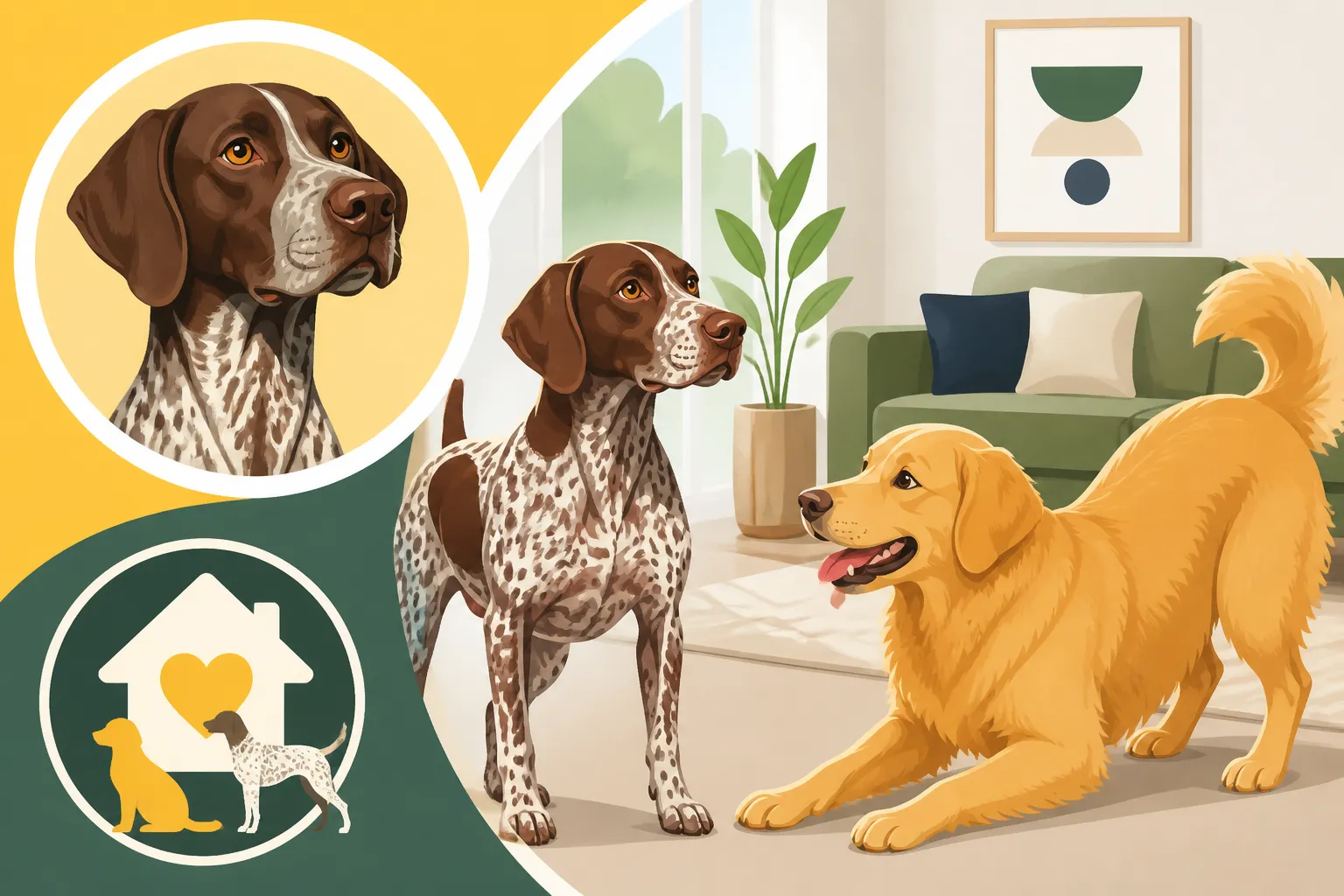
German Shorthaired Pointers are often energetic, physical, and eager to engage. Those tendencies can make one a lively companion for a dog that enjoys play, but they can overwhelm a dog that prefers quiet company or needs personal space. Breed traits offer clues, not guarantees: individual temperament, social history, health, and training matter just as much.
Think about the dogs you already know yours enjoys. Does your resident dog willingly approach playful dogs, or mostly tolerate them? Can they take breaks when play gets too intense? A dog that has lived peacefully with a calm older companion may not automatically enjoy a young, bouncy Shorthair.
Age and size differences matter, too. A puppy may pester a senior dog that has sore joints or less patience. A large, athletic Shorthair could accidentally knock over a small dog during enthusiastic play. That does not make the pairing impossible, but it does mean you will need closer supervision, protected rest areas, and realistic expectations. If you are still deciding whether the breed fits your household, Whether a First Time Owner Can Handle a Shorthair offers useful context on the breed’s everyday demands.
Check the resident dog’s comfort and the household setup
Before committing, consider how your resident dog handles food, toys, sleeping spots, and attention. A dog who guards a sofa, stiffens when another dog approaches a bowl, or becomes distressed when crowded may need professional guidance before a new dog arrives. Do not assume these behaviors will disappear once the dogs “get used to each other.” In a busy home, repeated conflict can make both dogs less comfortable.
Make sure your layout allows separation without making either dog feel trapped. Ideally, each dog can eat, sleep, and relax behind a closed door or secure barrier. A sturdy baby gate or exercise pen can help create that space; a pet retailer such as Chewy may be one place to look for suitable barriers and other setup supplies. Check the fit and stability before relying on any gate, especially with a dog that jumps or pushes at barriers.
A practical match is not just two dogs that might like each other. It is two dogs whose needs your household can meet at the same time. A high-energy Shorthair still needs daily activity and training, even if your resident dog is not a playmate. The Structure a German Shorthaired Pointer Needs Daily can help you think through how that routine fits around your existing dog.
| Household factor | A promising sign | A reason to plan more carefully |
|---|---|---|
| Play style | Both dogs enjoy similar, balanced play | One dog chases or body-slams while the other tries to leave |
| Age and mobility | Both can move comfortably and take breaks | One dog is elderly, sore, tiny, or easily knocked over |
| Resources | Each dog can eat and rest separately | Either dog guards food, toys, beds, or people |
| Home layout | Separate rooms or secure barriers are available | There is nowhere to give either dog a quiet break |
| Daily schedule | You can exercise and train the Shorthair separately | You expect the resident dog to tire out or entertain the newcomer |
Introduce the dogs gradually and with room to choose
Start on neutral ground
For the first meeting, choose a quiet outdoor area neither dog treats as home territory. A calm park edge or a broad, low-traffic path can work better than a cramped doorway or a busy dog park. Have one capable adult handle each dog. Use secure, comfortable walking equipment, and begin far enough apart that both dogs can notice each other without immediately pulling, barking, or rushing in.
Walk in the same direction rather than bringing the dogs nose-to-nose. Let them glance, sniff the ground, and move away if they choose. Keep the leads loose where it is safe to do so; tight leads can add tension and make a greeting feel more restrictive. Reward relaxed attention and calm disengagement. If either dog becomes fixed, stiff, or frantic, calmly increase distance instead of insisting they greet.
A first meeting does not need to end with play or close contact. The useful question is whether the dogs can share space without escalating. If they can walk parallel, sniff nearby areas, and recover after noticing one another, that is meaningful progress. For a more detailed introduction sequence, see Introducing a Shorthair to a Resident Dog.
Keep early greetings short and supervised
If both dogs seem comfortable, allow a brief greeting with space to move away. A curved approach is usually less confrontational than a direct charge. Watch for loose bodies, brief sniffing, and pauses. Play can include chasing or wrestling, but it should have breaks, role changes, and willingness from both dogs to re-engage.
Interrupt gently if play becomes one-sided. Call the dogs apart, guide them to different areas, and let them settle before deciding whether to resume. Avoid grabbing collars in the middle of a tense interaction if you can safely use a practiced recall or barrier instead; reaching between dogs can put people at risk. If you see repeated lunging, freezing, hard staring, or attempts to escape, end the session and seek help from a qualified behavior professional.
Keep the first sessions brief enough to finish while the dogs are still coping well. A successful meeting may look uneventful: a few calm minutes together, followed by separate rest. That is better than pushing for a long play session that leaves one dog overwhelmed. For cues that a dog needs more space, Reading a German Shorthaired Pointer's Stress Signals is a helpful related topic.
Set up the home to prevent avoidable conflict
Give each dog separate essentials
For the first days and weeks, feed the dogs in separate spaces and pick up bowls afterward. Do the same with high-value chews and favorite toys unless you are certain both dogs can share calmly. Competition can arise over resources that seemed unimportant before the newcomer arrived, including a person’s lap, a doorway, or access to a comfortable bed.
Create distinct resting areas so neither dog has to defend a favorite spot. A crate can be useful if the dog is already comfortable in it, but it should never be used to force a dog to tolerate another dog hovering nearby. Some households use closed doors; others use gates or pens to provide a visual break while keeping dogs safely separated. If you need to buy additional bowls or enrichment items, Chewy may be a practical place to source supplies, but introduce new items one at a time and keep valuable toys apart initially.
Keep the first homecoming low-key. Let the Shorthair explore one area at a time while the resident dog is elsewhere, then switch so each can investigate the other’s scent without a face-to-face meeting. When they are together, stay present and keep the environment uncluttered. Remove tempting food, scattered toys, and chew items until you understand how each dog responds.
Protect rest, routines, and one-on-one time
The resident dog may be unsettled even if the introduction goes smoothly. Keep familiar parts of their day as consistent as possible: walks, meals, bedtime, and quiet time. Give each dog individual attention so the newcomer does not become the center of every interaction. This is particularly important with a Shorthair, whose enthusiasm may lead it to seek attention repeatedly.
Plan separate exercise and training rather than relying on the dogs to entertain each other. A walk together can be useful once they are comfortable, but it does not replace individual training or activity suited to each dog. The Shorthair may need more structured outlets than the resident dog can provide. Exercise a Shorthair Needs Before a Work Day can help with planning that part of the day, while Crating a Shorthair That Has Energy to Burn covers ways to make a rest space part of the routine.
If the resident dog retreats, let them. Do not encourage the Shorthair to follow into a crate, bed, or tucked-away corner. A barrier can help the resident dog relax without having to repeatedly correct the newcomer. If the Shorthair struggles to settle when separated from you, The Shorthair That Will Not Let You Out of Sight may offer relevant guidance on building comfort with distance.
Read the relationship and adjust at the dogs’ pace
Know what progress and tension look like
Progress is not measured by whether the dogs cuddle or play every day. A good early outcome may be that they can rest in the same room, pass each other without incident, or walk together while staying responsive to their handlers. Neutral coexistence is a perfectly valid relationship, especially when the dogs have different ages or play preferences.
Pay attention to the whole interaction, not just a wagging tail. Loose, shifting movement and voluntary pauses are generally more reassuring than a stiff body, prolonged staring, blocking, or repeated attempts to mount or pin. A dog that keeps turning away, hiding behind a person, or trying to leave is communicating that the interaction is too much. Give them space rather than waiting for a growl to make the decision.
Some vocal play is normal, but escalating intensity deserves attention. If one dog repeatedly ignores the other’s attempts to stop, separate them and change the setup. Keep notes if patterns are emerging: where tension happens, what was present, and which dog initiated it. That record can help a trainer or behavior professional understand the situation more clearly.
Decide when to get help
Get professional support early if either dog has a bite history, guards resources, repeatedly corners the other, or cannot calm down after seeing the other dog. A veterinarian can also help rule out pain or health issues that may make a resident dog less tolerant of physical play. Choose a qualified, reward-based trainer or veterinary behavior professional who will assess both dogs and give you a management plan.
In the meantime, prevent unsupervised access. Do not leave the dogs together while you are away or asleep until they have shown a sustained pattern of safe, relaxed behavior—and even then, separation is often the safest choice when no one is home. A second dog is not a guaranteed companion for the first; some dogs do best with structured, limited interaction.
If you are considering adding another Shorthair, remember that two dogs of the same breed can still have very different needs and temperaments. Whether Two Shorthairs Are Easier Than One explores why adding a second high-energy dog can increase, rather than reduce, the work. And if your household includes a cat or other small animal, assess that relationship separately; dog-to-dog compatibility does not predict how a Shorthair will behave with other species. See Whether a Shorthair Lives With a House Cat for that distinct concern.
Disclaimer
This article is for general informational purposes only and does not constitute professional advice. Laws, prices and regulations vary by location and change over time. Consult a qualified professional for guidance on your specific situation.