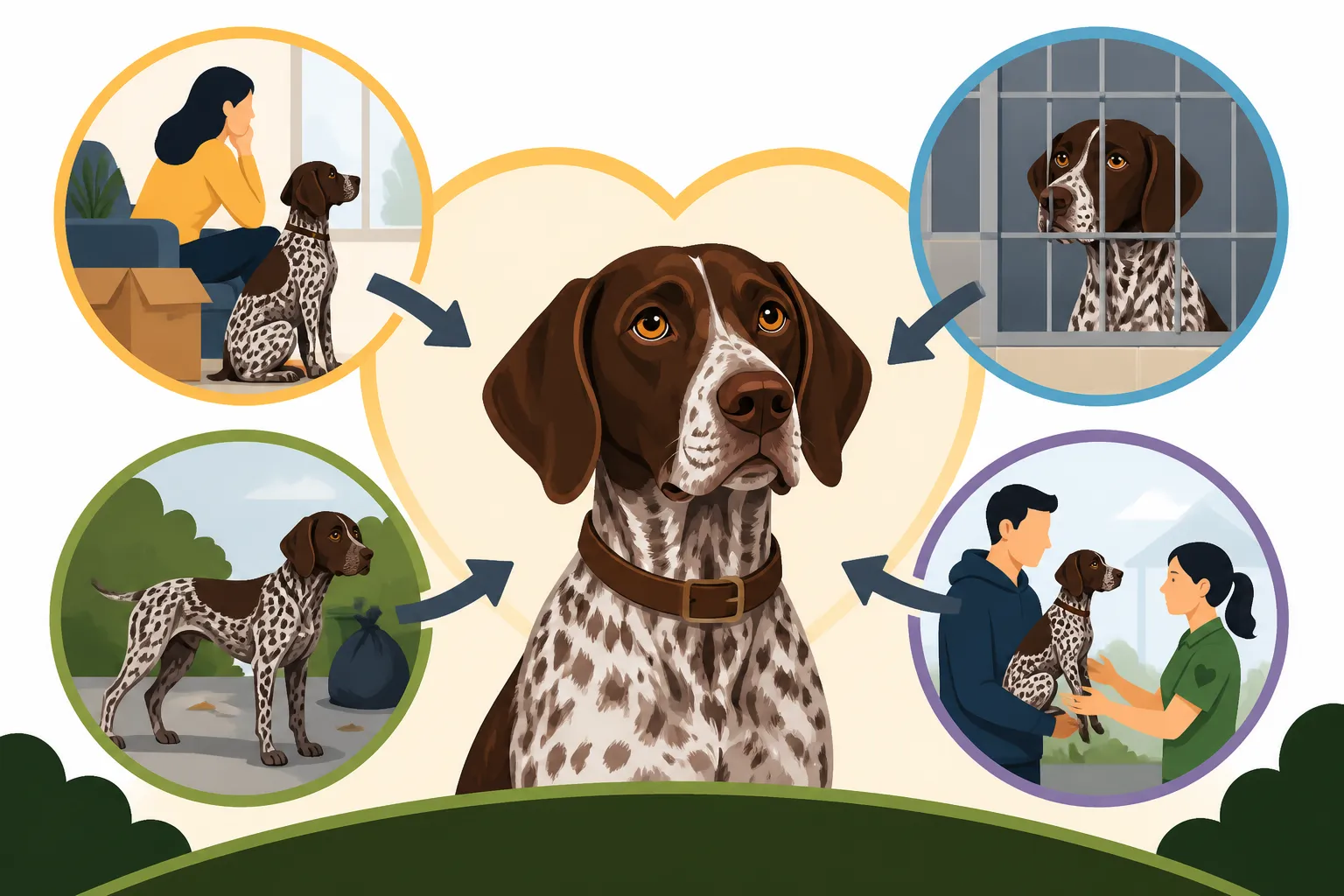
Where Rehomed German Shorthaired Pointers Come From
It’s a heartbreaking reality that many wonderful German Shorthaired Pointers find themselves in need of new homes. Often, it's not due to any fault of their own, but rather a clash between their immense energy and needs and an owner's unpreparedness or unforeseen life changes. This guide aims to shed light on the common origins of rehomed GSPs, providing insights for those considering adopting one of these incredible, yet demanding, dogs.
Understanding the Realities of German Shorthaired Pointer Ownership
Bringing a German Shorthaired Pointer into your life is a huge commitment, and sometimes, the reality hits harder than expected. These aren't your average couch potatoes; they are finely tuned athletes with an incredible drive and intelligence. When people don't fully grasp what they're signing up for, that's often where the journey to rehoming begins. It's a tough situation for both the dog and the human, born from a mismatch of expectations and capabilities.
The GSP's Demanding Energy Levels
Let's be real, GSPs are bundles of kinetic energy. They were bred to work all day in the field, covering miles of varied terrain, pointing and retrieving with unwavering focus. This means they aren't content with a leisurely stroll around the block once a day. A GSP needs a significant outlet for their physical prowess, often requiring dedicated exercise for several hours daily. We're talking running, biking, swimming, or intense games of fetch that truly tax them both physically and mentally. If they don't get that release, all that pent-up energy has to go somewhere, and it usually manifests in ways that are far from desirable for a household.
Many new GSP owners envision beautiful walks and happy romps, but underestimate the sheer volume of exercise required. It's not just about a quick jog; it's about sustained, high-intensity activity. Without it, you’ll find yourself with a dog that's constantly pacing, nudging for attention, or trying to entertain themselves in destructive ways. This can be a huge source of frustration and exhaustion for an owner who simply can’t keep up, no matter how much they love their dog. It's truly a lot, and it's one of the biggest reasons these dogs end up needing a new start, because their current families just can't provide them with The Two Hours a Day a German Shorthaired Pointer Needs to thrive.
The "Velcro Dog" Nature and Separation Anxiety
Beyond the physical demands, German Shorthaired Pointers are often dubbed "Velcro dogs" for a reason. They form incredibly strong bonds with their people and crave constant companionship. This isn't a breed that enjoys being left alone for long stretches, day after day. They thrive on being part of the action, whether that's accompanying you on a hike or simply curling up at your feet while you work. Their strong pack drive means they genuinely want to be with you, always.
This intense desire for connection can quickly escalate into separation anxiety if not properly managed from a young age. A GSP left alone for hours on end, especially without adequate exercise beforehand, can become distressed. This distress often translates into destructive behaviors like chewing through doors, excessive barking, house-soiling, or even self-mutilation. For an owner who works a full-time job outside the home, managing The Velcro Side of a German Shorthaired Pointer can feel like an impossible task, leading to stress for both parties and ultimately, the difficult decision to rehome. It's a heartbreaking situation when an owner's love isn't enough to meet their dog's fundamental need for companionship and stimulation.
Training Challenges and Expectations
German Shorthaired Pointers are exceptionally intelligent dogs, which is both a blessing and a curse. They are quick learners, eager to please, and can excel in various dog sports and advanced obedience. However, their intelligence is often paired with a strong will and a tendency to test boundaries. This means that consistent, positive reinforcement-based training is not just recommended, it's absolutely essential from the moment they join your family. They need a job to do, rules to follow, and clear communication from their leader.
Without proper training and mental stimulation, a GSP can quickly become a handful. They might jump on guests, pull relentlessly on the leash, or develop selective hearing when a fascinating scent captures their attention. Many first-time GSP owners, or those accustomed to more biddable breeds, can feel overwhelmed by the sheer intensity and drive of a young GSP. The dog might not be "bad," but simply untrained and under-stimulated, leading to behaviors that become unmanageable for the household. When an owner feels they’ve tried everything and the dog is still running the show, rehoming often seems like the only option.
The Common Pathways to Rehoming
When a German Shorthaired Pointer needs a new home, there are several avenues they might travel. These pathways often reflect the circumstances surrounding their surrender, and understanding them can provide valuable context for potential adopters. It's rarely a simple case of "bad dog" or "bad owner"; life is usually far more complicated than that.
Owner Surrenders to Shelters and Rescues
The most direct route for a GSP needing a new home is often through owner surrender to local animal shelters or breed-specific rescues. These are difficult, often agonizing, decisions for owners. Reasons are varied and complex, ranging from lifestyle changes like a new baby, a demanding job that leaves no time for the dog, or a move to housing that doesn't allow pets. Sometimes, financial strain plays a significant role; unexpected vet bills, or even the rising cost of quality dog food, can become an insurmountable burden.
Behavioral issues, often stemming from inadequate exercise or training, are also a frequent cause. An owner might feel they can no longer manage a dog that's destructive, pulls constantly, or shows reactivity towards other dogs. These owners are often genuinely heartbroken but feel they have exhausted all other options. Rescues like the German Shorthaired Pointer Rescue of the Carolinas or local humane societies see these cases daily. They work to assess the dog, provide immediate care, and then seek a suitable new family, understanding that the dog’s past doesn’t define its future. While there are fees associated, understanding German Shorthaired Pointer Rescue Fees helps plan for the adoption process.
Breeder Returns and Rehoming Programs
Responsible German Shorthaired Pointer breeders often include a clause in their puppy contracts stating that if an owner can no longer keep the dog, it must be returned to the breeder. This is a hallmark of ethical breeding practices, as these breeders take lifelong responsibility for the dogs they produce. When a GSP is returned to its original breeder, it typically receives excellent care and a thorough assessment before being placed in a new home. Breeders understand their lines intimately, making them well-suited to find a compatible new family.
Some breeders even run their own informal rehoming networks, working with previous puppy buyers or GSP enthusiasts to find suitable placements. These dogs usually come with a known pedigree, health history, and often, a clearer picture of their temperament. While less common than shelter surrenders, breeder returns represent a vital safety net for GSPs and demonstrate a commitment to the breed beyond the initial sale. It highlights the importance of choosing a reputable breeder who will stand by their dogs throughout their lives, making it clear Whether a Breeder Takes a Shorthair Back is a sign of a good breeder.
Stray and Abandoned Dogs
Sadly, not all rehomed GSPs arrive at shelters or rescues through a formal surrender. Many are found as strays, wandering loose, sometimes in rural areas or even bustling urban environments. A GSP, with its incredible prey drive and boundless energy, can easily escape an insecure yard or slip a leash if not properly contained. They might follow a scent for miles and become disoriented, unable to find their way home. In some truly heartbreaking cases, GSPs are simply abandoned, left to fend for themselves.
When a GSP is found as a stray, its history is a mystery. Rescues and shelters will do their best to scan for microchips, check for tattoos, and advertise the dog as found, hoping to reunite them with their original owners. If no owner comes forward, these dogs enter the general adoption pool. They may require more patience and rehabilitation, as their past experiences can be unknown and potentially traumatic. This is where a strong Fencing That Holds a German Shorthaired Pointer becomes so important, not just for containing your dog, but for ensuring their safety.
Specific Behavioral and Health Issues Leading to Rehoming
While unforeseen life changes are common reasons for rehoming, specific challenges inherent to the German Shorthaired Pointer breed itself can also push owners to their breaking point. These often revolve around the breed's high needs, which, if misunderstood or unmet, can lead to significant problems within a household.
Unmanaged Energy and Destructive Behaviors
The classic GSP conundrum: give them an inch and they'll take a mile, or rather, give them an hour of exercise and they'll demand two more. When a German Shorthaired Pointer's immense energy isn't channeled constructively, it will find an outlet, and it's almost never one you'll appreciate. This isn't naughtiness; it's simply a GSP being a GSP. Picture this: you come home from a long day at work to find your favorite couch cushions ripped to shreds, or your carefully manicured garden now resembles a lunar landscape, complete with GSP-sized craters. These aren't malicious acts, but rather symptoms of profound boredom and a desperate need for mental and physical stimulation.
Dogs might chew inappropriate items like furniture, baseboards, or shoes; they might bark incessantly, digging up the yard, or even escape fences in their quest for adventure. This can be incredibly frustrating and expensive for owners, turning their home into a battleground. Many owners are simply unprepared for the sheer volume of exercise and mental engagement required to keep a GSP content. They might try short walks or backyard play, which barely scratches the surface of what a GSP needs. When the house is being systematically dismantled, and the owner is constantly exhausted trying to manage a hyperactive dog, the thought of rehoming starts to become a grim reality, especially when faced with What an Under Exercised Shorthair Does to a House.
Medical Conditions and Unexpected Costs
Another significant factor contributing to GSP rehoming is the unexpected burden of medical conditions and the associated veterinary costs. While GSPs are generally a healthy breed, they are susceptible to certain genetic conditions and injuries common to active dogs. Hip and elbow dysplasia, bloat, certain skin diseases, and various cancers can strike at any age, often requiring expensive diagnostics, treatments, and ongoing management. Imagine facing a sudden emergency with a dog that's bloating, requiring immediate, life-saving surgery that can easily run into thousands of dollars. Or discovering your beloved GSP has The Bloat Risk a Shorthair Carries Into Every Season, which necessitates a gastropexy or constant vigilance.
Similarly, chronic conditions like certain skin diseases, such as The Skin Disease That Hits a German Shorthaired Pointer Before One, can require lifelong medication, special diets, and frequent vet visits. For many families, these unexpected financial demands can be devastating, especially without pet insurance. Even with the best intentions, some owners simply cannot afford the specialized care their GSP needs, leading to the heartbreaking decision to surrender them to a rescue that has the resources to provide it. This is where preventative measures and considerations for pet insurance, perhaps from providers like Healthy Paws, become so incredibly important when bringing a GSP into your home.
Lack of Socialization and Aggression Concerns
German Shorthaired Pointers, by nature, are outgoing and friendly dogs, but like any breed, they require extensive and proper socialization from puppyhood. This means exposing them to a wide variety of people, dogs, sights, sounds, and environments in a positive and controlled manner. Without this crucial foundation, a GSP can become fearful, anxious, or reactive, leading to behaviors that are challenging and potentially dangerous in a home environment. A GSP that hasn't learned appropriate dog-to-dog etiquette, for instance, might be overly boisterous or even aggressive at the dog park, leading to confrontations.
Moreover, a lack of early positive experiences can result in fear-based aggression towards strangers, children, or even other household pets. While true aggression is less common in the breed than reactivity due to fear or over-stimulation, it can certainly develop if a dog is not properly introduced to the world around it. Living with a dog that lunges and barks at every passerby, or shows growling tendencies towards children, is incredibly stressful and can pose a safety risk. When owners find themselves unable to manage these behaviors, often after exhausting various training methods or reaching a point of personal safety concern, rehoming becomes a stark reality.
The Impact of Life Changes on GSP Placement
Life is unpredictable, and even the most devoted German Shorthaired Pointer owners can find themselves in situations where keeping their beloved dog is no longer feasible. These shifts in personal circumstances are a leading cause of GSP rehoming, highlighting that it's often external factors, not the dog's behavior, that drive these difficult decisions.
Major Life Events: Divorce, Job Loss, Relocation
Life throws curveballs, and sometimes those curveballs directly impact our ability to care for our pets. A painful divorce, for example, can split a household and drastically alter financial stability or living arrangements. One partner might be unable to take on the full responsibility of a high-energy GSP alone, or new housing might prohibit pets. Similarly, a sudden job loss can plunge a family into financial crisis, making it impossible to afford food, routine vet care, or emergency medical expenses for their GSP. When every penny counts, the cost of owning a GSP, from food to preventative medications, can become an unsustainable burden.
Relocation is another huge factor. Moving to a new city, especially for work, might mean finding housing where a GSP isn't welcome, or moving from a large property with a yard to a small apartment that's simply not suitable for such an active breed. Cross-country or international moves can also be incredibly expensive and complicated with a large dog, leading some owners to reluctantly seek rehoming rather than subject their GSP to long, stressful travel or inadequate living conditions. These are gut-wrenching decisions, often made by owners who truly adore their dogs but feel trapped by their circumstances.
New Additions to the Family: Babies or Other Pets
While many GSPs are wonderful with children and other animals, the introduction of new family members – whether a human baby or another pet – can sometimes create unforeseen challenges that lead to rehoming. A GSP accustomed to being the center of attention might struggle to adjust to a newborn, whose cries and unpredictable movements can be unsettling. Even a well-behaved GSP can accidentally knock over a toddler in their exuberance, causing safety concerns for worried parents. The time commitment required for a new baby also dramatically reduces the time available for exercise and training, often leading to behavioral issues in a GSP that feels neglected or under-stimulated.
Similarly, bringing a new cat, rabbit, or even another dog into the home can be a difficult transition. GSPs have a strong prey drive, and while many can be successfully raised with cats, some simply cannot overcome that instinct, leading to dangerous situations for the smaller pet. Introducing another dog might lead to personality clashes, resource guarding, or even outright fights, creating an unmanageable and stressful environment for everyone involved. For specific guidance on integrating them, articles like A German Shorthaired Pointer With Children and Cats offer helpful advice, but sometimes, despite best efforts, the dynamics just don't work out.
Owner's Health or Age-Related Challenges
The physical demands of owning a German Shorthaired Pointer are no joke, and they often extend throughout the dog's life. As owners age, or if they experience unforeseen health challenges, keeping up with a GSP's needs can become physically impossible. An owner recovering from surgery, battling a chronic illness, or developing mobility issues simply might not be able to provide the intense daily exercise, training, and robust play that a GSP requires. This can lead to a decline in the dog's well-being and an increase in problematic behaviors stemming from frustration and boredom.
Furthermore, life transitions for older owners, such as moving into assisted living facilities or nursing homes, almost invariably mean that pets cannot accompany them. In these situations, deeply cherished GSPs are left without a home through no fault of their own, or their owner’s. These rehomings are particularly poignant, as they represent the breaking of a long-standing bond due to circumstances entirely beyond control. It's a stark reminder that planning for a pet's future, especially a long-lived and active breed like the GSP, needs to consider the potential for an owner's changing health and living situation.
How Rescues and Shelters Assess Rehomed GSPs
When a German Shorthaired Pointer arrives at a reputable rescue or shelter, their journey towards a new home begins with a comprehensive assessment. This isn't just a quick look-over; it's a multi-faceted process designed to understand the dog's individual needs, personality, and any challenges they might present, ensuring the best possible match with an adoptive family.
Behavioral Evaluations and Temperament Testing
One of the most crucial steps in the rehoming process is a thorough behavioral evaluation. This involves carefully observing the GSP in various scenarios: how they interact with different people (men, women, children), how they react to other dogs (both calm and boisterous ones), their comfort level with handling (touching paws, ears, tail), and their response to novel stimuli and sounds. Rescues often look for signs of fear, anxiety, resource guarding, or reactivity. They might test for prey drive with squeaky toys or assess their leash manners.
These evaluations provide invaluable insights into the dog's temperament, helping the rescue identify potential triggers and ideal living situations. For example, a GSP that is highly reactive to other dogs might need a home as an only dog or with experienced handlers. A dog that shows separation anxiety might require a family where someone is home most of the time. This detailed understanding allows the rescue to make informed decisions about placement, ensuring the dog goes to a home equipped to meet their specific needs and set them up for success.
Medical Screening and Rehabilitation
Beyond behavior, every rehomed GSP undergoes a comprehensive medical screening upon arrival. This typically includes a full veterinary exam, necessary vaccinations, deworming, and a microchip if one isn't already present. If the dog isn't already spayed or neutered, this procedure is usually performed before adoption. Many GSPs arrive at rescues with existing health issues, whether minor ones like ear infections or dental problems, or more serious conditions such as parasites, injuries from being stray, or even chronic illnesses like allergies or orthopedic issues.
Rescues dedicate significant resources to rehabilitating these dogs. This might involve extensive dental work, surgical repairs for injuries, or ongoing treatment for chronic conditions. The goal is to get the GSP as healthy as possible before adoption, minimizing future vet bills for the new family and ensuring the dog feels its best. This medical rehabilitation is a huge undertaking and is often supported by donor funds and dedicated veterinary partnerships, ensuring that even GSPs with significant medical histories have a chance at a healthy new life. Understanding The Vet Schedule a Working Shorthair Should Keep is crucial, but rescues often absorb the initial, heavy costs.
Foster Networks: A Bridge to a Forever Home
Foster homes are the unsung heroes of the rescue world, and they play an absolutely critical role in assessing and preparing rehomed GSPs for adoption. Unlike the stressful and often overwhelming environment of a shelter kennel, a foster home provides a calm, loving, and stable environment where a GSP can decompress, learn house manners, and reveal their true personality. In a foster home, dogs get one-on-one attention, consistent feeding schedules, and crucial socialization.
Foster parents observe everything: how the GSP interacts with children, other pets, visitors; their house-training status; their energy levels indoors versus outdoors; their response to everyday household sounds; and any specific quirks or anxieties. This detailed, real-world information is invaluable to rescue coordinators, allowing them to accurately describe the dog to potential adopters and make far better matches. It also helps the GSP adjust to a home environment, making the transition to their permanent family smoother. Without these dedicated foster networks, many GSPs would struggle to find their perfect match, and resources from pet supply retailers like Chewy often help foster parents provide everything the dogs need.
Making an Informed Decision: Adopting a Rehomed GSP
Adopting a rehomed German Shorthaired Pointer can be an incredibly rewarding experience, offering a second chance to a dog in need. However, it's a decision that requires careful consideration, extensive research, and a realistic understanding of the commitment involved. These dogs often come with a past, and while many are resilient, some may require extra patience and specific management.
Researching the Rescue and the Dog's History
When considering adopting a rehomed GSP, your first step should be to thoroughly research the rescue organization. Look for rescues that are transparent about their processes, have clear adoption requirements, and provide comprehensive support both before and after adoption. A reputable rescue will have a rigorous application process, including home visits and vet checks, because they are truly invested in finding the best fit for their dogs. They should also be able to provide you with as much information as possible about the dog's history, even if it's limited.
Don't hesitate to ask detailed questions: Why was the dog rehomed? What behaviors were observed in their previous home or foster care? Are there any known health issues or past injuries? What kind of environment does the dog thrive in (e.g., quiet home, active family, no other pets)? While some information might be unknown, a good rescue will share everything they do know, including any potential challenges. This transparency empowers you to make an informed decision and prepare properly for your new family member.
| Common Reason for Rehoming GSPs | Primary Handler/Path | Typical Challenges Presented |
|---|---|---|
| High Energy/Destruction | Owner Surrender (Shelter/Rescue) | Chewing, digging, barking, hyperactivity |
| Separation Anxiety | Owner Surrender (Shelter/Rescue) | Destructive behavior, excessive barking, house-soiling |
| Financial Burden (Vet Bills) | Owner Surrender (Shelter/Rescue) | Existing or recurring medical conditions |
| Lifestyle Change (Move, Baby) | Owner Surrender (Shelter/Rescue) | Adjusting to new environment, less attention |
| Behavioral Issues (Training) | Owner Surrender (Shelter/Rescue) | Pulling, jumping, reactivity, lack of manners |
| Breeder Contract Return | Original Breeder Rehoming | Typically less, known history, breeder support |
| Stray/Abandoned | Shelter/Rescue (Found Dog) | Unknown history, potential trauma, fear, lack of house-training |
| Owner Health/Age | Owner Surrender (Shelter/Rescue) | No fault of dog, needs active home |
Understanding the Commitment and Potential Challenges
Adopting a rehomed GSP is a significant commitment, and it's essential to go into it with open eyes. These dogs are often incredibly resilient, but some may carry baggage from their past experiences. A dog surrendered due to lack of exercise will still need that exercise in your home. A dog with separation anxiety will need a structured plan, patience, and potentially professional help to overcome it. It's not a quick fix, and it certainly isn't always easy.
Be prepared for a period of adjustment, both for the dog and for your household. It can take weeks, even months, for a rehomed GSP to fully settle in, learn the new routines, and truly show their personality. This means consistent training, patience, and a willingness to work through any issues that arise. Consider enrolling in obedience classes, even if your dog knows the basics, as it helps build your bond and provides mental stimulation. A high-quality diet, perhaps from a brand like Ollie, can also play a role in their overall health and well-being, influencing their behavior and ability to learn. It’s also wise to check into pet insurance options from companies like Healthy Paws to mitigate potential future health care costs.
Providing a Stable and Stimulating Environment
Ultimately, the key to success with a rehomed German Shorthaired Pointer is providing a stable, structured, and stimulating environment. These dogs thrive on routine, clear expectations, and plenty of opportunities to burn off their boundless energy. This means committing to regular, high-intensity exercise – not just walks, but runs, hikes, swimming, or mentally engaging activities like scent work. A bored GSP is a destructive GSP, so mental stimulation is just as important as physical exertion. Puzzle toys, training sessions, and interactive games can keep their sharp minds engaged.
Ensure your home is GSP-proofed, especially during the initial adjustment period. A secure yard is non-negotiable, and constant vigilance is required, as their escape artistry is legendary. Most importantly, provide them with plenty of love, positive reinforcement, and consistent leadership. A rehomed GSP often blossoms with the right guidance and the security of a loving family who understands their unique needs. By preparing yourself for The Structure a German Shorthaired Pointer Needs Daily, you can turn a challenging past into a bright future for these magnificent dogs.
Disclaimer
The information provided in this article is for general informational purposes only and does not constitute professional veterinary or behavioral advice. Always consult with a qualified veterinarian or certified professional dog trainer for any health or behavior concerns regarding your German Shorthaired Pointer.