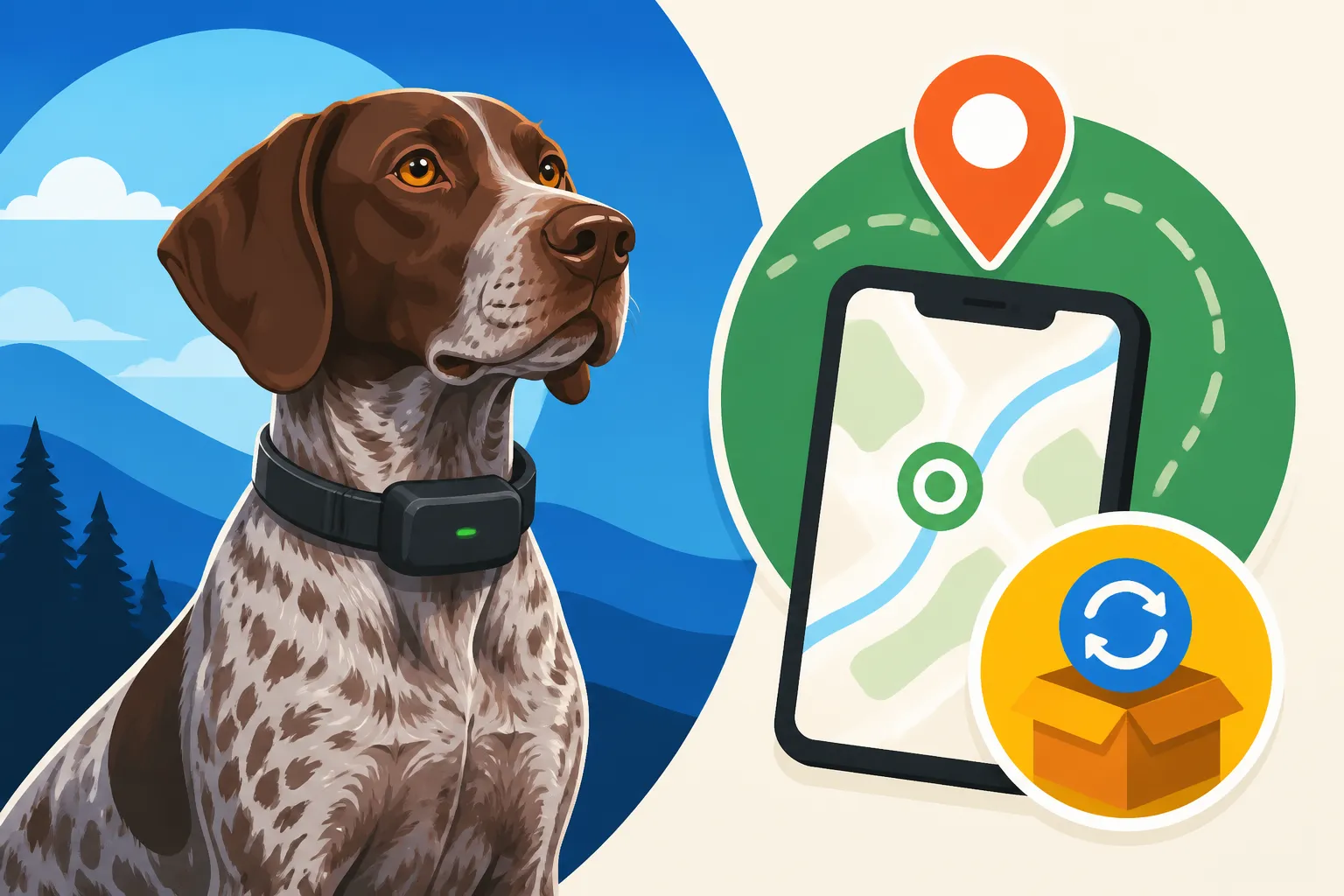
GPS Collar Subscription Fees for a Shorthair Owner
The thought of your German Shorthaired Pointer disappearing over the horizon, lost in the scent of a distant bird or simply out on an adventure, can send a chill down any owner's spine. These dogs are built to run, cover ground, and follow their noses with an unparalleled intensity, which means even the most reliable recall can sometimes fail when a particularly enticing trail calls. Understanding the costs associated with a GPS collar – especially those pesky subscription fees – is crucial for any GSP owner looking for that extra layer of security. This guide will walk you through what those fees entail, why they exist, and how to navigate them effectively, ensuring your adventurous companion can always find their way back to you.
Why GPS Collars Are Essential for German Shorthaired Pointers
Let's be honest, living with a German Shorthaired Pointer is a commitment to a life of motion. These dogs aren't content to simply wander the backyard; they crave vast spaces, new scents, and the thrill of the chase. Their inherent drive, while a hallmark of their incredible abilities as gun dogs, also means they possess a unique talent for getting themselves "misplaced" with alarming efficiency. That's where a GPS collar steps in, not as a replacement for training, but as an indispensable safety net.
The Ranging Instinct and Scent Drive
German Shorthaired Pointers were purposefully bred to hunt wide and far, covering large tracts of land in search of game. This means they possess an incredibly strong ranging instinct. They are wired to cast out, quarter the field, and work independently. Couple this with their phenomenal scent drive – a GSP’s nose is truly a wonder – and you have a dog that can quickly become deaf to your calls once a compelling odor hits their nostrils. It's not defiance; it's instinct. A bird flushes, a rabbit bolts, or even just the lingering scent of deer can send them on an exhilarating pursuit that can take them miles away from you in minutes. This is why tools beyond traditional e-collars or whistles become vital, especially if you want to allow your GSP to truly express their nature off-leash in appropriate areas.
It's a common frustration: you've spent countless hours on recall, your Shorthair is usually glued to your side, and then bam – a flash of fur or a whiff of pheasant and they're gone. You yell, you whistle, but the world has shrunk to that one tantalizing scent. This isn't just a nuisance; it's genuinely terrifying for an owner. Knowing you have a GPS device actively tracking their movements provides an immense sense of relief, turning what could be a frantic search into a more controlled retrieval mission. You might still have to cover some ground, but at least you know which direction to go.
Peace of Mind in Diverse Terrain
Whether you're hunting vast CRP fields, hiking remote mountain trails, or simply enjoying an off-leash walk in a sprawling park, the terrain can quickly obscure your view of a fast-moving German Shorthaired Pointer. Dense brush, rolling hills, or even just a thick stand of trees can make a dog vanish. In these environments, shouting their name or relying on them to "check in" might not be enough. The last thing you want is for your companion to venture onto a busy road, into another hunter's line of fire, or simply get completely disoriented in unfamiliar territory.
A GPS collar, especially those designed for robust outdoor use, gives you real-time location data, often displayed on a handheld device or a smartphone app. This is particularly valuable for serious hunters who expect their dogs to work out of sight for periods. It means you can let your dog do what they love – covering ground and seeking game – without the constant anxiety of losing them. Imagine the relief of seeing their icon on your screen, still moving, still actively hunting, even when you can't visually track them through thick cover or over a distant ridge. It enhances not only their safety but your enjoyment of the outing. You might find this freedom beneficial when considering The Two Hours a Day a German Shorthaired Pointer Needs for exercise.
Safety Beyond the Hunt
While hunting and intense field work are prime scenarios for GPS collar use, the safety benefits extend far beyond. German Shorthaired Pointers are energetic dogs, and an under-exercised Shorthair can sometimes develop problematic behaviors, including attempts to escape. An open gate, a hole dug under the fence, or a slipped leash during a walk can happen to anyone. In a suburban or rural setting, these escapes can lead to dangerous situations, from traffic accidents to encounters with wildlife or other dogs.
A GPS collar acts as an immediate alert and recovery tool in these accidental escape scenarios. Many systems allow you to set up "geofences" or virtual boundaries, sending you an alert if your Shorthair crosses them. This proactive notification means you can start looking for them immediately, often before they've gone too far or encountered trouble. It's a layer of security that traditional microchips, while invaluable for identification once found, simply cannot provide in real-time. For a breed known to range and follow scent, having that instant knowledge of their location can be the difference between a quick reunion and a heartbreaking search. Understanding Fencing That Holds a German Shorthaired Pointer is important, but a GPS collar offers an extra layer of protection when those fences fail.
Understanding the Types of GPS Tracking for Your Shorthair
Before we dive into subscription fees, it's really helpful to understand that not all GPS collars are created equal. Just like phones, there are different technologies and purposes behind them, and these differences directly impact whether you'll pay a monthly fee and what that fee covers.
Dedicated GPS Trackers with Cellular Plans
These are perhaps the most common type of GPS collar for everyday pet owners, and they are typically the ones that come with a subscription fee. Think of them like a mini cell phone for your dog. They contain a GPS receiver to pinpoint your dog's location and a cellular modem to transmit that location data to a central server, which then sends it to your smartphone app. Because they use cellular networks, they can track your dog over very long distances – essentially anywhere there's cell service.
The subscription fee for these devices primarily covers the cost of the cellular data plan. Just like your phone bill, you're paying for the ability to send and receive information over the network. These collars are fantastic for peace of mind, allowing you to check on your dog's whereabouts from anywhere, whether they've slipped out of the yard, gotten lost on a hike, or simply wandered a bit too far while exploring your property. Brands like Fi and Tractive fall into this category, offering continuous tracking and often additional features like activity monitoring. The real-time updates and long-range capabilities are what make these so valuable for a fast, far-ranging breed like the German Shorthaired Pointer.
GPS Trackers for Hunting Systems
Hunting-specific GPS collars, often from brands like Garmin or SportDOG, operate a bit differently and might have varying subscription fee structures, or none at all for basic tracking. These systems typically consist of a GPS collar for the dog and a dedicated handheld receiver for the owner. The collar tracks the dog's position, but instead of sending that data over a cellular network to a smartphone, it transmits it directly to the handheld device via a proprietary radio frequency (RF) signal.
For basic tracking within the range of the handheld device, these systems usually don't require a monthly subscription. You buy the units, and they work. However, where subscription fees can come in is if you want advanced features that leverage cellular or satellite networks. For instance, some modern hunting systems offer "companion apps" for your smartphone that allow you to track your dog even when they are out of range of your handheld device, or when you want to share their location with other hunters. These enhanced features often require a data plan, bringing us back to a subscription model. The primary benefit of these systems, even without extra fees, is their robust design, long battery life, and often superior signal strength in remote areas where cell service might be spotty. They are designed for situations where a GSP might be out of sight for extended periods, covering How Far a German Shorthaired Pointer Runs in an Hour.
Hybrid Systems and Their Cost Implications
Some GPS tracking systems attempt to offer the best of both worlds, or combine GPS with other technologies. For example, a collar might primarily use GPS and cellular for wide-area tracking but also incorporate Bluetooth for short-range tracking or finding the collar if it falls off in close proximity. There are also systems that use a combination of GPS and satellite technology, particularly for extremely remote areas where neither cellular nor ground-based radio signals might reach.
The more complex the technology and the wider the potential coverage area, the more likely you are to encounter a subscription fee, and potentially a higher one. Satellite-based systems, while offering unparalleled coverage in truly off-grid locations, often come with higher subscription costs due to the infrastructure involved. Understanding these distinctions is key to choosing the right system for your specific needs and managing the associated costs. If your Shorthair's adventures take them far off the beaten path where cell service is a distant dream, a more robust, potentially satellite-enhanced system might be necessary, and its subscription will reflect that capability.
Breaking Down GPS Collar Subscription Fees
Alright, let's get into the nitty-gritty of what you'll actually be paying for month after month to keep tabs on your German Shorthaired Pointer. The sticker shock of the device itself can be one thing, but those recurring fees are where the real long-term cost lies, and they can vary quite a bit depending on what you need.
What Influences the Cost
Several factors play a significant role in determining the price tag of your GPS collar subscription. It’s not just a flat fee; it’s usually tied to the services and capabilities you choose.
- Coverage Area: This is a big one. Do you need tracking only within your state or across the entire country? Some basic plans might offer limited geographical coverage, while premium plans provide nationwide or even international tracking. For a German Shorthaired Pointer owner who travels for hunts or competitions, broader coverage will likely mean a higher fee. If your Shorthair is a frequent traveler, this is a crucial consideration.
- Frequency of Updates: How often do you want your dog's location to update? A plan that pings every 10 minutes will consume less data and bandwidth than one that provides real-time, second-by-second tracking. More frequent updates, while offering greater precision for a fast-moving GSP, usually come with a higher subscription cost. For a dog that's A German Shorthaired Pointer That Self Hunts and covers ground quickly, faster updates might be a non-negotiable feature.
- Additional Features: Many GPS collars now offer more than just location tracking. Features like activity monitoring (steps, calories burned, sleep patterns), virtual fences (geofencing with alerts), lost pet recovery services (sometimes involving a call center), and even health insights can all be bundled into higher-tier subscriptions. These 'smart' features add convenience and value but naturally increase the monthly outlay.
- Contract Length: Just like your phone or internet provider, many GPS collar subscriptions offer discounts for committing to longer terms. A monthly plan might be more flexible but more expensive per month, while a yearly or multi-year plan could significantly reduce your average monthly cost. It’s a trade-off between flexibility and savings.
- Number of Devices: If you own multiple German Shorthaired Pointers, some providers might offer discounted rates for adding additional collars to a single account, often called a "family plan." Always inquire about this if you're managing more than one tracking device.
Common Subscription Models and Ranges
Because exact prices fluctuate and vary by provider and region, I can't give you hard numbers. However, I can describe the shape of what you might expect. Most GPS collar subscriptions fall into a range from relatively affordable, covering basic tracking, to more substantial monthly expenses for premium features and wider coverage.
You'll typically see options presented as:
- Basic / Essential Plans: These focus solely on location tracking, perhaps with less frequent updates or slightly less robust coverage. They are designed for owners who primarily want the peace of mind of knowing their dog's general whereabouts. These usually represent the lower end of the pricing spectrum.
- Standard / Plus Plans: These plans build on the basics by adding more frequent location updates, perhaps the ability to set geofences, and maybe some basic activity monitoring. This is often the sweet spot for many GSP owners, balancing features and cost.
- Premium / Elite Plans: These are the top-tier offerings, providing the fastest updates, broadest coverage, comprehensive activity and health monitoring, and often concierge-style lost pet recovery assistance. These come at the highest monthly cost but offer the most comprehensive suite of services.
It’s always wise to visit the specific brand's website or check with retailers like Chewy or your local pet supply store for the most current subscription rates and plan details. Many providers will allow you to compare plans side-by-side, detailing exactly what each tier includes.
Trial Periods and Guarantees
When you’re making an investment in a GPS collar and committing to a subscription, it’s understandable to want to be sure it’s the right fit for your German Shorthaired Pointer and your lifestyle. Thankfully, many GPS collar manufacturers and service providers understand this hesitation and offer various ways to try before you fully buy.
You might find that some brands offer a short trial period for their subscription services, often a week or 30 days, where you can experience all the features of a premium plan. This allows you to test the tracking accuracy, the app interface, the battery life in real-world usage, and how quickly you receive alerts. It's an excellent opportunity to see if the device truly meets your expectations for keeping tabs on your energetic companion. Others might offer a money-back guarantee on the device itself for a certain period, which indirectly helps if you find the subscription model or service isn't working out. Always read the fine print on these offers, particularly regarding the return policy for the hardware and the terms of any free trial for the service. Knowing these options can help alleviate some of the initial financial apprehension.
| Feature Type | Basic Plan Example | Premium Plan Example |
|---|---|---|
| Location Tracking | Hourly updates, general area | Real-time live tracking, precise location |
| Coverage Area | Regional or limited cellular network | Nationwide, expanded cellular/satellite coverage |
| Geofencing | Basic boundary alerts, limited zones | Multiple custom geofences, instant breach alerts |
| Activity Monitoring | Steps count | Steps, calories, sleep, behavioral patterns |
| Battery Life | Standard (e.g., 2-3 days with frequent use) | Enhanced (e.g., 5-7 days or more with frequent use) |
| Lost Pet Support | App-based notifications | Dedicated recovery service, community alerts |
| Data History | Last 24-48 hours | Extended history (weeks/months) of movements |
| Pricing Model | Lower monthly/annual cost | Higher monthly/annual cost with longer contract options |
Maximizing Value and Managing Costs for Your German Shorthaired Pointer
Owning a German Shorthaired Pointer is an investment in time, training, and resources. Adding a GPS collar to the mix means another recurring cost, but there are smart ways to ensure you’re getting the most value for your money and managing those expenses effectively.
Evaluating Your Shorthair's Needs
The first step in managing GPS collar costs is to honestly assess your German Shorthaired Pointer's lifestyle and your specific needs as an owner. Not every Shorthair or every owner requires the most expensive, feature-rich plan.
- Are you a serious hunter who needs to track your dog in remote, cellular-dead zones? If so, a more robust, possibly satellite-enhanced hunting system might be worth the higher upfront cost and potentially unique subscription model. Your needs for Handling a German Shorthaired Pointer at Range will dictate the range and reliability you require.
- Do you primarily use it for peace of mind during daily off-leash walks in parks with good cell service, or to monitor your dog in your backyard? A basic cellular-based tracker with standard updates might be perfectly adequate, offering a lower monthly fee.
- Does your Shorthair have a history of escaping, or do they simply have an insatiable urge to explore beyond your sight? The geofencing and instant alert features of a standard plan could be invaluable.
- Are you interested in their overall health and fitness data? If you're keen on monitoring their activity levels, tracking their sleep, and understanding their caloric output – which is often high for a GSP – then a premium plan with comprehensive activity monitoring might justify the expense. This ties into optimizing their diet, where you might consider a tailored meal service like Ollie to support their high energy needs.
By narrowing down your essential features versus your "nice-to-have" features, you can often save significantly by not paying for services you won't use.
Looking for Bundles and Discounts
Once you’ve identified the type of GPS collar and subscription features that genuinely match your German Shorthaired Pointer's needs, it’s time to shop smart. Many providers and retailers offer ways to reduce the overall cost, especially if you're willing to commit.
- Annual or Multi-Year Plans: As mentioned before, almost every subscription service offers a discount if you pay annually or commit to a longer-term contract. While it's a larger upfront payment, it can lead to substantial savings over the life of the device compared to month-to-month billing.
- Device + Subscription Bundles: Sometimes, purchasing the GPS collar hardware and a year of service together can result in a discount on either the device or the subscription. Keep an eye out for these promotions, especially around holidays or during sales events. Retailers like Chewy sometimes feature special offers for pet tech.
- Multiple Pet Discounts: If you're a multi-dog household with two or more GSPs, inquire about family plans or multi-device discounts. Some providers offer reduced rates for adding additional collars to a single account, as the underlying cellular plan can often support more than one device.
- Referral Programs: Many companies have referral programs where existing customers can earn discounts by referring new customers, and new customers get a benefit too. Ask around in your local German Shorthaired Pointer clubs or online communities to see if anyone has a referral code.
Always take the time to compare offers across different platforms and directly with the manufacturer to ensure you're getting the best possible deal for your specific needs.
The Hidden Costs Beyond the Subscription
While the monthly or annual subscription fee is the most obvious recurring cost, it’s important to budget for a few other potential expenses associated with GPS collars. Neglecting these can lead to unexpected out-of-pocket spending.
- Initial Device Purchase: This isn't a subscription cost, but it's the gateway to needing one. GPS collars themselves can range from moderately priced to quite expensive, depending on the brand, features, and durability. Factor this initial outlay into your total budget.
- Replacement Parts and Accessories: German Shorthaired Pointers are tough on gear. Collars can get snagged, batteries can wear down, and charging cables can get lost. You might need to replace bands, charging docks, or even the entire unit if it's damaged beyond repair. While some warranties cover defects, accidental damage usually isn't included.
- Power Banks and Car Chargers: For long hunting trips or extended adventures, you’ll likely want portable power solutions to keep the collar charged. These are additional purchases that contribute to the overall cost of ownership.
- Data Overages (Rare but Possible): Most dedicated pet GPS trackers come with a fixed data plan integrated into their subscription. However, if you opt for a more generic cellular tracker and provide your own SIM card and data plan, you could incur overage charges if your dog's tracking data exceeds your plan's limits. It's less common with purpose-built pet trackers, but always check the terms.
It’s also important to consider the potential costs if your Shorthair does get lost, even with a GPS collar. While the collar helps prevent extended searches, injuries can still occur. Insuring a Shorthair That Injures Itself Hunting is a crucial consideration. Pet insurance providers like Healthy Paws can help manage veterinary bills from unexpected accidents, offering peace of mind even with the best tracking technology.
Considering the Alternatives and Their Trade-offs
When it comes to keeping tabs on your German Shorthaired Pointer, a GPS collar isn't the only tool in the shed, but it often stands out for its unique capabilities. It’s worth briefly considering other options and why, for a GSP, a GPS tracker often remains the preferred choice.
- Microchipping: Every responsible pet owner should microchip their GSP. It's a permanent form of identification, linking your dog to your contact information. However, a microchip is a passive recovery tool – it only works if someone finds your dog, takes them to a vet or shelter, and scans the chip. It offers no real-time tracking or active search capabilities. It's essential, but not a replacement for a GPS collar for an adventurous dog.
- ID Tags and Licensing: Again, these are fundamental and required in many places. They provide immediate contact information for anyone who finds your dog. But like microchips, they rely on someone else finding and reporting your dog, offering no active tracking.
- E-Collars (Electronic Collars): E-collars are fantastic training tools for recall and boundary enforcement, especially for a breed like the German Shorthaired Pointer that can be headstrong with scent. Many e-collars have impressive range for delivering commands. However, they are not tracking devices in the GPS sense. While some high-end e-collars designed for hunting might integrate with GPS tracking systems (as discussed earlier), a standard e-collar doesn't tell you where your dog is if they're out of sight and not responding to commands. They are tools for training, not for finding a lost dog.
- Intensive Recall Training: This is absolutely foundational for any German Shorthaired Pointer owner. A rock-solid recall, especially a conditioned response to a whistle, is the best first line of defense against a lost dog scenario. However, as we discussed, even the best-trained GSPs can become temporarily "deaf" to commands when a strong scent or prey drive kicks in. A GPS collar is there for those rare, but terrifying, moments when training alone isn't enough.
Ultimately, while these alternatives all play a role in responsible GSP ownership, a GPS collar with its associated subscription fee offers a distinct and invaluable benefit: the ability to actively locate your dog in real-time, greatly increasing the chances of a swift and safe reunion, and providing a level of peace of mind that other tools simply cannot match for such a dynamic and far-ranging breed.
Disclaimer
This article is for general informational purposes only and does not constitute professional advice. Laws, prices and regulations vary by location and change over time. Consult a qualified professional for guidance on your specific situation.