A Shorthair That Panics Alone in the House
It's heartbreaking to come home to a shredded couch, a ruined doorframe, or frantic barking complaints from neighbors, all because your energetic German Shorthaired Pointer simply couldn't cope with being left alone. That gut-wrenching feeling of knowing your best friend is in distress while you're away is a unique burden. This comprehensive guide will walk you through understanding why your Shorthair might be experiencing panic when home alone, how to identify the subtle and not-so-subtle signs, and provide actionable strategies to help them feel safe, secure, and calm even when you're not by their side.
Understanding the Difference Between Boredom and True Panic
Many German Shorthaired Pointer owners, myself included, have walked into a chaotic scene after leaving our dogs alone for a few hours. The immediate thought might be, "They were just bored and destructive!" While a GSP certainly has enough energy to redecorate your living room if under-exercised, there's a crucial distinction between simple boredom and genuine panic, often rooted in separation anxiety. Understanding this difference is the first step toward effective intervention.
The Subtle Nuances of Anxiety Versus a Lack of Stimulation
A bored German Shorthaired Pointer is typically looking for a job to do. If you haven't given them enough physical or mental exercise, they'll invent their own entertainment. This might manifest as chewing on inappropriate items, digging in the yard, or perhaps even some vocalization, but it's usually less intense and less focused on escape. They might chew a shoe, but they're not typically trying to chew through a door or window frame. Their destructive acts are often exploratory or energy-releasing. You might come home and find a pillow defluffed, but your GSP greets you with enthusiastic wiggles, ready for their next adventure, not absolute relief that you've returned to save them from their distress.
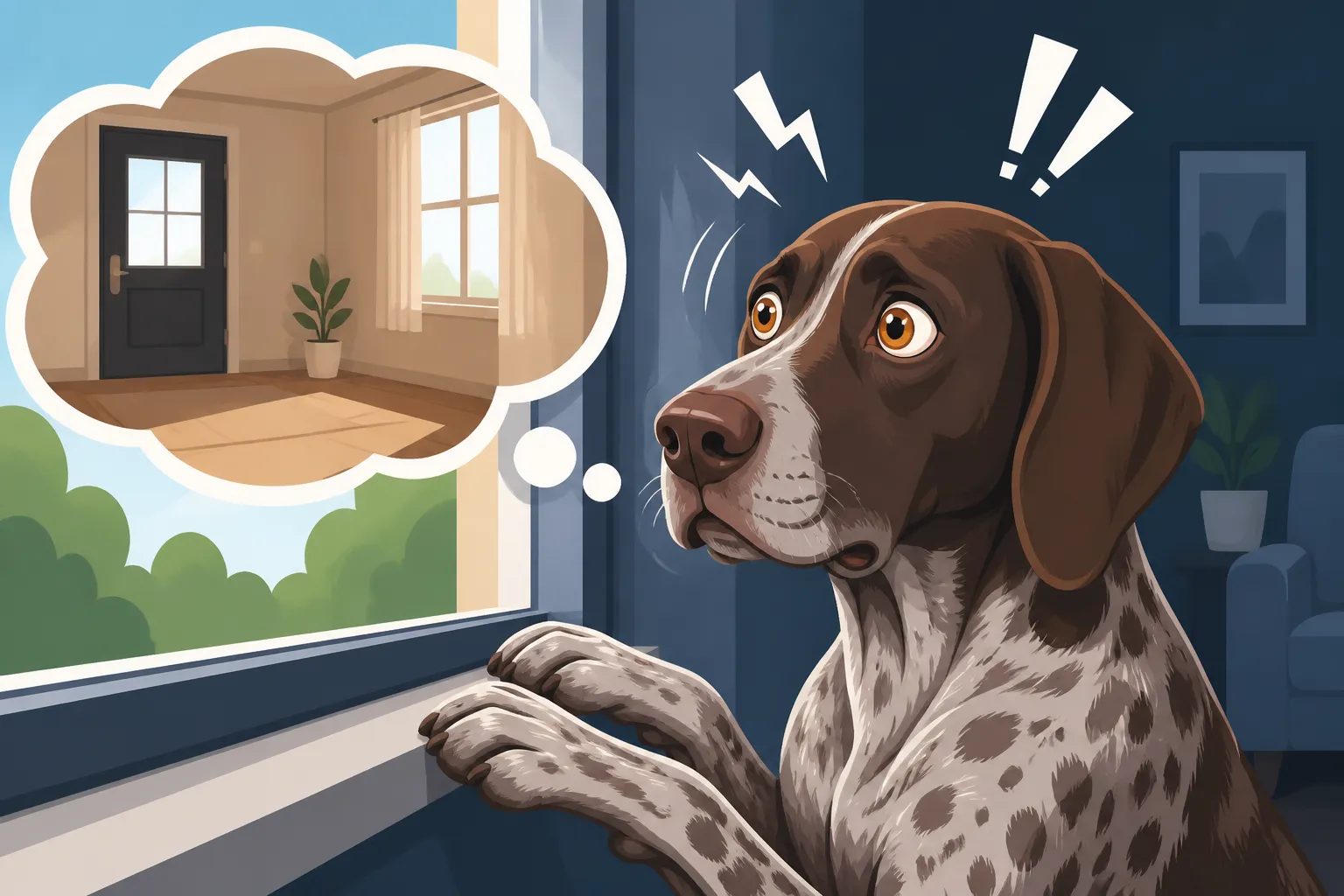
True separation anxiety, on the other hand, is an emotional distress response. It's not about being mischievous; it's about being genuinely terrified of being abandoned or left alone. This panic can be triggered the moment you pick up your keys or put on your coat. The dog isn't just seeking entertainment; they're suffering from an acute fear of isolation. Their behaviors are often an attempt to reunite with you, or a manifestation of extreme stress. This isn't just about needing The Two Hours a Day a German Shorthaired Pointer Needs; it's about a deep-seated emotional response that needs empathetic and structured support.
Why Correct Identification Matters for Effective Training
Misdiagnosing boredom as separation anxiety, or vice-versa, can lead to ineffective and even detrimental training approaches. If you try to correct anxiety-driven destructive behavior with punishment, you'll only heighten your Shorthair's fear and worsen the anxiety. They already believe they're in a terrifying situation, and your anger upon return simply confirms their worst fears about your departure. This can create a vicious cycle that's incredibly hard to break.
Conversely, if you assume intense anxiety is just boredom, you might just increase exercise or provide more toys, which, while beneficial, won't address the underlying panic. A dog suffering from true separation anxiety can have all the enrichment in the world and still panic because their emotional need for connection and security isn't being met. Accurate identification allows you to tailor your approach, focusing on building confidence and positive associations with alone time, rather than just managing symptoms. It means the difference between a dog who eventually learns to relax and one whose anxiety escalates.
Recognizing the Signs Your Shorthair Is Panicking
German Shorthaired Pointers are expressive dogs, but their signs of panic can sometimes be misinterpreted, especially if you're not home to witness the onset. It's crucial to understand the spectrum of behaviors that indicate true distress, not just a naughty phase. These signs often begin as soon as you give the 'leaving cues' and can persist until your return.
Destructive Chewing, Digging, and Attempts to Escape
One of the most common and frustrating signs of separation panic is destructive behavior, but it often has a distinct quality. While a bored GSP might chew your favorite slipper, an anxious Shorthair might target exit points: doorframes, window sills, crates, or even digging aggressively at the carpet or flooring near an entryway. They aren't just chewing; they are frantically trying to get out, to follow you, to escape the perceived abandonment. I've seen GSPs chew through drywall, bend metal crate bars, and literally dig holes in hardwood floors in their desperate attempts to get to their people. This isn't just What an Under Exercised Shorthair Does to a House in a general sense; it's focused, intense, and often self-injurious. You might come home to find bloody paws or broken nails, clear evidence of their frantic efforts.
These destructive acts are usually reserved for when you are completely absent. If your dog only chews furniture when you're in the next room, it's more likely a training issue or attention-seeking behavior. If the damage consistently occurs when you're gone, and especially around doors or windows, it strongly points to anxiety.
Excessive Vocalization, House-Soiling, and Self-Harm
Another classic sign of a Shorthair panicking alone is relentless vocalization. This isn't just a few barks when the mailman comes; it's sustained howling, barking, or whining that can last for hours. Neighbors often report this, providing objective evidence of your dog's distress. This vocalization is often a desperate cry for attention or an attempt to call you back. Some GSPs will pace relentlessly, pant, or drool excessively, leaving puddles on the floor even in cool weather.
House-soiling, particularly urination or defecation, is also a common anxiety symptom, even in fully house-trained dogs. This isn't usually due to a lack of bladder control, but rather an involuntary physiological response to extreme stress and fear. If your Shorthair consistently has accidents only when left alone, despite being perfectly clean when you're home, anxiety is a strong suspect. Finally, some highly anxious Shorthairs might resort to self-harm, such as licking or chewing their paws until they are raw, creating hot spots, or even pulling out their fur. These behaviors are clear indicators that your dog is suffering deeply when left alone. Take a look at this table to help differentiate between common behaviors:
| Behavior Characteristic | Signs of Boredom | Signs of Separation Anxiety |
|---|---|---|
| Destructive Behavior | Chewing various household items, generalized mess. | Focused chewing on exit points (doors, windows, crate). Attempts to dig out. |
| Vocalization | Occasional barking at outside stimuli. | Persistent, sustained howling, barking, whining. Desperate cries. |
| House-Soiling | Infrequent, possibly related to specific triggers or inadequate potty breaks. | Consistent urination/defecation only when left alone, even when house-trained. |
| Pacing/Panting | Mild restlessness. | Excessive, frantic pacing, drooling, panting, hyperventilating. |
| Reaction to Departure | Mild disappointment, then finds something to do. | Begins as soon as departure cues are noticed (keys, coat). |
| Reaction to Return | Happy to see you, ready for activity. | Over-the-top, frantic greeting, intense relief, takes a long time to settle. |
| Self-Harm | Rarely. | Licking/chewing paws until raw, pulling out fur. |
Creating a Safe and Calming Environment
When your German Shorthaired Pointer is struggling with being left alone, creating an environment that feels secure and reassuring is paramount. It’s not just about giving them toys; it’s about establishing a sense of predictability and comfort that counteracts their fear.
The Nuances of Crate Training for Anxious Shorthairs
For many dogs, a crate can be a den, a safe haven. For an anxious Shorthair, however, if introduced incorrectly or used as a "punishment" for anxiety, it can become a source of intense claustrophobia and heightened panic. Crating a Shorthair That Has Energy to Burn is a good start, but an anxious dog needs a gentler approach. Never force an anxious dog into a crate. Instead, make the crate the best place on earth.
Start by feeding all meals in the crate, leaving the door open. Toss high-value treats and favorite toys inside throughout the day, so your Shorthair voluntarily enters. You can cover the crate with a blanket to create a den-like feel, and place a soft, comfortable bed inside. The goal is for your dog to associate the crate with positive, calm experiences, not confinement. If your Shorthair is actively destroying the crate or injuring themselves trying to escape, the crate might be exacerbating their anxiety and should be re-evaluated, perhaps with the help of a professional. In such cases, a small, dog-proofed room might be a better, less confining alternative.
Designated Safe Spaces, Scent, and Sound Therapy
Beyond a crate, establish a specific "safe space" in your home where your Shorthair can go when alone. This might be a quiet room, a corner with their bed, or even a designated area in a larger room. This space should be free from loud noises and excessive stimulation. Stock it with engaging, safe chew toys, like Kongs filled with frozen peanut butter or other long-lasting treats purchased easily from Amazon. These provide a positive distraction and can help associate alone time with good things.
Scent and sound therapy can also be incredibly beneficial. Many dogs find classical music or specific "dog anxiety relief" playlists calming. Some owners use white noise machines to muffle outside sounds that might trigger alerts. Pheromone diffusers, which release synthetic versions of calming dog pheromones, can also help create a more serene atmosphere in their designated safe space. These tools help create a consistent, reassuring sensory environment that signals safety and helps reduce stress levels, giving your Shorthair something predictable and soothing to focus on.
Building Tolerance for Alone Time
This is where the real work begins. Helping a German Shorthaired Pointer overcome panic when left alone is a marathon, not a sprint. It requires immense patience, consistency, and a commitment to gradual progress. The goal is to slowly desensitize them to your absence, proving that your departure isn't a permanent abandonment.
Gradual Desensitization and Positive Associations
The core of building tolerance lies in a process called gradual desensitization. This means starting with incredibly short periods of alone time and slowly increasing the duration as your Shorthair shows comfort. Begin by simply performing your "leaving cues"—picking up your keys, putting on your coat—but then don't leave. Sit back down, put the keys away, and ignore your dog. Repeat this many times a day until your Shorthair no longer reacts with anxiety to these cues. This breaks the association between the cues and your departure.
Next, you'll start leaving for very brief periods. We're talking seconds. Put on your coat, open the door, step out, and immediately come back in. Don't make a big fuss when you leave or return. The goal is to make your departures as unremarkable as possible. If your GSP remains calm, gradually increase the time: 10 seconds, 30 seconds, a minute, five minutes, and so on. Always ensure your dog is calm before you return. If they are barking or panicking, wait for a momentary lull before re-entering, otherwise, you might inadvertently reward the anxious behavior. Pair these departures with high-value, long-lasting treats. Give your Shorthair a stuffed Kong or a favorite chew as you leave, making your departure a predictor of something good. Over time, your Shorthair learns that being alone means good things happen, and you always come back. This directly helps with Building a Shorthair's Tolerance for Being Alone.
The Importance of Pre-Departure Exercise and Mental Enrichment
For a German Shorthaired Pointer, physical and mental exhaustion is often the best calming aid. A tired GSP is a good GSP, and a GSP that is truly spent before you leave is far less likely to have the energy or inclination to panic. Before any planned absence, ensure your Shorthair gets a vigorous workout. This isn't just a leisurely walk; it's a solid run, a game of fetch, or a serious training session that gets their heart rate up and their brain engaged. Think about how much ground a German Shorthaired Pointer covers in the field; you need to replicate that level of exertion to truly tire them out.
Beyond physical exercise, mental enrichment is equally vital. Puzzle feeders, snuffle mats, or interactive toys can keep their minds busy and redirect their energy. You can find a huge variety of these on Amazon. These items should be given as you leave, making the association with your departure positive. Providing challenging mental tasks can help burn off nervous energy and keep their focus away from your absence. Remember, a mentally stimulated dog is often a calmer dog. For more ideas, explore topics like Puzzle Feeders and Scent Games for a Shorthair.
Seeking Professional Guidance and Support
While many owners can make significant progress with consistent effort, some German Shorthaired Pointers have such deeply ingrained anxiety that they need more specialized support. There's absolutely no shame in reaching out for professional help; it shows you're committed to your dog's well-being.
When to Call a Vet or Certified Behaviorist
If your Shorthair's panic is severe—leading to self-injury, extensive destruction, or if you simply aren't seeing progress with your efforts—it's definitely time to consult a professional. Your first stop should be your veterinarian. They can rule out any underlying medical conditions that might be contributing to the behavior, such as pain, thyroid issues, or cognitive decline in older dogs. They might also discuss medication options. While medication isn't a "cure" for separation anxiety, it can be a powerful tool to help lower your dog's overall anxiety levels, making them more receptive to behavioral modification training. It can break the cycle of extreme panic, allowing them to learn and cope more effectively.
Following a vet visit, consider a certified professional dog trainer or a veterinary behaviorist. These experts specialize in canine behavior and can provide a tailored plan specifically for your Shorthair's needs. A good behaviorist will observe your dog's specific triggers and reactions, then guide you through a systematic desensitization and counter-conditioning program. They can also provide support and adjustments to the plan as you go, which is invaluable. Don't be afraid to ask about What a Behaviorist Charges for an Anxious Shorthair during your initial consultation so you know what to expect.
Online Training Programs and Support Resources
The good news is that there are many excellent online resources available for owners dealing with separation anxiety. These can be particularly helpful if access to in-person behaviorists is limited or cost-prohibitive. Some online programs offer structured courses, video tutorials, and even virtual consultations. For example, BAXTER & Bella offers comprehensive online puppy training programs that cover crucial early socialization and foundational skills, which can prevent anxiety from developing in the first place, or provide a strong base for addressing it.
Many behaviorists also offer online courses or group coaching for separation anxiety. These programs often break down the desensitization process into manageable steps, providing a community of support and expert feedback. Look for programs that emphasize positive reinforcement and humane, science-based training methods. Remember, consistency is key, and these resources can provide the structured guidance you need to navigate this challenging journey. They can help you understand nuances like The Hours a Shorthair Tolerates an Empty House and how to gradually extend that time.
Living with a Shorthair Prone to Anxiety
Managing separation anxiety in a German Shorthaired Pointer is often a long-term commitment. It requires adjustments to your daily routine, a deep understanding of your dog's emotional needs, and a commitment to providing a stable, enriching life.
Management Strategies for Long-Term Success
Beyond active training, effective management strategies are crucial for living with an anxious Shorthair. This might mean arranging for a trusted friend, family member, or professional dog walker to visit your dog during longer absences. Dog daycare, for some Shorthairs, can be a great way to provide exercise and companionship, but it's not for every anxious dog; some may find the constant stimulation overwhelming. If your Shorthair struggles with alone time, avoid sudden, prolonged absences without preparation. Build up their tolerance gradually for every length of time you anticipate needing to be away.
Consider hiring a professional pet sitter who can stay with your dog in your home, providing comfort and continuity, especially for overnight trips. Puzzle toys and chew items remain important management tools; always have a rotating selection available to keep your GSP engaged when you're gone. If possible, set up a camera (many affordable options are available on Amazon) to monitor your dog's behavior while you're away. This provides invaluable insight into how they're truly coping and can help you adjust your strategy. Remember, the goal is to set your Shorthair up for success, minimizing opportunities for panic to take hold.
Enriching Their Lives Beyond Alone Time
German Shorthaired Pointers are highly intelligent, athletic, and sensitive dogs. Their "velcro" nature often means they thrive on close companionship and shared activities. Addressing their anxiety means ensuring their lives are rich and fulfilling even when you are present. This includes plenty of physical exercise – more than just a walk around the block – but also mental stimulation through training, scent work, or dog sports. A well-exercised and mentally engaged GSP is a more resilient and confident dog overall.
Spend quality time with your Shorthair, engaging in activities they love. This builds their confidence and strengthens your bond, which can indirectly help them feel more secure when you're not around. Practice short training sessions throughout the day, play interactive games, and give them plenty of appropriate chew items and toys. A busy, happy German Shorthaired Pointer is less likely to fixate on your absence. It's about providing a holistic approach to their well-being, recognizing that their anxiety is a symptom of an unmet need for security and comfort. By showering them with appropriate exercise, training, and affection, you help build a foundation of confidence that supports them when they must face the world without you, even if it's just for a little while.
Disclaimer
This article is for general informational purposes only and does not constitute professional advice. Laws, prices and regulations vary by location and change over time. Consult a qualified professional for guidance on your specific situation.