Whether Trailing a Runner Can Be Taught to a Shorthair
One of the most frustrating moments for a German Shorthaired Pointer owner, especially one who loves to hunt, is when your beautifully pointing dog suddenly sees their quarry bolt away, turning a perfect stance into an uncontrolled chase. This guide will delve into whether you can actually teach your Shorthair to effectively trail a running bird, transforming that wild pursuit into a skilled, controlled follow that leads to more birds in hand and a more polished hunting companion.
Understanding the Shorthair's Natural Instincts
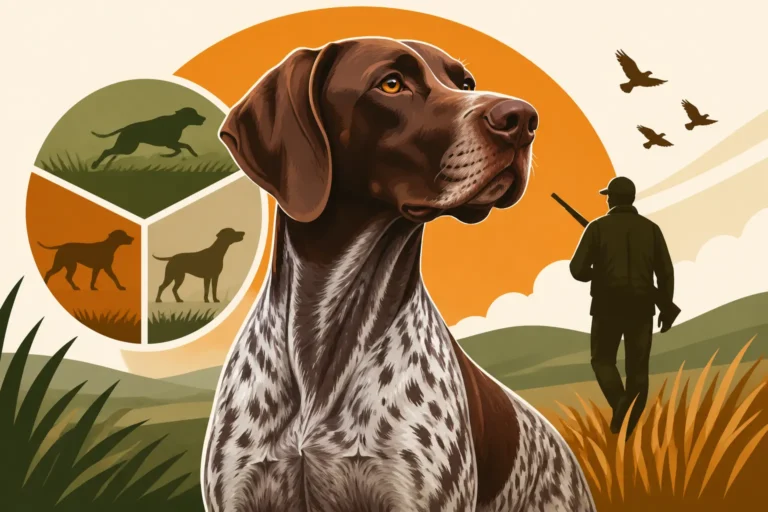
German Shorthaired Pointers are, by their very design, natural pointers. For centuries, they've been bred to halt, often with a rigid, intense posture, upon scenting game. This "point" is a magnificent spectacle, showcasing their deep-seated genetics and training, but it's fundamentally designed for stationary birds. When a bird decides to use its legs rather than its wings, the equation changes drastically, and your Shorthair's inherited programming can sometimes work against you.
The Pointing Predicament: When "Whoa" Meets "Go"
Think about it: your Shorthair locks up, nose to the wind, muscles trembling, eyes intense. This is the moment you live for. You approach, ready for the flush. But what if that pheasant or chukar, instead of bursting into the air, simply lowers its head and starts running through the cover? The typical, well-trained GSP's instinct, reinforced by countless repetitions of "whoa" and holding point, is to remain frozen. Their mind tells them "bird here, hold steady."
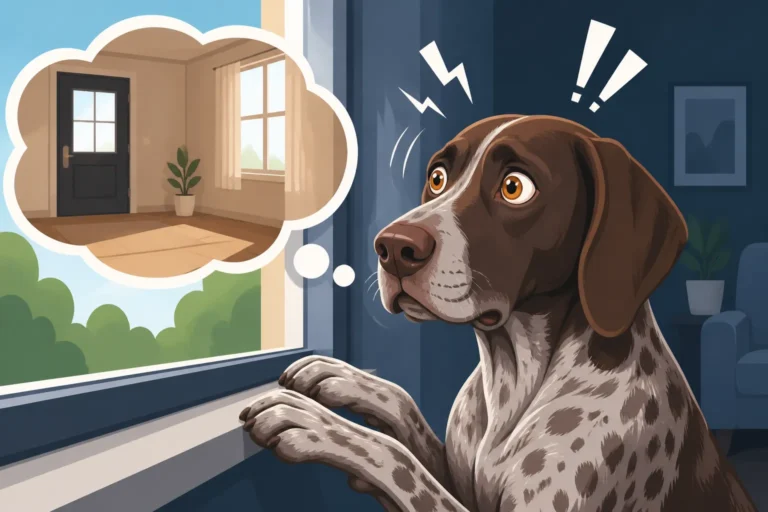
The problem arises when the "bird here" isn't here anymore, it's fifty yards away and moving fast. A rigid point becomes a disadvantage. Many Shorthairs, upon realizing the bird is moving, will break their point and chase, often without much thought for scent cone or wind, simply reacting to the visual stimulus or rapidly fading scent. This isn't a failure of their desire; it's a conflict in their programming. They want the bird, but their primary training focuses on the static point and flush.
When a Bird Bets on Its Legs
Some birds, especially wily pheasants or even certain types of quail, are masters of evasion. They know the trick of running rather than flying, particularly in dense cover where they can disappear quickly. For a German Shorthaired Pointer, whose ancestral job includes precisely locating and holding that bird, a runner presents a unique challenge. Their powerful nose is still working overtime, but the manner of working changes from a static pinpoint to a dynamic track.
Without specific training, a Shorthair might do one of several things when faced with a runner. They might break point and simply sprint after the bird, often overrunning the scent and losing it in a flurry of excitement. They might try to re-point frantically, losing valuable ground. Or, they might get confused and return to the handler, unsure how to proceed. None of these outcomes is ideal for a hunter seeking to maximize their retrieve opportunities. This is why purposefully teaching trailing can be a game-changer, turning a potentially lost bird into a successfully located one.
Laying the Groundwork for Trailing Success
Teaching a German Shorthaired Pointer to trail a running bird effectively isn't about eradicating their pointing instinct; it's about adding a sophisticated layer to their existing skill set. It requires patience, consistency, and a clear understanding of how to communicate this new expectation to a dog that thrives on clear commands and consistent reinforcement.
Scent Discrimination and Tracking Basics
Before your Shorthair can trail a running bird, they need to understand the fundamental concept of following a specific scent trail, and ignoring distractions. This isn't necessarily something they naturally apply to a running bird in a controlled manner; their natural instinct might be to chase the visual, or react to the general scent of bird, rather than meticulously picking up a track.
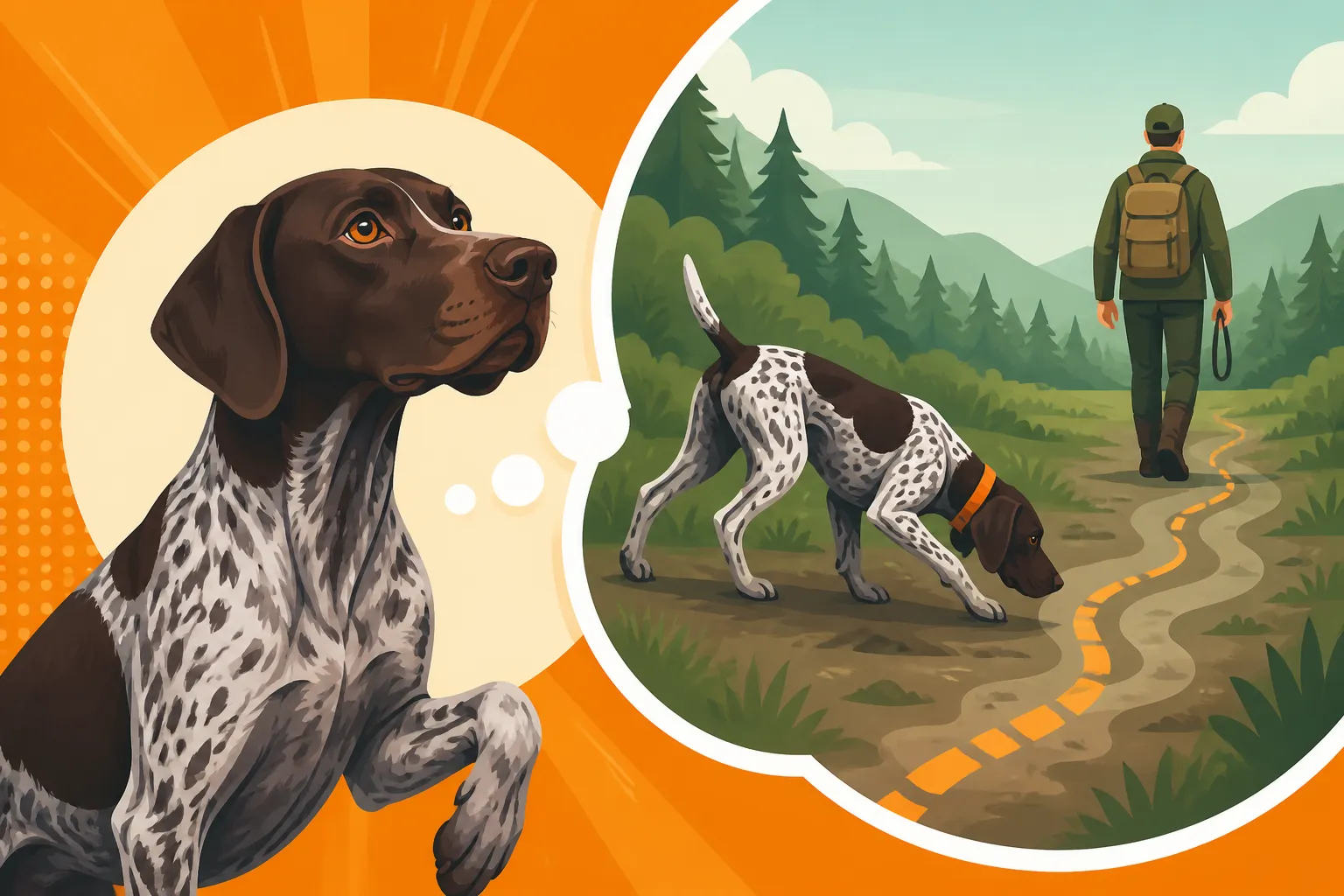
Start with very basic tracking exercises in a low-distraction environment. Use a specific bird wing or a dummy that has been rubbed with bird scent. Create a short, straight, easy-to-follow track on open ground. Keep your dog on a long line, allowing them to lead, but providing just enough tension to guide them if they stray. Reward heavily when they stay on the scent and find the "bird." You're teaching them that following this specific scent leads to a reward, not just the general excitement of "bird." Programs like those offered by BAXTER & Bella can be fantastic for building foundational obedience and confidence, which underpins more advanced scent work. You're building their focus and teaching them the process of tracking. For more advanced scent work, exploring resources on Nose Work for a Shorthair can be incredibly beneficial.
Controlled Pursuit and "Whoa" Reinforcement
This is where things get interesting, because you're asking your dog to do two seemingly contradictory things: pursue a moving object, and yet remain under control. The key here is "controlled pursuit." Your Shorthair needs to understand that they can follow the scent of a running bird, but not at a flat-out, unthinking sprint. They need to work the ground, keeping their nose down and their brain engaged.
This often involves extensive use of a check cord or a long line. Introduce a bird that will run, perhaps a pen-raised pigeon or quail. Release the bird, let it run a short distance, and then release your Shorthair on a long line. The moment they start to break point and charge, use a gentle but firm "whoa" command and a slight check on the line to remind them that this isn't a free-for-all. The goal is to encourage them to lower their head, use their nose, and work the track deliberately, staying connected to you. Building Whoa on a Shorthair With a Check Cord goes into more detail on how to solidify this crucial command. The ultimate goal is for them to follow the scent, find the bird, and ideally, re-point it or at least hold it until you arrive, rather than flushing it wildly.
Specific Techniques for Trailing Runners
Once your GSP has a solid foundation in basic scent discrimination and understands the concept of controlled "whoa," you can start integrating these skills into specific trailing scenarios. This is where the training truly transforms from foundational work to practical application in the field.
Using a Long Line and Check Cord for Control
These tools are your best friends when teaching trailing. They allow you to give your Shorthair the freedom to work scent while maintaining the ability to intervene and guide. A good quality long line, perhaps 30-50 feet, made of material that doesn't easily snag or burn your hands (you can find various options on platforms like Amazon), is indispensable.
Here’s how you might use it:
- Set up the scenario: Place a bird in cover that you know it will likely run through. Release it a little distance away before your dog gets there.
- Introduce your Shorthair: Bring your Shorthair to the spot where the bird was originally placed or where you saw it disappear. Put them on the long line, letting them pick up the scent.
- Encourage working the scent: As they start to follow, allow them to move, but be ready to apply a gentle "whoa" and a slight upward tug if they try to sprint or lift their head too high, losing the scent. Your goal is to keep their nose engaged with the ground.
- Reward success: When they successfully trail the bird and locate it, or re-point, provide enthusiastic praise and a reward. The retrieve itself is often the biggest reward for a Shorthair, so letting them retrieve the found bird (if ethically appropriate and safe) is a huge motivator. This kind of nuanced training helps build a Shorthair's confidence in its ability to work running scent.
Introducing Running Birds in a Controlled Environment
The transition from training dummies to live birds, especially those that will run, is a critical step. Pen-raised game birds like pigeons, chukar, and quail are ideal for this stage, as they can be released in controlled environments where you can manage the running scenario. Chukar and Quail for a Young German Shorthaired Pointer offers more insights into using these birds.
Start with birds that aren't too fast or too prone to flying immediately. Quail, for example, often prefer to run through brush before flying. Release a bird, let it run a reasonable distance, then bring your Shorthair in on the long line. This allows you to observe their reaction and guide them. You want to see them switch from a hard point to a focused, nose-to-the-ground trail, working the exact path the bird took. If they get too excited and try to sprint, use your "whoa" and the check cord to slow them down and remind them to use their nose. The goal is to teach them that methodical trailing, not a reckless dash, is the way to the bird.
Integrating "Fetch" and "Retrieve" into Trailing
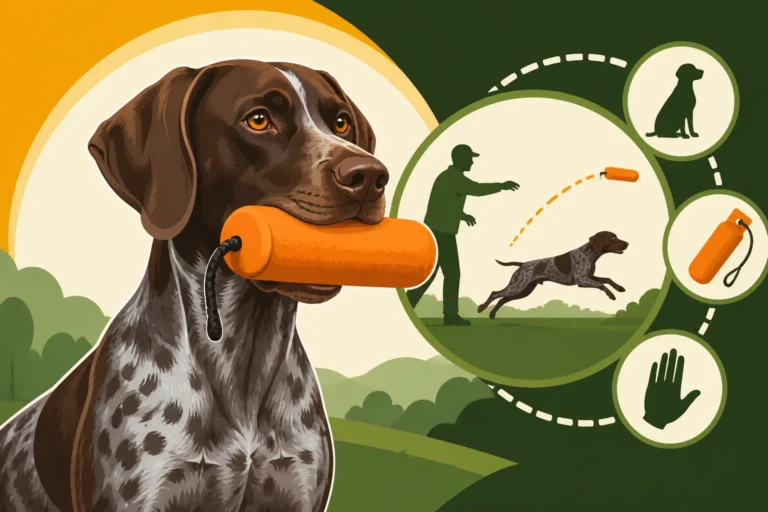
What happens when your Shorthair successfully trails and finds the running bird? The retrieve becomes paramount. If your dog has a strong natural retrieve, fantastic. If not, or if they tend to mouth birds hard or drop them short, force fetch training is highly recommended. Force Fetch Explained for a Shorthair Owner details this process.
When training trailing, the retrieve should be a seamless part of the exercise. After successfully trailing and locating the bird, allow them to retrieve it to hand. This completes the cycle and reinforces the entire process as a positive experience. Make sure to instill a soft mouth if you haven't already, as a hard mouth can ruin a retrieved bird. Practice retrieving in various scenarios, ensuring your Shorthair understands that the end goal is always to bring the bird gently back to you. This also ensures that if they trail a crippled bird, they know exactly what to do when they find it. You can also explore Teaching a Shorthair to Deliver a Bird to Hand for more specific techniques on the retrieve aspect.
Common Challenges and Troubleshooting
Teaching a German Shorthaired Pointer to trail running birds is a nuanced process, and it's inevitable that you'll encounter some bumps along the way. Your Shorthair is a creature of instinct and habit, and you're essentially refining and expanding on those deeply ingrained behaviors. Understanding common pitfalls and how to troubleshoot them can save you a lot of frustration.
Overcoming the Instinct to Break Point
This is perhaps the biggest hurdle. Your GSP has been praised for holding point. Now, you're asking them to shift gears when the bird runs. It's a mental adjustment for them. The solution lies in consistent, controlled training where the reward for controlled trailing is greater than the impulse to simply chase.
- Reinforce "Whoa" rigorously: If your dog breaks point and sprints, immediately correct them with a firm "whoa" and a check on the long line. Bring them back to the last known scent and restart. They need to understand that breaking point without command is unacceptable. For many Shorthairs, learning Whoa and Why Every Shorthair Starts There is the absolute foundation.
- Gradual exposure: Don't throw them into a field full of wild, running pheasants right away. Start with pigeons or docile quail that run predictably. Gradually increase the difficulty.
- Focus on scent work, not sight: When they break and chase visually, they often lose the scent. Encourage them to keep their nose down and trust it. Praise heavily when you see them methodically working a track with their head low, rather than running wildly. Remember, Reading a Shorthair's Point Before It Breaks can give you clues about their intent.
Managing Range and Staying Connected
German Shorthaired Pointers are bred to cover ground and range out. While this is fantastic for finding birds, it can be problematic when you're trying to teach a focused, methodical trailing pattern. You need them to stay within a reasonable distance so you can guide and intervene if necessary. Shortening a Shorthair That Ranges Too Far is a relevant topic here.
- Start close: Begin trailing exercises in smaller, more contained areas. This naturally limits their ability to range too far.
- Use the check cord/long line: This is your primary tool for managing range. If they start to get too far ahead while trailing, gently check them back to a comfortable working distance. You want them to hunt with you, not independently.
- Whistle commands: Incorporate whistle commands for recall and turning. A single, consistent whistle blast for "come in" or "this way" can be incredibly effective in keeping them connected, especially in dense cover where visual contact is lost. Teach them that even when on a hot trail, your command takes precedence.
Patience is Your Greatest Asset
This type of training isn't learned overnight, and it's certainly not something every Shorthair will pick up with the same speed. German Shorthaired Pointers are intelligent and eager to please, but they also have strong natural instincts that need careful molding. Some dogs naturally point butterflies and birds alike, while others need more focus.
- Consistency is key: Short, regular training sessions are far more effective than infrequent, long ones. End each session on a positive note, even if it's just a small success.
- Avoid frustration: If you or your dog are getting frustrated, take a break. Push too hard, and you risk creating negative associations with the training.
- Celebrate small victories: Did your Shorthair hold a controlled trail for just a few extra yards? That's a win! Did they re-point a running bird, even briefly? Huge success! Acknowledging progress, no matter how small, keeps both you and your dog motivated. Remember, not every Shorthair will point naturally without training for every scenario, and that's okay. You're building a refined hunting partner, and that takes time and dedication.
Trailing vs. Pointing: A Comparative Overview
To truly understand the value and challenge of teaching a German Shorthaired Pointer to trail running birds, it's helpful to compare the core objectives and methodologies of traditional pointing training with those of trailing. This isn't about choosing one over the other, but rather adding a versatile dimension to your dog's capabilities.
| Feature | Traditional Pointing Training | Trailing Running Birds Training |
|---|---|---|
| Primary Instinct | Freeze on scent, hold steady. | Follow scent, work track, ideally re-point or flush on command. |
| Ideal Bird Behavior | Stationary or flushing immediately. | Runs through cover, attempting to evade. |
| Key Command Focus | "Whoa," "Steady." | "Whoa" (for control), "Find," "Track," "Hup" (or similar for follow). |
| Dog's Movement | Static, often rigid body posture. | Dynamic, nose to ground, methodical movement along a path. |
| Primary Goal | Pinpoint exact location, allow handler to flush. | Relocate moving bird, prevent escape, facilitate retrieve. |
| Tools Used | Check cord, whoa post/barrel, training table. | Long line, check cord, e-collar (for advanced control), dummies with scent. |
| Typical Challenge | Breaking point, creeping, ignoring handler's approach. | Overrunning scent, chasing visually, losing focus on track. |
| Reward | Successful flush, retrieve (often after the shot). | Finding the bird, successful re-point, retrieve. |
As you can see, while both rely heavily on the German Shorthaired Pointer's incredible nose and desire to please, the application of these skills differs. Trailing introduces a dynamic element that requires a deeper level of communication and control between you and your dog. It transforms a fixed response into a fluid, adaptive problem-solving skill, making your Shorthair even more versatile in the field. This type of advanced training is a testament to the comprehensive abilities of The German Kennels the Shorthair Was Built In.
The Benefits of a Trail-Savvy Shorthair
Beyond the satisfaction of seeing your German Shorthaired Pointer master a new, complex skill, teaching them to trail running birds offers tangible advantages in the field. It enhances their effectiveness as a hunting companion and contributes to a more fulfilling experience for both of you.
More Birds in the Bag
Let's be honest, that's often the ultimate goal for a hunting dog. Running birds, especially in thick cover, are notoriously difficult to pin down. A Shorthair that can effectively trail and relocate these evasive creatures significantly increases your chances of getting a shot. Think of those wily pheasants that sneak out of cover or the chukar that sprints across a rocky hillside; a trailing dog turns what would be a lost opportunity into a potential retrieve.
This isn't just about the bird count, either. It's about reducing lost game. A bird that's crippled but still able to run can often escape if your dog only knows how to point or chase wildly. A Shorthair trained to trail will meticulously follow that scent, even faint blood trails, to find the bird, ensuring a more humane and successful hunt. This versatility is a hallmark of the breed, originally envisioned to be the ultimate multi-purpose gun dog, handling everything from upland birds to waterfowl, and even working as a Blood Tracking With a German Shorthaired Pointer.
Enhanced Versatility in Diverse Terrain
Not all hunting environments are created equal. Some fields offer open expanses where a classic, hard-pointing dog shines. Others are dense with briars, thickets, or tall grass, making a running bird an almost guaranteed escape artist if your dog can't adapt. A Shorthair proficient in trailing becomes a far more versatile hunting tool, capable of excelling in varied landscapes.
Consider hunting situations where birds constantly move, perhaps on a windy day, or in fields where cover is patchy. A dog that can switch from a staunch point to a focused trail on command, or even instinctively, is invaluable. This adaptability minimizes lost opportunities and maximizes your time in the field, making your German Shorthaired Pointer an even more capable and reliable partner, no matter what challenges the terrain throws your way.
Disclaimer
This article is for general informational purposes only and does not constitute professional advice. Laws, prices and regulations vary by location and change over time. Consult a qualified professional for guidance on your specific situation.