A Shorthair Around Chickens and Small Pets
The dream of a harmonious household, where your spirited German Shorthaired Pointer coexists peacefully with smaller animals like backyard chickens or even the family cat, often bumps up against the reality of a GSP's inherent design. Many GSP owners find themselves facing a significant challenge: how to manage their dog's strong prey drive around creatures that are, by nature, prey. This guide will walk you through understanding your Shorthair's instincts, implementing effective training and management strategies, and setting realistic expectations for integrating your GSP with chickens and other small pets safely.
Understanding the German Shorthaired Pointer's Prey Drive
Let's be real: German Shorthaired Pointers were literally bred for hunting. They have generations of selective breeding behind them that enhanced their ability to locate, point, and retrieve game birds and even small furred game. This isn't just a quirk; it's the very fabric of their being. When you bring a GSP into a home with small, fast-moving, or high-pitched animals, you're essentially asking a highly specialized predator to ignore its life's calling. It's a huge ask, and understanding this fundamental truth is the first step toward managing the situation responsibly.
Instinct Versus Training
The distinction between instinct and training is crucial here. While training can absolutely shape and modify a GSP's behavior, it rarely, if ever, eradicates deep-seated instincts like prey drive. Your GSP isn't being "naughty" when it lunges at a fleeing squirrel or gets intensely focused on a chicken pecking in the yard. It's simply acting on thousands of years of evolutionary programming. Imagine trying to train a cat not to chase a laser pointer – you can reduce the behavior, but the underlying urge remains. For a GSP, that urge is to pursue. A well-trained GSP can learn to control its instincts under command, but the instinct itself doesn't disappear. This means vigilance will always be a part of your life if you're mixing GSPs with small prey animals.
Their drive is complex, involving sight, scent, and sound. A quick movement, the flapping of wings, or a distinctive smell can instantly trigger that hard-wired response. For many GSPs, the sight of a chicken scratching in the dirt, the rustle of a rabbit in a hutch, or the sudden dart of a cat can switch them from "family dog" to "focused hunter" in a split second. This isn't a moral failing on their part; it's simply what they were bred to do. We ask a lot of our dogs when we expect them to override these powerful urges, so setting them up for success means understanding these triggers and mitigating them wherever possible.
Scent and Sight Triggers
German Shorthaired Pointers possess an incredible nose, designed to pick up faint scent trails of game birds. This means even if your small pets are out of sight, their scent can still be a powerful trigger. Imagine your GSP catching the faint whiff of chicken in the breeze, or tracking the scent trail a rabbit left along the fence line. Their minds are instantly engaged, trying to locate the source of that intriguing smell. It's like a siren song for their hunting instincts. This is why simply fencing off an area might not be enough; the olfactory stimulation can still be a significant challenge.
Beyond scent, sight is perhaps the most immediate trigger for a GSP's prey drive. These dogs are sight hounds to a degree, quick to spot movement. A fluttering feather, a quick scurry across the floor, or a sudden hop can be irresistible. Chickens, with their jerky movements and tendency to run when startled, are practically designed to trigger a GSP's chase instinct. The same goes for rabbits, guinea pigs, or even some cats who aren't dog-savvy enough to stand their ground. The speed and unpredictability of these smaller animals make them prime targets for a GSP who sees them as potential game. This is why careful, controlled introductions and constant supervision are paramount, because one wrong move from a small pet can unleash that powerful drive.
Introducing Your GSP to Chickens
The idea of your GSP happily patrolling the chicken coop, keeping predators away, is a lovely one. The reality is often far more complicated, and frankly, risky for your flock. While some GSPs can learn to tolerate chickens, very few can be truly trusted unsupervised, especially if they have a high prey drive. The goal isn't usually to make them best friends, but to establish a respectful, non-lethal coexistence built on strict management.
Controlled Introductions
Controlled introductions are non-negotiable, and they need to be done over an extended period, often weeks or even months. Never, ever just throw your GSP into a pen with chickens and hope for the best. Start with your GSP on a secure leash, at a distance from the coop or run, allowing them to observe the chickens without being able to reach them. The chickens should be safely enclosed, ideally behind a double barrier if possible, so there's no chance of escape or contact. You're looking for your GSP's reaction. Is it intense focus, whining, pulling, or barking? Or is there a more relaxed curiosity? Keep these sessions short and positive. Reward calm behavior heavily with high-value treats. If your GSP is too aroused, move further away or end the session.
Gradually, over many sessions, you can decrease the distance, always maintaining a secure leash and barrier. The goal is for the GSP to eventually see the chickens as a boring part of the landscape, not an exciting chase opportunity. This takes immense patience and consistency. Remember, this isn't about letting them "play." It's about desensitization. If you're working with a new puppy, early, positive exposure can be beneficial, but again, always controlled and supervised. A good online training program, like those offered by BAXTER & Bella, might have specific modules on desensitization to help guide you through the process step-by-step.
Secure Enclosures and Supervision
When we talk about GSPs and chickens, "secure" isn't just a suggestion; it's a life-or-death requirement. Your chicken coop and run need to be absolutely escape-proof, not just for the chickens but also to prevent your GSP from gaining unsupervised access. This means sturdy wire, buried hardware cloth to prevent digging, and secure latches. Free-ranging chickens are almost certainly not an option if you have a GSP with any degree of prey drive. Even a small hole or a loose gate can lead to disaster.
Even with the most secure enclosures, direct supervision is crucial whenever your GSP and chickens are in the same general area. This might mean your GSP is always on a leash when outside, or only allowed in a completely separate, fenced-off yard when the chickens are out. Never leave them alone together, even for "just a minute." A momentary lapse can undo weeks or months of training and result in tragedy. Many owners create a "dog-free zone" around the coop, adding another layer of fencing or gates to ensure the chickens have a safe haven where the GSP cannot reach them. Investing in high-quality outdoor crates or tie-outs (always supervised!) from a retailer like Amazon can also provide safe, temporary containment for your GSP when you need to let the chickens roam a little more freely in a designated area.
Integrating Your GSP with Other Small Pets
Beyond chickens, many homes have cats, rabbits, guinea pigs, or even ferrets. The challenges here are similar to those with chickens, but with their own unique nuances depending on the small pet's behavior and ability to defend itself or escape.
Cats: The Tricky Coexistence
Cats are often the small pet owners most hope their GSP can live with. The good news is, it's often more achievable than with chickens, primarily because cats are generally more capable of self-preservation and setting boundaries. A confident, dog-savvy cat can often put a GSP in its place with a well-timed hiss or swat. However, a timid cat that runs will likely trigger the GSP's chase instinct, leading to a dangerous situation.
Introducing a GSP to a resident cat requires careful, slow, and positive steps. Start by keeping them completely separate, using gates and crates to ensure no unsupervised interaction. Allow them to smell each other under doors. Then, introduce them on-leash in a neutral territory, with the cat having escape routes or high perches. Reward your GSP heavily for calm, respectful behavior. Never force an interaction. Over time, some GSPs and cats can become amicable, even cuddling. But for many, coexistence means respectful distance. The cat needs vertical space (cat trees, shelves) to escape, and the GSP needs to understand that the cat is off-limits. This might mean the GSP is never truly off-leash in the same room as the cat, especially if the cat is prone to darting. A German Shorthaired Pointer With Children and Cats delves deeper into these dynamics.
Pocket Pets: High-Risk Scenarios
Rabbits, guinea pigs, hamsters, gerbils, and other small "pocket pets" represent the highest risk category when it comes to living with a GSP. These animals are true prey animals, often fragile, and completely defenseless against a determined hunting dog. Their quick, erratic movements and high-pitched squeaks are potent triggers for a GSP's prey drive. Frankly, it's often not a matter of if something will go wrong, but when, if precautions aren't absolutely airtight.
For these types of pets, the only truly safe approach is complete physical separation at all times. Their cages must be sturdy, escape-proof, and located in a room that the GSP can never access unsupervised. This means heavy locks on doors, baby gates that the GSP can't jump or chew through, and constant vigilance. Even allowing a GSP to stare intently at a caged rabbit can cause immense stress to the small pet. Consider a room with a solid door that locks, where the small pet's enclosure is also highly secure. Never assume a cage is GSP-proof; these dogs are incredibly intelligent and persistent problem-solvers when motivated by prey. We love our GSPs, but we must be realistic about their innate drives when fragile lives are at stake.
Management Strategies and Training for Safety
Living with a German Shorthaired Pointer and small animals isn't about eliminating prey drive; it's about managing it with an ironclad commitment to safety through training and environmental controls. This takes consistency, patience, and a healthy dose of realism.
Solid Obedience and Recall
A rock-solid foundation of obedience is your greatest tool. Your GSP needs to respond instantly to commands like "leave it," "stay," "down," and especially "come." "Come" or recall, is paramount. If your GSP starts to fixate or chase, you need to be able to interrupt that behavior immediately and reliably, even when their adrenaline is pumping. Practice recall in every environment, starting in low-distraction areas and gradually increasing the challenge. It needs to be proofed around tempting sights and sounds. Recall on a German Shorthaired Pointer That Is Locked On provides excellent strategies for this critical skill. Using a long line (a 30-foot or 50-foot lead) during outdoor training sessions can give you control while still allowing your GSP some freedom to explore and encounter distractions.
Beyond recall, "leave it" and "watch me" are incredibly useful. "Leave it" teaches your GSP to disengage from something tempting, while "watch me" gets their focus back on you. These aren't just parlor tricks; they are life-saving commands in a multi-species household. Enroll in obedience classes, or consider an online training program from a reputable source like BAXTER & Bella, which often provide video tutorials and structured lesson plans to help you build these skills systematically. Consistency is key; every family member must use the same commands and expectations.
Crate Training and Safe Spaces
Crate training is not just a useful tool; it's an essential management strategy for a GSP living with small pets. A crate provides a secure, comfortable space where your GSP can relax, eat, and sleep without the possibility of an unsupervised incident. This is invaluable when you can't actively supervise, like when you're cooking dinner, answering the door, or simply need a break. The crate should be a positive place, not a punishment, so make it comfortable with soft bedding and offer treats or puzzle toys inside. Crating a Shorthair That Has Energy to Burn offers more insights into making the crate a positive experience.
Beyond the crate, creating "safe spaces" for both your GSP and your smaller pets is critical. For your GSP, this might be their crate, a specific bed in a quiet corner, or a room where they can chew a favorite toy without being bothered. For your smaller pets, it means having areas where they are completely inaccessible to your GSP, such as elevated cat trees, rooms with baby gates that only the cat can jump over, or secure hutches for rabbits. These spaces reduce stress for everyone and prevent accidental encounters when supervision might be momentarily lax. Using tall, sturdy baby gates from retailers like Amazon can help carve out these zones in your home.
Desensitization and Counter-Conditioning
Desensitization and counter-conditioning are powerful, humane training techniques to shift your GSP's emotional response towards small pets from excitement/prey drive to neutrality or even positive association. Desensitization means gradually exposing your GSP to the sight, sound, or smell of the small pet at a level where they don't react negatively, and slowly increasing the intensity. Counter-conditioning means pairing that exposure with something your GSP loves, like high-value treats or praise.
For example, if your GSP sees a chicken and gets excited, you might start by having your GSP at a distance where they notice the chicken but don't react strongly. As soon as they look at the chicken and don't pull or whine, immediately reward them with a delicious treat. Repeat this over and over, slowly decreasing the distance. The goal is for your GSP to eventually think: "Oh, chickens mean delicious treats!" rather than "Oh, chickens mean chase time!" This process requires immense patience and should only be done in controlled environments, always with a leash and safety barriers in place. It's about changing their emotional response, not just suppressing the behavior.
What to Do When Things Go Wrong
Despite the best training and management, accidents can happen. It's crucial to know how to react calmly and effectively to de-escalate the situation and prevent future incidents. These moments can be terrifying and upsetting, but your response is vital.
Immediate Intervention
If your GSP gets too close to a small pet, or worse, makes physical contact, immediate and calm intervention is necessary. Do not yell or physically punish your GSP, as this can increase their arousal and potentially make them fearful or defensive, leading to more unpredictable behavior later. Instead, immediately and calmly separate the animals. Use your leash to guide your GSP away, or use a pre-established "safe word" or "time-out" command that sends them to their crate or a separate room. Your focus should be on stopping the interaction and ensuring the safety of the smaller animal.
Once separated, check on the small pet for any injuries. Even a perceived threat can be highly traumatic for a small animal. Then, calmly assess your GSP. Are they still highly aroused? Give them a few minutes to cool down in their crate or a quiet space before engaging with them. This is not about punishment, but about managing the situation and helping your dog reset. Remember that your dog is acting on instinct, and while we must prevent harm, we also need to understand their nature.
Re-evaluating the Situation
After an incident, it's absolutely critical to re-evaluate your management plan. What went wrong? Was there a lapse in supervision? Was a barrier compromised? Was your GSP overly tired or under-exercised that day? Sometimes, a single incident is a stark reminder that your current strategy isn't foolproof, and adjustments are needed. It might mean tighter controls, more intensive training, or even accepting that true coexistence isn't possible and permanent separation is the only humane option.
This re-evaluation might involve reinforcing obedience training, increasing mental and physical exercise (a GSP with pent-up energy is more likely to act on impulse), or investing in even more robust containment solutions. For example, if your GSP keeps finding ways around a baby gate, you might need a taller, sturdier one, or even a solid door. If a cat is constantly provoking your GSP by darting, you might need to ensure the cat has more high-up escape routes. Sometimes, the most responsible decision is to recognize that the risk is too high, and while it's heartbreaking, separating the animals permanently for their safety is paramount. Never feel ashamed for prioritizing safety.
Considerations for Puppy Versus Adult GSP
The age at which you introduce a GSP to other pets makes a big difference, but neither is a guaranteed path to success without diligent effort. Puppies offer a window for early socialization, while adult GSPs come with established personalities and often, ingrained habits.
Starting Early with a Puppy
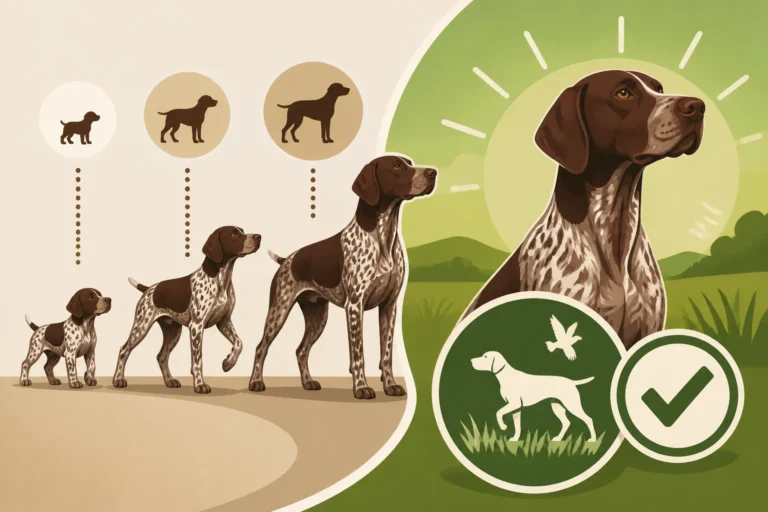
Bringing a German Shorthaired Pointer puppy into a household with small pets offers the best chance for successful integration, but it's by no means a guarantee. Puppies are like sponges, and their brains are highly malleable. Early, positive, and controlled exposure to small animals can help them learn that these creatures are part of their "pack" and not prey. This means gentle, supervised interactions (always with the small animal safe in a cage or on a lap, never loose) where the puppy learns to be calm and respectful. Rewarding calm curiosity and discouraging any rough play, nipping, or excessive chase behavior from the very beginning is vital.
However, even with early socialization, a GSP's inherent prey drive will eventually emerge. Around 4-6 months, and again during adolescence, you'll start to see those instincts really kick in. What was once playful puppy nipping might become more intense chasing. It’s a critical time to double down on training and management, not let up. Remember that puppy teeth can still cause significant injury, so direct interaction should be carefully managed, and never unsupervised. Consistent positive reinforcement training, perhaps with structured online courses, can set a strong foundation.
Working with an Adult GSP
Introducing an adult German Shorthaired Pointer to small pets presents a different set of challenges, especially if the adult GSP has no prior experience with them or, worse, a history of chasing or harming small animals. An adult GSP's prey drive is fully developed, and their habits are more ingrained. This doesn't mean it's impossible, but it requires even more stringent management and training protocols. Success will depend heavily on the individual dog's temperament, their previous experiences, and the owner's commitment to safety.
For an adult GSP, you'll rely heavily on desensitization, counter-conditioning, and strict environmental management. The initial stages of introduction might need to be much slower and more controlled than with a puppy. Constant leashing, crate use, and absolute separation when unsupervised are non-negotiable. If the GSP has a very high prey drive, or a history of harming small animals, the most responsible decision might be to keep them permanently separated, allowing no direct contact. This ensures the safety of the smaller pets and reduces stress for the GSP, who is constantly being asked to suppress a powerful instinct. It's always about setting everyone up for success and safety first.
Training Tools and Resources for Mult-Pet Households
Navigating the complexities of a German Shorthaired Pointer in a home with smaller animals is an ongoing journey. Thankfully, there are many tools and resources available to help you on this path, from physical aids to educational programs.
Essential Gear for Safety
When you're working to create a safe environment for your GSP and smaller pets, having the right gear can make all the difference. Strong, well-fitting leashes and harnesses are paramount for controlled introductions and walks where small prey might be present. A hands-free leash, for example, can be useful if you're managing multiple animals or need your hands free for treats. For home management, sturdy baby gates are indispensable for creating separate zones and preventing unsupervised access. Look for gates that are tall enough and strong enough to withstand a determined GSP. Some even offer pet doors for cats to pass through while keeping dogs out.
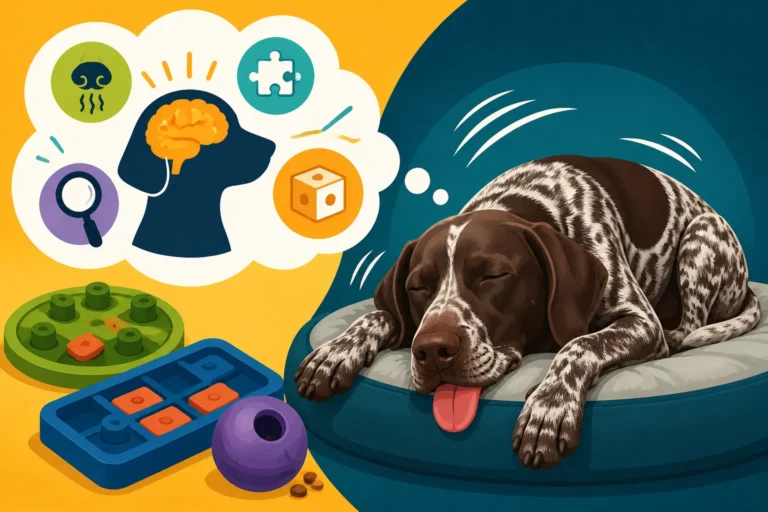
Secure crates, as discussed, are another essential. They provide a safe haven for your GSP and a secure place to be when you can't supervise directly. Puzzle feeders and high-quality chew toys can also be incredibly useful. A mentally stimulated GSP is often a calmer GSP. Giving them appropriate outlets for their energy and chewing instincts can redirect their focus away from smaller housemates. You can find a vast selection of these items on platforms like Amazon, making it easy to equip your home for safety and success. Don't skimp on quality when it comes to safety equipment; a cheap gate or flimsy leash isn't worth the risk.
| Small Pet Type | GSP Risk Level | Management Key | Safe Coexistence Potential |
|---|---|---|---|
| Chickens | High | Strict Separation, Secure Coops, Leashed Supervision | Low (Tolernace, not friendship) |
| Rabbits/Guinea Pigs | Very High | Permanent Physical Separation, GSP Never Unsupervised Near Cages | Extremely Low (Zero tolerance for contact) |
| Cats | Moderate to High | Gradual Introduction, Vertical Escape Routes for Cats, GSP on-leash in shared spaces | Moderate (Dependent on individual cat/dog temperament) |
| Hamsters/Gerbils | Very High | Permanent Physical Separation, Cages in GSP-free Zones | Extremely Low (Zero tolerance for contact) |
Professional Guidance and Online Training
Sometimes, tackling the prey drive challenge feels overwhelming, and that's perfectly normal. Don't hesitate to seek professional guidance. A certified professional dog trainer or a veterinary behaviorist can provide invaluable personalized advice and hands-on help. They can assess your GSP's individual temperament, help you refine your training techniques, and offer specific strategies tailored to your household's unique situation. Look for trainers who use positive reinforcement methods and have experience with high-drive breeds.
Online training platforms can also be a fantastic resource, especially for those who need flexibility or live in areas with limited access to in-person trainers. Services like BAXTER & Bella offer comprehensive online puppy and dog training programs that cover everything from basic obedience to advanced manners. Their structured approach, video tutorials, and live Q&A sessions can be incredibly helpful for owners working on complex issues like impulse control and managing distractions around other animals. Learning at your own pace, with expert support, can empower you to build the skills needed to create a safer, more harmonious home for all your pets. The Structure a German Shorthaired Pointer Needs Daily often includes these kinds of training elements.
The Role of Exercise and Mental Stimulation
Let's face it: a tired German Shorthaired Pointer is usually a well-behaved German Shorthaired Pointer. These dogs were bred for endurance and intense activity, and if their physical and mental needs aren't met, that pent-up energy can easily translate into undesirable behaviors, including an exacerbated prey drive. A GSP that hasn't had adequate exercise is more likely to be restless, easily aroused, and quicker to act on impulse when a small pet triggers their instincts. The Two Hours a Day a German Shorthaired Pointer Needs isn't just a suggestion; it's a requirement for a happy, well-adjusted GSP.
Ensuring your GSP gets at least an hour or two of vigorous exercise every single day is paramount. This isn't just a casual walk around the block; it means running, swimming, fetch, or long hikes. Beyond physical exercise, mental stimulation is equally important. Engage their intelligent minds with puzzle toys, scent work games, obedience practice, or even advanced training like agility. Puzzle Feeders and Scent Games for a Shorthair can be great ways to channel their natural drives in a constructive manner. A GSP that is physically satisfied and mentally engaged is far less likely to obsess over the chickens in the yard or the cat on the couch. Think of it as proactively managing their energy so it doesn't manifest in ways you don't want.
Disclaimer
This article is for general informational purposes only and does not constitute professional advice. Laws, prices and regulations vary by location and change over time. Consult a qualified professional for guidance on your specific situation.