Whether a Shorthair Can Run Field Trials and Hunt Tests
For many German Shorthaired Pointer owners, the drive to showcase their dog's incredible natural abilities is strong, but the world of competitive dog sports can feel like a maze. It's common to wonder if your incredibly intelligent and athletic GSP can truly excel in both the highly refined atmosphere of a field trial and the more natural simulation of a hunt test. This guide will walk you through the distinct characteristics of each venue and explain how a well-bred and properly trained Shorthair can indeed navigate both with grace and success.
Understanding Field Trials Versus Hunt Tests for German Shorthaired Pointers
The world of competitive dog sports for gun dogs can seem like two sides of the same coin, but field trials and hunt tests, while both demonstrating a dog's hunting prowess, operate under distinctly different philosophies and rules. Many GSP owners feel overwhelmed trying to decide which path is right for their dog, or if they even have to choose at all.
The Demands of a Field Trial
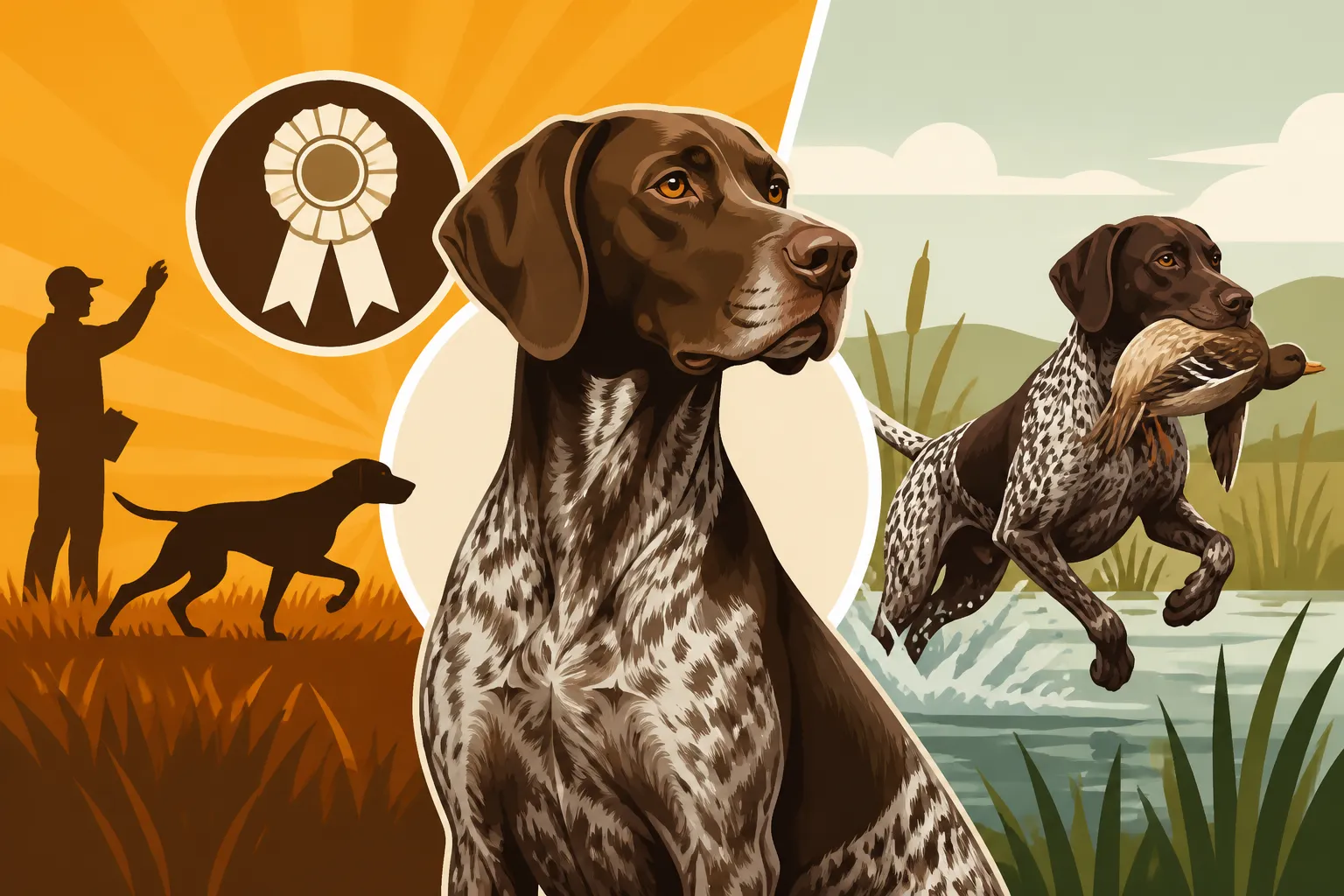
Field trials are often considered the pinnacle of competition for many pointing breeds. They are designed to test a dog's ability to find and point birds with intense style, speed, and range, often over vast amounts of ground. Imagine a dog covering hundreds of yards at a gallop, scenting a bird from a distance, and locking up on point with an almost statuesque intensity. That's the ideal field trial dog. The judging criteria emphasize ground speed, bold pointing, and a strong desire to hunt, pushing the boundaries of what a dog can do independently. Handlers often ride horses to keep up with their dogs, especially in open, big-running stakes. There’s a strong emphasis on independence and the dog being a "specialist" in finding birds with minimal handler intervention once released. The stakes are often about proving breeding stock and upholding a certain ideal of the breed's working ability.
The Nature of a Hunt Test
Hunt tests, conversely, aim to simulate a realistic hunting scenario as closely as possible. The focus shifts from extreme independence and speed to a more cooperative partnership between dog and handler. A German Shorthaired Pointer in a hunt test is expected to quarter within gun range, find and point birds, remain steady to wing and shot (meaning they don't break point until commanded, even after the shot), and retrieve the fallen bird quickly and efficiently to hand. Think of a pleasant day out hunting pheasants or grouse with your best companion, working together seamlessly. The dog needs to be responsive to whistle commands, honor another dog's point, and show good manners. Judges are looking for a dog that is a reliable, competent, and enjoyable hunting partner. While still competitive, the atmosphere tends to be more accessible for the average hunter, with less emphasis on extreme speed and more on practical, disciplined field work. AKC Hunt Tests Versus NAVHDA for a Shorthair goes into more detail on the specific differences between different organizations.
Key Differences in Competition Focus
The table below outlines the core differences between these two competitive arenas, highlighting why a GSP's training might need to be tweaked depending on the chosen path.
| Feature | Field Trials | Hunt Tests |
|---|---|---|
| Primary Goal | Test extreme bird-finding ability, speed, range | Simulate realistic hunting conditions, teamwork |
| Range/Speed | Wide-ranging, high-speed gallop | Within gun range, methodical quartering |
| Handler Control | Minimal once released, subtle signals | Responsive to whistle and hand commands |
| Steadying | Often expected to chase after the shot | Required to be steady to wing and shot, retrieve |
| Retrieving | Not always required, often optional stakes | Mandatory, to hand |
| Environment | Large open fields, often horseback handling | Varied cover, foot handling |
| Judging | Emphasizes bold style, independence | Emphasizes cooperation, control, manners |
It's clear that while both celebrate the German Shorthaired Pointer's innate hunting abilities, they ask for different expressions of those talents.
The German Shorthaired Pointer's Natural Talent for Versatility
German Shorthaired Pointers were literally bred for versatility, a concept that's central to their very existence. This inherent adaptability is what makes them such strong candidates for excelling in both field trials and hunt tests, even if it presents unique training challenges.
A Breed Designed to Do It All
The early breeders in Germany didn't just want a pointing dog; they wanted a true "all-around" gun dog. They envisioned a dog that could point upland game, track wounded deer, retrieve from land and water, and even dispatch vermin. This demanding set of requirements forged a breed with an incredible array of natural instincts: a strong nose, powerful retrieving drive, endurance, intelligence, and a biddable nature. This deep-seated versatility means that a well-bred GSP often possesses the raw talent needed for both high-octane field trials and disciplined hunt tests. They have the drive to run big and find birds from a distance, coupled with the intelligence and desire to please that makes them trainable for precise control. How the Shorthair Was Bred to Replace Four Specialist Dogs highlights this historical imperative.
Instilling Foundational Skills
Regardless of whether you're aiming for a field trial ribbon or a hunt test title, solid foundational training is absolutely paramount for a German Shorthaired Pointer. This isn't just about obedience; it's about shaping their natural instincts into reliable behaviors. Early socialization, consistent positive reinforcement, and clear communication are key. Programs like BAXTER & Bella can provide excellent structured guidance for new puppy owners, helping to build that crucial early bond and lay the groundwork for a biddable, confident dog. Commands like "whoa," "here," and a reliable retrieve are not just important; they're essential. A strong foundation in these basic controls, along with exposure to various environments and stimuli, prepares a GSP to adapt to the specific demands of either competitive venue. Raising a Shorthair Puppy Toward Its First Season gives great advice on this.
Leveraging Instincts for Both Venues
The beauty of the GSP lies in how their instincts can be molded. That high prey drive, which propels them to run wide in a field trial, can also be channeled into methodical quartering with proper training. Their intense point, an asset in both, can be steadied for a hunt test without dulling its fire. The retrieve, often a natural inclination for the breed, just needs refinement for either scenario. It's about understanding which instincts to encourage and how to refine them for the specific rules of the game. For example, a dog that naturally ranges wide for field trials might still need specific drills to bring it back in close for a hunt test scenario, while retaining its ability to open up again when needed. This requires a dedicated owner and often, a skilled trainer who understands how to balance these aspects. Introducing a German Shorthaired Pointer to Birds is an excellent starting point for engaging these natural abilities.
Navigating the Challenges of Competing in Both Venues
While a German Shorthaired Pointer's versatility is a huge advantage, training a single dog to excel in both field trials and hunt tests presents unique challenges. It's not impossible, but it demands consistency, careful planning, and a deep understanding of your dog.
The "Steady" Versus "Running" Dilemma
Perhaps the biggest hurdle is the differing expectation around steadiness. In most hunt tests, a dog is expected to be "steady to wing and shot"—meaning they must remain staunchly on point when a bird flushes and even after the shot is fired, only retrieving on command. Field trials, especially in amateur stakes, often allow a dog to chase a bird after the flush or shot, emphasizing the raw drive to find and pursue game. Trying to train a dog to be steady in one venue and then allowing them to break in another can create immense confusion and undermine training.
Many trainers opt to train a dog to be steady all the time and then simply choose not to enforce that steadiness in a field trial where it's not a fault. However, for a truly big-running, high-drive GSP, holding back that instinct to chase can be incredibly difficult and might diminish some of their field trial 'fire.' It often comes down to the individual dog's temperament and how well they can differentiate between training scenarios. Using a check cord and working extensively on "whoa" is critical for building this control without crushing desire. Steadying a Shorthair to Wing and Shot covers this in depth.
Time Commitment and Training Regimen
Training for either field trials or hunt tests is a significant time commitment, but doing both magnifies it considerably. Each venue requires specific drills, exposures, and refinement. You'll need separate training sessions focusing on:
- Field trial specifics: Encouraging big casts, reading wind, holding a point with intensity even if there's no shot.
- Hunt test specifics: Precise quartering patterns, honoring another dog's point, perfectly timed retrieves to hand, flawless steadiness.
This often means working with different types of birds, different cover, and even different equipment (like e-collars tuned for specific responsiveness, which you can find on Amazon, or specialized training collars). Maintaining peak physical condition for both can also be demanding. A field trial dog might need to build more raw endurance for long runs, while a hunt test dog still needs stamina but also the agility for closer, more intricate work in heavy cover. The Two Hours a Day a German Shorthaired Pointer Needs is a conservative estimate for a regular GSP; competing in both will demand more.
Finding the Right Trainer and Support System
Successfully campaigning a GSP in both field trials and hunt tests often requires more than just owner dedication. Finding a trainer who is experienced and respected in both arenas is a huge asset. This is a rare find, as many trainers specialize in one or the other. An ideal trainer would understand how to build and maintain the dog's natural drive for trials while instilling the discipline needed for tests, without creating conflict. They can help you recognize your dog's specific strengths and weaknesses, tailoring a program that allows them to shine in both.
Networking with other GSP owners who have achieved success in dual venues can also provide invaluable guidance, tips, and moral support. These communities often share insights on managing the schedule, understanding the rules, and keeping a GSP mentally and physically sharp.
Maximizing Success for a Dual-Purpose German Shorthaired Pointer
Achieving success in both field trials and hunt tests with a German Shorthaired Pointer is a testament to the dog's talent and the owner's dedication. It's a challenging but deeply rewarding journey.
Strategic Training and Scheduling
To prepare your GSP for both types of competition, a strategic training schedule is essential. It's often not feasible to train for both simultaneously with equal intensity. Instead, many handlers will focus their training on one venue for a period, then shift gears for the other. For instance, you might dedicate the spring and early summer to building the steadiness and precise handling required for fall hunt tests, then transition to more independent, big-running drills for late fall or winter field trials.
It’s about compartmentalizing the training. You want your GSP to understand the context. This might involve different areas of training grounds, different handlers, or subtle cues that signify which 'game' they are playing. For example, specific collar types or vest configurations might signal the type of work ahead. Consistent practice in both styles, even if not concurrently, will help your dog adapt. Conditioning a Shorthair Before Opening Day is vital for maintaining physical readiness through these varied training regimes.
Equipment and Resources
Having the right equipment can make a world of difference when training for diverse competitions. A high-quality e-collar is almost universally used for effective remote communication and reinforcement, especially for long-range work or reinforcing steadiness. Ensure you select one known for reliability and adjustability, as found on sites like Amazon, to match your GSP's sensitivity and the demands of varying distances. Also, consider specialized gear such as durable boots for rough terrain (useful in both settings) and appropriate vests for safety and comfort.
Access to diverse training grounds is equally important. You'll need wide-open spaces for practicing big casts and field trial maneuvers, as well as areas with heavier cover and varied terrain to simulate hunt test conditions. Consistent access to training birds, like pigeons, chukar, or quail, is also non-negotiable for building and reinforcing bird-finding and pointing skills. Building a strong relationship with your local bird supplier or hunting preserve will pay dividends.
Prioritizing Your Dog's Well-being
Ultimately, the most important aspect of campaigning a GSP in both field trials and hunt tests is ensuring your dog's physical and mental well-being. These are demanding sports that require peak physical condition and a stable, happy temperament. Watch for signs of stress, burnout, or injury. Over-training can be just as detrimental as under-training, leading to a dog that loses its enthusiasm or develops unwanted behaviors.
Ensure a balanced diet, proper veterinary care, and plenty of rest. Joint supplements might be a consideration for such active dogs, and regular check-ups are paramount. The Vet Schedule a Working Shorthair Should Keep outlines typical healthcare needs. Remember, a happy, healthy dog is far more likely to perform at its best, regardless of the competitive arena. Celebrate their successes, learn from their challenges, and always prioritize the bond you share with your remarkable German Shorthaired Pointer.
Disclaimer
This article is for general informational purposes only and does not constitute professional advice. Laws, prices and regulations vary by location and change over time. Consult a qualified professional for guidance on your specific situation.