Loose Leash Walking a German Shorthaired Pointer
The daily battle of walking your German Shorthaired Pointer on a leash can feel less like a pleasant stroll and more like a full-body workout you didn't sign up for. Many GSP owners experience the frustration of being pulled down the street, feeling their arm ache, and dreading every outing, especially when their otherwise wonderful companion transforms into a sled dog at the sight of a squirrel. This guide is here to walk you through understanding why your high-drive Shorthair pulls and, more importantly, to arm you with practical, empathetic strategies and tools to transform those strenuous walks into enjoyable, loose-leash adventures for both of you.
Understanding Why Your German Shorthaired Pointer Pulls
It’s easy to get frustrated when your German Shorthaired Pointer seems determined to drag you across town, but it’s crucial to remember that this isn’t malicious behavior. It’s deeply rooted in their nature, their incredible energy, and often, a simple lack of understanding about what we want from them. Before we can teach them, we need to understand their perspective.
The Hunter's Instinct: Nose to the Ground, Body Forward
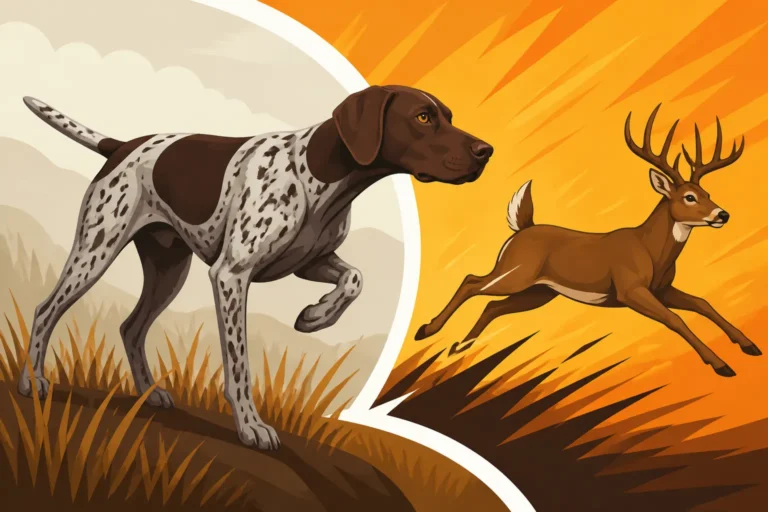
German Shorthaired Pointers were quite literally bred to be tireless hunting machines. Their lineage is all about covering ground, finding scent, and driving forward. When they catch a whiff of a rabbit that darted across the path a few minutes ago, or they spot a flock of birds in the distance, their ancient instincts kick in. That intense focus on prey or interesting smells translates directly into a powerful forward pull. They are driven by an urge to explore, to chase, to point, and to retrieve. This isn't just a casual interest for them; it's a deep, genetic imperative. Their strong bodies are built for propulsion, and when that nose hits the ground, or those eyes lock onto movement, they're simply doing what they've been perfected to do over generations. Expecting them to ignore every tantalizing scent or sight is like asking a race car to drive at five miles per hour – it goes against their very design. Understanding this inherent drive helps us approach training with more patience and empathy.
Energy Levels and Lack of Outlet
Let's be real: German Shorthaired Pointers are not for the faint of heart, or the sedentary. These dogs have boundless energy, and if it's not channeled constructively, it will find an outlet, often in ways we don't appreciate, like pulling on the leash. A quick twenty-minute walk around the block simply isn't enough for a GSP, especially a young one. They need significant physical exercise, yes, but also mental stimulation. Think about it: a dog that's been cooped up all day with minimal activity is going to explode with excitement and pent-up energy the moment that leash clips on. They're not trying to be rude; they're trying to burn off steam and explore the world at their preferred, much faster, pace. The Two Hours a Day a German Shorthaired Pointer Needs is not an exaggeration. If they haven't had a proper run, a vigorous game of fetch, or some intense training sessions before a walk, they're likely to use that walk to try and exhaust themselves, and you're just along for the ride. This is why addressing their overall exercise needs is foundational to successful loose leash walking. Without that base level of fulfillment, you're constantly fighting an uphill battle against a natural physiological drive.
Lack of Early Training and Reinforcement
Another common reason GSPs pull is simply that they haven't been consistently taught not to. From puppyhood, if pulling gets them where they want to go, even just a few feet forward, they learn that pulling is an effective strategy. Every time they tug and you relent, even subconsciously, you're reinforcing the behavior. Perhaps when they were little, their pulling wasn't a big deal, but now they're eighty pounds of pure muscle, and it's a real problem. Many owners, ourselves included, might inadvertently contribute to the problem by not being clear and consistent from day one. It's not about being harsh; it's about being incredibly clear with our expectations and rewarding the desired behavior generously. This lack of consistent, positive reinforcement for walking politely means the dog simply doesn't understand the rules of the game. They just know that when they pull, things happen.
Essential Gear for Loose Leash Training
Having the right tools can make a monumental difference in your loose leash training journey. While no piece of equipment is a substitute for consistent training, some tools can certainly make the process easier and safer for both you and your GSP.
The Right Leash and Collar Combination
Choosing the right leash and collar is more important than many people realize. For a German Shorthaired Pointer, you need something durable. A standard flat buckle collar can work for well-trained dogs, but for a puller, it often puts too much pressure on their throat, which is uncomfortable for them and can lead to coughing or even damage.
- Flat Buckle Collar: Good for identification and tags, and for well-behaved dogs. Not ideal for heavy pullers as the pressure is all on the neck.
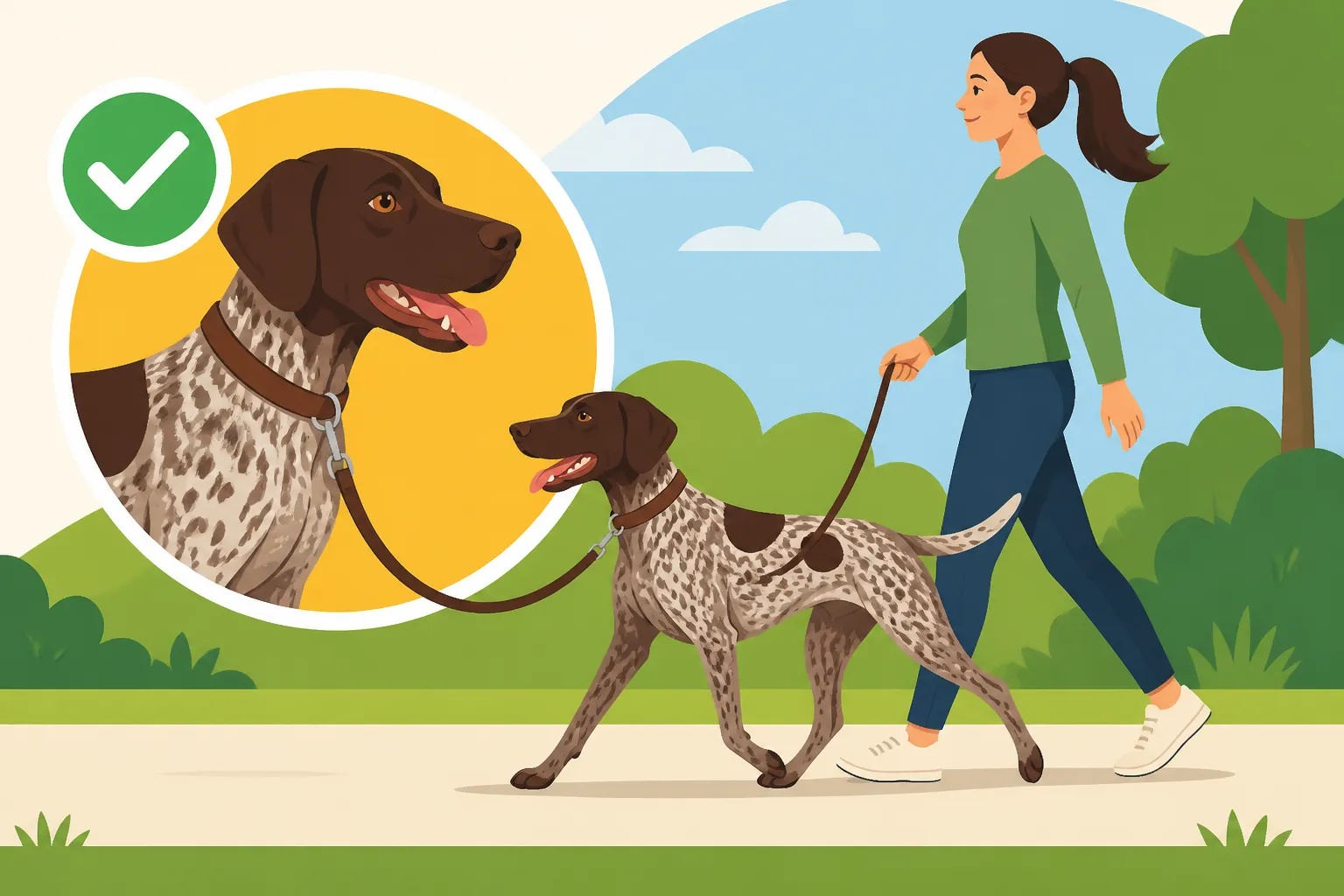
- Martingale Collar: This is a fantastic option for GSPs. It's a type of collar that tightens when your dog pulls, but only to a certain point, preventing them from slipping out while distributing pressure more evenly around the neck than a choke chain would. It's much safer than a slip lead or choke chain for general training, as it prevents undue pressure on the trachea while still giving you control. Many owners find these effective.
- Head Halter (e.g., Gentle Leader, Halti): These collars fit over your dog's muzzle and behind their ears, allowing you to steer their head. Where the head goes, the body follows. For powerful pullers, a head halter can offer immediate relief, giving you much more control with less physical effort. It's important to introduce these gently and positively, as some dogs initially dislike the sensation on their muzzle. They can learn to associate it with walks and treats. Amazon offers a wide variety of these.
For leashes, a standard six-foot nylon or leather leash is usually best. Avoid retractable leashes for loose leash training. They teach dogs that pulling extends their range, which is the opposite of what you want. A fixed-length leash gives clear boundaries and allows for consistent communication.
Harnesses: Front-Clip vs. Back-Clip
Harnesses are a popular choice, but not all harnesses are created equal when it comes to preventing pulling.
- Back-Clip Harnesses: These harnesses clip on the dog's back, usually between the shoulder blades. While great for comfort and preventing neck strain, they can actually encourage pulling in a GSP. Think of it like a sled dog harness – the attachment point on the back allows them to lean into the pull with their full body weight, making it harder for you to control them. If your GSP is already a strong puller, a back-clip harness might make the problem worse.
- Front-Clip Harnesses: These are often called "no-pull" harnesses, and for good reason. The leash attaches at the dog's chest. When your GSP pulls, the leash redirects them sideways, turning them back towards you instead of allowing them to surge forward. This disrupts their forward momentum and makes it physically uncomfortable to pull with full force. Many owners find these harnesses incredibly effective for immediate relief from pulling while they work on training. Brands like Easy Walk or Freedom Harness are popular options. You can find many effective front-clip harnesses on Amazon, and it's worth exploring the options to find one that fits your GSP comfortably.
Treat Pouches and High-Value Rewards
When training any dog, especially a high-energy, intelligent breed like a German Shorthaired Pointer, motivation is key. You're asking them to override powerful natural instincts, so the reward needs to be worth their while.
- Treat Pouch: A treat pouch that clips onto your waist is an absolute game-changer. It keeps treats easily accessible, so you can reward your GSP the instant they do something right. Timing is everything in dog training; a delayed reward loses its impact.
- High-Value Rewards: Dry kibble isn't going to cut it when you're competing with the allure of a rabbit scent. Bring out the good stuff! Small pieces of cooked chicken, cheese, hot dogs, or commercially available soft training treats work wonders. These "high-value" treats capture their attention and make them eager to work for you. Always have plenty on hand – you'll be rewarding frequently, especially in the initial stages.
Step-by-Step Loose Leash Training Techniques
Now that we understand why your GSP pulls and what gear can help, let's dive into the practical steps for teaching them to walk politely on a leash. Consistency and patience are your best friends here.
Starting Indoors: Building the Foundation
Before you even step foot outside, it’s crucial to lay the groundwork in a low-distraction environment. Your living room or a quiet hallway is the perfect place to start. The goal here is to teach your GSP that walking next to you with a loose leash is the most rewarding place to be.
- Leash Up: Clip on your chosen collar and leash. Don't go anywhere yet. Just let them get used to the equipment.
- Lure and Reward: Hold a high-value treat in your hand, close to your GSP's nose, keeping it at your side where you want them to walk (typically your left side, but consistency is key). Take a single step. The moment your dog takes a step with you, or even just looks at you, praise enthusiastically ("Yes!" or "Good!") and immediately give them the treat.
- Short Bursts: Start with just one or two steps, rewarding heavily. Then build up to three, four, five steps. If they pull ahead, immediately stop moving. The moment the leash goes slack, even for a second, praise and reward. This teaches them that pulling gets them nowhere, but a loose leash gets them goodies.
- Practice Different Speeds: Once they're getting the hang of it, vary your pace. Speed up, slow down, stop. Every time the leash stays loose, reward. This is also a good time to introduce a verbal cue like "Heel" or "Let's go" as you start walking.
Remember, the goal is not perfection at this stage, but consistent effort. Keep sessions short and positive, ending on a successful note. Training programs like those offered by BAXTER & Bella often start with these foundational steps, emphasizing positive reinforcement and clear communication in a structured way. This strong start helps your GSP understand what you're asking before the real-world distractions hit.
The "Stop and Go" Method
This is a classic and highly effective technique for teaching loose leash walking, especially once you move outside to slightly more distracting environments. It’s all about teaching your GSP that forward momentum only happens when the leash is slack.
- Start Walking: Begin your walk.
- Freeze: The very instant you feel any tension on the leash, stop dead in your tracks. Do not move another inch. Become a tree. Your GSP might be confused at first, or try to pull harder.
- Wait for Slack: Wait patiently. Do not say anything. Do not yank the leash. Just wait. Your GSP will eventually turn to look at you, sniff around, or perhaps even sit down. The moment the leash goes slack, even for a split second, say "Yes!" or "Good!" and immediately take a step forward.
- Reward Loose Leash: If they walk one or two steps with a loose leash, praise and reward. If they pull again, immediately stop. Repeat, repeat, repeat.
The core principle here is simple: pulling stops the walk, a loose leash starts it again. Your German Shorthaired Pointer is smart; they will quickly make the connection. They want to keep moving, and they'll figure out that the way to do that is to keep the leash loose. Be prepared for this to be slow going at first, but stick with it. Every time you stop, you're reinforcing the consequence of pulling.
Changing Directions for Attention
Another powerful technique, particularly useful for GSPs who are easily distracted by sights and smells, is frequently changing direction. This keeps them guessing and encourages them to pay attention to you rather than forging ahead.
- Walk Forward: Start walking in a straight line.
- Sudden Change: Before your GSP has a chance to pull, or as soon as you feel the slightest tension, abruptly change direction. Turn left, turn right, make a U-turn, or even just pivot in place.
- Lure and Reward: As you turn, use a treat to lure your GSP to follow you, praising and rewarding them for keeping up and maintaining a loose leash.
- Repeat: Change direction frequently, every few steps if needed. This makes you unpredictable and forces your GSP to focus on your movements, not just the path ahead. It breaks their concentration on whatever might be pulling them forward and reminds them that you are the leader of this walk.
This method helps build a stronger bond and communication, teaching your GSP to check in with you regularly. Whistle Commands a Shorthair Should Know can also be integrated here; a quick whistle blast followed by a direction change can become a very effective recall and attention-getter on walks.
Consistent Reinforcement and Verbal Cues
Consistency is truly the secret ingredient in all German Shorthaired Pointer training. You cannot expect loose leash walking if you only enforce it sometimes.
- Reward Frequently: Especially in the beginning, reward every single step your GSP takes on a loose leash. This might seem excessive, but it builds a strong positive association. As they improve, you can gradually reduce the frequency of rewards, moving to rewarding every few steps, then every minute, then intermittently.
- Clear Cues: Use a consistent verbal cue like "Heel" or "Close" when you want them in the loose-leash position beside you. Pair this with a hand signal. When they respond, reward instantly.
- Don't Let Them Practice Pulling: This is critical. If you're having an "off day" or are in a hurry, it's better to use a head halter or front-clip harness to manage pulling rather than allowing them to pull on a regular collar. Every time they successfully pull, they're rehearsing the unwanted behavior.
- Praise Beyond Treats: While high-value treats are important, don't forget verbal praise ("Good boy/girl!") and gentle physical affection (a scratch behind the ears, if they like it) when they're doing well. Make the walk a positive experience when they're behaving.
- Practice Short Sessions: Long, frustrating walks are counterproductive. Keep training sessions short (5-10 minutes) and positive, ending before either of you gets too tired or frustrated. You can have several short sessions throughout the day.
- Consider Mental Stimulation: Remember that GSPs need mental exercise as much as physical. Incorporate Puzzle Feeders and Scent Games for a Shorthair into their daily routine. A mentally tired dog is often calmer on walks.
Common Challenges and Troubleshooting
Even with the best intentions and techniques, training a German Shorthaired Pointer to walk politely can have its ups and downs. Don't get discouraged! It's perfectly normal to hit roadblocks.
Distractions in the Environment
This is where the GSP's hunting instincts really come into play. A squirrel, another dog, a distant bird, or even just an interesting smell can turn your well-behaved walker into a freight train.
- Start Small, Build Up: If your GSP is easily distracted, you've likely moved too quickly to high-distraction environments. Go back to basics. Practice loose leash walking in your backyard, then a quiet street at an off-peak time, then slowly introduce more distractions.
- Manage the Environment: Whenever possible, choose walking routes and times that minimize triggers. If you know a particular park is teeming with squirrels at 8 AM, try walking there at 10 AM or choosing a different, quieter path.
- Engage and Counter-Condition: When you see a potential distraction approaching (another dog, a person, a bird), immediately start rewarding your GSP for looking at you. Keep their focus on you by holding a treat near your face and praising them for eye contact. As the distraction passes, continue to reward. The goal is to change their emotional response from "I must pull towards that!" to "Oh, a distraction means good things from my human!"
- Increase Reward Value: When facing high distractions, increase the value of your treats even further. That cooked chicken might work wonders when a tennis ball isn't even registering.
- Practice "Look at Me" Command: Teach a strong "look at me" or "focus" command in low-distraction environments first. Practice it everywhere. This becomes your go-to tool when distractions appear. Get their eyes on you, reward, and then proceed.
Relapse: When Training Seems to Fail
It's disheartening when your GSP, who was doing so well, suddenly starts pulling again. This is a normal part of the learning process for any dog, especially a GSP who has strong drives.
- Don't Give Up: Relapse doesn't mean failure; it means you need to go back a few steps in your training.
- Re-evaluate Exercise and Mental Stimulation: Is your GSP getting enough physical exercise and mental engagement? A common reason for relapse is that their needs aren't being fully met. Revisit Exercise a Shorthair Needs Before a Work Day and ensure they are adequately prepped for a calmer walk. An under-exercised German Shorthaired Pointer will always struggle with impulse control. What an Under Exercised Shorthair Does to a House is a stark reminder of their need for activity.
- Revisit the Basics: Go back to training in a low-distraction environment. Reinforce the "stop and go" and direction change methods. Increase your reward rate temporarily.
- Identify Triggers: What caused the relapse? Was it a specific environment, a certain time of day, or a particular distraction? Once you identify the triggers, you can plan to address them more specifically. For example, if they're pulling towards every bird, you know you need to work on engagement around avian distractions. A German Shorthaired Pointer that pulls toward every bird it sees is a very common issue that requires targeted counter-conditioning.
- Check Your Consistency: Are you being consistent? Are all family members on board with the same training methods? A single inconsistent walk can undo a lot of hard work. The Structure a German Shorthaired Pointer Needs Daily applies to owners, too.
Seeking Professional Guidance
Sometimes, despite your best efforts, you might feel like you're not making progress, or the pulling is simply too overwhelming. There's absolutely no shame in seeking professional help.
- Certified Professional Dog Trainer (CPDT-KA): A good professional trainer can observe your interactions, identify specific issues, and tailor a training plan for you and your GSP. They can teach you how to properly use equipment, refine your timing, and help you understand your dog's individual learning style. Look for trainers who use positive reinforcement methods.
- Group Obedience Classes: Group Obedience Before a Shorthair Starts Birds can be incredibly beneficial. These classes provide a structured environment with controlled distractions, and the guidance of an experienced instructor. It's also a great way for your GSP to learn to work around other dogs calmly.
- Behaviorist: If the pulling is accompanied by extreme reactivity, aggression, or anxiety, a veterinary behaviorist might be necessary. They are veterinarians with specialized training in animal behavior and can address underlying behavioral issues that might be contributing to the pulling.
- Online Resources: While not a substitute for in-person help, reputable online training platforms can offer structured courses and support. BAXTER & Bella, for example, offers online programs that can guide you through various training stages from puppyhood to advanced behaviors, including loose leash walking, with comprehensive resources and live Q&A sessions. These can be a great supplement or starting point if an in-person trainer isn't immediately accessible.
Remember, loose leash walking is a skill, and like any skill, it takes time, practice, and a whole lot of patience to master. Your German Shorthaired Pointer wants to please you, but their instincts are powerful. By understanding them, using the right tools, and applying consistent, positive training, you can enjoy those walks together.
Disclaimer
This article is for general informational purposes only and does not constitute professional advice. Laws, prices and regulations vary by location and change over time. Consult a qualified professional for guidance on your specific situation.