Dilated Cardiomyopathy and a Shorthair’s Diet
Dilated cardiomyopathy in German shorthaired pointers, including its genetic roots and potential links to grain-free diets, is explained.
Know what to watch for.
Breed-specific conditions, screening and DNA tests, what surgery actually costs, and the daily habits that stretch a healthy lifespan.

Dilated cardiomyopathy in German shorthaired pointers, including its genetic roots and potential links to grain-free diets, is explained.

Echocardiograms for German Shorthaired Pointers reveal heart chamber structures, valve functions, and conditions like subaortic stenosis using sound waves.

German Shorthaired Pointer exercise with Subaortic Stenosis involves managing physical activity levels for dogs with congenital heart defects safely.
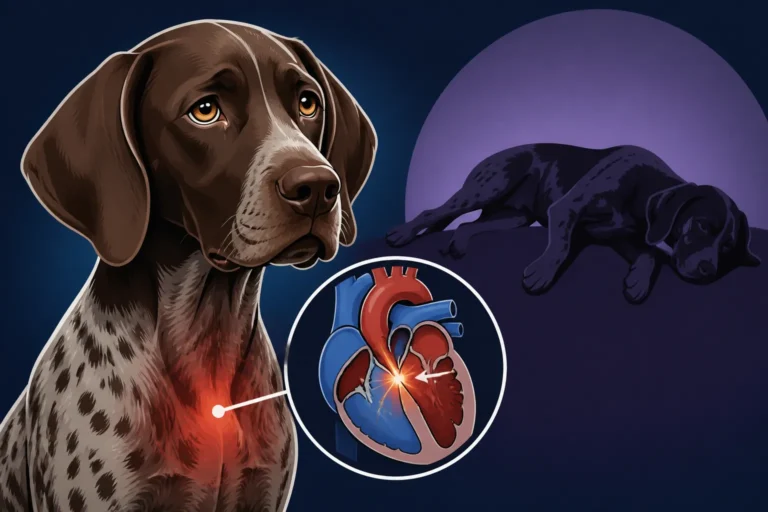
Subaortic stenosis in German Shorthaired Pointers is a congenital heart defect causing narrowed blood flow and sudden death.

German Shorthaired Pointer heart murmur grades explain puppy cardiac health and help breeders identify serious structural conditions.

Nosebleeds in a German Shorthaired Pointer stem from trauma, foreign objects, infections, allergies, or blood disorders.

Carrier German Shorthaired Pointers typically avoid clinical bleeding problems because they produce enough functional Von Willebrand factor daily.

Pre-spay testing for German Shorthaired Pointers uncovers hidden health issues and assesses anesthesia risks before surgery.
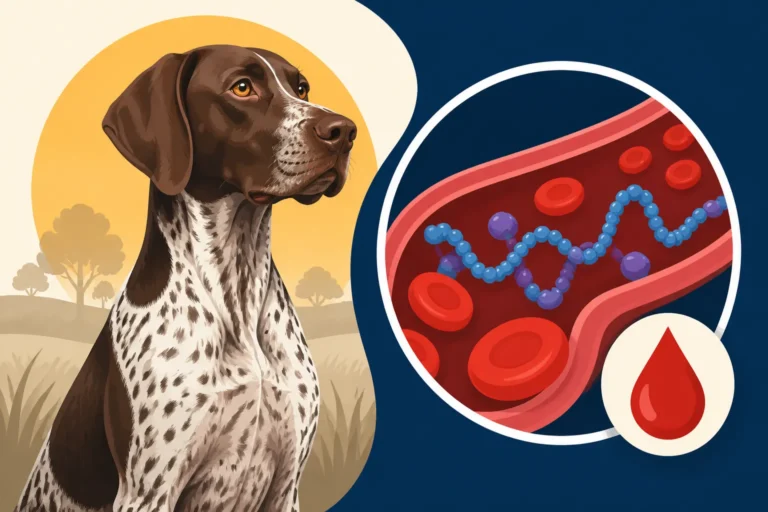
Von Willebrand Disease Type Two in German Shorthaired Pointers causes abnormal blood clotting through a dysfunctional protein deficiency.

German Shorthaired Pointer prolonged bleeding causes, including Von Willebrand Disease, platelet plugs, and clotting stages.