Whether a German Shorthaired Pointer Was Bred to Point Rabbits
A German Shorthaired Pointer can point rabbits, but that does not mean the breed was developed solely—or primarily—for rabbit pointing. The distinction matters if you are trying to understand the dog’s hunting background or decide what to expect in the field. This guide explains what the Shorthair was bred to do, how rabbits fit into that work, and why pointing one may look different from pointing a bird.
Was the German Shorthaired Pointer bred to point rabbits
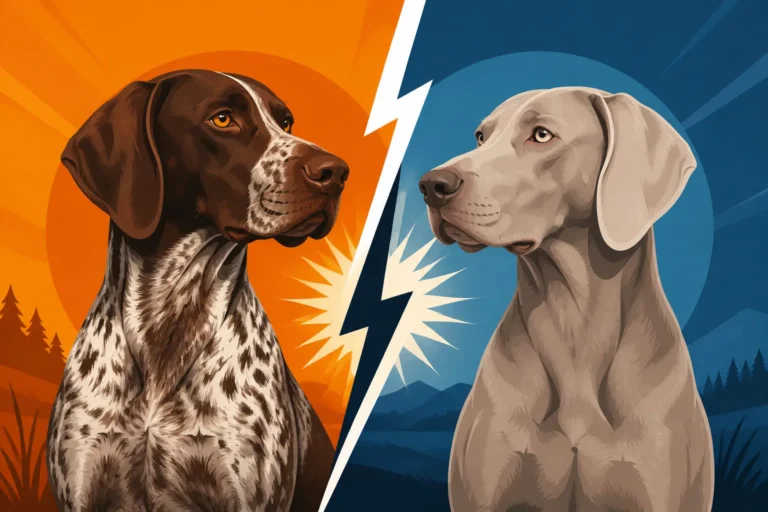
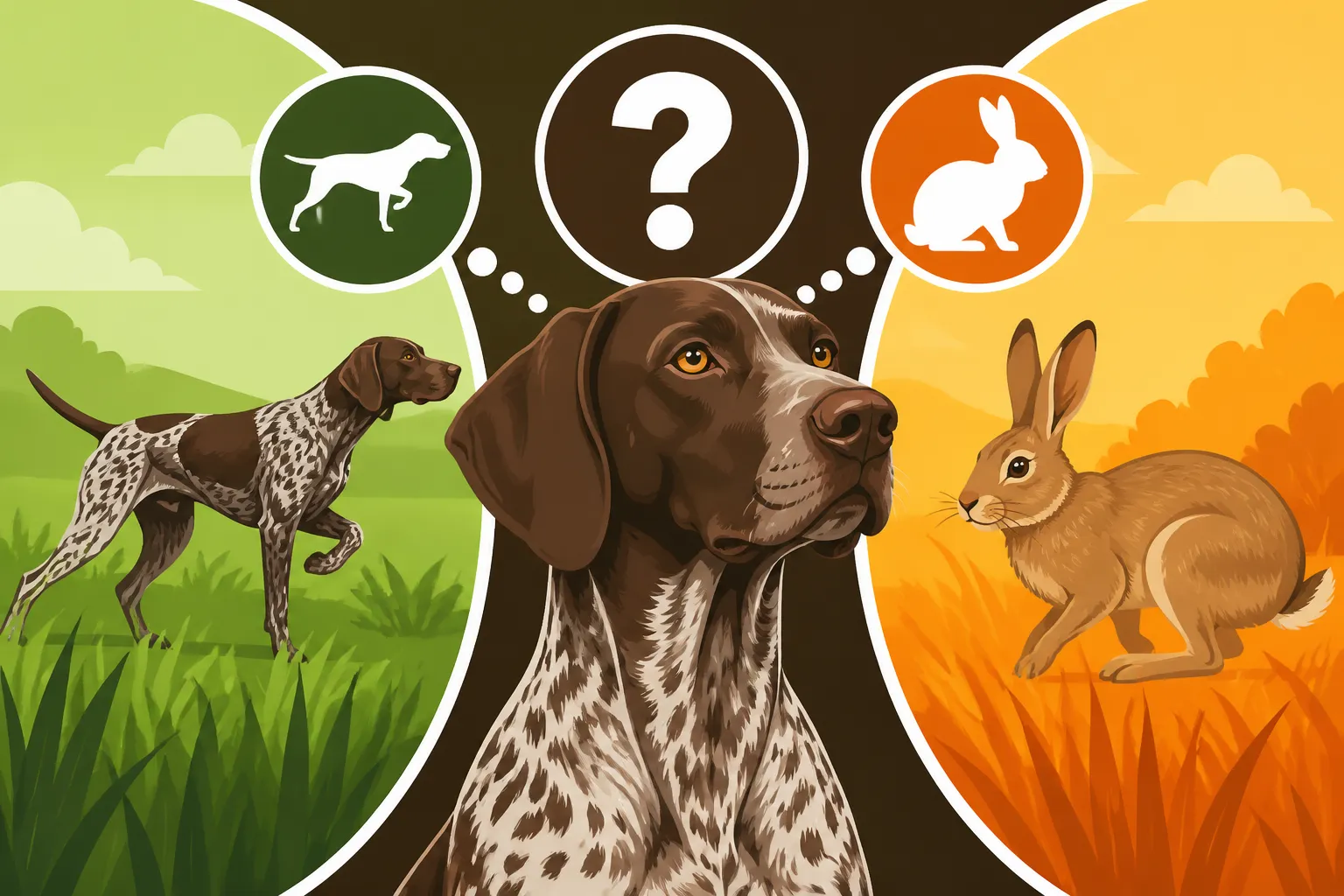
The most accurate answer is that the German Shorthaired Pointer was developed as a versatile hunting dog, not as a rabbit-only pointing breed. Its work could involve locating game, pointing, retrieving and tracking. Rabbits and hares fit into that broader purpose, but the breed’s history is not simply a story of dogs selected to point rabbits.
That distinction can get lost when people hear that a breed was expected to hunt both furred and feathered game. “Hunt fur” describes a kind of quarry and work; it does not necessarily mean “find a rabbit and hold a formal point until the hunter arrives.” The task could change with the animal, the terrain and what the hunter needed from the dog.
Versatility mattered more than one kind of quarry
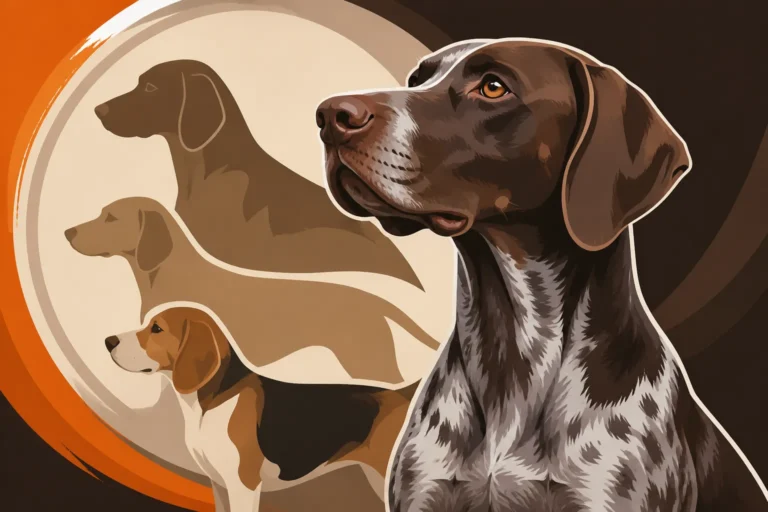
The German Shorthaired Pointer took shape as a practical, multipurpose hunting dog. Hunters valued a dog that could search ground, use its nose, indicate game, retrieve and help locate wounded animals. That broad working role helps explain why a Shorthair may show interest in birds, rabbits and other moving or scent-bearing animals.
Pointing is one part of that package, not the whole job description. A dog can point a bird, pursue a rabbit, retrieve game and follow a scent trail without each behavior being interchangeable. The history of the breed makes more sense when you think of it as a versatile hunting partner rather than a specialist bred for one precise quarry or technique. For more background on that broader purpose, see What Versatile Actually Means for a Shorthair.
The breed’s wider development also reflects a practical hunting tradition: combining abilities that might otherwise require several dogs. That does not mean every individual Shorthair will perform every task equally well, or that every line has been selected for the same kind of work. It does mean rabbit work belongs in a larger picture of versatility. Why German Hunters Bred the Shorthair Instead of Four Dogs explores that history in more detail.
Pointing rabbits is not the same as pointing birds
A point is a dog’s way of indicating that it has located game by scent. With a bird, the dog may freeze in a recognizable pose and remain there while the hunter approaches. A rabbit may behave differently. It might crouch, run, bolt from cover or leave the area before the dog has a chance to hold a steady point.
So when someone says a Shorthair “points rabbits,” they may mean the dog pauses or indicates a rabbit’s scent or location. They may also be describing a brief point that ends as the rabbit moves. That can be a real hunting behavior, but it may not resemble the sustained, composed point people picture when they think of a pointing dog on birds.
A dog’s response also depends on what it encounters. A rabbit sitting tight in grass may give a dog an opportunity to pause and indicate. A rabbit that breaks cover may trigger pursuit instead. Neither outcome, on its own, proves that the dog is poorly bred or badly trained. It reflects the interaction between the dog, the scent, the animal’s movement and the handler’s expectations.
How rabbits fit into the Shorthair’s hunting work
A Shorthair’s nose and searching style can make it interested in rabbits, but “interest” is not the same as a trained, reliable rabbit-hunting routine. The dog may locate scent, point briefly, flush the animal or chase it. Which behavior appears can depend on the dog’s experience and the kind of hunting it has been encouraged to do.
The breed’s history includes a wider range of game and tasks than bird pointing alone. A Shorthair might be expected to find game, retrieve what has been shot and help track wounded quarry. To understand that range, it helps to look beyond the word “pointer” and consider the breed’s nose, trainability and versatility together. See Pointing, Retrieving and Tracking in One Shorthair and The Nose the German Shorthaired Pointer Was Selected For.
Rabbits, hares and local hunting language
“Rabbit” can mean different things depending on where someone lives and what they hunt. In North America, people often use the word for cottontails and may distinguish them from hares such as jackrabbits. In other hunting traditions, the terms and the animals involved may differ. The quarry’s size, habits and habitat can influence how a dog encounters it.
That matters because a dog following a running rabbit through cover is having a different experience from one locating a stationary bird in open ground. A rabbit may rely on concealment and then escape quickly. A hare may run across more open country. The dog’s behavior and the hunter’s expectations can change accordingly, even if both situations are casually described as “rabbit hunting.”
Historical references to furred game should therefore be read with care. They support the idea that the Shorthair was expected to work beyond birds, but they do not automatically establish that it was bred to perform a particular, modern rabbit-pointing method. Whether the Shorthair Was Bred for Fur as Well as Feather offers a closer look at that broader distinction.
A rabbit point may be brief or turn into a flush
Imagine walking field edges with a young Shorthair. The dog catches scent near a patch of brush, slows, and pauses. If the rabbit stays tucked into cover, that pause might look like a point. If the rabbit bolts, the dog may break into pursuit before you can reach the spot. The sequence can happen quickly, especially when the animal is close and the cover is thick.
That’s one reason owners can disagree about whether a dog “points rabbits.” One person may count a short pause or nose-up indication as a point; another may reserve the word for a steady, sustained posture. It helps to describe what the dog actually did rather than assuming every pause has the same meaning or reflects a specific training standard.
A Shorthair that chases a rabbit is not necessarily failing at its original purpose. The dog may be responding to movement and scent, while the handler is hoping for a stationary indication. If you want a particular behavior, work with a qualified trainer who understands your hunting goals and local rules. Training aimed at birds may not automatically produce a reliable rabbit response, and a rabbit’s tendency to move can make steadiness difficult.
What the breed’s history does and does not tell you
Breed history can tell you why a Shorthair is likely to be curious about game and capable of several kinds of hunting work. It cannot guarantee that a particular dog will point rabbits, hold a point, retrieve reliably or make a suitable hunting companion without training. Individual dogs vary, and their experiences shape how their natural instincts show up.
The Shorthair’s identity as a versatile hunting dog is more useful than a narrow claim that it was “bred to point rabbits.” That broader view also helps explain why the breed may be a challenging match for a household expecting a dog that ignores small animals. Strong interest in quarry does not mean a dog is unsafe in every home, but it does call for thoughtful supervision and management.
What a breed label cannot promise
Two German Shorthaired Pointers can respond differently to the same rabbit. One may pause over scent, another may chase, and a third may pay little attention in that moment. Age, early exposure, training, individual temperament and the dog’s breeding background can all matter. A dog’s papers or breed name alone cannot tell you exactly how it will behave around live game.
If you are choosing a puppy for hunting, ask the breeder what the parents and close relatives have actually done. Ask about the kind of game they work, their search and pointing style, and whether they have experience beyond birds. Practical descriptions are more useful than a vague promise that a puppy will “hunt everything.”
If you already have a Shorthair, observe its behavior without forcing a conclusion from one encounter. Note whether it follows scent, pauses, flushes or chases, and in what conditions. That information gives a trainer a much clearer starting point than the general question of whether the dog “points rabbits.”
Living with rabbits as pets is a separate question
A Shorthair’s hunting heritage deserves attention if you keep rabbits at home. A dog that has been calm near a rabbit once is not automatically safe to leave unsupervised with one. Prey drive can be triggered by movement, sound or access, and a barrier that seems secure to a person may not be enough if the dog can push, jump or chew through it.
Plan for physical separation, not just hopeful introductions. A securely closed room or enclosure and a dependable barrier can help prevent accidental contact. If you are gathering household supplies, Chewy is one place owners may look for pet gates or enclosure-related basics; check that any item is appropriate for the size, strength and habits of both animals. Chewy may also be useful for comparing crate and barrier options, but product choice should follow a careful assessment of your home rather than an assumption that a particular setup guarantees safety.
Keep the rabbit’s enclosure inaccessible when you cannot actively supervise the dog, and give both animals separate spaces where they can rest without being approached. If your Shorthair fixates, lunges or becomes difficult to redirect, speak with a qualified trainer or veterinary behavior professional before attempting closer introductions. The goal is not to test whether instinct will disappear; it is to manage the environment responsibly.
How to set realistic expectations for a Shorthair in the field
If you are interested in rabbit work, begin with a clear goal. Do you want a dog that notices rabbit scent, one that can locate and flush game, or one expected to point and remain steady? Those are different expectations. A trainer can help you choose a safe, humane approach that fits the dog’s ability, your hunting experience and local regulations.
It is also worth separating natural interest from trained performance. A Shorthair may show a strong nose and enthusiasm for cover before it has learned what you want it to do. That enthusiasm can be promising, but it is not a finished hunting skill. Patience matters, particularly with a young dog still learning to respond to its handler around exciting scent.
Start with the dog’s actual behavior
Watch your dog in controlled, legal settings and pay attention to its body language. Does it slow down when it catches scent? Does it stop and indicate, or does it immediately push into cover? Does it remain responsive when you call, or does the sight of moving game override familiar cues? These observations can help you decide which skills need work.
Avoid trying to force a young dog into a formal point by repeatedly correcting it around game. Poorly timed pressure can create confusion or weaken the dog’s confidence. If you want steadiness, flushing control or reliable recall, get hands-on guidance from a trainer who can see the dog work and explain how to build the behavior step by step.
Safety and legality come first. Hunting rules vary by place, species and season, and private land requires permission. A dog should also be fit for the conditions, have dependable identification and be checked after working cover. The practical side of hunting a Shorthair includes much more than whether it points. The German Bird Dog Behind the Modern Shorthair provides more context on the breed’s working background.
Choose a trainer and goals that match your quarry
A trainer who mainly works pointing birds may be excellent for bird work but may not have the experience you need for your rabbit-hunting goals. Ask what kinds of dogs and quarry the trainer works with, how they introduce young dogs to game, and what outcomes they consider realistic. A good conversation should include the dog’s temperament and your experience, not only a promise of quick results.
Be specific about the behavior you want. “I want my dog to hunt rabbits” could mean following scent, flushing from cover or holding a point. Those goals need different handling, and the rabbit’s tendency to move can make the distinction important. If your main interest is bird hunting, you may decide that a brief rabbit point or chase is simply a side behavior rather than something to develop.
| What you observe | What it may mean | A sensible next step |
|---|---|---|
| The dog pauses over rabbit scent | It may be indicating scent, but the pause alone does not establish a trained point | Observe the pattern and discuss it with a trainer |
| The dog chases when a rabbit bolts | Movement may be triggering pursuit | Build recall and control with qualified guidance |
| The dog searches cover with its nose down | It is showing hunting interest, though not necessarily a specific rabbit skill | Note the conditions and clarify your training goal |
| The dog is calm near a pet rabbit once | One calm encounter does not prove the animals are safe together | Maintain secure separation and supervise carefully |
Ultimately, the German Shorthaired Pointer was bred for versatile hunting work, and rabbits can be part of that picture. But it is more accurate to say that a Shorthair may hunt, locate or sometimes point rabbits than to say the breed was created specifically to point them. For a particular dog, what matters is its individual behavior, the work it has been trained for and the care taken to manage it safely.
Disclaimer
This article is for general informational purposes only and does not constitute professional advice. Laws, prices and regulations vary by location and change over time. Consult a qualified professional for guidance on your specific situation.