The Traits a Shorthair Breeder Selects For Today
A German Shorthaired Pointer breeder is choosing more than a coat pattern or a promising puppy face. The choices behind a litter shape health, temperament, structure, and working ability—and they matter whether the dog will hunt, compete, run trails, or live as a companion. This guide explains what thoughtful breeders select for, what evidence to ask about, and where selection has limits.
What breeders are trying to preserve
A versatile dog, not one impressive trait
The German Shorthaired Pointer was developed as a versatile hunting dog, selected to point game, retrieve, and track. A conscientious breeder considers how those abilities fit together rather than choosing solely for speed, range, a striking outline, or one memorable performance. A dog that looks exciting in a field photo may still lack the steadiness, cooperation, or soundness needed for a whole day’s work.
That does not mean every GSP must be a high-powered hunting dog. Some breeders emphasize field performance, while others focus more on conformation, companionship, or a balance of traits. The key is that the breeder can describe the goals behind a mating and explain what the parents are like in ordinary life as well as in the setting they were bred for. The breed’s multi-purpose background is covered in Pointing, Retrieving and Tracking in One Shorthair.
A useful conversation includes specifics. Does the breeder value a dog that stays connected to its handler, or one that ranges widely? How do the dogs respond to new people, other dogs, birds, and everyday household routines? What do they do when the excitement is over and it is time to settle? The answers help you judge whether the breeder’s version of “good temperament” matches your home and plans.
Field and show goals can differ
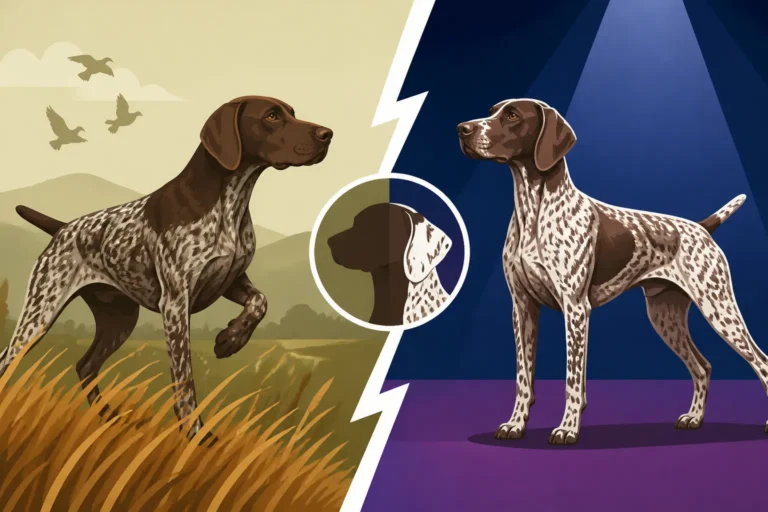
Field-focused and show-focused breeders may be selecting for different strengths. A field breeder may place particular weight on hunting ability, stamina, cooperation, and performance in training or testing. A show breeder may give more attention to how closely a dog fits the breed standard and how it moves and is put together. Neither label alone proves quality, and neither tells you everything about an individual dog.
There are breeders who work toward both performance and conformation, but it is still worth asking what they prioritize when traits compete. A dog can be beautifully built and still be a poor fit for your sporting plans; a talented hunting dog may not be selected with the same show-ring goals. The historical and practical distinctions are explored in The Split Between Field and Show Shorthairs and How Shorthair Field Lines and Show Lines Diverged.
For a household seeking a companion, the most relevant question may be less “Which line is best?” and more “What daily life does this line tend to need?” Ask about the parents’ activity levels, ability to relax indoors, responsiveness to training, and experience around children or other pets. Those details are more useful than assuming that every field-bred dog behaves one way or every show-bred dog another.
The traits worth evaluating closely
Health and physical soundness
Good breeders pay attention to health because a capable dog needs a body that can support its expected life and activity. They should be willing to discuss health concerns in their lines, the health information available for the parents, and the checks they use before breeding. Health screening reduces some risks; it cannot promise that a puppy will never develop an inherited or acquired problem.
Ask what tests were performed, who evaluated the results, and how you can review the records. A registration or a statement that a dog is “vet checked” is not a substitute for understanding relevant screening. For a broader overview of screening expectations, see The Parent Club That Sets Shorthair Health Rules and The Five Tests Behind a German Shorthaired Pointer CHIC Number. The right questions can vary with the dog’s family history and the purpose of the breeding.
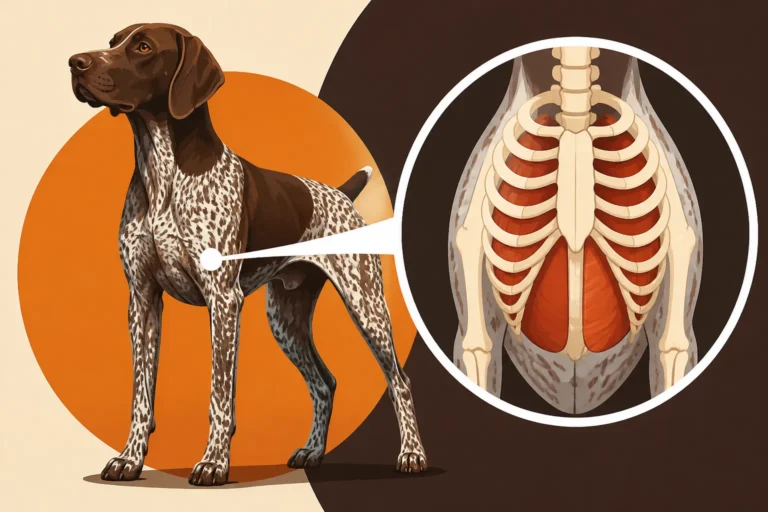
Structure matters alongside test results. A breeder should be able to explain why the sire and dam are physically suited to the work or lifestyle they are expected to support. You can ask how they assess movement, joints, feet, and overall condition, and whether close relatives have had recurring problems. If a breeder dismisses reasonable questions or guarantees a puppy will be free of all health problems, treat that as a reason to slow down and ask more.
Temperament, trainability, and recovery
A good temperament is not simply friendliness or constant enthusiasm. Breeders may look for curiosity, confidence, willingness to engage with people, and the ability to recover after a surprise or frustration. For a sporting dog, responsiveness and cooperation matter too. A puppy that is bold in a new space may still need patient, consistent training to become a dependable adult.
Ask how the breeder describes each parent outside a test or training session. Can the dog settle at home? How does it handle new environments, time alone, and ordinary household activity? What does the breeder observe in previous puppies as they mature? These questions can reveal whether the breeder values a rounded dog or focuses narrowly on a single performance trait.
No temperament observation at eight weeks can reliably forecast every adult behavior. Early puppy behavior is only one piece of the picture, and the home environment, training, health, and experiences that follow all matter. A thoughtful breeder will talk about likely tendencies without claiming to predict a puppy’s future with certainty. For guidance on evaluating background and working ability, How to Read a Shorthair Pedigree for Hunting Ability can help you understand what a pedigree can—and cannot—tell you.
| Selection area | What a breeder may value | What to ask for |
|---|---|---|
| Health | Soundness and attention to known risks in the family | Test records, evaluations, and relevant family history |
| Temperament | Confidence, cooperation, and recovery from surprises | Examples from the parents and mature relatives |
| Working ability | Useful instincts and a trainable approach to work | Test or hunting history and the breeder’s actual goals |
| Structure | A body suited to the dog’s expected activity | How the breeder evaluates movement and physical soundness |
| Home suitability | A dog whose needs fit the buyer’s routine | Honest discussion of activity, training, and settling indoors |
How breeders assess potential and make a pairing
Pedigrees and performance records are clues, not guarantees
A pedigree can help you understand family connections and learn whether ancestors have been used or tested for particular purposes. Titles and test scores can provide additional context, but they do not guarantee that a puppy will inherit the same ability, personality, or level of drive. They are pieces of evidence—not a promise about an individual dog.
Ask what the records mean in practice. A breeder should be able to explain why a particular ancestor or result matters to their goals, rather than treating impressive names as proof that every puppy will excel. If you are new to sporting-dog credentials, What NA, UPT and UT Mean on a Shorthair Pedigree explains common abbreviations. Also ask whether the parents’ day-to-day behavior supports the picture suggested by their records.
A pedigree is most useful when paired with direct information about relatives and the breeder’s experience with the line. Do close relatives tend to be easy to train, or do they need experienced handling? Are they comfortable in a home after a day of activity? Do buyers report recurring health concerns? A breeder who keeps in touch with puppy owners may have valuable observations about how earlier litters developed.
The mating should have a reason
Responsible breeders should be able to say what each parent contributes and what they hope to improve or preserve by pairing them. For example, they may be seeking a complementary combination of temperament, structure, health information, and working qualities. “They are both beautiful” or “they have great pedigrees” is not much of an explanation on its own.
Listen for a balanced account rather than a sales pitch. The breeder should be able to mention strengths and acknowledge areas they are monitoring. They should also explain what they are aiming for in the litter without pretending they can control every outcome. A mating can be carefully planned and still produce puppies with different personalities and abilities.
You can compare the breeder’s stated goals with your own needs. If you are hoping for a dog to join you on occasional hikes, a pairing intended for intense field competition may ask for more training and daily outlets than you can offer. If you plan to hunt regularly, ask about the parents’ practical experience and what support the breeder offers as you develop a young dog. A comparison of field-line lifestyle demands is available in Whether a Field Line Shorthair Is Harder to Live With.
Questions to ask before choosing a puppy
Ask for evidence and an honest picture
A visit or conversation should leave you with a clear sense of the adult dogs, the puppies’ early care, and the breeder’s priorities. Ask to see relevant health documentation and learn how the breeder decides which puppy may suit which home. A careful breeder may ask as many questions about your plans as you ask about the litter. That exchange is useful: matching a puppy is about fit, not simply choosing the boldest puppy or the one that approaches first.
Be specific about your life. Explain how much time the dog will spend alone, whether you have hunting or training experience, what exercise you can reliably provide, and who else lives in your household. Ask how the breeder introduces puppies to ordinary sights and sounds, how they handle early social experiences, and what guidance they offer after the puppy goes home. The breed’s needs are easier to assess alongside Whether a German Shorthaired Pointer Suits a Non Hunting Home.
A reputable breeder should not make you feel silly for asking questions. Nor should they promise that a particular puppy will be calm, perfectly suited to children, or guaranteed to hunt. Their job is to share the evidence they have, be candid about uncertainty, and help you think through the commitment.
Look for care that continues after the handoff
Ask what the puppy has been eating and how to make any food change gradually. Keeping the familiar diet at first can make the transition less complicated; if you need to source the same food, a retailer such as Chewy may be one place to check, but confirm the exact product with the breeder. A feeding recommendation should also take the puppy’s age, growth, and veterinary guidance into account.
You can also ask for a written routine covering meals, sleep, toilet breaks, and early training. Before bringing the puppy home, make a simple supply list and check which items the breeder recommends. If you use Chewy for basic supplies, compare your list with the breeder’s advice rather than assuming that a particular toy, chew, or accessory is suitable for every puppy. Supervision and age-appropriate choices matter more than buying a large collection of gear.
Finally, ask how the breeder handles questions or concerns after placement. A good relationship can be helpful when you are trying to interpret a new behavior, arrange training, or understand a health concern. Chewy can help owners obtain routine pet supplies, but it cannot replace the breeder’s knowledge of the litter or advice from a veterinarian. For a bigger-picture look at training, exercise, and daily routine, see The Structure a German Shorthaired Pointer Needs Daily.
Disclaimer
This article is for general informational purposes only and does not constitute professional advice. Laws, prices and regulations vary by location and change over time. Consult a qualified professional for guidance on your specific situation.