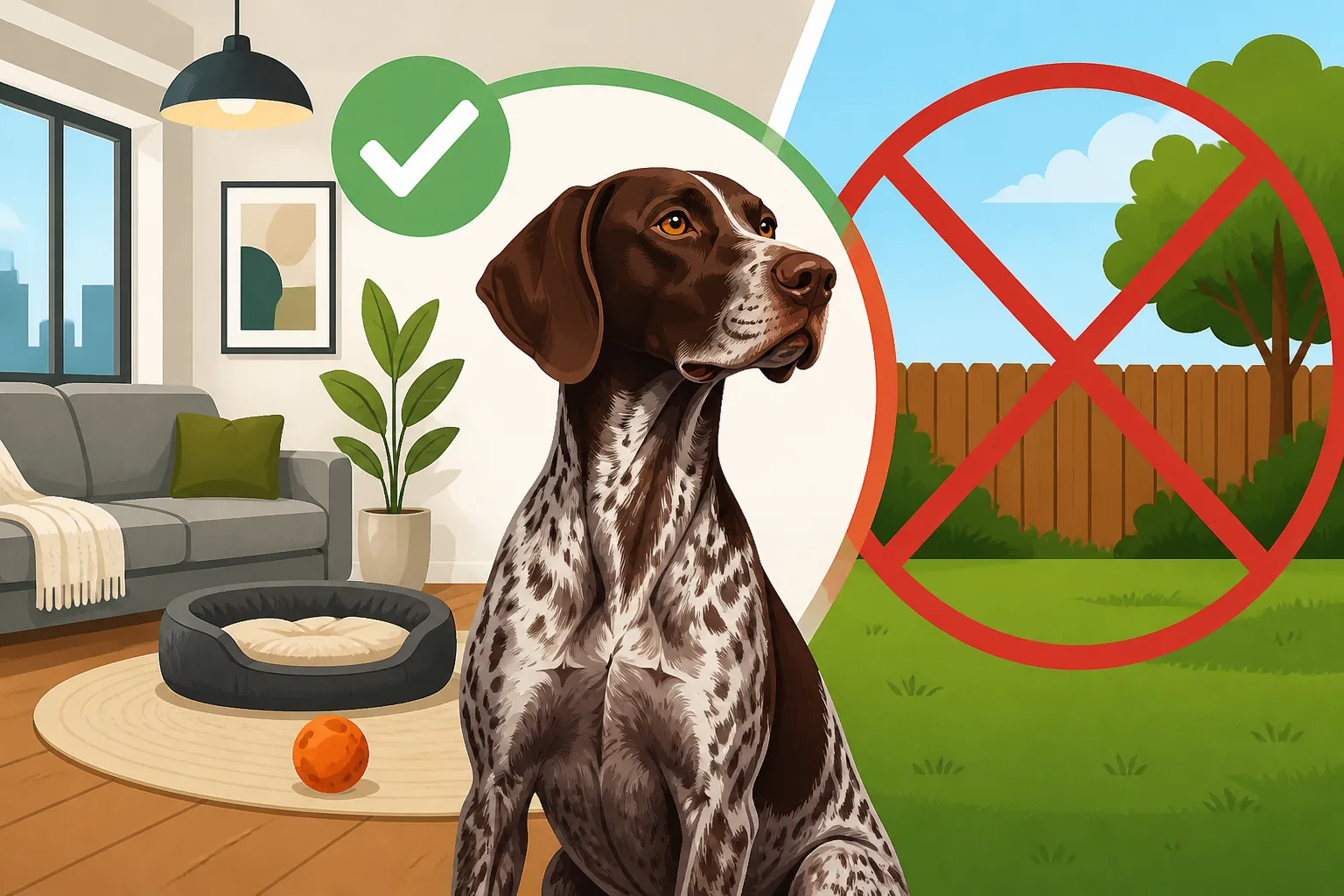
Whether a Shorthair Fits a House With No Yard
A German Shorthaired Pointer can live in a home without a yard, but the missing yard has to be replaced with a reliable plan for exercise, training, and downtime. A quick trip downstairs or one neighborhood walk usually won’t meet this breed’s needs. This guide explains what apartment and no-yard life really asks of you—and how to tell whether your routine can make it work.
Can a German Shorthaired Pointer Live Without a Yard
A yard is convenient, not a substitute for activity
A fenced yard can make bathroom breaks and casual play easier, but it does not automatically give a German Shorthaired Pointer the activity this energetic sporting breed needs. Many dogs will sniff around, watch the street, or bring a toy back a few times, then head inside still ready to go. A yard is useful space; it is not, by itself, a complete exercise plan.
Without a yard, you’ll need to take responsibility for getting your dog outside and actively involved in the day. That might mean a brisk morning walk with training, a longer outing later, and short sessions of scent work or retrieving between them. The important part is not just covering distance. Your dog also needs opportunities to use their nose, practice cues, and settle afterward.
This is why the answer depends less on your home’s square footage than on your schedule and surroundings. A small home near safe walking routes, a suitable off-leash area, or open space can work better than a large house where the dog spends most of the day alone. For a deeper look at the trade-off, see Whether a Shorthair Can Live in an Apartment.
Daily needs are more than a quick bathroom trip
German Shorthaired Pointers are not usually satisfied by a few minutes outside before work and another short outing at night. Their exercise needs vary with age, health, temperament, training, and whether the dog comes from particularly active working lines. Still, most adults need meaningful daily activity, not merely opportunities to step outdoors.
Think through the ordinary weekday, not just the weekend hike. If you leave home early, who handles the morning outing? If it’s pouring rain or icy, what is your backup? If you have an unexpectedly long workday, can someone provide a proper break? Questions like these matter because the dog needs a dependable routine, and a plan that works only when the weather is perfect tends to unravel.
A practical schedule may combine a walk, structured play, short training sessions, and a longer outing when your time allows. It does not have to mean running your dog until they are exhausted every day. In fact, exercise should be appropriate to the dog’s age and fitness, and very young dogs should not be pushed into repetitive, high-impact distance work. Start with realistic, regular activity and adjust with guidance from your veterinarian if you have concerns. The Two Hours a Day a German Shorthaired Pointer Needs and Exercise a Shorthair Needs Before a Work Day offer more detail on planning activity.
The biggest challenge may be the routine, not the home
A no-yard home can feel like extra work because every bathroom break requires you to get dressed, find the leash, and go outside. That friction is easy to underestimate before a puppy arrives. It becomes especially noticeable during house-training, late-night trips, bad weather, or the first weeks after a move.
Consider the practical details before bringing a dog home. Is there a safe route to a suitable toilet spot? Are stairs manageable for you and your dog? Can you reach a walking area without crossing busy roads? If you live in a building, are dogs permitted, and can you get outside promptly when a puppy needs to go? Even a well-behaved adult dog may need frequent outings when sick or recovering from a procedure.
Also think about neighbors. A high-energy dog that barks, scrabbles at the door, or races around at midnight can create strain in close quarters. These behaviors are not inevitable, but they are more difficult to ignore when homes share walls. Training, enrichment, and a predictable rest routine help; so does teaching your dog that indoor time can be calm rather than a countdown until the next burst of activity.
What You Need to Replace a Yard
Build a repeatable exercise plan
The goal is not to make every outing a marathon. It is to create a routine that gives your dog appropriate physical activity and mental engagement across the day. For example, a weekday might include a morning walk with a few short obedience exercises, a midday break with a dog walker or trusted helper, and an evening session that combines sniffing, play, and calm practice at home.
Off-leash exercise can be useful, but it should happen only where permitted and where you can manage your dog safely. A long line can offer room to explore while preserving control in appropriate settings. Don’t assume that a dog who comes when called in a quiet living room will reliably recall when a rabbit, bird, or interesting scent appears. Build those skills gradually, and use a secure fenced space when you need a safer place for free running.
If your neighborhood has limited green space, vary the activities rather than relying on the same short pavement loop. Walks that allow sniffing, structured retrieve games, and supervised exploration can make an outing more engaging. A local park or trail may help, but check its dog rules, leash requirements, and seasonal restrictions before planning around it. The Structure a German Shorthaired Pointer Needs Daily is a useful companion topic when designing a balanced routine.
Add mental work and indoor enrichment
A dog can be physically active and still become restless if the day offers little to think about. Nose games are especially practical in a home without a yard: hide a few pieces of the dog’s regular food around one room, scatter food in a safe snuffle mat, or ask the dog to search for a familiar toy. Keep early games easy so the dog learns the task rather than becoming frustrated.
Short training sessions can fit naturally into ordinary routines. Ask for a sit before clipping on the leash, practice settling on a mat while you make dinner, or rehearse a calm door greeting. A few focused minutes can be more productive than an extended session that leaves both of you tired and impatient. Rotate activities, too. If the same puzzle feeder appears every day, it may stop holding the dog’s attention.
Use toys and enrichment safely, particularly when your dog is unsupervised. Check chew items for damage and choose options suited to your dog’s chewing style. If you’re assembling supplies, Chewy can be one place to look for basics such as puzzle feeders or treat-dispensing toys; the particular item matters less than whether your dog can use it safely and whether it genuinely engages them. More ideas are covered in Mental Work That Tires a Shorthair Out.
| No-yard need | Practical option | What to watch for |
|---|---|---|
| Bathroom breaks | Take the dog to the same safe outdoor area on a consistent schedule | Puppies, older dogs, and dogs with health needs may need more frequent trips |
| Physical activity | Brisk walks, structured play, or suitable running in a safe area | Match intensity to age, fitness, weather, and veterinary advice |
| Sniffing and exploration | Let the dog investigate on leash or a long line where allowed | Keep distance from traffic, wildlife, and areas where dogs are prohibited |
| Mental engagement | Scent games, short training sessions, food puzzles | Supervise new items and avoid making every activity overly exciting |
| Midday care | A trusted walker, sitter, or planned visit home | Introduce the person and routine before relying on them for a full workday |
| Indoor calm | Mat training, quiet chew time, predictable rest periods | Don’t expect exercise alone to teach a dog how to settle |
Plan for the messy and inconvenient days
A plan that depends on perfect weather or a completely open calendar is not much of a plan. Set up a rainy-day routine before you need one. That could include a brief outdoor bathroom trip followed by a scent game, a training refresher, and a calm chew. Indoor activity is not a full replacement for outdoor exercise, but it can help keep a disrupted day from turning into hours of frustration.
Gear can make these outings easier. Keep a leash, waste bags, towel, and weather-appropriate clothing near the door so leaving the house takes less effort. For a dog that gets muddy or wet, having a designated drying spot can protect floors and make coming home less chaotic. Chewy may be useful for finding routine supplies such as waste bags, washable mats, or travel bowls, but choose items based on your dog’s needs and your space rather than buying a collection of gadgets.
The other part of bad-weather preparation is managing expectations. A young, energetic dog may still need attention after a short walk, but that does not mean you must keep escalating the activity until the dog is completely spent. Repeatedly relying on high-intensity games can create a dog that expects constant excitement. Mix movement with sniffing, training, and deliberate rest so the routine teaches both engagement and recovery.
Is Your Lifestyle a Good Match
Be honest about work hours and backup care
The hardest version of no-yard ownership is a high-energy dog spending long stretches alone with no meaningful outing before or after. A yard would not solve the underlying issue, but it might make quick breaks easier. Without one, you need a reliable way to meet bathroom and activity needs, especially during a full workday.
Before deciding, write out your actual weekday from the moment you wake up until bedtime. Include commuting, errands, exercise, and the time you realistically have after work. Then identify who can step in if you’re delayed or ill. A dog walker, neighbor, family member, or sitter may be part of the plan, but you should know whether that support is genuinely available—not just something you hope to arrange later.
Budget and logistics matter alongside affection. A walker or daycare may provide useful help, but each option has its own cost, availability, and suitability. Some dogs enjoy group care; others do better with an individual walk or a familiar sitter. If you rely on outside help, introduce it gradually and confirm that the caregiver understands how to handle a strong, alert dog around wildlife and other dogs. Whether a Shorthair Suits an Owner Who Works Full Time explores the time commitment more directly.
Think about noise, neighbors, and shared spaces
In a detached house, a dog barking at passing people may be irritating. In an apartment or townhouse, it can quickly affect neighbors. German Shorthaired Pointers can be vocal when excited, under-stimulated, or unsettled alone, though individual dogs differ. A calm home life is taught through routine and training; it should not be assumed just because the dog has had a long walk.
Shared hallways and elevators add another layer of management. Practice walking past people and other dogs without pulling, jumping, or rushing. Keep the dog close in narrow spaces, and don’t let them greet every person or dog simply because the encounter is available. A large, enthusiastic dog can be difficult to manage in a crowded lobby even when friendly.
If you rent, review your housing rules before committing. Confirm that the breed and dog size are allowed, understand any requirements for common areas, and consider how close the nearest safe outdoor route is. If you’re still deciding whether the breed’s energy and temperament suit your home, Whether a German Shorthaired Pointer Needs to Hunt to Be Happy and The Household a German Shorthaired Pointer Actually Fits can help you think beyond the yard question.
Match the dog’s age and temperament to your circumstances
A puppy without a yard brings a different workload from a settled adult. Puppies need frequent toilet trips, close supervision, safe social experiences, and careful management of activity while they grow. If you live several flights up or have no quick outdoor access, house-training can require extra patience and planning. A puppy’s energy may also arrive in short, intense bursts that don’t line up neatly with your work schedule.
An adult dog may already be house-trained and know how to settle, but age alone does not guarantee an easy fit. Ask about the individual dog’s exercise needs, habits when left alone, comfort in busy environments, and history with other dogs. A dog accustomed to a rural home may need time to adjust to elevators, traffic, and close neighbors. Rescue or breeder conversations should focus on behavior and daily routine, not only on whether the dog has lived in an apartment before.
Temperament matters as much as the floor plan. Some dogs are adaptable and happy to nap after a good outing; others remain intensely alert to hallway sounds or struggle to relax indoors. If you’re choosing a puppy, speak with a knowledgeable breeder about the parents’ temperaments and the demands of their lines. If you’re considering an adult, ask for candid details about the dog’s current routine and behavior when left alone.
How to Make No-Yard Living Work Day to Day
Create a simple morning-to-evening rhythm
Consistency helps a dog understand what happens next. A workable routine might start with a bathroom trip and a purposeful walk, followed by breakfast and a quiet rest period. A midday visit can provide another chance to toilet, stretch, and sniff. In the evening, a walk or training game can be followed by calm time indoors rather than hours of nonstop play.
The exact schedule should fit the dog, not an idealized timetable. A young dog may need more frequent bathroom trips than an adult. A senior may benefit from shorter, gentler outings. A dog recovering from injury needs a different plan from a fit dog in the middle of hunting season. Keep an eye on appetite, body condition, restlessness, and how easily your dog settles; these clues can help you judge whether the routine is appropriate.
Make indoor calm part of the schedule from the beginning. After an outing, guide the dog toward a bed or mat, offer a safe quiet activity if useful, and reward relaxed behavior. If every return home leads to an exciting game, the dog may learn that coming indoors means the fun is about to intensify. The goal is a dog who can participate enthusiastically outdoors and rest comfortably inside.
Measure success by behavior, not exhaustion
A dog does not need to be physically worn out to have had a good day. Watch for signs that the routine is working: the dog can settle after activity, is not constantly demanding attention, and has regular opportunities to toilet and explore. If your dog is restless, destructive, or barking frequently, consider the whole picture. The cause may be too little activity, too little sleep, anxiety when alone, or a training issue—not simply a need for a harder run.
Keep notes for a week if you’re unsure. Record outings, training, time alone, barking, and when the dog settles. Patterns often become clearer on paper. Perhaps the dog struggles most after a long period alone, or perhaps an overexciting evening game makes settling harder. Adjust one part of the routine at a time so you can see what helps.
For indoor comfort, choose a defined resting area and keep essential supplies easy to reach. Chewy can be a practical place to source ordinary items such as a washable bed cover or food puzzle, but the most valuable “equipment” is a dependable schedule and consistent training. Add new products gradually, and supervise your dog with anything unfamiliar.
Make a realistic decision before bringing a dog home
A German Shorthaired Pointer can live well in a house or apartment without a yard when the owner can provide dependable outdoor access, suitable daily activity, training, and help when life gets busy. The arrangement is much less likely to work if the dog will be left alone for long stretches, the nearest safe walking route is impractical, or you’re counting on a small balcony or quick potty trip to meet exercise needs.
Ask yourself a few straightforward questions:
- Can I make time for meaningful activity every day, including workdays?
- Do I have a safe place for regular walks and chances to sniff and explore?
- What is my backup plan for long shifts, illness, travel, and bad weather?
- Can I manage daily outings without resenting the extra steps and planning?
- Am I prepared to teach indoor calm as well as outdoor exercise?
If your answers are mostly yes, no yard does not have to rule out the breed. If several answers are uncertain, it may be kinder to wait, arrange more support, or consider a dog whose energy and routine are a closer match. The key is not to ask whether a Shorthair can technically fit inside your home. It’s whether your everyday life can give that dog enough structure and engagement to feel at home there.
Disclaimer
This article is for general informational purposes only and does not constitute professional advice. Laws, prices and regulations vary by location and change over time. Consult a qualified professional for guidance on your specific situation.