Whether Weekly Ear Cleaning Is Enough for a Shorthair
It’s a common scenario for German Shorthaired Pointer owners: you've got this energetic, adventurous companion who loves to plunge into water, barrel through tall grass, and generally embrace all the grimy joys of the outdoors. Naturally, their ears, those wonderfully expressive floppy things, become a magnet for all sorts of debris and moisture. The question then becomes, is that dutiful weekly ear cleaning really doing enough, or are you fighting a losing battle against the inevitable funk and irritation? This guide will dive deep into the unique challenges GSP ears face and help you determine a routine that truly keeps your shorthair's ears healthy and happy, beyond just a quick swab every Sunday.
Why Your German Shorthaired Pointer's Ears Are Prone to Issues
Let's be honest, those beautiful, soft, low-set ears are part of what makes a GSP so endearing. But from a health perspective, they present a few distinct challenges that make them more susceptible to problems than, say, a German Shepherd's ears. It's not just bad luck; it's a combination of their anatomy, their lifestyle, and sometimes, underlying health factors. Understanding these predispositions is the first step in creating an effective ear care plan.
The Anatomy of a Floppy Ear
Think about it: your GSP's ears hang down, covering the ear canal. This design, while charming, essentially creates a warm, dark, and often humid microclimate deep inside. Unlike dogs with erect ears, where air can circulate freely, a floppy ear traps moisture and heat. This isn't just uncomfortable; it's the perfect breeding ground for opportunistic yeast and bacteria. When these microbes decide to throw a party, you're looking at a potential infection. It’s like putting a lid on a pot – all that warmth and dampness stays right where it is, creating an environment where things can thrive that you definitely don't want thriving in your dog's ear. This constant warmth and lack of ventilation means even minor moisture can quickly escalate into an issue.
Furthermore, the ear canal itself in a GSP, like many breeds, isn't a straight shot. It has a vertical and a horizontal component, making it a bit like an 'L' shape. This bend makes it harder for debris or fluid to naturally drain out, and it also makes it trickier for you to clean effectively with just a simple wipe. Things can get trapped down in that horizontal section, stewing away and setting the stage for bigger problems if not addressed.
An Active Lifestyle and Environment
If you own a German Shorthaired Pointer, you know they aren't meant for the couch all day. These dogs are athletes, bred to hunt and work tirelessly. This means they're constantly on the go, often in environments that are less than pristine for ear health. Imagine your GSP charging through a field of chest-high cover, nose to the ground, ears flapping and collecting all manner of seeds, burrs, and general grime. Or perhaps they're enjoying a refreshing swim in a pond, lake, or even a mucky ditch – water pouring directly into those warm, dark ear canals.
Every time they dive into water, or push through dense brush, foreign material and moisture get introduced. Grass awns, those incredibly annoying and dangerous barbed seeds, are notorious for migrating deep into ear canals, causing intense irritation and often requiring veterinary removal. Even simple dust and dirt can become problematic when mixed with ear wax and moisture, creating a thick sludge that blocks the canal and fosters microbial growth. This constant exposure to environmental factors means their ears are under a higher assault than many other breeds, demanding a more vigilant approach to care. What Collects in a Shorthair's Folded Ear explores this further.
Allergies and Underlying Conditions
Sometimes, ear issues aren't just about what gets in the ear, but what's going on inside your dog's body. German Shorthaired Pointers, like many breeds, can be prone to allergies, whether they're environmental (pollen, dust mites) or food-related. A common symptom of allergies in dogs is recurrent ear infections. If your GSP is constantly scratching, shaking their head, and developing ear infections despite your best cleaning efforts, allergies might be the culprit. The allergic reaction causes inflammation and increased wax production in the ear canal, creating an even more inviting environment for yeast and bacteria to flourish.
Beyond allergies, other less common conditions can also manifest with ear problems. Hypothyroidism, a condition where the thyroid gland doesn't produce enough hormones, can sometimes lead to skin and coat issues, including recurrent ear infections. Autoimmune diseases or even certain parasites can also contribute. If you're consistently battling ear infections and nothing seems to work, it's crucial to partner with your veterinarian to explore these deeper, underlying causes. Addressing the root issue is key to long-term ear health, as simply cleaning the symptoms away won't solve the problem.
Signs Your Shorthair Needs More Frequent Ear Care
So, how do you know if your current weekly cleaning routine is actually falling short? Your German Shorthaired Pointer can't tell you in words, but they're excellent communicators through their behavior and physical signs. Learning to "read" your dog's subtle cues is paramount to catching potential ear problems before they become full-blown infections, which are painful and costly to treat.
Behavioral Clues That Scream Trouble
Your GSP might not hold up a paw and point to their ear, but their body language will give you plenty of hints if something is amiss. The most obvious sign is head shaking. It might start subtly, a little flick of the head after they wake up, then become more frequent and vigorous throughout the day. They might also begin pawing or scratching at their ears with their back leg, sometimes quite frantically. You might notice them rubbing their head or ears on furniture, the carpet, or even against your leg as if trying to relieve an itch or discomfort.
Beyond these direct actions, watch for more general changes. Are they more withdrawn or irritable when you approach their head? Do they flinch or cry out if you try to touch their ear? This indicates pain, and pain means something significant is going on. Some dogs might even develop a slight head tilt if one ear is particularly bothering them. If your normally happy-go-lucky GSP seems a bit grumpy, restless, or just "off," especially after a run in the field or a swim, their ears should be one of the first things you check. Ignoring these subtle shifts is a common mistake that allows minor irritation to snowball into a full-blown and very uncomfortable infection.
Olfactory and Visual Indicators
Sometimes, your nose knows before your eyes or your GSP's behavior gives it away. A healthy dog's ear should have a very faint, neutral smell, or perhaps a slightly "doggy" smell unique to them. However, if you detect a strong, pungent, yeasty, or even sweet odor emanating from their ears, that's a red flag. Yeast infections often have a distinctive smell that some describe as similar to stale bread or corn chips. Bacterial infections can smell foul or even putrid. If you find yourself wrinkling your nose when your GSP leans in for a cuddle, it's definitely time for a closer inspection. The Smell That Means a Shorthair's Ear Is Infected has more details on this.
Visually, pull back that floppy ear leather and take a good look inside. What do you see?
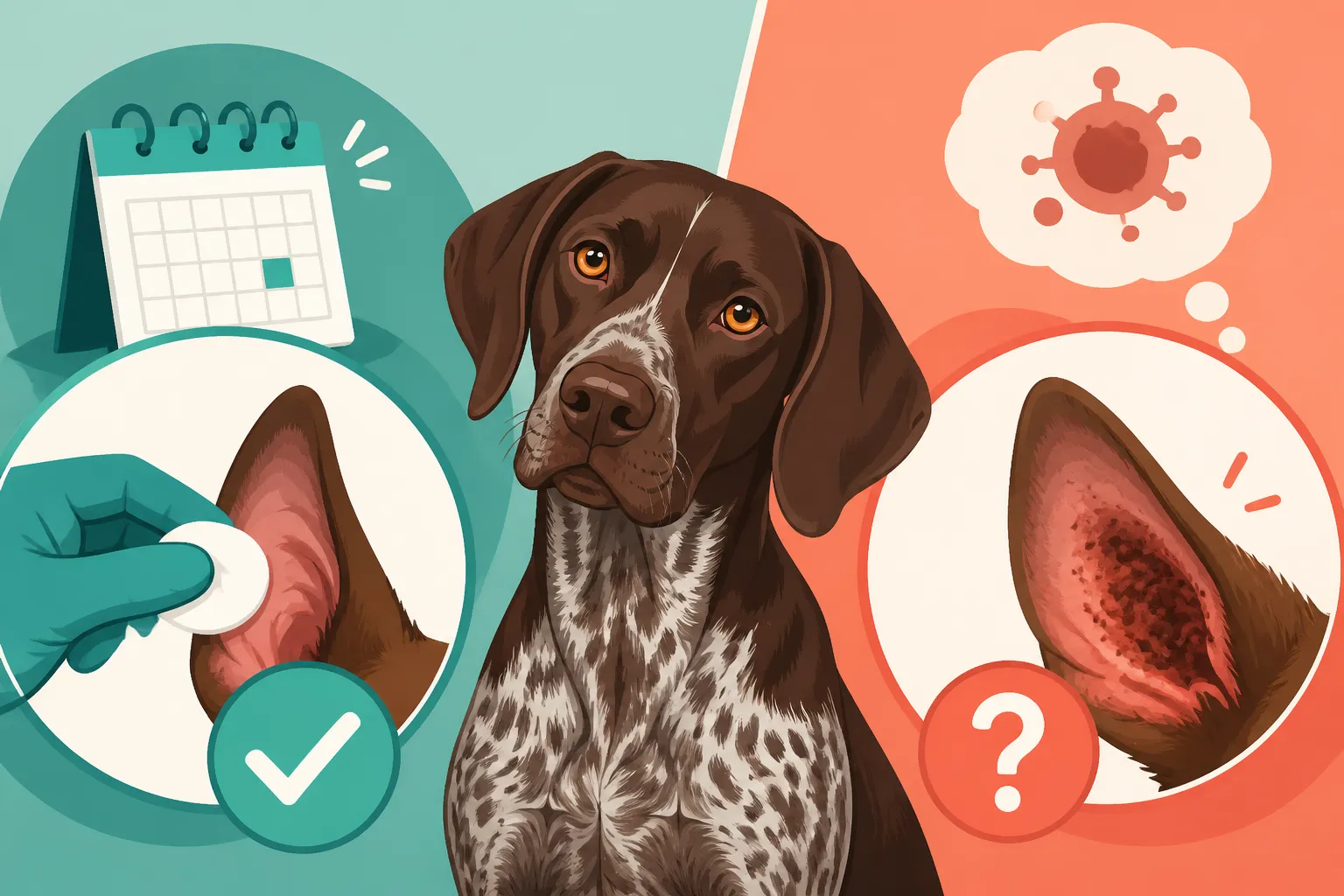
- Redness or inflammation: The skin inside the ear flap and lining the canal should be a healthy pink, not angry red or swollen.
- Discharge: Healthy ears have minimal wax. If you see excessive dark brown, black, yellow, or greenish discharge, that's abnormal. The consistency matters too – is it waxy, crumbly, gooey, or pus-like?
- Crusts or scabs: These can indicate scratching, secondary skin infections, or even mites.
- Hair loss around the ear: Constant scratching can lead to irritation and hair loss on the ear flap or surrounding areas.
Any of these visual cues, especially when combined with a suspicious odor or behavioral changes, are clear indicators that your GSP's ears need more than just a routine wipe. They likely need a thorough cleaning and potentially a trip to the vet for diagnosis and treatment.
Chronic or Recurring Issues
Perhaps you are cleaning weekly, and your GSP still gets ear infections several times a year. This pattern of chronic or recurring issues is a flashing neon sign that your current routine, and perhaps even your approach, isn't enough. It's frustrating when you feel like you're doing everything right, yet the problem persists.
Recurring infections often point to an underlying cause that hasn't been fully addressed. It could be persistent allergies that are not managed effectively, structural issues within the ear canal making it hard to clear, or even antibiotic resistance if previous infections weren't fully cleared. If you're constantly battling ear infections, simply increasing the frequency of your existing cleaning method might not be the answer. Instead, it's time for a comprehensive re-evaluation with your veterinarian. They can help identify the root cause, recommend specific medicated cleaners or treatments, and work with you to develop a long-term management plan that finally breaks the cycle of infection. This might involve prescription ear drops, dietary changes, or allergy medications.
The Art of Effective Ear Cleaning for Your GSP
Once you've determined your GSP needs more than just a cursory glance, or even if you're just maintaining a healthy ear, knowing how to clean them properly is crucial. It’s not about scrubbing aggressively, but about gentle, thorough care that targets the right areas without causing irritation or pushing debris further down.
Choosing the Right Tools and Solutions
Before you start, gather your supplies. This isn't a task you want to pause halfway through because you forgot something!
- Vet-approved ear cleaner: This is perhaps the most critical item. Do not use alcohol, hydrogen peroxide, or human ear drops. These can be irritating, damaging, or ineffective. Your vet can recommend a good quality ear cleaning solution specifically formulated for dogs. These solutions are designed to break down wax, dry the ear canal, and often have antiseptic properties. You can usually find these at your vet's office or reputable pet supply stores like Chewy or even through Amazon with your vet's guidance. Look for ingredients like salicylic acid, lactic acid, or aloe vera.
- Cotton balls or gauze pads: These are for wiping away discharge and cleaning the visible parts of the ear. Avoid cotton swabs (Q-tips) for cleaning deep inside the ear canal, as they can push debris further in or damage the delicate eardrum.
- Treats: Lots of them! Ear cleaning isn't always a GSP's favorite activity, so make it a positive experience with plenty of rewards.
- Towels: Have a few old towels ready. Your GSP will shake their head, and ear cleaner will go flying!
Consider a cleaning solution with a gentle formula that won't strip the natural oils but is effective in breaking down wax and dirt. Some solutions are also designed to specifically target yeast or bacteria, which can be beneficial if your dog is prone to certain types of infections. Always check the expiration date on your cleaner and store it according to the manufacturer's instructions to maintain its efficacy.
Step-by-Step Cleaning Process
Once you have your supplies and your GSP is calm and comfortable (perhaps tired out from a good run!), you can begin the cleaning process:
- Position your dog: Have your GSP sit or lie down in a comfortable position. You might need a helper to gently hold them, especially if they are squirmy or if their ears are sore. Make sure you're in an area where you don't mind a little mess from head shaking.
- Lift the ear flap: Gently hold your GSP's ear flap up and open the ear canal. This gives you better access and helps the cleaner penetrate.
- Apply the cleaner: Carefully insert the tip of the ear cleaner bottle into the opening of the ear canal and squeeze to fill the canal with the solution. Don't be shy; you need enough liquid to really flush things out. Your vet can show you how much is appropriate.
- Massage the base of the ear: Once the cleaner is in, gently massage the base of your GSP's ear for about 30 seconds. You should hear a squishing sound, which means the cleaner is working its way down into the horizontal canal and breaking up wax and debris.
- Allow head shaking: Stand back! Your GSP will naturally want to shake their head vigorously, and this is exactly what you want. It helps dislodge all the loosened gunk from deeper in the ear canal. This is where those towels come in handy!
- Wipe the outer ear: After the shaking, use a cotton ball or gauze pad to gently wipe away any visible discharge, wax, and cleaner from the inner surface of the ear flap and the uppermost part of the ear canal. Only clean what you can easily see. Do not push anything into the ear canal.
- Repeat if necessary: If the ear is particularly dirty, or if there's a lot of discharge, you might need to repeat the process on the same ear until the cotton balls come out relatively clean.
- Reward: Lavishly praise and reward your GSP with treats and affection! Make this experience as positive as possible so they associate ear cleaning with good things.
Remember, gentleness is key. If your dog shows signs of pain, stop immediately and contact your vet. This process aims to remove debris and maintain hygiene, not to cause distress.
When to Seek Professional Help
While regular at-home cleaning is vital for German Shorthaired Pointers, there are definite times when you need to call in the professionals. Attempting to treat an active infection yourself can prolong suffering, make the problem worse, or lead to antibiotic resistance if you use the wrong products.
Contact your veterinarian immediately if you notice any of these signs:
- Intense pain or sensitivity: If your GSP cries out, snaps, or recoils aggressively when you try to touch their ear.
- Persistent or worsening discharge/odor: Even after cleaning, if the discharge or smell doesn't improve or gets worse.
- Swelling or redness that extends beyond the ear canal: If the outer ear flap or surrounding skin becomes very inflamed.
- Bleeding from the ear: This is a serious sign and requires immediate vet attention.
- Head tilt or loss of balance: This could indicate a severe inner ear infection that affects their vestibular system.
- You suspect a foreign object: If your GSP was running through tall grass and suddenly starts pawing at their ear incessantly, a grass awn could be lodged deep inside.
- Chronic recurrence: If you're seeing ear infections pop up every few months despite diligent care, your vet needs to investigate the underlying cause, whether it's allergies, structural issues, or something else. The Vet Schedule a Working Shorthair Should Keep can help you plan routine check-ups.
Your vet has specialized tools, like an otoscope, to look deep into the ear canal, assess the eardrum, and collect samples for laboratory analysis (cytology) to identify whether yeast, specific bacteria, or mites are present. This allows them to prescribe the exact medication needed to effectively clear the infection. Early intervention can prevent a minor issue from escalating into a severe, painful, and more complicated problem.
Proactive Measures to Keep GSP Ears Healthy
Beyond the reactive cleaning of dirty ears, a proactive approach is your best defense against recurrent ear problems in your German Shorthaired Pointer. It's all about minimizing the opportunities for trouble to start and supporting their overall health from the inside out.
Post-Activity Care: The Immediate Defense
Given your GSP's love for the outdoors, one of the most critical proactive steps is immediate post-activity care. This is where you can nip many potential issues in the bud.
- After every swim or bath: Thoroughly dry your GSP's ears. Gently wipe the visible parts of the ear canal with a cotton ball or soft cloth. For breeds prone to ear infections, some vets even recommend using a specific ear-drying solution after water exposure. These solutions typically contain agents that help evaporate moisture quickly and can slightly acidify the ear canal, making it less hospitable to microbial growth. Drying a Shorthair's Ears After Every Swim offers more in-depth advice on this. Don't let moisture linger, as it's an open invitation for yeast and bacteria.
- After a hunt or run in heavy cover: Always check your GSP's ears for foreign bodies. Those sneaky grass awns, burrs, or tiny seeds can easily work their way deep into the ear canal and cause immense irritation and infection. A quick visual inspection and gentle wipe can often catch these before they become embedded. If you spot anything that looks like a foreign object and it's not easily wiped away, resist the urge to dig for it. Contact your vet to have it professionally removed, as improper removal can push it deeper or damage the ear. Grass Awns in a Shorthair's Coat and How to Find Them is a must-read for field dogs.
Incorporating these checks into your post-adventure routine is a small time investment that can save you a lot of heartache (and vet bills!) down the line. It becomes second nature, just like checking for ticks or wiping muddy paws.
Diet and Supplements for Overall Ear Health
While a special "ear health" diet isn't a magical cure, your GSP's overall nutrition plays a significant role in their skin and coat health, which in turn impacts their ears. A high-quality, balanced diet supports a strong immune system and healthy skin barrier, making them less susceptible to inflammation and infections.
Consider a diet rich in Omega-3 fatty acids, which are known for their anti-inflammatory properties. These can help reduce the overall inflammatory response in the body, which can be beneficial if your GSP's ear issues are linked to allergies. You can find Omega-3s in fish oil supplements or in some high-quality dog foods. For specialized diets or supplements, look into options from reputable brands. Brands like Ollie, known for fresh, human-grade ingredients, might offer formulas that support general skin and coat health, indirectly aiding ear health by reducing inflammation throughout the body. Always discuss any significant dietary changes or the addition of supplements with your vet to ensure they are appropriate for your individual dog's needs and won't interact with any medications.
Regular Veterinary Check-ups
Even with the most diligent at-home care, routine veterinary check-ups are an indispensable part of proactive ear health for a German Shorthaired Pointer. Your vet can spot subtle signs you might miss and address concerns before they escalate.
During your GSP's annual physical, your vet will perform a thorough ear examination, often using an otoscope to get a clear view of the deeper ear canal and eardrum. They can assess the general health of the ear, check for excessive wax buildup, inflammation, or any structural abnormalities. If your GSP has a history of ear problems, your vet might recommend more frequent ear checks, especially after a particularly active season or before an anticipated allergy flare-up.
For dogs with chronic or recurrent ear infections, these regular visits allow your vet to continuously monitor the situation, try different treatment protocols, and ensure that underlying issues, such as allergies or hypothyroidism, are well-managed. They can also perform cytology to identify the specific type of infection, which is crucial for prescribing the most effective medication. Partnering with your vet means you have an expert on your side, helping you navigate the unique challenges of keeping those active, beautiful GSP ears healthy and infection-free for a lifetime. Managing a German Shorthaired Pointer's Lifelong Skin Disease can also provide insights, as skin health often correlates with ear health.
Ear Cleaning Frequency: Finding Your GSP's Perfect Schedule
So, after all this, is weekly ear cleaning enough for your German Shorthaired Pointer? The truthful, if sometimes frustrating, answer is: it depends. For some GSPs, particularly those with no history of ear issues, limited water exposure, and a generally calm environment, a weekly check and a light cleaning might indeed be perfectly adequate. They might be the lucky ones.
However, for the vast majority of German Shorthaired Pointers, especially those living up to their sporting dog heritage with regular hunts, swims, or runs through varied terrain, weekly cleaning is often the minimum and frequently needs to be supplemented. If your GSP is prone to allergies, or experiences frequent swimming, or even just produces more wax than average, you might find yourself needing to clean their ears every few days, or even daily during peak activity or allergy seasons.
The key is not to adhere blindly to a strict "weekly" rule, but to become attuned to your individual dog's needs and the signals their ears are sending. Use the signs discussed above – the smell, the discharge, the scratching, the head shaking – as your guide. If you see or smell anything amiss, don't wait for the scheduled weekly cleaning; address it immediately.
Here's a simple table to help you determine potential ear cleaning frequency:
| Situation | Recommended Frequency/Action |
|---|---|
| Routine / Low Risk | Check ears daily (quick visual/smell), clean once a week. |
| After Swimming/Heavy Cover | Immediately dry ears thoroughly, apply ear drying solution if prone to issues. Check for debris. Clean if necessary within 24 hours. |
| Mild Signs of Irritation/Excess Wax | Clean every 2-3 days until signs resolve. Increase monitoring. |
| Suspected Allergy Flare-up | Daily cleaning with appropriate solution as recommended by vet. Address allergies with vet. |
| Signs of Active Infection | Stop at-home cleaning if painful. Consult vet immediately for diagnosis and prescription medication. Follow vet's specific cleaning/medication schedule. |
| Chronic/Recurrent Issues | Work closely with vet for diagnosis and ongoing management plan. Cleaning frequency will be tailored to the underlying cause and current state. |
Ultimately, your GSP's ears are a dynamic part of their health, directly influenced by their activity, environment, and internal well-being. By staying vigilant, understanding the signs, and being prepared to adjust your routine, you can ensure those wonderful German Shorthaired Pointer ears remain healthy and comfortable, allowing your companion to focus on what they do best: enjoying life to the fullest.
Disclaimer
This article is for general informational purposes only and does not constitute professional advice. Laws, prices and regulations vary by location and change over time. Consult a qualified professional for guidance on your specific situation.