Chews Safe for a Teething German Shorthaired Pointer
Few things are quite as frustrating, or as concerning, as a German Shorthaired Pointer puppy who’s decided your antique chair leg, your favorite pair of shoes, or even your electrical cords are the perfect remedy for their aching gums. That relentless puppy chewing isn't just a nuisance; it's a desperate plea for relief, and an unsupervised GSP pup with sore teeth can quickly turn destructive or even put themselves in danger. This guide will walk you through understanding why your GSP puppy chews so much and, more importantly, how to choose safe, effective, and sanity-saving chews that will keep them happy and your home intact during this challenging phase.
The Urgent Need for Chews: Why Your GSP Puppy Can't Stop Gnawing
It's easy to get exasperated when your energetic German Shorthaired Pointer puppy seems determined to put everything in their mouth. But it's not just mischief; it’s a biological imperative. Teething is a painful process, and chewing is their primary way of coping with discomfort and exploring their world. Understanding this fundamental drive is the first step toward managing it successfully.
Understanding the Teething Process in Your GSP
Just like human babies, GSP puppies go through distinct teething phases. They’re born without teeth, and their tiny, needle-sharp "milk teeth" (deciduous teeth) typically start erupting around 3-4 weeks of age. By 6-8 weeks, they'll usually have a full set of 28 puppy teeth. This is often when you first notice the serious chewing begin, as those little teeth are getting into position and sometimes causing irritation as they break through the gums.
The real chewing marathon, however, kicks off when those puppy teeth start falling out to make way for their 42 adult teeth. This transition usually begins around 3-4 months of age and can last until they're about 6-7 months old. During this period, their gums are often inflamed, itchy, and sore. The act of chewing provides counter-pressure that helps to soothe the pain, loosen the stubborn baby teeth, and stimulate the eruption of the new adult teeth. It's an uncomfortable, but entirely natural, developmental stage for your growing pup.
It's also worth noting that the German Shorthaired Pointer, being an intelligent and active breed, often has a higher drive to explore and engage with their environment. This means their teething phase might feel even more intense than with a less active, less oral breed. They aren't just teething; they're also learning about textures, strengths, and tastes, all through their mouths. This makes providing appropriate outlets for chewing even more critical for a GSP.
The Dangers of Inappropriate Chewing for a GSP Puppy
When a GSP puppy is teething, their drive to chew is incredibly strong, and they're not particular about what they choose. This is where the real danger lies. Unsupervised puppies will chew on anything, and many household items pose significant risks. Electrical cords, for example, can lead to severe burns, electrocution, or even death. Furniture, while not immediately life-threatening, can result in expensive damage and potential ingestion of splintered wood or upholstery, which can cause internal blockages or punctures.
Beyond household items, choosing the wrong "chew toy" can be equally hazardous. Certain types of bones, rawhide, or cheaply made plastic toys can splinter, break into sharp pieces, or be entirely ingested, leading to choking, cuts in the mouth, or serious gastrointestinal issues requiring emergency veterinary intervention. A GSP puppy, with their strong jaws and determined nature, can make quick work of items that might seem harmless to a smaller, less powerful chewer. Being proactive about providing safe options is not just about protecting your belongings; it's about safeguarding your puppy's health and life.
Imagine your lively GSP puppy, full of energy and exploring the world. Without appropriate chews, that exploration might lead them to sample the legs of your dining room table, potentially ingesting splinters. Or perhaps they find a discarded plastic bottle, which quickly shatters into sharp fragments. These aren't just minor inconveniences; they can lead to painful vet visits, emergency surgery, and a lot of worry. The teething phase is also a critical time for positive reinforcement, and preventing destructive habits from forming is much easier than trying to break them later.
Meeting Their Instinctual Needs Safely
Since chewing is such a fundamental need for a teething GSP puppy, our job as responsible owners isn't to stop the chewing entirely, but to redirect it safely and constructively. Providing a variety of appropriate chews not only saves your belongings but also helps your puppy develop good habits. This means having readily available, enticing, and safe chews on hand at all times, especially during peak teething periods when their discomfort is highest.
Think of it as setting your puppy up for success. When they reach for something inappropriate, a gentle "no" followed by immediately offering a desirable, safe chew can teach them what is acceptable. Consistency is key here. Every time they go for a forbidden item, redirect them to a proper chew. The more appealing the safe chew is, the more likely they are to choose it over your expensive rug. Remember, a tired GSP is a good GSP, but a well-chewed GSP is an even better one, and it helps them settle, especially during The Growth Year of a German Shorthaired Pointer Puppy.
Furthermore, incorporating specific training around chews can be beneficial. Teaching "leave it" and "take it" commands with their chews helps establish boundaries and control. This isn't just about managing teething; it builds a foundation for good behavior throughout their lives. When you meet this instinctual need with safe and positive alternatives, you strengthen your bond with your GSP and help them navigate this sometimes-painful stage with less stress for everyone involved.
Navigating the Chew Aisle: What's Truly Safe (and What's Not)
Stepping into the pet store or browsing online for puppy chews can be overwhelming. The sheer number of options is dizzying, and not all of them are created equal. For a German Shorthaired Pointer puppy, who will likely grow into a powerful adult chewer, making the right choices from the start is paramount. We need to be discerning, understanding what characteristics define a truly safe chew and what items are best left on the shelf.
Characteristics of a Safe Chew for Your GSP Puppy
When you're looking for a safe chew for your teething GSP, keep a few key factors in mind. First and foremost, durability is crucial. A good chew should withstand your puppy's strong jaws without breaking into small, swallowable pieces. It should be firm enough to provide gum relief but not so hard that it risks chipping or breaking teeth. Look for products designed for "power chewers" or "aggressive chewers," even if your GSP is still a puppy, as their jaw strength develops quickly.
Secondly, size and shape matter immensely. The chew should be large enough that your puppy cannot swallow it whole or get it entirely stuck in their throat, but small enough for them to comfortably mouth and gnaw on. Odd shapes can sometimes make it harder to choke, but always consider the overall dimensions. Thirdly, material safety is non-negotiable. Chews should be made from non-toxic materials that won't leach harmful chemicals. Natural rubber, food-grade nylon, or certain digestible animal products are often good choices. Always check product labels for material information and safety certifications.
Finally, consider digestibility and caloric content for edible chews. If your GSP puppy is going to ingest parts of the chew, it needs to be easily digestible to prevent blockages. Overly rich or high-calorie chews, even if safe, can upset a sensitive puppy stomach or contribute to unwanted weight gain, especially during a period when Puppy Food That Suits a Growing German Shorthaired Pointer is carefully chosen. It’s a fine balance, but prioritizing durability and safety over flavor or novelty will serve your GSP puppy best.
The "No-Go" List: What to Avoid at All Costs
While many products are marketed as chews, some pose significant risks to your German Shorthaired Pointer puppy. Rawhide is almost universally discouraged by veterinarians. It can swell in the stomach, leading to blockages, and often contains chemicals used in processing. Furthermore, rawhide can break off in large, chewy chunks that present a serious choking hazard, especially for a GSP who is likely to gulp things down quickly.
Cooked bones of any kind (chicken, pork, beef, etc.) are an absolute no-go. Cooking makes bones brittle and prone to splintering into sharp shards that can cause internal damage, perforate organs, or create severe blockages. While raw, recreational bones can be given with extreme caution and supervision to adult dogs, they are generally too risky for teething puppies who lack the fully developed jaw strength and chewing etiquette. Similarly, antlers are often marketed as natural chews, but many are simply too hard. They can easily fracture a puppy's delicate teeth, leading to painful extractions and expensive vet bills. For a GSP, who will enthusiastically gnaw, the risk of tooth damage is elevated.
Lastly, avoid small or easily destructible toys that aren't specifically designed for chewing. Plush toys or thin plastic items might be fun for play, but they are not meant to withstand determined puppy jaws. Bits of fabric, plastic, or stuffing can be ingested, leading to choking or blockages. Your GSP puppy’s instinct to chew is powerful; don't underestimate it. Always err on the side of caution.
Tailoring Chews to Your GSP's Chewing Style
Not all German Shorthaired Pointers chew alike, even as puppies. Some might be relatively gentle gnawers, content to mouth and lightly chew, while others are enthusiastic power chewers from day one, capable of destroying most toys in minutes. Understanding your individual GSP puppy's chewing style is key to selecting the most effective and safest chews. Observe them with various items – do they just mouth things, or do they immediately try to tear and shred?
For "gentle gnawers," softer rubber toys or even certain edible chews might last a reasonable amount of time and provide sufficient relief. These puppies might be satisfied with a chew that has some give and texture. However, for the "power chewers" – and many GSPs fall into this category given their breed characteristics – you'll need to invest in extremely durable options. Think solid, hard rubber, or tough nylon chews. These chews are designed to withstand significant abuse and provide a long-lasting outlet for their strong jaws.
It's also important to recognize that a GSP puppy's chewing style can evolve as they mature and their jaw strength increases. A chew that was safe and durable at three months might be easily destroyed by six months. Regularly reassess your puppy's ability to handle their chews and upgrade to tougher options as needed. This adaptability ensures that they always have appropriate and safe items to satisfy their chewing urges, preventing them from turning their attention to your furniture or other inappropriate items around the house.
Top Recommended Safe Chews for Teething GSP Puppies
Now that we understand the "why" and "what to avoid," let's dive into some specific categories of chews that are generally safe and highly recommended for your teething German Shorthaired Pointer puppy. Providing a variety of textures and experiences can keep your pup engaged and prevent boredom, which can often lead to destructive chewing.
Rubber and Nylon Chews: Durable and Long-Lasting Options
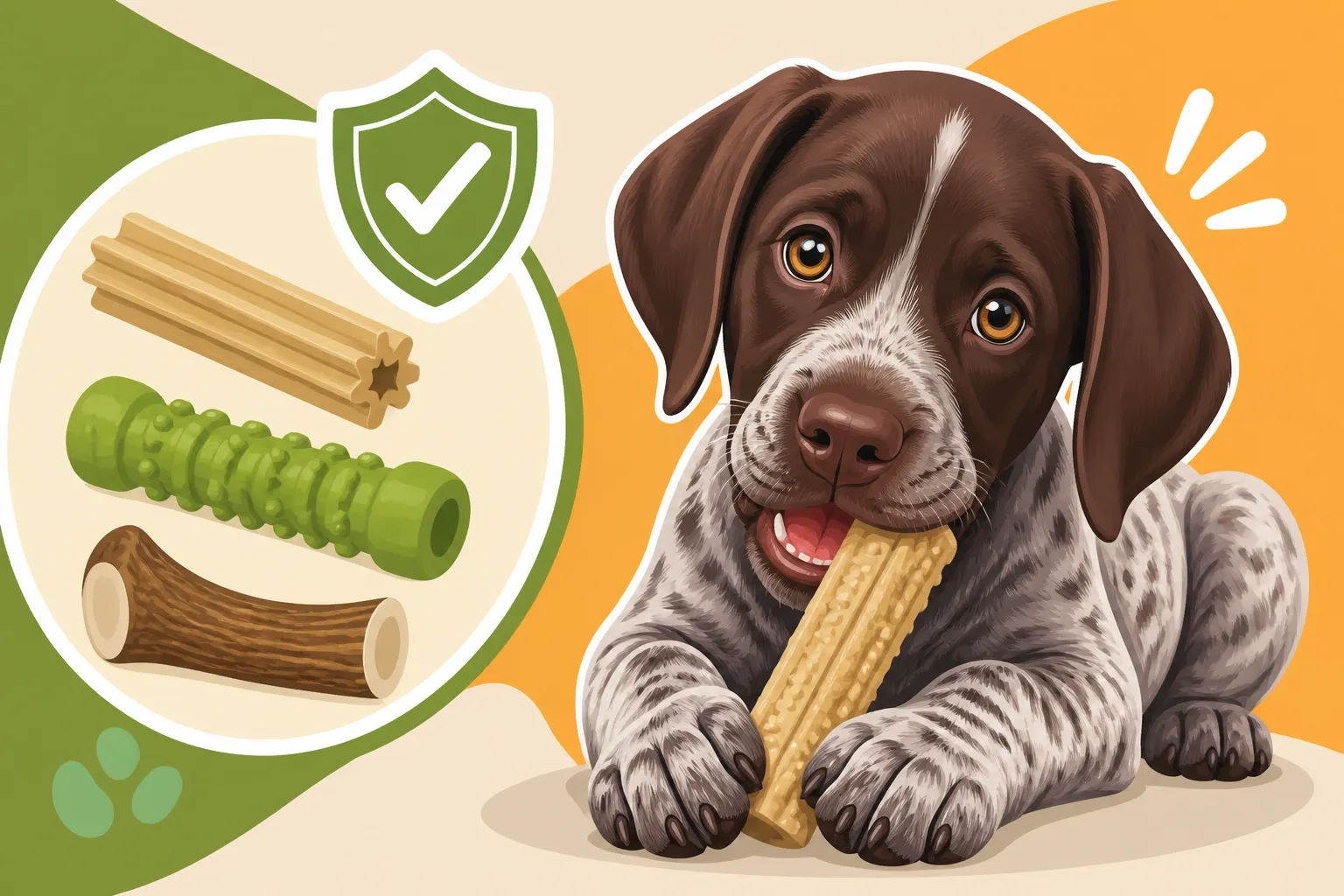
For a breed like the German Shorthaired Pointer, who often possesses formidable chewing power even as a puppy, durable rubber and nylon chews are often lifesavers. Brands like Kong (while not a contextual brand, it's a common example of the type) offer a range of rubber toys known for their durability. Look for the "extreme" or "tough" lines specifically, as regular puppy rubber can still be destroyed by a determined GSP. These toys are not only nearly indestructible but often have hollow centers that can be stuffed with soft food, peanut butter, or specialized treats, which adds an extra layer of mental stimulation and extends the chewing session. Freezing a stuffed rubber chew makes it last even longer and provides soothing cold for sore gums. You can find a huge selection of these types of durable chews on platforms like Amazon or specialty pet retailers.
Nylon chews, often resembling bones or sticks, are another excellent choice for strong chewers. They come in various shapes and sizes, often with different textures to help clean teeth as your puppy chews. The key here is to ensure they are made from a high-quality, non-toxic nylon that will flake off in tiny, digestible pieces rather than breaking into sharp chunks. Always inspect nylon chews regularly; once they are worn down to a point where sharp edges appear, or if they become small enough to be a choking hazard, it's time to replace them. Many pet supply stores, including large online retailers like Chewy, carry a wide array of trusted nylon chew brands suitable for vigorous chewers.
One of the greatest benefits of these non-edible chews is their longevity and ability to withstand repeated chewing. Unlike edible chews that disappear, good quality rubber and nylon toys can provide weeks or even months of entertainment and relief, making them a cost-effective choice in the long run. They're also less likely to contribute to weight gain or digestive upset, which can be a concern with constant consumption of edible treats. Just remember, even with the toughest chews, supervision is always recommended, especially when you first introduce a new item.
Edible Chews: Natural and Digestible Options
While rubber and nylon chews are great for long-term engagement, sometimes your GSP puppy needs something that slowly diminishes and provides a tasty reward. This is where high-quality, digestible edible chews come in. Bully sticks (made from beef pizzle) are a popular choice for many puppy owners because they are fully digestible and generally don't splinter. They come in various thicknesses and lengths, so you can select one appropriate for your GSP's size and chewing intensity. They're also often quite enticing, which makes them excellent for redirecting a puppy from undesirable chewing targets. Many reliable brands are available, and you can often find competitive prices and a broad selection on Chewy, making it easy to stock up.
Another option to consider is dental chews specifically formulated for puppies. These chews often have unique shapes and textures designed to help scrape plaque off teeth as your puppy chews, providing a dual benefit of gum relief and oral hygiene. Look for reputable brands that emphasize natural ingredients and are free from artificial colors, flavors, and preservatives. These are usually designed to be consumed slowly and digested easily. While these chews can be a bit more expensive per chew, the dental benefits can be worth it. Always check the ingredients and ensure they align with your puppy's dietary needs, especially if you're already carefully managing their primary diet.
When offering edible chews, moderation and supervision are key. Even digestible chews can cause upset stomachs if given in excess, and any edible item, if consumed too quickly, poses a choking risk. Always supervise your GSP puppy with an edible chew, and if they start trying to swallow large chunks, remove the chew. It’s better to be safe than sorry, especially with an enthusiastic eater like a GSP. These chews are fantastic for focused chewing sessions, perhaps during crate time or when you need a few minutes of quiet.
Frozen and Comfort Chews: Soothing Relief for Sore Gums
For a puppy whose gums are particularly sore and inflamed, cold can provide immense relief. Frozen chews are a simple yet highly effective way to soothe discomfort, much like an ice pack for a human's sore muscles. A classic and easy option is a frozen wet washcloth. Simply soak a clean washcloth in water (or diluted, pet-safe broth for extra appeal), twist it into a knot, and freeze it. The cold, hard texture provides both chewing satisfaction and numbing relief. Just be prepared for a bit of a watery mess as it thaws!
Another great option is frozen vegetables like carrots or green beans. These offer a healthy, low-calorie chew that's hard when frozen but becomes softer as they chew, posing less risk to developing teeth than some harder items. Larger, whole carrots can be a good choice for bigger puppies. Some owners also freeze pet-safe purees (like pumpkin or sweet potato) into silicone molds or within a Kong-style toy, offering a delicious, long-lasting, and soothing treat. These are fantastic for calming an agitated, teething puppy and can be a good activity to provide before settling down for the night.
Lastly, consider specialized teething toys that are designed to be chilled or frozen. Many brands offer rubber or silicone toys with ridges and nubs that are specifically textured to massage sore gums and can be filled with water and frozen. These combine the benefits of durable rubber with the soothing power of cold. Keeping a few of these in rotation in your freezer ensures you always have a "cold comfort" chew ready to go when your GSP puppy is feeling particularly uncomfortable. It's a small effort that can make a big difference in their comfort during this tricky phase.
Best Practices for Teething Chew Management
Providing the right chews is only half the battle. How you manage those chews, and your puppy's access to them, plays a huge role in preventing destructive habits and ensuring their safety. For an intelligent and energetic breed like the German Shorthaired Pointer, consistent management is non-negotiable.
Supervision is Key
No matter how safe a chew is advertised to be, supervision is always paramount, especially when introducing a new chew to your German Shorthaired Pointer puppy. A GSP's powerful jaws and innate drive to process objects can quickly turn a seemingly safe chew into a hazard. When you give your puppy a new chew, sit with them and observe how they interact with it. Are they merely gnawing, or are they attempting to break off large pieces? Do they try to swallow chunks that are too big?
This is particularly important with edible chews, where the risk of choking or ingesting large, undigested pieces is higher. Even with highly durable rubber or nylon chews, vigilance helps you spot any signs of wear and tear, such as sharp edges developing or pieces breaking off. If you see your puppy struggling, trying to swallow something too big, or if the chew starts to splinter, it’s time to intervene and remove the item. Establishing this routine of supervision early on reinforces your role as the guardian of their safety and helps you learn your individual puppy's chewing habits and limitations.
Think of it like this: your GSP puppy is learning, and you're their guide. You wouldn't leave a toddler unsupervised with small toys, and the same principle applies to puppies and chews. This isn't just about preventing accidents; it's about building trust and understanding. If your puppy chews on something inappropriate, you can gently redirect them to a proper chew, reinforcing the right choices. This early training can also contribute to their overall discipline, helping them understand boundaries, which is crucial for a breed as driven as the GSP, impacting everything from their The Age a Shorthair Puppy Starts Whoa to their general house manners.
Rotation and Novelty: Keep Things Interesting
German Shorthaired Pointers are smart, and like all intelligent dogs, they can get bored if presented with the same old toys day after day. Boredom is often a precursor to destructive chewing, as a bored puppy will find their own entertainment, usually at the expense of your belongings. To combat this, implement a chew rotation strategy. Instead of leaving all their safe chews out at once, select 2-3 different types of chews for them to have access to for a few days, then swap them out for another set.
This simple act of rotation makes old chews feel new and exciting again. When a chew reappears after a short break, it regains its novelty and appeal, making your puppy more likely to engage with it. Varying the textures, shapes, and materials also provides different kinds of oral stimulation and works different parts of their jaw and gums. One day it might be a hard nylon bone, the next a soft rubber toy stuffed with frozen goodies, and perhaps an edible bully stick for a special supervised session.
Consider having a "chew basket" where you keep the rotating selection. When you see your GSP puppy getting restless or starting to eye something inappropriate, offer them a "new" chew from the basket. This keeps them mentally stimulated and physically satisfied, reducing the chances of them seeking out your shoes or other forbidden items for entertainment. This strategy is an easy way to ensure that your energetic GSP always has a compelling, appropriate outlet for their chewing drive, which is vital for a happy and well-adjusted German Shorthaired Pointer.
When to Replace or Remove a Chew
Even the most durable chews have a lifespan, and knowing when to replace or remove an item is critical for your GSP puppy's safety. Regularly inspect all of your puppy's chews for signs of wear and tear. For rubber chews, look for cracks, tears, or areas where chunks are missing or could be easily torn off. If the rubber becomes soft or sticky, it's also time to go. For nylon chews, check for sharp points or splintered edges that could cut your puppy's mouth. If a nylon chew is worn down to a nub or becomes small enough to be a choking hazard, into the trash it goes.
With edible chews, the rule is simpler: if it’s small enough for your puppy to swallow whole, remove it. This usually happens when they’ve chewed it down to the last couple of inches. It’s better to discard a small piece than risk a choking incident or an intestinal blockage. Also, if your GSP puppy is consuming edible chews too rapidly, remove them and consider switching to a tougher, more long-lasting option. The goal is prolonged chewing, not rapid ingestion.
It’s also wise to consider the "gross factor." If a chew becomes excessively dirty, moldy, or has a strong, unpleasant odor, it’s probably time to toss it. While GSPs aren't usually delicate about their toys, hygiene still plays a role in their overall health. Being proactive about replacing worn-out or dangerous chews is a fundamental aspect of responsible GSP ownership. A quick check of their chew collection once a week can save you a lot of worry and potentially a costly emergency vet visit.
Disclaimer
This article is for general informational purposes only and does not constitute professional advice. Laws, prices and regulations vary by location and change over time. Consult a qualified professional for guidance on your specific situation.