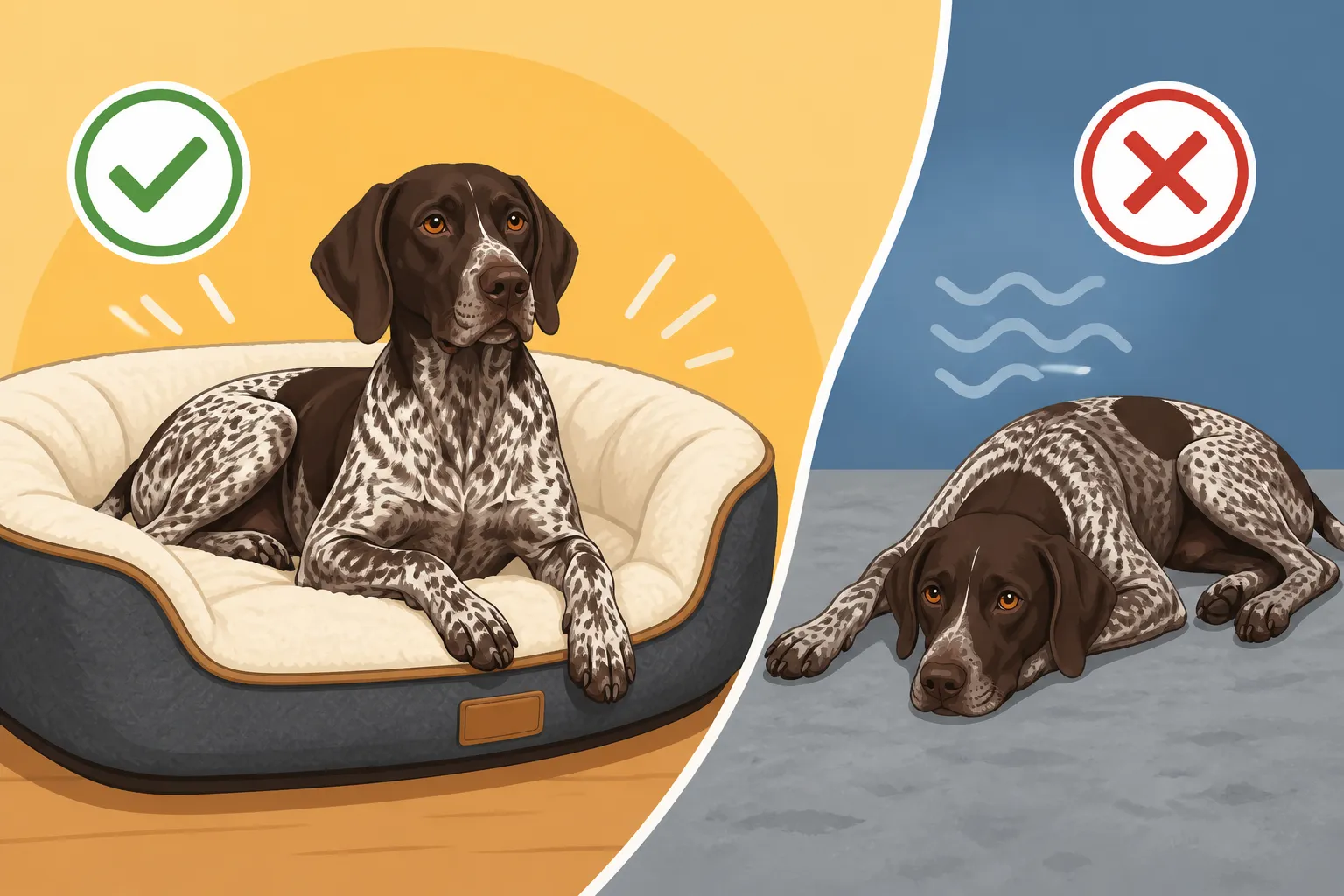
Bedding That Keeps a Shorthair Off Cold Concrete
There's nothing quite like the boundless energy of a German Shorthaired Pointer. They're always on the go, whether it's tearing through a field after a pheasant, splashing through a pond for a retrieve, or just bouncing around the living room. But even the most indefatigable GSP needs a good rest, and that rest shouldn't be on cold, hard concrete. Many of us have kennel runs, garage spaces, or even just tile floors that get chilly, and finding the right bedding to keep your Shorthair comfortable and healthy in these environments is crucial. This guide will walk you through why cold concrete is such a big deal for our lean, athletic companions and what kind of bedding truly makes a difference.
The Chilly Reality: Why Cold Concrete is a Problem for Your German Shorthaired Pointer
It might seem like a small thing, a dog sleeping on a hard floor, but for a German Shorthaired Pointer, cold concrete can lead to real discomfort and long-term health issues. These dogs aren't built with thick, insulating coats like a Northern breed; they're lean, athletic, and have relatively little body fat to protect them from the chill emanating from the ground.
The Physiological Impact of Cold Surfaces
When your German Shorthaired Pointer lies directly on cold concrete, their body heat is continuously wicked away. Think about how quickly a cold drink cools down a hand; the principle is similar. The ground acts as a massive heat sink, drawing warmth from your dog's body. Because GSPs have short, close-lying coats without a dense undercoat, there's very little natural insulation between their skin and the cold surface. This constant heat loss means their bodies have to work harder to maintain a stable core temperature, expending energy that should be used for rest and recovery.
Beyond the immediate chill, lying on a hard, cold surface can lead to stiffness, especially in the joints. After a long day of running, pointing, and retrieving, a GSP's muscles and joints need to relax and repair. Lying on concrete offers no cushion or support, which can exacerbate any existing stiffness or contribute to new aches and pains. You might notice your dog is slower to get up in the morning or takes longer to "warm up" if they've spent the night on a cold, unforgiving surface. This isn't just about feeling a bit stiff; it's about potentially hindering their recovery and overall comfort.
Health Concerns Beyond Just Discomfort
While discomfort is certainly something we want to avoid for our beloved companions, the impact of cold concrete can extend to more serious health concerns. For a breed known for its athleticism and demanding lifestyle, joint health is paramount. Conditions like Arthritis in a German Shorthaired Pointer at Eight can be made significantly worse by regular exposure to cold, hard surfaces. The cold can reduce blood flow to the joints, decreasing flexibility and increasing pain. If your Shorthair is starting to show signs of aging, or already has some joint stiffness, providing proper insulation and support becomes even more critical.
Furthermore, prolonged exposure to cold, damp environments – even if it’s just the damp chill from concrete – can put a strain on their immune system. While a robust GSP is generally hardy, anything that compromises their body's ability to maintain warmth can potentially make them more susceptible to minor illnesses, particularly if they are older or stressed. We often worry about Heat Stroke in a September Shorthair, but the opposite extreme, prolonged chill, also merits attention.
For older German Shorthaired Pointers, the impact is even more pronounced. As dogs age, their circulation can become less efficient, and their ability to regulate body temperature can diminish. They also tend to have less muscle mass and natural padding. An older GSP sleeping on cold concrete will feel the chill more intensely and suffer the consequences more severely than a young, robust dog. It’s important to remember Whether an Old Shorthair Feels the Cold More and plan accordingly. Protecting them from cold surfaces is a simple yet effective way to improve their quality of life as they enter their senior years.
Decoding the Best Bedding: Essential Features for GSP Comfort
Choosing the right bedding for your German Shorthaired Pointer, especially when they might be resting on concrete, isn't just about picking something soft. It's about finding a bed that actively works to insulate, support, and last. There are a few key features that stand out as non-negotiable for our active, lean companions.
Superior Insulation and Loft
The primary goal when placing bedding on cold concrete is to create an effective thermal barrier. This means looking for materials with excellent insulating properties and enough "loft" – or thickness – to elevate your GSP off the cold surface. Think about how a thick sleeping bag keeps you warm on the ground; it’s all about trapped air and a barrier.
Materials like high-density foam, particularly orthopedic or memory foam, excel at this. They don't compress completely under your dog's weight, maintaining a thick layer between your GSP and the concrete. The air pockets within the foam act as insulators, preventing heat transfer. Look for beds that are at least 3-4 inches thick, with some options going up to 6 inches or more for larger or older dogs. A thin mat, while better than nothing, won't provide the necessary insulation for sustained warmth.
Beyond just warmth, the loft also provides crucial support. For an active breed like the GSP, proper support helps cushion their joints, hips, and elbows, which can take a beating during a day of intense activity. Memory foam, for example, conforms to their body, distributing weight evenly and relieving pressure points. This is especially beneficial for adult GSPs and even more so for those approaching The Age a German Shorthaired Pointer Is Called Senior.
Durability and Ease of Cleaning
Let's be realistic: GSPs are not dainty lapdogs. They're rugged, often muddy, sometimes wet, and occasionally prone to "redecorating" with their teeth. Any bedding you choose for your German Shorthaired Pointer needs to stand up to their active lifestyle and be easy to clean.
Look for beds with durable, heavy-duty covers that can withstand scratching, digging, and general wear and tear. Ballistic nylon or tough canvas materials are often good choices. Ideally, the cover should be removable and machine washable. This is paramount, especially if your GSP spends time outdoors or comes in from a hunt damp and a little dirty. Being able to easily strip the cover and toss it in the wash means you can maintain hygiene and freshness without much fuss. Some beds also offer water-resistant or waterproof liners underneath the main cover, which is a fantastic feature for protecting the internal foam from accidents, drool, or wet fur. Searching on Amazon or Chewy for beds with "machine washable cover" and "water-resistant liner" will narrow down your options significantly.
While "chew-proof" is a strong claim and few things are truly indestructible for a determined GSP, some beds are designed with more robust seams and materials that make them harder to destroy. If your Shorthair is a known bed shredder, investing in one of these tougher options might save you money in the long run.
Non-Slip Base and Appropriate Sizing
Imagine your enthusiastic GSP launching themselves onto their bed after a long run, only for the bed to slide across the concrete floor. Not only is it annoying, but it could lead to an injury. A good bed should have a non-slip bottom, often made from rubberized fabric or silicone dots, to keep it securely in place, even during energetic greetings or happy tail wags. This is especially important on smooth concrete surfaces.
Equally important is ensuring the bed is appropriately sized for your German Shorthaired Pointer. They are not small dogs, and they love to stretch out. A bed that's too small will force them to curl up uncomfortably, negating many of the benefits of proper bedding. Your GSP should be able to fully extend their body, head to tail, on the sleeping surface without any limbs hanging off. For a male GSP, who might be up to 25 inches at the shoulder, this means a generous sleeping area. Measure your dog from nose to tail when they are fully stretched out and add a few extra inches to ensure ample room. Whether you're looking at Ollie's custom options or browsing a general pet supply retailer, always check the dimensions carefully against your dog's size.
Exploring Bedding Types and Materials for Optimal Insulation
When it comes to keeping your German Shorthaired Pointer warm and comfortable on cold concrete, not all beds are created equal. Different types and materials offer unique advantages. Understanding these can help you make the best choice for your particular GSP and living situation.
Orthopedic and Memory Foam Beds
These types of beds are often considered the gold standard for active and aging dogs alike, and for good reason. The core benefit of orthopedic and memory foam is the exceptional support and pressure relief they provide. High-density orthopedic foam offers firm, consistent support, keeping your GSP's spine aligned and distributing their weight evenly. Memory foam takes it a step further, conforming precisely to your dog's body contours, cradling their joints and muscles.
For German Shorthaired Pointers, whose athleticism puts significant stress on their joints, this kind of support is invaluable. It helps prevent soreness after a hard day in the field and is particularly crucial for alleviating discomfort in dogs with existing joint conditions such as hip or elbow dysplasia, or general Arthritis in a German Shorthaired Pointer at Eight. The thickness of these beds is also a major plus for insulation. Most quality orthopedic beds are several inches thick, creating a substantial barrier against the cold concrete. Look for beds with at least 4-6 inches of foam for optimal insulation and support. Many reputable brands offer excellent orthopedic beds that you can find readily on Chewy or by searching for "orthopedic dog bed GSP" on Amazon.
Elevated Beds and Cot-Style Sleepers
Elevated beds, also known as cot-style sleepers, are a fantastic solution specifically for cold or damp concrete surfaces because they entirely remove your dog from the ground. These beds feature a sturdy frame (often metal or heavy-duty plastic) with a suspended fabric sleeping surface. The key here is the air circulation underneath the bed. This gap prevents the cold from radiating directly into your dog's body.
While they don't offer the plush cushioning of a foam bed, the benefit of being completely off the ground for thermal regulation is immense. They are also incredibly durable, often made with heavy-duty mesh or canvas that is resistant to chewing and easy to clean – just wipe down the fabric or hose it off. This makes them perfect for outdoor kennels, garages, or even just hot summer days when you want to promote airflow. For colder months, you can easily add a thick blanket or a self-warming mat on top of the elevated bed for extra insulation. This hybrid approach gives you the best of both worlds: elevation from the cold and soft, warm padding. Consider them for The Kennel a German Shorthaired Pointer Needs if it's placed on concrete.
Insulated or Thermal Beds
Some beds are specifically designed with thermal properties to help keep your GSP warm. These might incorporate materials that reflect your dog's body heat back to them, or have layers of insulating fill.
- Self-warming beds: These often contain a layer of Mylar or similar material that reflects the dog's own body heat. They don't require electricity and can be quite effective, especially when paired with a good base foam.
- Heated beds: These come in two main types:
- Low-wattage electric beds: These plug in and provide gentle, consistent warmth. They are excellent for older dogs, those recovering from injury, or GSPs who are particularly sensitive to cold. Ensure any electric bed you choose is safety-certified for pets and has chew-resistant cords if your dog is prone to chewing.
- Microwaveable core beds: These have removable cores that you heat in a microwave, offering warmth for several hours. They are good for short-term warmth but require reheating.
When choosing an insulated bed, ensure it still offers adequate padding to lift your GSP off the concrete. Often, these thermal features are built into orthopedic or plush beds, giving you both warmth and comfort.
Heavy-Duty Crate Pads and Mats
If your German Shorthaired Pointer spends time in a crate, especially one placed on a concrete floor, a heavy-duty crate pad or mat is essential. These are typically simpler in design than full beds but are specifically made to fit within a crate and provide a layer of insulation and comfort.
Look for pads that are at least 2-3 inches thick, made from dense foam or a robust, insulated material. Fleece-topped pads with a sturdy foam core are common. Again, durability and washability are key. Many brands, including those found on Chewy and Amazon, offer crate pads with removable, machine-washable covers and often waterproof liners. While a thin, fluffy blanket might seem soft, it won't provide the necessary barrier against cold concrete. A good crate pad, combined with an The Structure a German Shorthaired Pointer Needs Daily including proper rest, can make a huge difference in your GSP's comfort.
| Bed Type | Key Feature | Insulation Quality | Durability | Best Use |
|---|---|---|---|---|
| Orthopedic/Memory Foam | Body-conforming support | High | High | Indoor, aging dogs, active dogs, concrete floors |
| Elevated/Cot-Style | Off-the-ground design | Excellent | Very High | Outdoor kennels, garages, warm climates, concrete |
| Insulated/Thermal | Heat reflection/generation | High (passive/active) | Medium-High | Indoor, cold climates, older dogs, concrete floors |
| Heavy-Duty Crate Pad | Dense, fitted for crates | Medium-High | Medium-High | Crates on concrete, travel |
Practical Considerations: Placing and Maintaining Your GSP's Warm Retreat
Once you've selected the perfect bedding to keep your German Shorthaired Pointer off that cold concrete, a few practical considerations will ensure maximum comfort and longevity. It's not just about the bed itself, but how you integrate it into your GSP's daily life and how you care for it.
Strategic Placement and Layering
Where you place the bed matters just as much as what kind of bed it is. Even the best insulated bed can't entirely combat a persistent draft. Position your GSP's sleeping area away from exterior doors, drafty windows, or open garage bays that let in cold air. If your dog sleeps in a kennel, consider using solid-sided kennel covers or panels to block wind and retain warmth.
For GSPs who love to burrow or appreciate extra warmth, don't hesitate to add extra layers. A soft, washable fleece blanket or two on top of their primary bed can make a world of difference. Many Shorthairs enjoy nestling into blankets, creating their own cozy den. This is particularly useful in unheated spaces like garages or outdoor dog houses, where you might want to consider Bedding That Keeps a Shorthair Off Cold Concrete as the base, then layering with a thick, self-warming blanket. Just ensure any blankets are safe, without loose threads that could be a choking hazard.
If your GSP struggles with anxiety when alone, creating a comfortable, secure sleeping spot can help. Building a Shorthair's Tolerance for Being Alone often starts with a comforting space. A cozy bed in a quiet corner can be a sanctuary.
Routine Cleaning for Health and Longevity
GSPs are active, and even the cleanest house dog can bring in dirt, shed hair, and oils. Regular cleaning of their bedding is vital not just for hygiene, but for maintaining the bed's insulating properties and overall lifespan. Dirt and hair can compress foam and reduce its effectiveness.
- Weekly Cover Wash: If your bed has a removable, machine-washable cover (which is highly recommended), aim to wash it at least once a week, or more frequently if your GSP is particularly muddy, wet, or prone to accidents. Use a gentle, pet-safe detergent and air dry or tumble dry on low to protect the fabric and any waterproof backing.
- Spot Cleaning: For minor spills or muddy paw prints between washes, spot clean the cover with a damp cloth and a mild soap.
- Vacuuming: Regularly vacuum the bed (with the cover on) to remove loose hair and dander. This also helps prevent pet hair from building up in your washing machine.
- Deep Cleaning the Core: If the bed has an internal foam core, check the manufacturer's instructions for cleaning. Some can be spot cleaned; others may require a gentle wipe down with a damp cloth and thorough air drying. Ensure the foam is completely dry before replacing the cover to prevent mold or mildew.
- Dealing with Wet Dogs: If your GSP comes in soaked, even from a quick swim, make sure they are thoroughly towel-dried before they settle onto their bed. Excess moisture can seep into the foam, leading to odors and potential mildew. You might even want to designate a "drying spot" with an old towel before they get to their main bed.
Consistent cleaning not only keeps your home smelling fresh but also helps to manage potential allergens and skin irritations for your GSP. Keeping an Old Shorthair Comfortable at Grooming Time also includes ensuring their sleeping area is pristine.
When to Upgrade or Replace Bedding
Even the best bedding won't last forever. Over time, foam can compress and lose its loft, covers can wear thin, and insulation can become less effective. Pay attention to the signs that your GSP's bed needs an upgrade or replacement:
- Loss of Loft: If the bed feels flat or thin, and your GSP is no longer adequately elevated from the concrete, it's time for a new one. The insulating barrier is compromised.
- Visible Wear and Tear: Rips, tears, or excessive fraying on the cover not only look bad but can also make the bed less comfortable and harder to clean.
- Persistent Odor: If an odor persists even after cleaning the cover, it might mean the core foam has absorbed smells and moisture, and it's difficult to truly sanitize.
- Your Dog Avoids It: Sometimes, your GSP will tell you. If they start choosing the bare floor or another less-ideal spot over their bed, it's a strong indicator that the bed is no longer comfortable or supportive.
- Changes in Your Dog's Needs: A bed that was perfect for a young, healthy GSP might not be sufficient for an older dog developing Arthritis in a German Shorthaired Pointer at Eight or a puppy that is rapidly growing. How Much Exercise a Shorthair Puppy Should Get is often balanced with adequate rest, and their bed needs to keep up with their changing body. As your dog ages or their health needs evolve, you might need to upgrade to a more supportive orthopedic bed or one with active warming elements.
Investing in quality bedding and replacing it when necessary is an integral part of responsible German Shorthaired Pointer ownership. It contributes significantly to their overall health, comfort, and ability to rest and recover, ensuring they're ready for their next adventure.
Disclaimer
This article is for general informational purposes only and does not constitute professional advice. Laws, prices and regulations vary by location and change over time. Consult a qualified professional for guidance on your specific situation.