The Chest and Ribcage a Shorthair Standard Describes
It's easy to look at a German Shorthaired Pointer and just see that sleek, powerful athlete, but a deeper dive into their anatomy, specifically their chest and ribcage, reveals a crucial blueprint for their performance and well-being. Many new GSP owners, or even seasoned ones, might not fully appreciate how much thought went into designing this breed for demanding fieldwork, and how the "standard" isn't just about looks, but about hard-working function. This guide will walk you through the specifics of what the German Shorthaired Pointer breed standard describes for their chest and ribcage, explaining why these structural elements are so vital for a dog meant to conquer any terrain, all day long.
Why the Chest and Ribcage Matter So Much for a GSP
When you consider a German Shorthaired Pointer, you're not just looking at a pretty face; you're looking at a carefully engineered sporting machine. Every aspect of their physical structure, especially the chest and ribcage, is designed with a purpose, directly contributing to their ability to perform the rigorous tasks asked of them in the field. It’s not about aesthetics alone, but about ensuring the dog can breathe, run, and endure without undue strain.
Function Over Form: The Working Dog's Anatomy
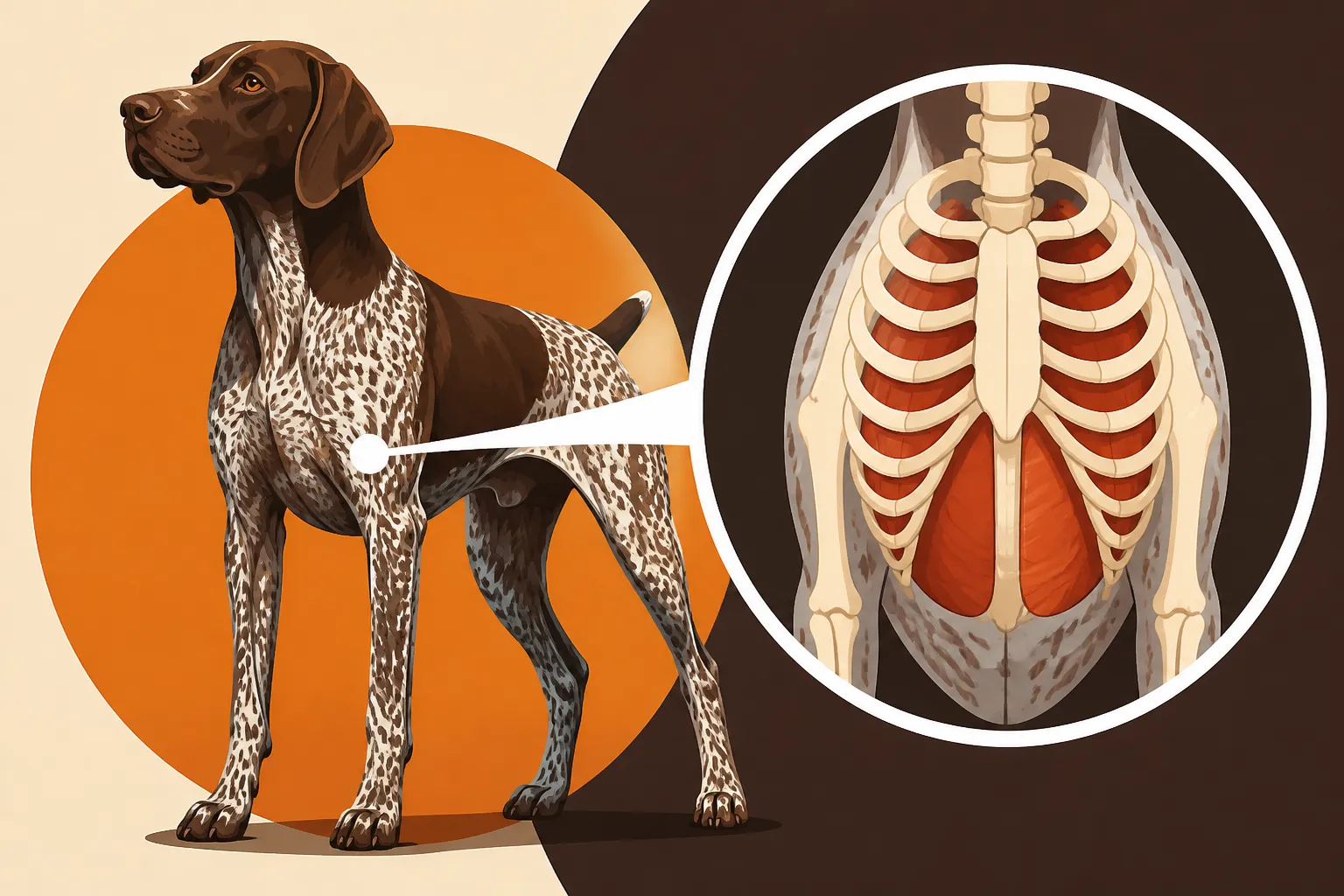
Imagine a GSP tirelessly quartering a field, bursting through thick cover, or making a strong retrieve from icy water. None of this is possible without a robust and correctly formed chest and ribcage. These aren't just aesthetic features; they are the protective housing for vital organs like the heart and lungs. A well-sprung and deep chest provides ample room for these organs to expand fully, allowing for maximum oxygen intake and efficient blood circulation. This translates directly into stamina and endurance, qualities a GSP needs in spades.
Think of it this way: a marathon runner wouldn't thrive with a restrictive corset, right? Similarly, a GSP needs an unrestricted, voluminous chest cavity to power through miles of challenging terrain. A GSP with a poorly developed chest might tire quickly, struggle to recover, or even be more susceptible to overheating because their body can't efficiently process oxygen and regulate temperature. The breed was developed to be versatile, capable of pointing, retrieving, and tracking. To excel at all three, they need a "powerhouse" engine, and that starts with their chest. This physical robustness is key to How Long a Working German Shorthaired Pointer Stays Sound.
The Breed Standard's Ideal: What Judges Look For
Breed standards are like detailed instruction manuals for what an ideal specimen of a breed should look like and how it should be built. For the German Shorthaired Pointer, the standard emphasizes a strong, well-muscled body, and the chest and ribcage are central to this description. Judges aren't just looking for "pretty"; they're evaluating functional conformation. They want to see a dog that looks like it can work all day, every day, without falling apart.
The standard guides breeders in selecting dogs that will pass on desirable traits, ensuring the breed retains its working prowess. It's a testament to the idea that form follows function. When the standard describes a certain depth or spring of rib, it’s not an arbitrary measurement. It's because those proportions have been proven, over generations, to contribute to a dog’s athletic ability and resilience in the face of demanding physical activity. A breeder striving for the ideal GSP will carefully consider these aspects, understanding their direct impact on the dog's future in the field or as an active companion. You can delve deeper into the overall structure by reading The Size and Build the Shorthair Standard Asks For.
Deconstructing the German Shorthaired Pointer's Chest
The chest of a German Shorthaired Pointer is more than just a single structure; it's a complex arrangement of bone and muscle designed for peak performance. Understanding its various components, as laid out by the breed standard, helps appreciate the careful thought put into this versatile hunting dog.
Depth and Reach: The Forechest and Brisket
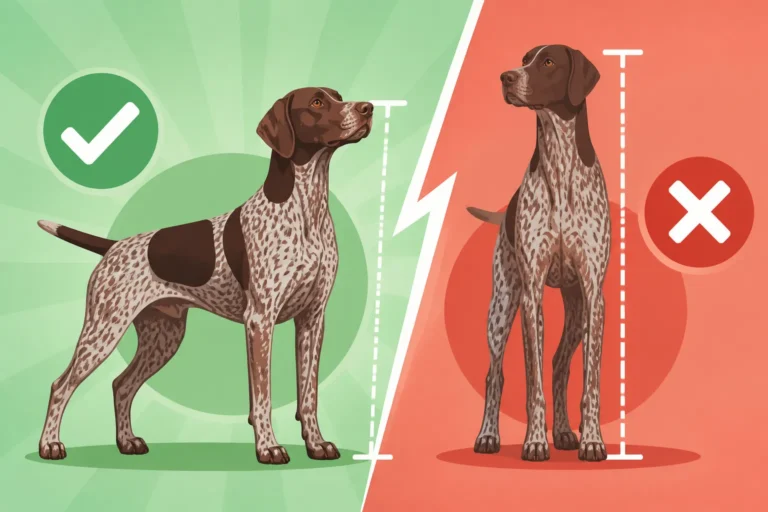
When the standard talks about chest depth, it refers to how far down the chest extends, ideally reaching at least to the elbows. This isn't just a measurement; it's about providing generous space for the heart and lungs. A deep chest allows for large, healthy lungs to inflate fully, crucial for oxygen exchange during intense exercise. Imagine a dog running for hours through tall grass, needing every breath to sustain its drive. A shallow chest would simply not allow for this kind of sustained effort.
The forechest, viewed from the front, should appear well-developed and rounded, not narrow or pinched. From the side, you want to see a prominent sternum, clearly visible ahead of the shoulder assembly. This "pro-sternum" or forechest gives the dog a balanced appearance and allows for proper layback of the shoulder blade, which is vital for efficient, far-reaching movement. Without adequate forechest, the shoulder blades are often too far forward, resulting in a restricted gait, making it harder for the dog to achieve The Movement a German Shorthaired Pointer Should Show. For puppies, proper nutrition, perhaps even specialized growth formulas you can find on sites like Chewy, are crucial for supporting this structural development early on.
Width and Capacity: The Spring of Ribs
The "spring of rib" refers to how the ribs curve outwards from the spine. The GSP standard calls for ribs that are well-sprung, meaning they have a good, moderate curve, but not "barrel-chested." A barrel chest, where the ribs are excessively rounded, can actually hinder the dog's flexibility and make movement less efficient, especially when turning quickly in dense cover. Conversely, flat-sided ribs restrict lung capacity and give the dog a narrow, less powerful appearance.
The ideal spring of rib creates a spacious, well-rounded ribcage that gradually tapers towards the sternum. This provides maximum volume for the internal organs while maintaining an athletic shape. It’s a delicate balance; too much or too little curvature can compromise the dog’s ability to work effectively. A GSP needs to be able to twist and turn, jump over obstacles, and navigate tight spots. The correct spring of rib allows for this agility while also offering robust protection to the vital organs. When you feel along your GSP's side, you should be able to feel their ribs without them being overly prominent or completely hidden under fat, aiming for The Body Condition a Field Shorthair Should Carry. Many owners find that a well-fitting harness, which can be easily sourced from retailers like Chewy, properly distributes pressure across this vital area without restricting movement during walks or training.
Understanding the Ribcage and its Connection to the Underline
Beyond just the front of the chest, the entire ribcage and how it integrates with the dog’s backend are crucial for a GSP’s overall functional build. It’s all about creating a cohesive, powerful, and agile body.
The Ribcage Extension: Length and Tuck-Up
The standard dictates that the ribs should extend well back, but not so far as to make the loin appear short. The loin is the area between the last rib and the pelvis, and a GSP needs a moderately long and strong loin for flexibility and power. If the ribcage is too short, the loin becomes too long and potentially weak, which can impact the dog's ability to drive forward powerfully with its hindquarters. Conversely, if the ribs extend too far back, the dog might appear heavy-bodied and lack the desired tuck-up.
The "tuck-up" refers to the upward curve of the underline from the end of the ribcage to the pelvis. A moderate tuck-up is desired in a GSP, giving them an athletic, streamlined appearance. This isn't just for looks; it allows for greater freedom of movement in the hindquarters and contributes to their overall speed and agility. A GSP isn't built like a bulldog; they are light on their feet for their size, capable of swift directional changes. A good tuck-up is part of that equation, allowing them to coil and spring. For a hard-working dog, maintaining this muscular condition is essential, supported by a diet rich in appropriate nutrients, which can be explored on platforms like Chewy that offer a wide range of performance dog foods and supplements.
Balancing the Proportions: A Symphony of Structure
Ultimately, the chest and ribcage, while important on their own, must exist in harmony with the rest of the German Shorthaired Pointer’s anatomy. The breed standard emphasizes balance and proportion because an imbalance in one area can negatively impact the entire structure and, consequently, the dog's ability to perform. The deep, well-sprung chest needs to be complemented by strong, well-angled shoulders, powerful hindquarters, and a strong topline.
Think of it as an intricate machine where all parts must work together seamlessly. If the chest is deep but the shoulders are too straight, the dog won't have the reach it needs. If the ribcage is too narrow, it might compromise the power of the hindquarters. The GSP's build is a testament to efficient design, allowing them to cover ground effortlessly, point staunchly, and retrieve strongly. Every angle, every curve, every proportion serves a purpose in creating a dog that is both beautiful and supremely functional. This holistic structural integrity is what allows a GSP to thrive, whether they are running a field trial or simply enjoying a long hike with their family. Understanding these nuances helps appreciate the breed as a whole, from their powerful gait to their incredible endurance.
Common Faults and Their Impact on a GSP's Performance
Understanding the ideal chest and ribcage is one thing, but recognizing common deviations from the standard is equally important, especially when considering the health and working potential of a German Shorthaired Pointer. These faults aren't just cosmetic; they can directly impact a dog's stamina, agility, and overall soundness.
Shallow or Narrow Chest: Compromised Endurance
A shallow chest, one that doesn't extend deep enough, particularly not reaching the elbows, is a significant fault in a GSP. This deficiency means less internal space for the heart and lungs to operate optimally. Imagine trying to run a sprint with a tight belt around your abdomen; your breathing would be restricted, and you'd tire quickly. The same applies to a GSP. A shallow chest limits lung capacity, making it harder for the dog to take in enough oxygen during sustained exercise. This can lead to decreased stamina, quicker fatigue, and slower recovery times after a long day in the field.
Similarly, a narrow chest, lacking adequate width and development in the forechest, also restricts internal space and can lead to a "pinched" appearance. Dogs with narrow chests often have shoulders that are too close together, which can hinder proper gait and cause them to "paddle" or move inefficiently. Over time, this inefficiency can lead to increased wear and tear on joints and muscles, impacting the dog's longevity in the field. This can contribute to issues that compromise their ability to hunt, potentially leading to injuries such as Torn Cruciates in a Field Bred German Shorthaired Pointer. When selecting a GSP puppy, or evaluating an adult, paying attention to the chest depth and width can give you valuable insight into their potential for endurance and a healthy working life.
Barrel or Flat Ribs: Sacrificing Agility and Efficiency
Just as a shallow or narrow chest is detrimental, so too are extremes in the spring of rib. A "barrel-chested" GSP, with ribs that are too rounded and wide, might appear robust, but this structure can actually reduce flexibility. This excessive width can make it difficult for the dog to maneuver quickly through dense cover, navigate tight spaces, or make sharp turns. Imagine trying to run through a thicket with a wide, inflexible barrel strapped to your torso; it would slow you down and make you clumsy. For a breed that needs to be agile and responsive to scent and bird movement, this is a distinct disadvantage.
On the other end of the spectrum are "flat-sided" ribs, which lack the proper curve. A flat-sided dog appears slab-sided and narrow when viewed from above or behind. While a narrower profile might seem advantageous for moving through brush, flat ribs significantly reduce the volume of the chest cavity, again impacting lung and heart capacity. Furthermore, flat ribs can give the dog a less athletic, almost delicate appearance, which is contrary to the GSP's powerful build. Both barrel and flat ribs deviate from the ideal, balanced structure that allows the GSP to perform its demanding tasks with grace, power, and efficiency. The right harness for your GSP, whether for everyday walks or specific activities, should accommodate their well-sprung ribs without rubbing or restricting movement. You can find many options designed for active breeds on sites like Chewy, ensuring a comfortable fit for any GSP build. How a Field Bred Shorthair Differs in Build often highlights these nuances in practical application.
| Chest/Ribcage Trait | Ideal GSP Standard | Common Fault | Impact on Performance |
|---|---|---|---|
| Chest Depth | Reaches at least to the elbows | Shallow (above elbows) | Reduced lung/heart capacity, decreased stamina, quicker fatigue |
| Forechest Prominence | Prominent sternum ahead of shoulder | Flat or recessed | Restricted shoulder movement, inefficient gait, reduced reach |
| Spring of Rib | Well-sprung, oval, not barrel or flat | Barrel-chested (too round) | Reduced flexibility, hindered agility in cover, clumsy movement |
| Spring of Rib | Well-sprung, oval, not barrel or flat | Flat-sided (too narrow) | Restricted lung/heart capacity, less powerful appearance |
| Ribcage Length | Extends well back, moderate loin | Too short (long loin) | Weak loin, reduced power from hindquarters, imbalance |
| Underline | Moderate tuck-up | Flat or overly tucked | Compromised agility, reduced power in hindquarters |
Disclaimer
This article is for general informational purposes only and does not constitute professional advice. Laws, prices and regulations vary by location and change over time. Consult a qualified professional for guidance on your specific situation.