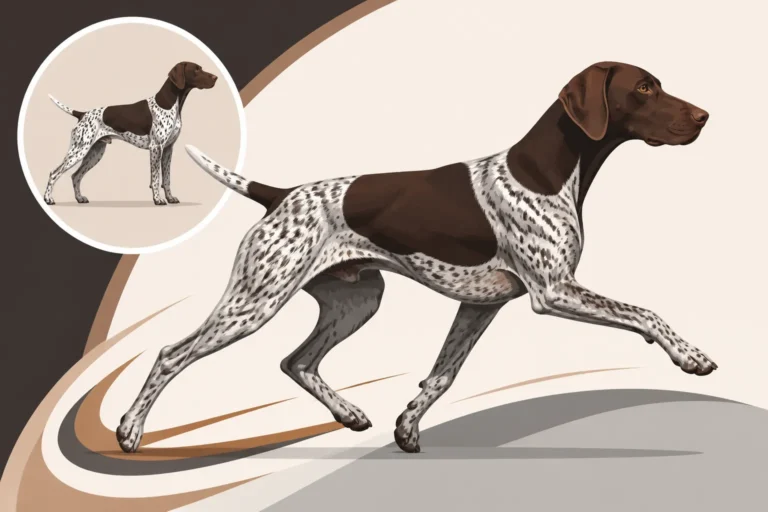
Why Black German Shorthaired Pointers Were Once Refused
If you're new to the world of German Shorthaired Pointers, you might be surprised to learn that the sleek, distinctive black coat that many GSPs proudly wear today wasn't always accepted. For a long time, black-coated Shorthairs faced an uphill battle for recognition, considered by some to be "impure" or outside the breed's foundational vision. This guide delves into the fascinating history behind why black German Shorthaired Pointers were once refused, the reasons for this historical prejudice, and how their place in the breed has changed over time.
The Early Vision: When Liver Ruled the Roost
Imagine the rolling hills and dense forests of 19th-century Germany, where breeders were meticulously crafting a versatile hunting companion. The German Shorthaired Pointer, or Deutsch Kurzhaar as it was known in its homeland, was designed to do it all: point upland game, retrieve fallen birds from land and water, and even track wounded deer. This was a dog bred for function, resilience, and an unwavering drive in the field. But even with such a strong emphasis on working ability, aesthetics—particularly coat color—played a significant role in how the breed was perceived and standardized.
The German Origins and Early Vision
The earliest breeders of the German Shorthaired Pointer had a very specific ideal in mind. They drew upon a lineage of various German bird dogs, the old Spanish Pointer, and later infusions of English Pointer blood to create a canine athlete that excelled across diverse hunting terrains. This wasn't about creating a "pretty" dog for the show ring initially; it was about utility. However, traditional preferences for working dogs in Germany often leaned towards earth tones, browns, and liver. These colors were thought to blend well with the natural environment, offering a subtle camouflage that was practical for hunting. The German Kennels the Shorthair Was Built In were focused on developing a dog that embodied an ideal blend of scenting ability, stamina, and trainability, and the color liver became strongly associated with this foundational type.
As the breed coalesced, the prevailing vision for the Deutsch Kurzhaar prominently featured liver and liver/white coats. These were the colors that adorned the dogs carefully selected for breeding, the ones proving their worth in the field. When Prince Albrecht and the First Shorthair Stud Book was established, meticulously documenting the lineage and characteristics of these pioneering GSPs, liver was the dominant and most celebrated color. It wasn't just a preference; it became intertwined with the very identity of the emergent breed, almost a visual shorthand for "authentic German Shorthaired Pointer."
"Purity" and the Exclusion of Black
So, if versatility was the primary goal, why the hang-up on black? The resistance to black coats stemmed from a deep-seated concern about "purity" and the fear of unwanted outcrossings. Early in the breed's development, it was widely believed by some influential breeders and kennel clubs that a black coat indicated a recent cross with other breeds, such as the Black Pointer, or perhaps even breeds that weren't considered "pure" German hunting dogs. In an era before genetic testing, visual cues were paramount, and any deviation from the established color palette was viewed with suspicion.
This wasn't merely aesthetic snobbery. The idea was that if a dog carried black pigment, it must have inherited it from an "outside" source, thereby compromising the carefully cultivated traits of the German Shorthaired Pointer. Such a belief, while scientifically unfounded today given the natural genetic variations within dog breeds, was powerful enough to influence breed standards and discourage the breeding of black-coated dogs. Breeders striving for recognition and adherence to the nascent breed ideal often avoided black offspring, and certainly wouldn't highlight them. This created a cycle where black was seen as undesirable, further solidifying its exclusion from official standards in many places for a considerable time. This historical context helps us understand why the question, Whether a Black Shorthair Is Accepted in Germany, was once a complex one, even if today it has a much simpler answer.
The Journey Towards Acceptance: A Changing Standard
As breeds mature and expand globally, standards often evolve. The German Shorthaired Pointer was no exception, particularly as it gained popularity outside of Germany. What might have been a strict, almost insular, view in its country of origin began to broaden as breeders in other nations embraced the dog's exceptional abilities, regardless of a nuanced color variation. The pressure to acknowledge the full genetic spectrum of the breed, combined with the undeniable quality of black-coated individuals, eventually led to significant changes in official recognition.
The American Kennel Club's Stance Shift
The German Shorthaired Pointer made its way to the United States and was officially recognized by the American Kennel Club (AKC) in 1930. The 1930 AKC Entry of the German Shorthaired Pointer marked a significant milestone for the breed, bringing it into the mainstream of American dog sports and companionship. However, even with this recognition, the early AKC standard largely mirrored the German preference for liver and liver/white coats, often explicitly stating that black was an undesirable color or even a disqualification.
Over time, American breeders and enthusiasts recognized the inherent quality and working ability of black-coated GSPs. They understood that a dog's hunting prowess, temperament, and health were not dictated by the color of its coat. As more black German Shorthaired Pointers proved themselves in the field and in performance events, the illogical nature of their exclusion became increasingly apparent. Eventually, through persistent advocacy and a growing understanding of canine genetics, the AKC's standard was revised to include black as an acceptable color. This shift reflected a more inclusive and scientifically informed approach, recognizing that black was a natural and valid color expression within the breed, rather than a mark of impurity. This pivotal change paved the way for Solid Black and Black Roan German Shorthaired Pointers to compete and be celebrated fully.
Regional Differences in Acceptance
While the AKC eventually embraced black GSPs, the journey wasn't uniform across all regions or kennel clubs. In Germany, where the breed originated and where the Deutsch Kurzhaar is still meticulously managed, the acceptance of black was, for a long time, more rigid. The German Verband für das Deutsche Hundewesen (VDH) and the breed clubs within it maintained stricter standards based on the original vision, often explicitly disallowing black coats or considering them a fault. This highlights a common dynamic in breed development: the country of origin often holds onto its foundational ideals with greater tenacity than countries where the breed is later adopted and adapted.
However, even within Germany, discussions and debates about coat color have occurred. As genetics became better understood, it was harder to argue against black as an "impure" color. Nevertheless, traditional preferences and the weight of history can be slow to change. In contrast, other European countries or regions might have adopted the breed with slightly different interpretations of the standard, or were quicker to accept black, influenced by the successes of black GSPs in performance events. This created a patchwork of acceptance levels, where a black GSP might be fully legitimate in one country but considered non-standard in another. These regional nuances underscore the complex interplay of history, culture, and science in shaping breed standards. It's a testament to the dedication of breeders and enthusiasts worldwide that the overall trend has been towards greater inclusivity, focusing on the dog's overall health and ability rather than superficial traits like coat color.
The Science of Coat Color: Why Black is Natural
To truly understand why black German Shorthaired Pointers were once refused, and why that refusal was ultimately challenged, it helps to grasp the basic genetics behind their coat color. It's not about secret outcrosses or impure lines; it's about common canine genetics that dictate pigment production. Once this science became more widely understood, the arguments against black coats began to unravel.
The B/b Locus Explained
At the heart of GSP coat color lies a gene locus known as the B/b locus. This locus determines whether a dog will have black pigment or liver (brown) pigment. It's a simple, two-allele system:
- B (dominant allele): Produces black pigment.
- b (recessive allele): Produces liver (brown) pigment.
Every dog inherits two alleles for this gene, one from each parent.
- BB genotype: The dog will be black.
- Bb genotype: The dog will be black, but carries the gene for liver.
- bb genotype: The dog will be liver.
This means that a black German Shorthaired Pointer can be just as "pure" as a liver one. If two GSPs carry the recessive 'b' allele (meaning they are Bb, or black but carrying liver), they can produce liver puppies (bb) and black puppies (BB or Bb) in the same litter. Conversely, two liver dogs (bb) can only produce liver puppies (bb), because they don't have the dominant B allele to pass on. The presence of black, therefore, is simply a natural genetic variation, not an indicator of an outcross. This understanding helped to dismantle the outdated notions of "purity" tied to liver coloration.
Understanding Ticking and Roan
Beyond the base color of black or liver, German Shorthaired Pointers also exhibit various patterns, primarily ticking and roan. These patterns are controlled by separate genes that interact with the base color. Ticking refers to small, distinct colored spots or flecks on white areas, while roan gives a more blended, salt-and-pepper appearance where colored hairs are interspersed with white hairs. The Difference Between Ticked and Roan on a Shorthair is important to appreciate the full spectrum of GSP coats.
For instance, a GSP with a black base color might display "black ticked" markings on its white areas, or "black roan" if the black hairs are more evenly distributed with white. Similarly, a liver dog can be "liver ticked" or "liver roan." The genes for ticking and roan are independent of the B/b locus, meaning they can express themselves on either a black or a liver background.
Here's a simplified breakdown of how coat colors and patterns combine:
| Base Color | Pattern Gene Present | Resulting Coat Description |
|---|---|---|
| Liver | Solid | Solid Liver |
| Liver | White & Ticked | Liver and White Ticked |
| Liver | White & Roan | Liver Roan |
| Black | Solid | Solid Black (less common) |
| Black | White & Ticked | Black and White Ticked |
| Black | White & Roan | Black Roan |
This table clearly shows that black, with its various patterns, is a natural and expected outcome of GSP genetics. The old arguments against black were based on a lack of scientific understanding, rather than any true genetic impurity. Modern breeders, armed with this knowledge, can confidently breed and register black German Shorthaired Pointers, knowing they are just as authentic and capable as their liver-coated counterparts.
Black German Shorthaired Pointers Today: Full Acceptance
Today, the landscape for black German Shorthaired Pointers is vastly different. The outdated prejudices have largely faded, replaced by a widespread understanding of canine genetics and a recognition of quality regardless of coat color. Black GSPs are celebrated for all the same reasons as their liver-coated relatives: their intelligence, athleticism, loyalty, and undeniable charm.
Modern Acceptance and Performance
In many parts of the world, including the United States under the AKC, black German Shorthaired Pointers are fully accepted. They compete in conformation shows, excel in field trials, hunt tests, agility, obedience, and are beloved family companions. You’ll see them gracing the covers of magazines, winning top honors, and working tirelessly in the field. This widespread acceptance means that a black coat is now simply another beautiful variation of the breed, without any stigma attached. Their color has no bearing on their pointing instinct, their retrieve drive, their intelligence, or their robust health.
When you're looking for a German Shorthaired Pointer puppy today, whether from a breeder or a rescue organization, color is a matter of personal preference, not a judgment of quality or lineage. You can find beautiful Solid Black and Black Roan German Shorthaired Pointers with excellent pedigrees and proven working ability. Resources like Chewy, for example, cater to all GSP owners, offering everything from high-performance kibble to durable training gear, recognizing that a GSP's needs are universal regardless of its beautiful coat color.
Care Considerations for Darker Coats
While a black coat doesn't change the fundamental care requirements of a German Shorthaired Pointer, there are minor considerations, just as there are for any color. Darker coats tend to absorb more sunlight, which can make them feel warmer in direct sun. For a breed as energetic and prone to overheating as the GSP, this is something to be mindful of during hot weather, especially if your dog is working hard in the field. Providing ample shade and water is always critical, but perhaps even more so for a black-coated dog on a scorching day.
Conversely, a black coat can offer a bit more camouflage in dense cover or low light conditions, which some hunters appreciate. Beyond these minor points, the care for a black GSP is identical to that of any other color. They still need robust exercise—likely Ninety Minutes of Real Exercise for a Shorthair daily—a high-quality diet, regular veterinary check-ups, and consistent training. Their short, dense coat is relatively easy to maintain, shedding moderately but typically not requiring extensive grooming. Whether you're purchasing grooming supplies, a new bed, or a specialized food for sensitive stomachs from a retailer like Chewy, the color of your GSP will never be a barrier to finding the best products for their health and happiness. The most important thing is that the dog is healthy, well-socialized, and comes from responsible breeding, irrespective of the color.
Disclaimer
This article is for general informational purposes only and does not constitute professional advice. Laws, prices and regulations vary by location and change over time. Consult a qualified professional for guidance on your specific situation.