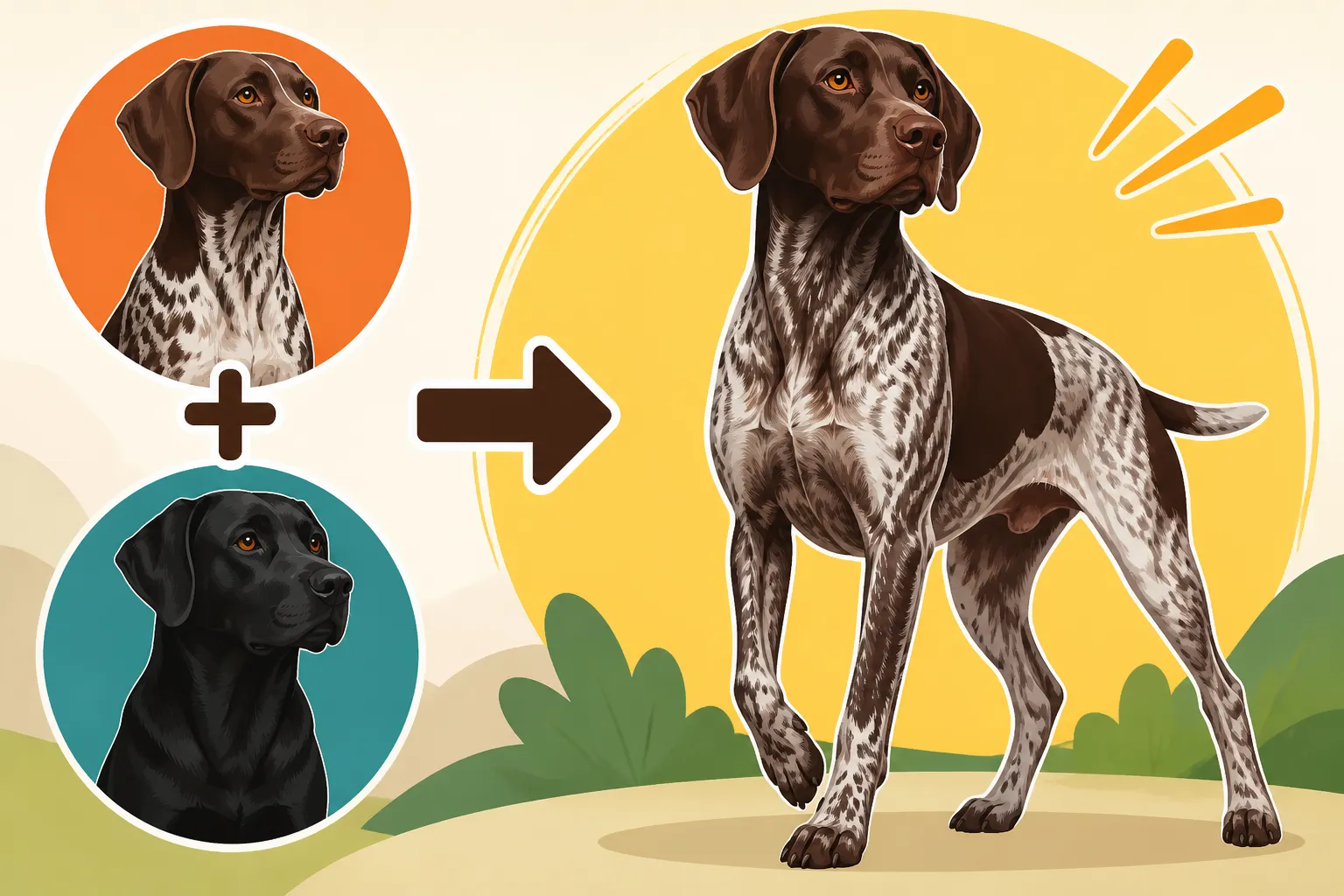
What a Shorthair Crossed With a Lab Becomes
A German Shorthaired Pointer crossed with a Labrador Retriever may look like a familiar sporting dog, but the mix can be a lot to manage if you expect a predictable blend of two breeds. The result may inherit a Lab’s retrieving enthusiasm, a Shorthair’s pointing instincts, both breeds’ athleticism—or a combination that changes as the dog grows. Here’s what prospective owners should realistically prepare for.
What a German Shorthaired Pointer Lab mix may look and act like
Appearance and temperament can vary widely
There is no single appearance or personality that every German Shorthaired Pointer Lab mix shares. One puppy may have a short, close coat, a broad Lab-like head, and a Shorthair’s lean build. Another from the same litter may be heavier, have longer ears, or show more of the Shorthair’s narrow, athletic outline. Coat colors and markings can vary too, depending on the parents’ genetics.
Even the parents may not give you a neat preview. A cross between a large, high-drive field Lab and a hard-running field Shorthair could produce a very intense dog. A cross involving more moderate, companion-oriented parents may be easier to live with, although it still won’t guarantee a low-energy pet. The individual parents’ behavior, health, and daily needs are more useful clues than the mix’s label alone.
This uncertainty is one reason to meet the adult dogs behind a planned litter when possible. Ask how they behave around visitors, other dogs, children, wildlife, and time alone. If you are adopting a mixed-breed adult, the dog’s observed habits are more informative than guesses based on appearance. A DNA estimate can suggest ancestry, but it cannot tell you exactly how much exercise a particular dog will need or whether it will point at birds.
Expect athleticism, a strong nose, and a desire to engage
Both parent breeds were developed as sporting dogs, though they were selected for different work and may express their instincts differently. German Shorthaired Pointers are versatile hunting dogs with a strong drive to search, point, and work over ground. Labradors were bred for retrieving, especially bringing game back to the handler. A cross may show interest in birds, scent trails, carrying objects, swimming, or several of these behaviors at once.
That combination can be delightful when an owner has a plan for it. A dog that loves to carry toys and splash in water may enjoy structured retrieves. A dog that ranges out to sniff every hedge may be more interested in scent games or supervised field work. Some mixes point; others flush, chase, retrieve, or simply investigate. If pointing behavior matters to you, read more about Whether a German Shorthaired Pointer Mix Still Points. A mixed dog’s instincts can be strong without matching the exact pattern you expect from either parent.
The word “Lab mix” can also make people assume a dog will be easygoing and automatically suited to any household. That is not a safe assumption. Many Labradors are friendly and eager to work, but a young, powerful sporting mix may still jump, pull, mouth objects, and struggle to settle without enough activity and training. For a broader look at the breed’s drive, Whether a Shorthair Mix Inherits the Energy explains why a cross may still need an active routine.
Exercise, training, and everyday life
Build a routine around the dog in front of you
A German Shorthaired Pointer Lab mix will often need regular exercise, but there is no reliable one-size-fits-all daily target. Age, health, temperament, fitness, and the dog’s ability to relax all matter. A young dog may have energy to spare but still need careful exercise that avoids repetitive, high-impact work while its body is developing. An adult dog that has been gradually conditioned may be able to handle longer outings than one that has spent most of its life indoors.
Think beyond simply trying to tire the dog out. A long walk on a loose leash, a sniff-focused outing, a short training session, and a retrieve in a safe area can meet different needs. If every day consists of frantic ball throwing, the dog may become fitter and more demanding without learning how to settle. Mix physical activity with calm, mentally engaging work and teach rest as part of the routine.
For example, a weekday could include a brisk morning walk with sniff breaks, a few minutes practicing recall and leash skills, and an evening food puzzle or scent search at home. On a weekend, a secure field or suitable trail may provide a longer outing. The right plan should leave the dog content rather than exhausted or overstimulated. The guide to The Structure a German Shorthaired Pointer Needs Daily offers useful ideas for balancing activity and downtime.
Teach practical skills before giving the dog freedom
A sporting mix can be curious and quick to chase. A dog that spots a rabbit, deer, or bird may suddenly stop responding to a casual call, even if it is affectionate and attentive at home. For that reason, reliable recall should be built gradually with a leash or long line in safe spaces before you consider off-leash freedom. Secure fencing is valuable, but it does not replace training or supervision.
Start with manageable distractions. Reward the dog for checking in, coming when called, walking beside you, and releasing objects. Practice in quiet settings first, then slowly add new locations and distractions. If the dog already pulls hard toward birds or wildlife, use equipment that allows you to maintain control while training rather than relying on strength in the moment. For help thinking through the breed’s family fit, Whether a German Shorthaired Pointer Suits a Family With Kids covers the supervision and structure that can make a difference.
Training should be consistent without turning every interaction into a contest. These dogs often enjoy working with people, but excitement can make them impulsive. Short, clear practice sessions may be easier than one long session when the dog is young. Reward calm behavior too: settling on a mat while dinner is prepared, waiting at a door, or relaxing after a walk are useful life skills, not just tricks.
| Trait or need | What you might see in the mix | A practical response |
|---|---|---|
| Exercise | A strong desire to run, explore, or play | Provide varied, age-appropriate activity and teach a calm settle |
| Retrieving | Carrying toys or bringing objects back | Use structured retrieves and practice a reliable drop cue |
| Bird interest | Staring, stalking, pointing, or chasing | Use a leash or long line until recall is dependable |
| Social behavior | Friendly excitement, jumping, or pulling | Reward calm greetings and manage introductions |
| Coat and build | Anything from a lean outline to a sturdier frame | Choose care and exercise routines based on the individual dog |
| Alone time | Boredom or distress in some dogs | Build gradual alone-time skills and provide suitable enrichment |
If you are outfitting a new dog, Chewy can be one place to look for basics such as a well-fitted harness, long line, durable toys, and food puzzles. Choose equipment for the dog’s actual size and behavior, and check fit regularly as a puppy grows. Chewy may also be useful for replacing worn toys or stocking simple enrichment items, but no purchase substitutes for training, supervision, or a safe exercise area.
Health, grooming, and care considerations
Do not assume a mixed breed is automatically healthier
A cross may inherit health risks from either parent, and the word “mixed” does not guarantee protection from inherited conditions. German Shorthaired Pointers and Labradors can each have joint, eye, skin, or other health concerns. The specific risks depend on the dog’s family history and other factors, so it is sensible to ask for veterinary records and information about both parents when adopting from a breeder.
For a planned litter, ask what health screening has been completed and request documentation rather than relying on a general claim that the parents are healthy. A responsible breeder should be willing to explain the results and discuss health concerns in the dogs’ lines. If the mix is a rescue, ask what is known about the dog’s medical history and arrange a veterinary exam after adoption. A vet can help establish a baseline and advise on preventive care, weight, and exercise.
Pay attention to body condition as the dog matures. A mix that is food-motivated may gain weight easily if meals, treats, and training rewards are not counted together. Excess weight can make exercise harder and put extra stress on joints. Use your veterinarian’s guidance to choose a suitable diet and serving plan, and reassess as the dog’s activity changes. Chewy may offer convenient access to food and feeding supplies, but food choice should be based on the dog’s needs and veterinary advice, not simply on the breed mix.
Keep grooming simple but consistent
Many German Shorthaired Pointer Lab mixes have short coats, but coat density, shedding, and skin sensitivity vary. A quick brush or grooming mitt can help collect loose hair, particularly during heavier shedding periods. Regular checks are just as useful as brushing: look at the ears, paws, skin, and nails, especially after hikes, swims, or time in long grass.
If the dog swims, dry the ears and check for redness, odor, or repeated head shaking. If it runs through brush, look between the toes and around the face for burrs or other debris. Short coats are not self-cleaning in every situation, and a dog that has rolled in mud or pond water may need a rinse or bath. Use products intended for dogs and ask a veterinarian about recurring irritation rather than repeatedly trying new shampoos.
A well-stocked care kit can make the routine easier. Chewy may be a practical source for a brush, nail-trimming supplies, or washable towels, while your veterinary clinic can advise you on ear or skin products if the dog has a recurring problem. Keep grooming calm and gradual, particularly if the dog is uncomfortable having its feet handled. A few gentle handling sessions at home can make nail checks and post-hike inspections less stressful.
Is this mix a good match for your home
Consider your schedule, space, and activity level
A German Shorthaired Pointer Lab mix may suit an owner who genuinely enjoys spending time outdoors and can make daily activity part of ordinary life. A large yard can provide room to play, but it does not automatically meet the dog’s needs; many dogs still need walks, training, interaction, and opportunities to use their noses. Likewise, a home without a yard is not automatically unsuitable if the owner can provide safe, regular outings and enrichment.
The tougher question is what happens on busy days. If work, commuting, childcare, or other commitments leave little time for the dog, a high-energy youngster may struggle. A predictable schedule, help from a trusted dog walker, or an exercise arrangement can be useful, but the dog also needs to learn how to settle when activity is over. Read Whether a Shorthair Fits a House With No Yard for more on making a smaller or yard-free home work.
If you already have a dog, introductions should be gradual and supervised. Similar size and energy may help, but it does not guarantee friendship. A new dog should have space to eat, sleep, and decompress without being crowded. Children also need clear rules: no climbing on the dog, disturbing it while it eats, or chasing it when it wants to rest. The best household match is one where people can meet the dog’s needs and respect its limits.
Decide whether you want a sporting companion or a lower-key pet
This cross is not automatically a hunting dog, nor does it need to hunt to have a satisfying life. Many dogs can enjoy running, hiking, swimming, retrieving toys, obedience, scent games, or other structured activities. If you are hoping to hunt with the dog, remember that interest in birds is only one part of the picture. Training, steadiness, recall, exposure, and the dog’s individual temperament all shape whether it becomes a useful field companion. Whether a German Shorthaired Pointer Needs to Hunt to Be Happy explores ways to meet a dog’s needs outside hunting.
Ask yourself what a normal Tuesday would look like, not only what the dog might do on a perfect weekend. Can you provide daily engagement, manage a strong pull on leash, and train around wildlife? Can the dog be safely contained when visitors arrive or a door opens? If you need a reliably quiet dog that requires little activity, this mix may be a difficult match, particularly as a young adult.
For someone prepared for an energetic, people-oriented sporting dog, though, the mix can be a rewarding companion. The most dependable approach is to evaluate the individual dog, meet the parents when possible, ask direct questions about health and behavior, and plan for training before problems become habits. Don’t choose based only on a predicted appearance or a promise that the dog will be “half Lab, half Shorthair.” Real dogs do not divide their traits so neatly, and good preparation matters more than a label.
Disclaimer
This article is for general informational purposes only and does not constitute professional advice. Laws, prices and regulations vary by location and change over time. Consult a qualified professional for guidance on your specific situation.