Whether a Shorthair Has Ever Won Westminster
A German Shorthaired Pointer has won Westminster’s top prize, but it took more than a striking coat and a good day in the ring. In 2016, a Shorthair named CJ won Best in Show at the famed New York dog show. Here’s what that win means, how the competition works, and what it does—and doesn’t—say about the breed.
The German Shorthaired Pointer that won Westminster
CJ’s Best in Show victory
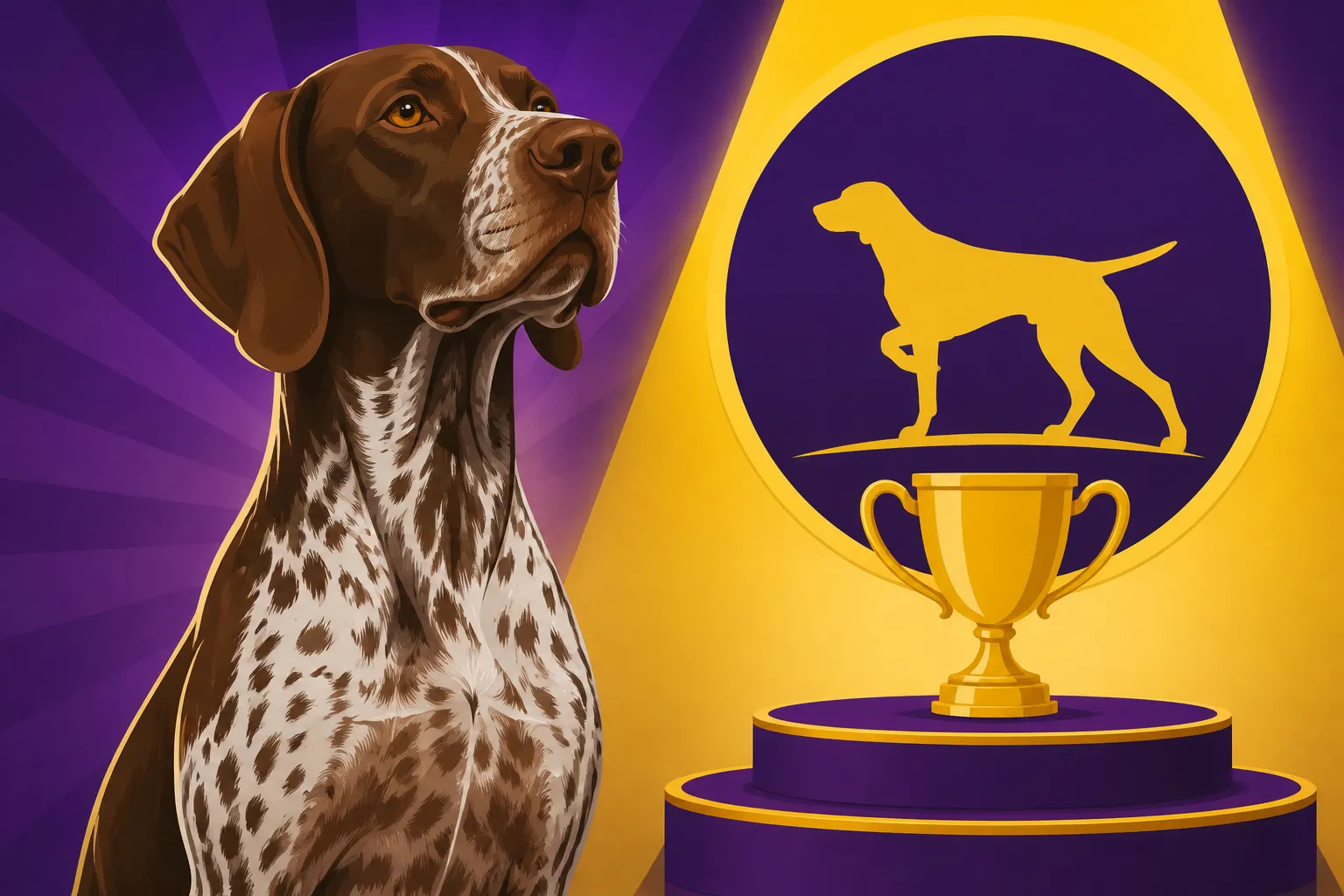
The winning dog was CJ, a German Shorthaired Pointer whose registered name was GCH VJK-Myst Garbonita’s California Journey. He took Best in Show at the 140th Westminster Kennel Club Dog Show in 2016. His win put a Shorthair at the very top of one of the best-known conformation shows in the United States.
To get there, CJ first had to win against other German Shorthaired Pointers entered in his breed competition. He then advanced through the Sporting Group, competing with winners from other sporting breeds. After winning that group, he moved on to the final Best in Show judging, where he competed against the other group winners.
That distinction matters: CJ didn’t win a special prize reserved for gun dogs or sporting breeds. He won the show’s overall top award. His victory is a notable moment in the breed’s public history, alongside its longer story in American dog shows, including The 1930 AKC Entry of the German Shorthaired Pointer.
What the win means for the breed
Westminster judges dogs by how closely they conform to their breed’s written standard. That standard describes the physical traits and movement expected of a German Shorthaired Pointer, not a checklist of hunting achievements. A judge assessing a Shorthair in the ring may look at its outline, proportions, coat, head, gait, and overall presentation.
CJ’s win showed that a German Shorthaired Pointer could stand out in a demanding, high-profile conformation competition. It did not establish that every Shorthair has the same strengths, or that show success automatically predicts a dog’s field ability, health, or temperament at home.
It also helps to separate a breed win from the overall win. A dog can be an excellent example of its breed without winning its group, and a group winner may still not take Best in Show. Westminster success requires progressing through several rounds of judging, each with a different set of competitors.
How Westminster judging works
From breed judging to Best in Show
Westminster is a conformation show. In simple terms, judges compare each dog with the standard for its breed. Dogs are not ranked as though every breed should have the same shape or movement; instead, each is evaluated against the features expected for its own breed.
The competition generally moves through stages. Dogs compete within their breed, and the breed winner advances to the relevant group. The group winner then represents that group in the final Best in Show round. A German Shorthaired Pointer competes in the Sporting Group, where it faces breeds with very different builds and histories.
That process means a dog has to impress judges repeatedly, not just make one memorable appearance. A Shorthair’s outline and movement need to read well in the ring, and the dog needs to tolerate the handling, noise, waiting, and close proximity to other dogs that come with a major show.
What the judge is looking for in a Shorthair
A German Shorthaired Pointer’s standard describes a capable, balanced sporting dog. In the ring, judges assess structure and movement alongside breed-specific details. They are not testing whether a dog can find birds, retrieve from water, or work all day in cover. Those abilities may be important to an individual dog and its owner, but they are not the central task of conformation judging.
Movement can be especially revealing. A dog is often viewed both standing and in motion, because the way its parts fit together should support efficient, sound movement. Anyone curious about what the ring evaluation is built around can read The Size and Build the Shorthair Standard Asks For and The Movement a German Shorthaired Pointer Should Show.
Show presentation is part of the experience, too. Dogs are groomed and handled so judges can assess them clearly, but presentation cannot substitute for sound structure or breed type. A polished dog may catch the eye; the judge still has to decide how well it matches the standard.
What Westminster success does and does not prove
A show title is not a hunting test
A Best in Show result is a conformation achievement. It does not demonstrate that a dog has been trained to point birds, retrieve reliably, track wounded game, or remain steady around gunfire. Those skills are developed and assessed in other settings, with different goals and criteria.
This can be confusing because the German Shorthaired Pointer was developed as a versatile hunting dog. Its history includes work in the field and water, while modern Shorthairs may come from lines selected with different priorities. Some breeders emphasize conformation, some emphasize hunting performance, and some aim to preserve both. The differences are worth understanding before choosing a dog; The Split Between Field and Show Shorthairs explains why those labels come up so often.
Even within a line, dogs vary. A show-bred Shorthair may have hunting instincts, and a field-bred Shorthair may have the structure to look at home in a conformation ring. But a title in one venue is not proof of performance in another. If you want to know whether a dog hunts, ask about its training, experience, and the work its relatives have done—not only its show record.
A trophy is not a shortcut to choosing a dog
A Westminster win can draw attention to a breed, but it cannot tell you whether a particular Shorthair will suit your household. The daily realities still matter: exercise, training, socialization, supervision, and a plan for the dog’s high energy. A famous winner is one individual, not a promise about every puppy carrying the same breed name.
If you are considering a Shorthair, meet dogs in ordinary settings as well as at shows. Watch how they settle after activity, respond to people, and handle new surroundings. A local breed club or event can help you talk with owners and breeders. Where to Meet German Shorthaired Pointers Before Buying offers a useful starting point, while Whether a Shorthair Specialty Show Is Worth Attending can help you decide whether a breed-focused event fits your goals.
And if you attend a show with your own dog, plan for the unglamorous parts: travel, water, a comfortable place to rest, and familiar grooming supplies. Some owners use retailers such as Chewy to look for routine travel or care items before an outing. Chewy may also be one option to consider when replacing basics you forgot to pack, such as a familiar bowl or brush. For longer show days, think through your dog’s comfort and schedule rather than assuming the excitement will be enough to keep them content; some owners check Chewy for everyday supplies while preparing their dog’s travel kit.
How to appreciate the win as a Shorthair owner
Watch the breed in context
A Westminster broadcast can be a fun way to see a German Shorthaired Pointer handled in a formal ring, especially if you’re used to watching the breed work across open ground. Notice how the dog stands, moves, and responds to its handler. Then remember that this is one view of the breed, shaped by the goals of conformation judging.
Comparing different events can make the distinctions clearer. A specialty show focuses on dogs within a particular breed or breed group, while hunt tests assess trained field behavior against specific performance expectations. The settings, judging criteria, and preparation are different, so a dog may shine in one environment without being evaluated in the other.
| Event | Main focus | What a strong result can show |
|---|---|---|
| Westminster conformation show | How closely a dog matches its breed standard | Strength in conformation competition |
| Breed specialty show | Conformation judging focused on one breed | How a dog compares with other dogs of that breed |
| Hunt test | Trained hunting-related abilities under test conditions | Performance in the skills being assessed |
For many owners, the most helpful question is not “Could my dog win Westminster?” but “What kind of activity brings out the best in my dog?” Some Shorthairs enjoy the show ring, some thrive in field work, and many families simply want a capable companion with a satisfying routine.
Keep the achievement in perspective
CJ’s win is worth celebrating because a German Shorthaired Pointer reached the highest point of a famous all-breed show. It also gives people a chance to see the breed recognized outside hunting and sporting circles. That kind of visibility can inspire curiosity, but it should lead to realistic research rather than an impulse purchase.
If you’re watching Westminster because you love Shorthairs, enjoy the moment and take it for what it is: a remarkable conformation achievement by one dog. If you’re preparing to attend a dog event yourself, pack with your own dog’s needs in mind. Owners sometimes check Chewy for ordinary supplies before a trip, but no shopping list replaces practicing calm handling, making rest breaks, and ensuring the outing suits the individual dog.
Disclaimer
This article is for general informational purposes only and does not constitute professional advice. Laws, prices and regulations vary by location and change over time. Consult a qualified professional for guidance on your specific situation.