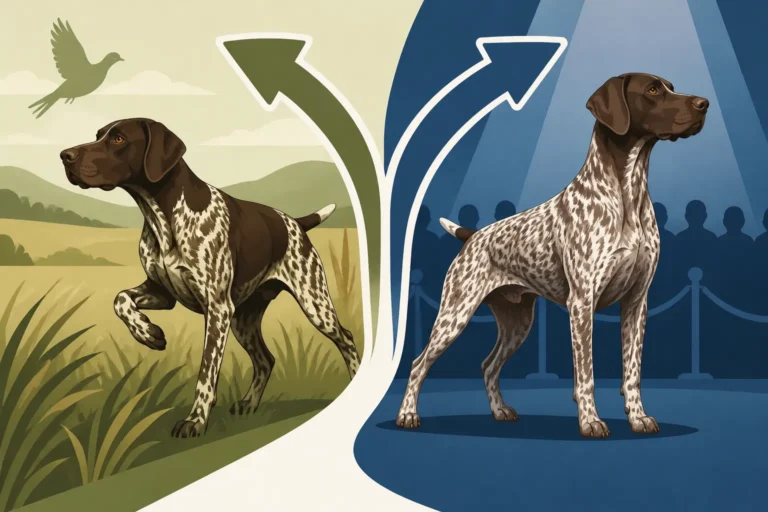
Whether You Have the Week a Shorthair Demands
A German Shorthaired Pointer can turn a quiet workday into a blur of exercise, training, cleanup, and companionship. If you are wondering whether your weekly routine can meet a Shorthair’s needs, this guide helps you assess the time involved, plan for ordinary weekdays as well as hunting days, and spot the difference between a workable schedule and one that leaves both dog and owner frustrated.
What a Shorthair’s week actually asks of you
Exercise is a daily commitment, not a weekend catch-up
German Shorthaired Pointers are athletic, people-oriented dogs bred to work alongside a handler. That does not mean every dog needs the same mileage or the same kind of activity, but it does mean a quick trip into the yard usually will not cover the day’s needs. Many Shorthairs do best with a routine that combines purposeful movement, time to sniff and explore, and some practice using their brains.
A long hike on Saturday is enjoyable, but it cannot make up for five under-stimulating weekdays. When a young or energetic Shorthair gets very little to do from Monday to Friday, you may see the backlog at home: persistent attention-seeking, chewing, jumping, counter-surfing, or restless pacing. The problem is not that the dog is “bad.” It is often that the dog’s body and mind have not had enough appropriate outlets.
Exercise does not have to mean running flat out every day. A brisk walk with sniffing breaks, a structured retrieve, a safe off-leash outing in an appropriate area, or water work can all contribute. A dog who is still growing also needs age-appropriate activity; repetitive distance running and high-impact exercise are not automatically suitable for a puppy. If you are building a routine, The Two Hours a Day a German Shorthaired Pointer Needs and Ninety Minutes of Real Exercise for a Shorthair offer useful starting points for thinking about the time involved.
The important question is not simply, “Can I give this dog a big workout sometimes?” It is, “Can I reliably make space for movement on an ordinary Tuesday, when it is raining, work ran late, or the family has other plans?” If the answer is usually no, you will need a dependable backup plan rather than hoping the dog will adapt to an inactive schedule.
Mental work and companionship count too
Physical activity can help, but it is not a substitute for interaction and learning. Many Shorthairs want to work with their person. Short training sessions, scent games, food puzzles, and simple household tasks can make a day more satisfying without requiring another long run. Hide treats in a room and let the dog search, practice a calm settle on a mat, or ask for a few familiar cues during a walk.
These activities are especially useful on days when weather or logistics limit outdoor time. A puzzle feeder may turn part of a meal into a search task; a few minutes of recall practice in a fenced area can build a skill while adding focus. For more ideas, see Mental Work That Tires a Shorthair Out and Puzzle Feeders and Scent Games for a Shorthair. Think of them as additions to a balanced day, not magic ways to tire out a dog who has been alone and under-exercised for hours.
Time together matters because many Shorthairs are strongly attached to their households. A dog can have a large yard and still feel under-stimulated if most of the day is spent alone outdoors. Likewise, having another dog in the home does not automatically meet a Shorthair’s need for human guidance and company. The breed’s social needs are part of the weekly workload, not an optional extra.
Map the routine you can realistically maintain
Count the whole day, not just the walk
Before bringing a Shorthair home, write down a typical week as it really happens. Include commuting, school runs, meetings, travel time, cooking, children’s activities, and the days when you are tired. Then identify who will handle the dog at each point. “We’ll all pitch in” can sound reassuring, but it becomes unreliable unless the responsibilities are specific.
A weekday plan might include a morning outing, a midday toilet break and interaction, an evening activity, and a short settling routine before bed. The exact mix depends on the individual dog’s age, health, temperament, and training. A puppy’s schedule differs from an adult’s, and an older dog may need more gentle movement and rest. In every case, account for the unglamorous pieces too: feeding, water, cleanup, grooming checks, and getting the dog safely to and from an exercise area.
| Weekly need | What to plan for | A practical question |
|---|---|---|
| Daily movement | Walks, play, training walks, or other suitable activity | Who handles it when the usual person is away? |
| Mental engagement | Short training, sniffing, food puzzles, or retrieving | What can you do indoors on a bad-weather day? |
| Companionship | Time with household members and help avoiding long, lonely stretches | How long will the dog regularly be alone? |
| Care and upkeep | Meals, fresh water, coat and paw checks, and routine health care | Can these tasks fit around work and travel? |
| Backup coverage | A trusted sitter, walker, family member, or suitable daycare | Is there a real plan for busy or unexpected days? |
Be honest about the busiest day of the week, not just the most flexible one. If you work long shifts in downtown Chicago, for example, a dog who is alone for most of the day will need reliable support. If you live near open space outside Minneapolis, access to trails may make some outings easier, but it does not remove the need for daily care or supervision. Location can shape the options; it does not replace the schedule.
Make a backup plan before you need one
A Shorthair’s routine can unravel when a meeting runs late, a child gets sick, or the person who usually walks the dog is out of town. Decide in advance what happens on those days. Options might include a trusted neighbor, a qualified dog walker, a family member, or daycare that is a good fit for your dog. Not every Shorthair enjoys group care, so assess your individual dog rather than assuming daycare will solve the problem.
It also helps to prepare low-effort activities for the days when your time is limited. Put together a few safe food puzzles, rotate training games, and keep a short list of indoor exercises. For household essentials, a recurring shopping list can help prevent last-minute runs for food or cleanup supplies. Some owners use retailers such as Chewy to arrange routine orders, which can be useful when a busy week makes errands difficult. It is still important to monitor deliveries and keep an appropriate supply on hand.
Build the backup around the dog’s real needs. A quick potty visit is not the same as an enriching outing, and an hour of unstructured play does not guarantee that a dog will settle afterward. Tell anyone helping you what cues the dog knows, what equipment to use, and what situations to avoid. If you use a walker, for example, explain whether the dog pulls toward birds or needs extra care around traffic and unfamiliar dogs.
Adjust the commitment for age, season, and lifestyle
Puppies and adolescents need supervision as well as activity
A puppy may not be able to handle the same duration or intensity of exercise as a mature dog, but that does not make puppy care effortless. Young Shorthairs need frequent bathroom opportunities, safe social experiences, gentle skill-building, rest, and close supervision. A puppy left to entertain itself can quickly find an outlet you did not intend, such as a chair leg, a shoe, or the contents of a wastebasket.
The adolescent stage can be particularly demanding because the dog may have plenty of energy while still learning impulse control and reliable responses. A young dog that seems to “forget” familiar cues around distractions is not necessarily being stubborn; the environment may be too exciting, the training may need more practice, or the dog may not yet have the maturity to manage the situation. Regular, consistent sessions are often more productive than one long, frustrating lesson.
Set up the home to make success easier. Use gates or a crate appropriately, provide safe chew options, and plan outings that match the puppy’s development. A crate can support rest and safe management, but it does not replace exercise, attention, or gradual training to tolerate alone time. Raising a Shorthair Puppy Toward Its First Season and The Adolescent Shorthair That Stops Listening can help you prepare for these changing stages.
Hunting season can add another layer of work
If you plan to hunt with your Shorthair, the season brings more than a few exciting days in the field. The dog needs suitable conditioning, practice, transport planning, and attention to safety. After a long outing, check the dog for cuts, burrs, ticks, sore pads, and signs of overheating or fatigue. A short-coated dog can be vulnerable to rough cover and changing weather, so field preparation and aftercare belong on the calendar.
Seasonal work can also affect the rest of the household routine. You may be leaving earlier, driving longer distances, and needing time to clean gear and care for the dog after returning home. It is worth considering whether the rest of the week supports that commitment. A dog that works hard for a few days still needs appropriate care on the days between outings. Conditioning a Shorthair Before Opening Day and Checking a German Shorthaired Pointer Over After a Hunt cover practical parts of that preparation and follow-up.
Not every Shorthair needs to hunt to have a fulfilling life. But a non-hunting household still needs to provide suitable exercise, training, and engagement. The breed’s working background helps explain why a quiet routine with only brief bathroom breaks can be difficult for many individuals. For a broader look at what the breed’s versatility means in daily life, see What Versatile Actually Means for a Shorthair.
Decide whether your week is a good fit
Signs your schedule may work
A demanding breed can fit into a busy life when the household has dependable routines and realistic support. You may be in a good position if you can consistently provide daily activity, involve the dog in family life, and arrange help for unavoidable gaps. You also need room for gradual training and the patience to manage normal setbacks, including muddy paws, wet-dog smells, interrupted plans, and the occasional chewed item.
A useful test is to imagine a normal week six months after the novelty has worn off. Would you still get up for the morning outing? Could you handle the dog’s needs when it rains? Is there someone else who can take over without confusion? Can your household afford the time and ongoing care, including food, training, equipment, and veterinary attention? If you can answer those questions with a clear plan, rather than a hopeful “we’ll figure it out,” you are assessing the commitment realistically.
Consider the household’s experience and support, too. A first-time owner may do well with a Shorthair if they are ready to learn, set routines, and seek qualified training help when needed. But if no one has the time to guide a lively dog through adolescence, the strain can build quickly. Reading Whether a First Time Owner Can Handle a Shorthair and The Household a German Shorthaired Pointer Actually Fits can help you think through the fit beyond the breed’s appealing looks and athletic reputation.
Warning signs that the timing may be wrong
It may be wise to wait if the dog would regularly be alone for long stretches with no midday support, if exercise would happen only when the weather and work schedule cooperate, or if the household expects a yard to do the work of interaction and training. Another warning sign is relying on a future change—such as a more flexible job or a less busy season—that has not actually happened yet.
Be cautious if family members disagree about who will care for the dog or what “enough exercise” means. Resentment can develop when one person quietly becomes responsible for every walk, training session, and vet appointment. Make the daily tasks explicit before adopting or buying. If your current schedule leaves little room for sleep, errands, or family time, adding a high-energy dog may create pressure rather than companionship.
Waiting does not mean you are not a dog person. It can be the kindest choice if your life is temporarily full or if a different kind of dog would better suit your routine. You might also meet adult Shorthairs through responsible breed groups or rescues and learn what their care looks like in practice. The goal is not to prove you can keep up with the breed at any cost. It is to choose a situation where both you and the dog can have a steady, satisfying week.
Disclaimer
This article is for general informational purposes only and does not constitute professional advice. Laws, prices and regulations vary by location and change over time. Consult a qualified professional for guidance on your specific situation.