Bone Cancer in a German Shorthaired Pointer’s Leg
It's absolutely heartbreaking when you notice something isn't quite right with your German Shorthaired Pointer, especially when it involves something as fundamental as how they move. That subtle limp, the way they hesitate before jumping into the truck, or a tender spot on their leg that just doesn't seem to get better – these are the moments that send a cold dread through any GSP owner's heart. This guide aims to shed light on bone cancer, specifically osteosarcoma, in German Shorthaired Pointers, helping you understand the signs, the diagnostic process, and the treatment options available for this devastating disease.
Understanding Osteosarcoma in German Shorthaired Pointers
Osteosarcoma is a word no dog owner ever wants to hear. It's the most common primary bone tumor found in dogs, and unfortunately, our beloved German Shorthaired Pointers, being large and active dogs, are among the breeds disproportionately affected by it. This isn't just a simple bone growth; it's a highly aggressive and rapidly metastasizing cancer that originates directly in the bone itself. It’s a cruel twist of fate for dogs known for their boundless energy and robust frames.
While the exact cause of osteosarcoma remains a mystery, there are strong correlations with breed size and rapid growth. A German Shorthaired Pointer's impressive athleticism and bone structure, which allow them to cover vast ground and sustain high impact during hunts, might inadvertently contribute to their risk. Some theories suggest that microtrauma accumulated over a lifetime of vigorous activity, or even rapid growth spurts as puppies, could play a role in the development of these tumors. It typically affects middle-aged to older dogs, though it's not unheard of in younger GSPs.
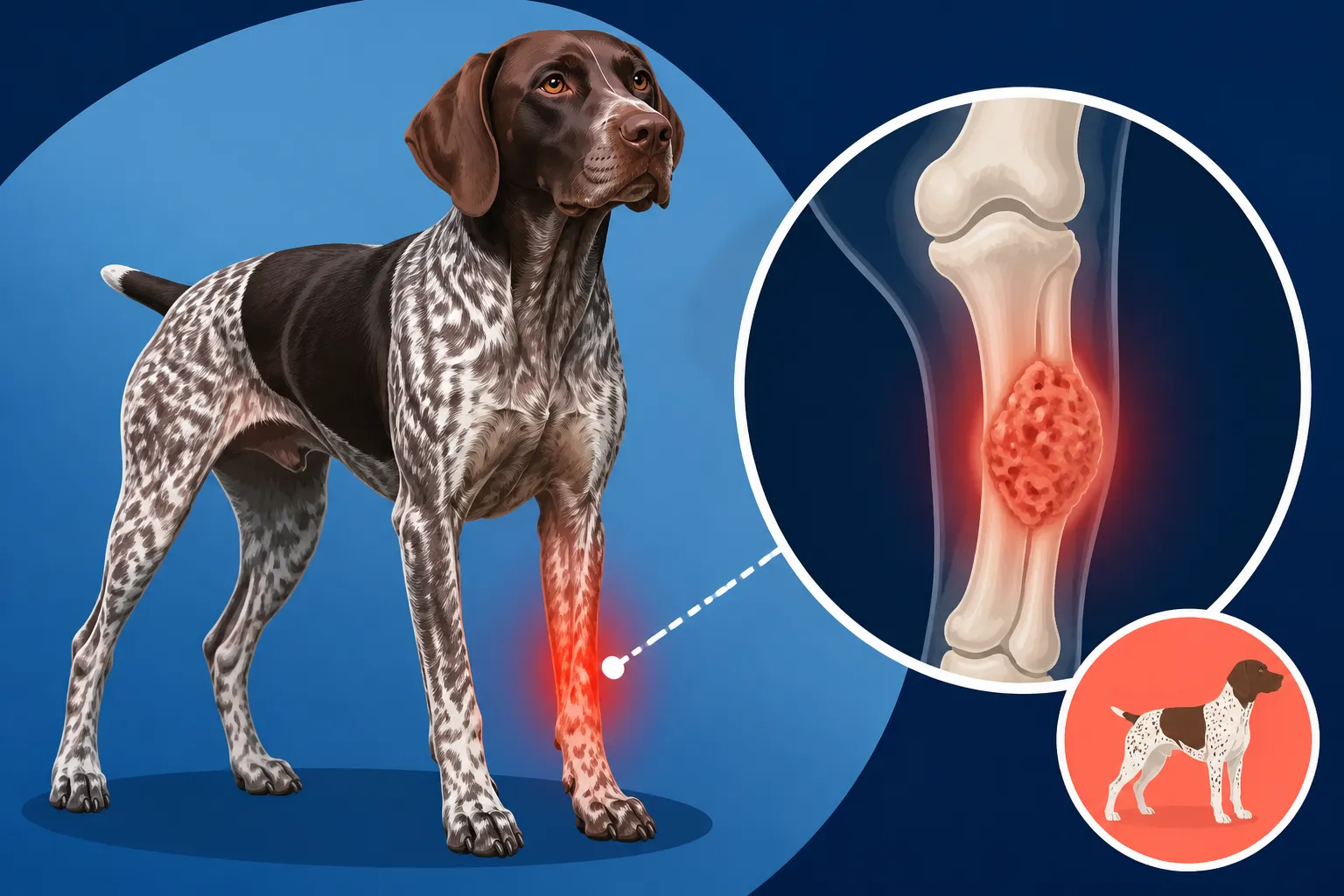
These malignant tumors most frequently target the long bones of the limbs – think of the bones just above the knee, below the elbow, or in the upper arm and thigh. Specifically, the areas often affected include the distal radius (wrist area), proximal humerus (shoulder area), distal femur (above the knee), and proximal tibia (below the knee). The cancer aggressively destroys normal bone tissue, replacing it with cancerous bone, which causes immense pain and structural weakness. This process can be incredibly fast-acting, turning a slight lameness into severe, constant pain in a matter of weeks. The devastating nature of this disease is its tendency to spread, or metastasize, very early, often to the lungs, even before the primary bone tumor is officially diagnosed.
Recognizing the Subtle Signs and Symptoms
One of the hardest parts about osteosarcoma is how it can initially mimic other, less serious conditions common in active dogs. A GSP's stoic nature and high pain tolerance, especially those accustomed to pushing through discomfort in the field, can make early detection even more challenging. It's why being hyper-aware of your dog's subtle cues is so critical.
Early Indicators of Trouble
Often, the first sign you'll notice in your German Shorthaired Pointer is a seemingly innocuous lameness. It might be intermittent at first – a slight stiffness after a long run, or a limp that appears only after they've been resting and then gets up. You might think, "Oh, they just twisted something during a sprint in the yard," or "Maybe they’re just feeling their age a bit." This initial lameness is particularly deceptive because it can wax and wane, leading owners to believe their dog is improving, only for the limp to return with greater intensity. Pay close attention if the lameness seems worse after a period of inactivity, like first thing in the morning or after a nap.
Another subtle indicator can be a slight, almost imperceptible swelling on a limb. Given the German Shorthaired Pointer's short, sleek coat, you might not notice a change in contour immediately. However, if you're regularly petting and grooming your dog, feeling for bumps and bruises, you might detect a firm, unyielding lump on one of the long bones. This swelling might not be painful to the touch initially, making it easy to dismiss. But any unexplained swelling that persists or grows warrants immediate investigation.
Perhaps the most telling early sign for a GSP owner is a change in their dog's boundless enthusiasm. A German Shorthaired Pointer who suddenly seems a little less eager to chase the ball, or who lags behind on a walk they once bounded through, is sending a strong signal. If your normally energetic companion starts refusing to jump into the car, struggles with stairs, or just generally seems "off" in their typical vigorous exercise routine, it's a significant red flag. They might even guard the affected limb, pulling it away if you try to touch it, or shifting their weight awkwardly to compensate.
Progression and Worsening Symptoms
As osteosarcoma progresses, the initial subtle signs unfortunately become much more pronounced and distressing. The intermittent lameness will almost certainly evolve into a persistent, severe limp, or even an inability to bear weight on the affected leg at all. Your dog might hold the leg up constantly, unwilling to put any pressure on it, making it clear that the pain has become chronic and debilitating.
The swelling will also become more obvious and alarming. What was once a subtle bump will likely grow into a noticeable, hard mass on the bone. This area will often feel hot to the touch, and your GSP will react with significant pain if you try to palpate it. They might lick the site excessively, chew at the area, or even become uncharacteristically defensive or aggressive if you approach the painful limb. This behavioral change, driven by intense pain, can be incredibly upsetting for owners.
Beyond the localized leg pain, you might start to see systemic signs that indicate the cancer is taking a toll on their overall health. Weight loss, even if their appetite remains somewhat normal, is a common indicator, as their body fights the disease. Lethargy and a general disinterest in activities they once loved can also appear. In the most severe cases, particularly if the tumor has significantly weakened the bone, a pathological fracture can occur – meaning the bone breaks spontaneously from minimal trauma because the cancer has eroded its integrity. This is an incredibly painful and devastating complication. When you consider A German Shorthaired Pointer That Has Stopped Wanting to Run, it's crucial to investigate all possibilities, not just assume it's simple aging or minor injury.
The Diagnostic Journey: From Suspicion to Confirmation
When you suspect something serious is going on with your German Shorthaired Pointer's leg, getting a definitive diagnosis is paramount. This journey often involves several steps, starting with your trusted veterinarian and potentially leading to specialist consultations.
Initial Vet Visit and X-Rays
Your first stop, of course, will be your veterinarian. They'll start with a thorough physical examination, carefully palpating all four limbs, assessing your GSP's gait, and evaluating their range of motion. During this exam, the vet will be looking for pain response, swelling, heat, or any abnormalities in the bone structure. They'll also consider your dog's history, activity level, and any changes you've observed.
If osteosarcoma is suspected, X-rays (radiographs) are the crucial first step. These images allow the veterinarian to look inside the bone structure for changes indicative of a tumor. On an X-ray, osteosarcoma often presents with a characteristic appearance: areas of bone destruction (lytic lesions) interspersed with areas of abnormal new bone production (proliferative lesions). Vets might describe seeing a "sunburst pattern" or "Codman's triangle," which are classic radiographic signs, though not always present or exclusive to osteosarcoma. Getting good quality films, sometimes even multiple views, is essential for a proper interpretation. These initial images are vital, but it's important to remember that other conditions can mimic bone cancer, such as fungal infections of the bone (osteomyelitis) or severe bacterial infections. Differentiating these from cancer is critical for the correct treatment plan. Thinking about common issues like Field Injuries a Hunting German Shorthaired Pointer Comes Home With or Arthritis in a German Shorthaired Pointer at Eight highlights why a vet's expertise is so important to discern the true culprit behind lameness.
Advanced Imaging and Biopsy
While X-rays provide strong indicators, they aren't always enough for a definitive diagnosis or for planning complex treatments. This is where advanced imaging comes into play. Computed Tomography (CT) scans or Magnetic Resonance Imaging (MRI) can offer a much more detailed, three-dimensional view of the tumor's exact size and extent within the bone, and how much it has invaded surrounding soft tissues. This information is invaluable for surgical planning, especially if limb-sparing surgery is being considered. Furthermore, these scans can also help to rule out other potential problems.
The absolute definitive step for diagnosing osteosarcoma is a bone biopsy. This procedure involves taking a small sample of the suspicious bone tissue, which is then sent to a veterinary pathologist for microscopic examination. There are different types of biopsies, such as a core needle biopsy or an incisional biopsy, and the choice depends on the location and characteristics of the tumor. It's a procedure that requires skill and precision to obtain a diagnostic sample while minimizing risks. While a biopsy confirms the presence of cancer, it's equally important to determine if the cancer has spread. This process is called "staging." Typically, staging involves chest X-rays (at least three views are crucial to detect small metastases) and sometimes an abdominal ultrasound to check for spread to other organs like the lungs, liver, or lymph nodes. Unfortunately, even if no visible spread is detected at diagnosis, osteosarcoma has a high likelihood of microscopic metastasis, which is why systemic treatment is almost always recommended.
Navigating Treatment Options and Prognosis
Receiving a diagnosis of bone cancer is devastating, and the path forward can seem overwhelming. However, there are various treatment options available, each with the goal of improving your German Shorthaired Pointer's quality of life and, hopefully, extending their time with you. The approach will depend on the tumor's location, stage, and your dog's overall health and temperament.
Palliative Care and Pain Management
For many German Shorthaired Pointers diagnosed with osteosarcoma, especially if the cancer has spread or if aggressive surgery isn't an option, palliative care becomes the primary focus. The main goal here is to manage pain effectively and maintain the best possible quality of life for as long as possible. The pain from osteosarcoma can be excruciating, so a multi-modal approach to pain management is key. This often involves a combination of medications. Non-steroidal anti-inflammatory drugs (NSAIDs) like Carprofen or Deramaxx are often prescribed, but more potent pain relievers like gabapentin, tramadol, and amantadine might also be used, sometimes in combination, to keep your GSP comfortable.
In addition to oral medications, palliative radiation therapy can be an excellent option. While it won't cure the cancer, a few doses of localized radiation can significantly reduce the pain associated with the bone tumor, often providing weeks or even months of comfort. This can make a huge difference in your GSP's daily life, allowing them to enjoy walks, eat comfortably, and interact with the family without constant agony. For owners exploring these avenues, understanding Monthly Medication for a Hypothyroid Shorthair gives a sense of ongoing pharmaceutical commitment, though osteosarcoma pain management can be more complex. When considering the financial aspect, many owners find relief in pet insurance, with companies like Healthy Paws often covering a significant portion of these high-cost treatments, allowing them to focus on care rather than crushing bills.
Surgical Intervention and Chemotherapy
For dogs whose cancer has not yet visibly spread, and where the tumor is localized to one of the limbs, surgical removal of the primary tumor is often recommended. For osteosarcoma in the leg, this most commonly means amputation. While the thought of amputation is frightening for many owners, German Shorthaired Pointers are incredibly resilient and often adapt remarkably well to life on three legs, especially when they are relieved of the constant pain from the tumor. A fit GSP, even an older one, can often regain a surprising amount of mobility and enjoyment after a successful amputation.
Limb-sparing surgery is another, more specialized surgical option where only the cancerous section of the bone is removed and replaced with a bone graft or prosthetic. However, this procedure is complex, not suitable for all cases (e.g., if the tumor is too extensive or located in certain areas), and carries a higher risk of complications like infection or implant failure. It's often reserved for specific candidates.
Regardless of whether amputation or limb-sparing surgery is performed, chemotherapy is almost always recommended for osteosarcoma. This is because, as mentioned earlier, this cancer is highly metastatic. Even if no spread is visible on X-rays at diagnosis, microscopic cancer cells have usually already traveled to other parts of the body. Chemotherapy aims to target and kill these circulating cancer cells, significantly extending the dog's life expectancy. Common chemotherapy drugs used include Carboplatin or Doxorubicin, often administered intravenously in a series of treatments over several months. Facing the costs of these treatments can be daunting; looking into options like The Vet Bills a Hunting German Shorthaired Pointer Earns or specifically Chemotherapy Costs for a German Shorthaired Pointer can help owners prepare. Pet insurance providers like Healthy Paws are often a lifeline for families facing these comprehensive and expensive treatment plans.
The prognosis for osteosarcoma is unfortunately guarded. With amputation alone, median survival times are typically only 3-6 months. However, combining amputation with chemotherapy can extend median survival times to 10-12 months, and some dogs live much longer. For those who choose palliative care, the focus is entirely on ensuring comfort and cherishing every moment. Making the difficult decision of Knowing When an Old Shorthair Has Had Enough is an individual journey, but understanding the options can help ensure your GSP lives their remaining time with dignity and minimal pain.
| Treatment Option | Primary Goal | Typical Duration | Key Considerations |
|---|---|---|---|
| Palliative Pain Meds | Reduce pain, improve comfort | Ongoing, daily | Oral medications, often multiple types; may require dosage adjustments. |
| Palliative Radiation | Target localized pain, improve comfort | 1-4 sessions over a few weeks | Does not cure; sedation for treatments; temporary hair loss in radiated area. |
| Amputation | Remove primary tumor, alleviate pain | Single surgery, recovery 4-8 weeks | Excellent pain relief; GSPs adapt well; crucial for preventing pathological fractures. |
| Limb-Sparing Surgery | Remove tumor while preserving limb | Single surgery, long recovery | Complex, higher complication risk; suitable for select cases only. |
| Chemotherapy | Target microscopic metastases, extend life | 4-6 treatments over several months | Systemic treatment; typically mild side effects (GI upset, temporary low blood count). |
Disclaimer
The information provided in this guide is intended for educational purposes only and should not be considered a substitute for professional veterinary advice. Always consult with a qualified veterinarian regarding any health concerns or before making any decisions about your German Shorthaired Pointer's medical care.