Rehabbing a Shorthair After Cruciate Surgery
Watching your German Shorthaired Pointer go through cruciate ligament surgery is incredibly tough, a mix of relief that the problem is being addressed and a gnawing worry about the long road to recovery. It’s a huge commitment, not just financially, but emotionally and physically for you, as you become their primary nurse and cheerleader. This guide is here to walk you through the often-challenging journey of rehabbing your shorthair after this significant procedure, offering realistic advice and a clear path forward.
The Initial Days Post-Surgery: What to Expect and How to Cope
The moment your shorthair comes home after cruciate surgery is usually a relief, but it’s also when the real work begins. Your dog will likely be groggy, confused, and feeling the effects of pain medication, making them seem unlike their usual energetic self. This initial period, typically the first 10-14 days, is crucial for controlling swelling, managing pain, and protecting the surgical site from any accidental damage. It's a time for strict rest, observation, and getting into a new, temporary routine. You'll be watching them like a hawk, ready to intervene at the slightest sign of discomfort or inappropriate movement.
It's common for owners to feel overwhelmed during these first few days. The vibrant, boundless energy of a GSP is suddenly muted, and the sight of them struggling can be heartbreaking. Remember, this is a temporary phase, and your dedication now lays the foundation for their successful return to an active life. Lean on your veterinary team for support and don't hesitate to call if you have concerns about their pain levels or the incision site.
Managing Pain and Discomfort at Home
Pain management is paramount in the immediate post-operative period. Your vet will send your shorthair home with a cocktail of medications, usually including NSAIDs (non-steroidal anti-inflammatory drugs) to reduce inflammation and pain, and sometimes stronger opioid-based pain relievers for the first few days. It’s absolutely critical to follow the dosage schedule precisely. Missing a dose or giving too much can have serious consequences. Keep a detailed log of when medications are given, especially if multiple people in the household are involved in their care, to avoid accidental double-dosing or skipped doses.
Beyond oral medications, cold therapy can be incredibly effective for reducing swelling and numbing the area. Applying an ice pack (wrapped in a thin towel to prevent frostbite) for 15-20 minutes every 4-6 hours, especially in the first 72 hours, can make a huge difference. Gently feel around the surgical site for heat or swelling, which could indicate inflammation or, rarely, infection. Many owners find that setting reminders on their phone helps them stay on track with both medication and icing schedules. If your dog seems to be in significant pain despite medication, or if they're panting excessively, crying, or unable to get comfortable, call your vet immediately. Don't try to increase medication on your own.
Strict Confinement and Early Mobility Limitations
This is perhaps the hardest part of cruciate rehab for any German Shorthaired Pointer owner: keeping them confined. These dogs are built for movement, for covering miles of ground, and suddenly, they're relegated to a small space. For the first two weeks, strict crate rest or confinement to a small, secure area like a laundry room or a pen is non-negotiable. This isn't just about preventing them from tearing stitches; it's about giving the surgical repair time to integrate and begin healing without undue stress.
Your shorthair should only be out of their confined space for short, leashed potty breaks. And we mean short – just long enough to do their business, then right back inside. No sniffing around, no chasing squirrels, no greeting the mailman. These potty breaks should always be on a leash, even in a fenced yard, to prevent sudden movements, slips, or attempts to run. If your GSP is typically a jumper or a climber, you'll need to be extra vigilant. Blocking off stairs and preventing access to furniture is vital. For large, energetic breeds like shorthairs, this level of confinement can be incredibly frustrating for both dog and owner. Engaging their minds with puzzle toys or gentle chewing can help alleviate boredom and destructive tendencies. If your dog has a tendency to be an escape artist or is struggling significantly with crate anxiety, discuss calming aids with your vet.
The Critical Weeks of Gradual Rehabilitation
Once the initial post-operative period has passed, typically after staples or sutures are removed around 10-14 days, you’ll enter the next critical phase: controlled, gradual rehabilitation. This period, which can stretch from week three to week eight or twelve, is all about carefully increasing activity to rebuild muscle strength and improve joint range of motion without overstressing the healing tissue. This is where patience truly becomes a virtue, as rushing the process can lead to serious setbacks and even re-injury. You’ll feel a strong urge to let your GSP "be a dog" again, but resisting that urge is key to a full recovery. Many owners find that having pet insurance, like a plan from Healthy Paws, helps cover the ongoing costs of these specialized rehabilitation efforts, providing peace of mind during this lengthy process.
Controlled Exercise and Physiotherapy Techniques
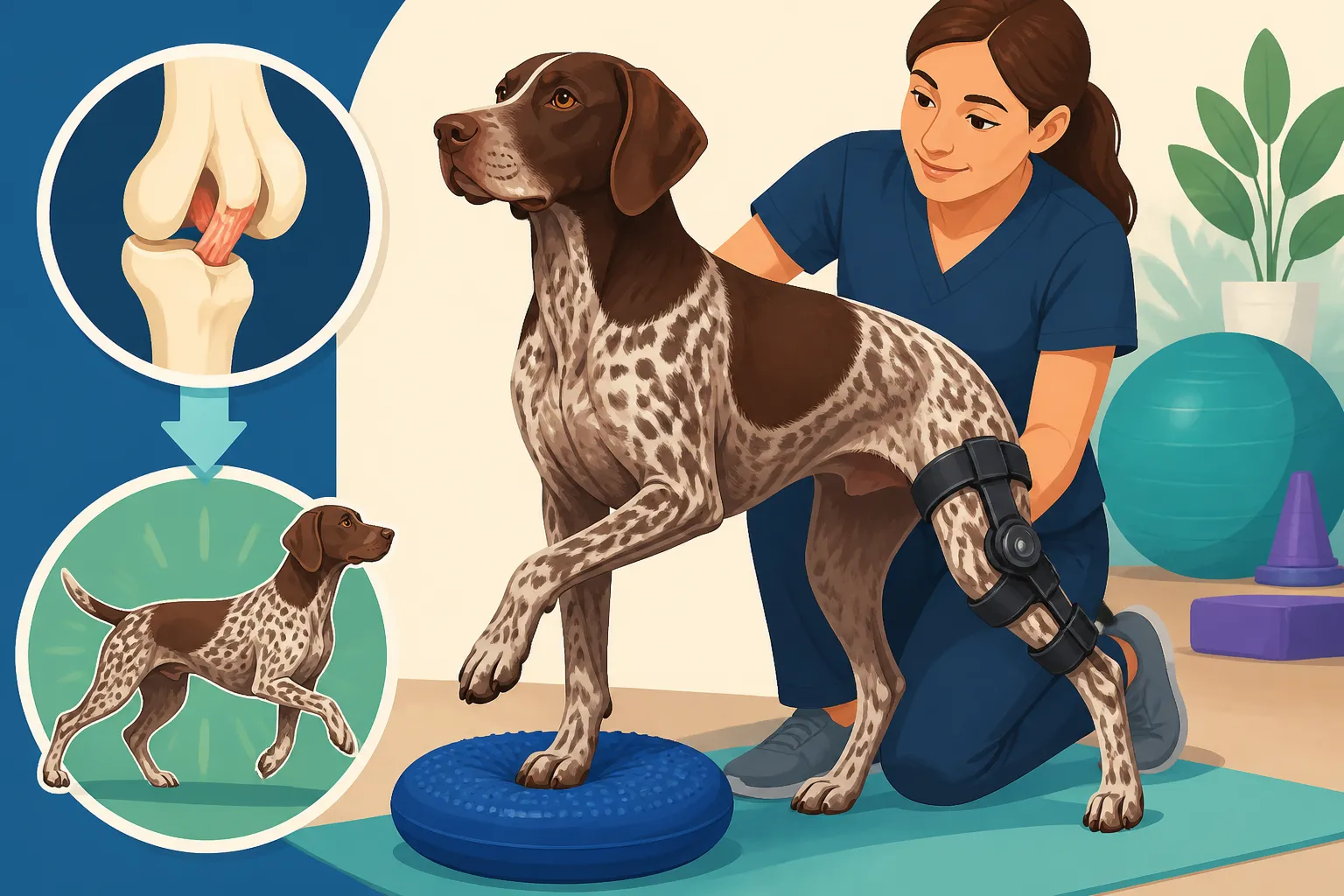
During this stage, your vet or a certified canine rehabilitation therapist will guide you through specific exercises. These aren't about running or jumping; they're precise movements designed to strengthen the supporting muscles and improve flexibility. Think slow, controlled leash walks, starting with just 5-10 minutes a few times a day and gradually increasing duration. The goal is quality of movement, not quantity. Uphill and downhill walks on a leash can be introduced cautiously to work different muscle groups, but always on smooth, even surfaces to prevent slips.
Physiotherapy might also include passive range of motion (PROM) exercises, where you gently move your dog's leg through its natural range of motion to prevent stiffness. This needs to be done very carefully and only after instruction from a professional, as improper technique can cause harm. Other techniques could include gentle massage around the muscles of the affected leg to improve circulation and reduce scar tissue. Hydrotherapy, such as walking on an underwater treadmill, is often recommended because the buoyancy of the water reduces impact on the joint while still allowing for muscle strengthening. This can be a fantastic way to introduce more substantial exercise safely. You might find a local rehab facility, such as a branch of Animal Medical Center in your area or a specialized canine rehab center, that offers these services. For more in-depth guidance, consider seeking out a professional for Physical Therapy for a Shorthair After Knee Surgery.
Monitoring Progress and Recognizing Setbacks
Throughout the rehab process, diligent observation of your German Shorthaired Pointer is essential. You’re looking for signs of improvement: increased weight-bearing on the operated leg, improved muscle tone, less lameness, and a generally happier, more comfortable demeanor. Keep a journal of their daily activity, lameness level (a simple 1-5 scale can work), and any notable events. This data will be invaluable for your vet or rehab therapist to assess progress.
However, you also need to be acutely aware of potential setbacks. Any sudden increase in lameness, swelling, heat around the surgical site, or reluctance to use the leg are red flags. This could mean they’ve done too much, sustained a minor injury, or are developing a complication. Don't push through it. Immediately reduce activity and contact your vet. It’s better to take a step back and let things settle than to push forward and risk a major re-injury, which could mean another surgery. It’s also common to worry about Whether a German Shorthaired Pointer Tears Both Knees, so stay vigilant for signs of lameness in the other leg as well, as the increased strain can sometimes lead to issues there.
Long-Term Recovery and Maintaining Joint Health
Even after the initial intensive rehabilitation period, the journey isn't over. The long-term recovery for a German Shorthaired Pointer after cruciate surgery often extends for many months, and sometimes, a lifetime of careful management. The goal is not just to get them walking comfortably, but to help them regain as much of their previous athleticism as safely possible, or to live a comfortable life as a beloved companion. This phase requires continued dedication, understanding that their joint will always be a point of consideration. Regular check-ups are key, aligning with The Vet Schedule a Working Shorthair Should Keep.
Building Strength and Endurance
Once your GSP has cleared the critical healing phases, typically around 3-4 months post-op, you can slowly begin to reintroduce more dynamic exercises. This must be a very gradual process, guided by your vet or rehab specialist. Activities like light jogging, controlled retrieves, and even very short bursts of off-leash play might be introduced. The key is moderation and listening to your dog. A good rule of thumb is to increase activity by no more than 10-15% each week, carefully observing how they recover.
For a breed like the German Shorthaired Pointer, which is bred for endurance and speed, managing their innate desire to run hard can be a challenge. You might need to adjust your expectations about what their "normal" activity level will look like. Some shorthairs can return to demanding field work, while others may be better suited to long hikes or swimming. Focused core strengthening exercises, like controlled standing on unstable surfaces (wobble boards) or cavaletti poles, can continue to build crucial stability around the joint. Remember that building muscle takes time, and consistency is far more important than intensity. Consider if your insurance, like a plan from Healthy Paws, has continued coverage for ongoing rehabilitation or maintenance therapies.
Preventative Measures and Ongoing Support
Post-cruciate surgery, preventative measures become even more important for your German Shorthaired Pointer’s long-term joint health. Maintaining an ideal body weight is absolutely crucial, as excess pounds put significant strain on all joints, especially a repaired one. Feed a high-quality diet appropriate for their activity level. Many owners also find Joint Supplements for a Hunting German Shorthaired Pointer beneficial for ongoing support, with ingredients like glucosamine, chondroitin, and MSM helping to promote cartilage health and reduce inflammation. Discuss specific brands and dosages with your vet.
Regular, moderate exercise that avoids extreme twists, jumps, or sudden stops will be key. If your GSP is an older dog, recognizing the signs of Arthritis in a German Shorthaired Pointer at Eight and managing it proactively can extend their comfortable years. Keep their nails trimmed short to ensure proper footfall, and ensure they have good traction on indoor surfaces to prevent slips. Non-slip rugs are a lifesaver! The goal is to create an environment that supports their healing joint and minimizes future stress. While it’s a long journey, with consistent care, many German Shorthaired Pointers can return to a fulfilling, active life, continuing to enjoy the outdoors with their devoted owners.
| Phase of Recovery | Typical Duration | Key Activities & Goals | Precautions |
|---|---|---|---|
| Acute Post-Op | Weeks 0-2 | – Strict crate rest | – Absolutely no running/jumping |
| – Pain management | – Monitor incision site closely | ||
| – Cold compresses | – Leashed potty breaks only | ||
| Early Rehab | Weeks 3-8 | – Controlled leash walks | – Gradual increase in duration, not intensity |
| – Passive Range of Motion (PROM) exercises | – Avoid stairs, slippery surfaces | ||
| – Gentle massage | – Start underwater treadmill if recommended | ||
| Intermediate Rehab | Weeks 9-16 | – Progress longer leash walks | – Introduce inclines/declines cautiously |
| – Introduction to light jogging (on vet's advice) | – No uncontrolled off-leash play | ||
| – Core strengthening exercises | – Maintain strict observation for lameness | ||
| Advanced Rehab & Maintenance | Weeks 16+ | – Gradual return to desired activities | – Warm-up/cool-down routines |
| – Continued strengthening and conditioning | – Monitor weight, use joint supplements | ||
| – Regular vet check-ups | – Adapt activities as needed for joint health |
Disclaimer
Please remember that this article offers general information and is not a substitute for professional veterinary advice. Every German Shorthaired Pointer's recovery journey is unique, and you should always consult with your veterinarian or a board-certified canine rehabilitation specialist for a tailored rehabilitation plan specific to your dog's condition and surgical procedure.