Mental Work That Tires a Shorthair Out
It's a common, utterly exhausting cycle for German Shorthaired Pointer owners: you've run your dog for miles, thrown the ball until your arm aches, and yet, they're still pacing, still restless, eyes bright with unspent energy, ready to redecorate your living room with chewed furniture. The truth is, physical exercise alone, as vital as it is for this magnificent breed, often isn't enough to truly tire out that keen, intelligent mind. This guide will dive deep into various forms of mental enrichment and brain games designed to engage your German Shorthaired Pointer's intellect, helping them feel genuinely satisfied and, dare I say it, calm at the end of the day.
The Hidden Energy Drain: Why Mental Stimulation Matters for a Shorthair
We all know GSPs are canine athletes. They are built for endurance, for covering vast amounts of ground in the field, and for holding a point with unwavering focus. This drive for physical activity is undeniable, but what often gets overlooked is the immense mental energy they expend during these activities. They're not just running; they're scenting, tracking, making decisions, problem-solving, and communicating with their handler. When these mental channels aren't adequately stimulated in daily life, that boundless physical energy can quickly turn into frustration, anxiety, and destructive behaviors. It's like trying to fill a bucket with a hole in the bottom – no matter how much you pour in, it never quite feels full.
Beyond the Treadmill: The Need for Cognitive Engagement
Imagine if your job involved running laps all day, every day, without ever having to think, plan, or learn anything new. You'd likely get incredibly fit, but you'd also probably go a little stir-crazy from the sheer monotony. Our German Shorthaired Pointers are no different. Their brains are wired for complex tasks, for using their incredible senses to decipher the world around them, and for working collaboratively. A long run is fantastic for their body, but it doesn't always engage the problem-solving parts of their brain that crave a challenge. This is why a GSP can still be bouncing off the walls after an hour-long jog, leaving you wondering if they're powered by perpetual motion.
Many GSP owners grapple with behaviors like incessant barking, obsessive chewing, or digging up the yard, even when they've provided ample physical exercise. These aren't necessarily signs of a "bad" dog, but rather a vocal plea from a smart, under-stimulated mind. Their breed history is rooted in versatility, meaning they were bred to do more than just point; they retrieved, they tracked, they often even dispatched vermin. This rich genetic tapestry means they thrive when given a variety of jobs that tax both their body and their brain. Neglecting one aspect often leads to an imbalance in their overall well-being, manifesting in ways that are frustrating for both dog and owner. What an Under Exercised Shorthair Does to a House is a common scenario we want to avoid.
Preventing Boredom-Induced Mayhem and Anxiety
A bored German Shorthaired Pointer is a disaster waiting to happen. Their intelligence, combined with their drive, means they will find their own jobs if you don't provide them with appropriate ones. Unfortunately, these self-appointed tasks often involve shredding couch cushions, emptying trash cans, or dismantling household items. This isn't out of malice; it's simply their innate need to be active and engaged. Providing consistent mental stimulation can significantly reduce the likelihood of these destructive behaviors, saving your sanity and your furniture.
Furthermore, a lack of mental engagement can contribute to anxiety, especially separation anxiety. A dog that is constantly under-stimulated can become overly reliant on its human for entertainment and direction. When left alone, they lack the internal resources or learned coping mechanisms to self-soothe or occupy themselves constructively. Engaging their minds with puzzles and training before you leave can help them transition into a calmer, more independent state. It gives them a sense of purpose and helps them understand that quiet, alone time can also be fulfilling, even if it's just finishing a Puzzle Feeders and Scent Games for a Shorthair challenge.
Brain Games and Puzzles to Challenge Your Shorthair
One of the easiest and most effective ways to provide mental stimulation is through interactive brain games and puzzle toys. These aren't just for puppies; adult German Shorthaired Pointers absolutely thrive on solving problems, especially when there's a tasty reward involved. The market is flooded with options, from simple treat-dispensing toys to complex multi-step puzzles that require a real commitment to figuring out. The key is to introduce them gradually and increase the difficulty as your GSP gains confidence and skill.
Engaging With Food Puzzles and Dispensing Toys
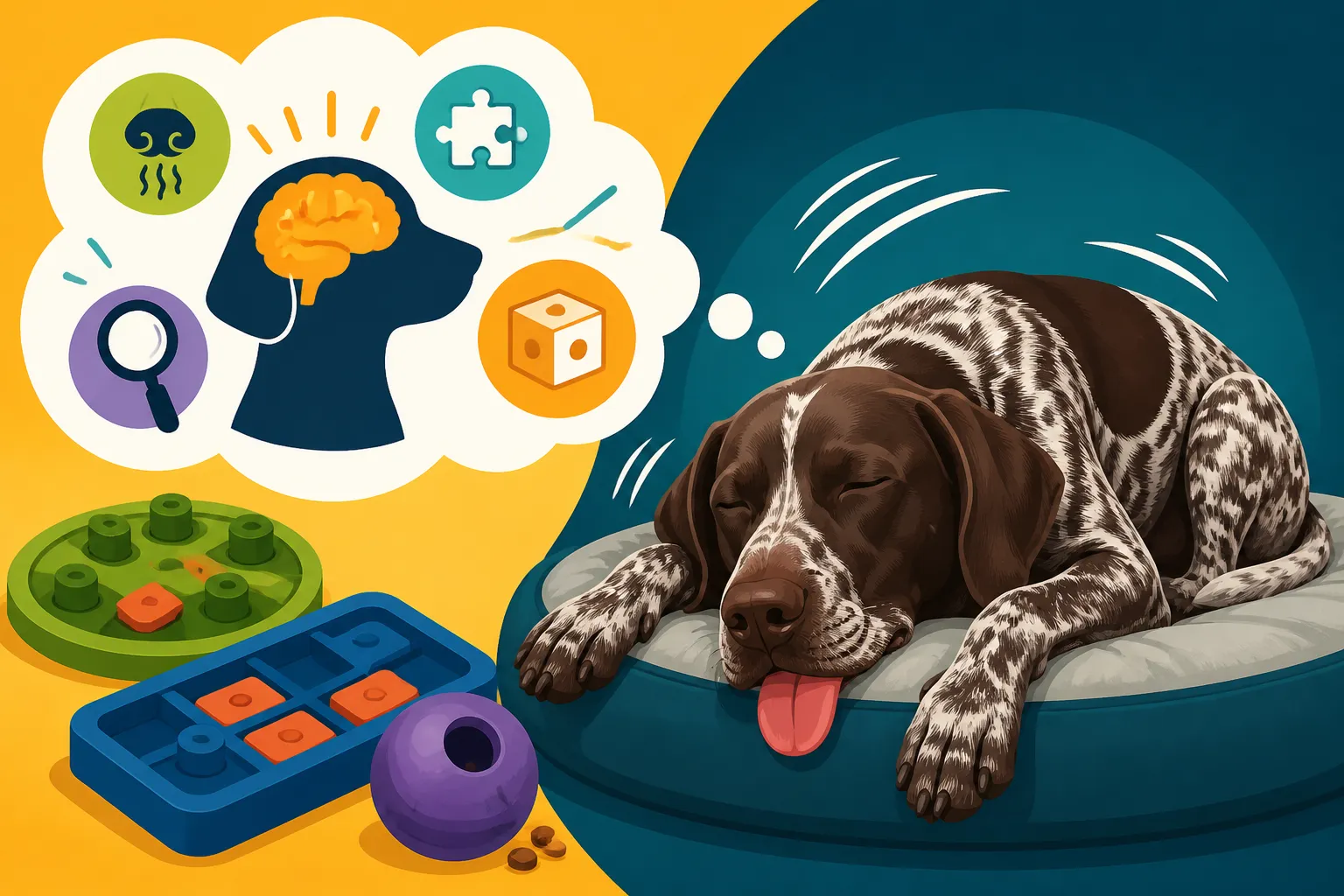
Food puzzles are a fantastic starting point because they tap directly into your Shorthair's natural foraging instincts. Instead of simply gulping down their meal from a bowl in seconds, they have to work for it. This slows down their eating, aids digestion, and most importantly, makes them think. You can start with something as simple as a treat-dispensing ball, where they roll it around to get kibble or small training treats to fall out. Brands like KONG offer various difficulty levels, from classic rubber toys you can stuff and freeze to more intricate designs with multiple chambers.
As your GSP gets better, you can advance to more challenging puzzles. Many wooden or plastic puzzles require your dog to slide levers, lift covers, or manipulate pieces to reveal hidden compartments. These are widely available on platforms like Amazon and can offer a significant mental workout. Always supervise your dog, especially when introducing new puzzle toys, to ensure they don't get frustrated or try to chew pieces off. The goal is engagement and success, not stress. The satisfaction your Shorthair gets from conquering a new puzzle is palpable – it's a huge confidence booster for them, and watching them work through it is incredibly rewarding for you.
Learning New Tricks and Advanced Obedience Skills
Beyond the basic sit, stay, and come, teaching your German Shorthaired Pointer more complex tricks and advanced obedience commands offers profound mental enrichment. Each new skill requires focus, memory, and understanding, firing up those brain cells in a way that physical exercise alone cannot. Think about teaching them to "fetch" specific named toys, to "weave" through your legs, or even something as fun as "play dead." The process of learning new things strengthens your bond and improves their overall responsiveness.
Consider enrolling in advanced obedience classes or workshops. Many dog training facilities offer classes like Canine Good Citizen (CGC) preparation, which teaches manners and reliability in various settings, or even trick training classes. Online training platforms, like those offered by BAXTER & Bella, can also provide structured courses and guidance for teaching a wide array of skills from the comfort of your home. These programs often break down complex behaviors into manageable steps, making the learning process enjoyable for both you and your highly intelligent companion. Whether a Shorthair Can Earn a Canine Good Citizen Title is a great goal that proves their mental acuity and good behavior.
Scent Work and Nose Games: Tapping Into Their Primal Instincts
There's no denying the power of a German Shorthaired Pointer's nose. These dogs are built to follow scent trails, to locate birds that are often hidden, and to process an incredible amount of olfactory information. Engaging this powerful sense through dedicated scent work and nose games is arguably one of the most fulfilling mental workouts you can provide. It's mentally exhausting in the best possible way, allowing them to use their natural talents in a structured and rewarding manner.
The Power of Their Nose: Indoor and Outdoor Scent Trails
Start simple with indoor "find it" games. Hide a high-value treat in an obvious spot and encourage your GSP to sniff it out. As they get the hang of it, increase the difficulty by hiding treats in less accessible places, under blankets, behind furniture, or even inside boxes within boxes. You can use their regular kibble for this, making mealtime an engaging activity rather than a race to the bottom of the bowl. This kind of work builds confidence and focus, and you'll be amazed at how quickly they learn to systematically search.
Outdoors, scent work can be taken to another level. Lay simple scent trails for them using a drag toy or a treat bag. Start in short grass or a familiar area, and let them follow the scent. Over time, you can introduce different terrains, longer trails, and even hide articles for them to find, much like a real hunt. This engages their tracking instinct and provides immense satisfaction. You'll see their body language change as they lock into a scent, their concentration absolute. Barn Hunt and Nose Work for a Shorthair are structured versions of this that can be incredibly rewarding.
Introduction to Formal Scent Work and Detection Sports
For those German Shorthaired Pointers who truly excel at nose games, exploring formal scent work or detection sports can be a fantastic avenue for mental enrichment. Organizations often offer classes that teach dogs to identify specific target odors, such as essential oils (birch, anise, clove), in various environments and search scenarios. These "nose work" classes mimic the work of detection dogs, but in a fun, accessible format for companion animals.
In these classes, your GSP learns to communicate when they've found the target odor, often by freezing, sitting, or pointing to the source. This requires immense concentration, discernment, and a strong partnership with you. Not only is it a brilliant mental workout, but it also builds an incredible bond as you learn to read your dog's subtle cues. It's fascinating to watch them use their natural abilities in such a precise and disciplined way, and the sense of accomplishment they feel is truly profound.
Advanced Training and Learning New Skills
Moving beyond the basics with your German Shorthaired Pointer can open up a world of mental stimulation. These dogs are quick learners and thrive on having a "job" to do, and that job doesn't always have to involve hunting. Whether it's complex retrieve work, advanced obedience, or even dog sports, the act of learning and executing intricate commands keeps their sharp minds engaged and satisfied.
Advanced Obedience and Utility Training
If your Shorthair has mastered basic obedience, consider moving on to more advanced levels. This might include off-leash reliability in distracting environments, perfecting their recall even when faced with irresistible temptations, or teaching them precise heel work with automatic sits and turns. Utility training, often seen in competitive obedience, involves tasks like scent discrimination, retrieving gloves, or directed retrieves, all of which demand intense focus and problem-solving. Group Obedience Before a Shorthair Starts Birds is a good foundational step, but there's always more to learn.
The beauty of advanced obedience isn't just the flashy commands; it's the mental discipline it instills. Your GSP learns to think critically, to listen attentively, and to control their impulses. This mental self-control translates into a calmer, more manageable dog in all aspects of life. It’s an investment in their mental well-being that pays dividends in a harmonious household. Regular, short training sessions, even just 10-15 minutes a day, are far more effective than sporadic, long ones, keeping their brains sharp and eager.
Dog Sports and Activities That Challenge the Brain
Beyond traditional obedience, there's a whole world of dog sports that offer incredible mental stimulation. Agility, for example, combines physical prowess with problem-solving as your dog navigates an obstacle course based on your directional cues. It requires them to think quickly, remember sequences, and anticipate your next command. The speed and precision involved are a fantastic brain drain.
Another option is Rally Obedience, which involves navigating a course with numbered stations, each with a different obedience exercise to perform. It's less rigid than traditional obedience and more about communication and teamwork. For the GSP with a strong retrieve drive, competitive retrieving events or even field work simulations can be incredibly satisfying. Teaching your GSP to Deliver a Bird to Hand with precision and control takes significant mental focus. Even urban-based activities like urban tracking or parkour can provide novel challenges and keep their minds active.
Structured Play and Interactive Activities
Mental stimulation doesn't always have to be about formal training sessions or puzzle toys. Structured play, where you actively engage with your German Shorthaired Pointer in a thoughtful way, can be just as mentally enriching. This is about more than just throwing a ball; it's about making them think, anticipate, and problem-solve within the context of play. These interactions strengthen your bond and allow them to burn mental energy in a joyful, collaborative way.
Hide-and-Seek and Engaging With Their Prey Drive
One of the simplest yet most effective mental games is hide-and-seek. Start by having your GSP stay in one room while you hide in another, then call them. The thrill of the search, the use of their nose and ears, and the joy of finding you are incredibly stimulating. As they get better, you can hide in more challenging spots, making them work harder to locate you. This game taps into their natural prey drive in a safe and positive way, as they "hunt" for their favorite person.
You can also incorporate elements of their prey drive into other games. Instead of just throwing a toy, hide it in the yard and send them to "find the bird" or "get the bumper." Make them wait, build anticipation, and then release them for the search. This engages their mental faculties far more than just a mindless retrieve. Use different types of toys to keep it interesting – a soft dummy for indoors, a durable bumper for outdoor retrieves. Remember, it's the mental effort of the search and the anticipation that provides the real mental workout.
Interactive Games That Build Focus and Impulse Control
Games that require impulse control and focus are excellent for GSPs. Think about a structured game of "fetch" where you incorporate a "wait" command before releasing them, or making them "down" before they can retrieve. This teaches them patience and reinforces their understanding of commands even amidst high excitement. Another great game is "shell game" where you hide a treat under one of three cups and shuffle them, asking your dog to indicate where the treat is. This is a simple yet powerful way to engage their problem-solving skills and sensory discrimination.
Tug-of-war, when played with rules, can also be a fantastic mental and physical outlet. Teach your GSP "take it" and "drop it" commands. The game stops if they don't release the toy immediately when asked. This teaches them control and respect, turning a high-energy game into a structured interaction that builds focus. Always end the game by having them "drop it" and then rewarding them with a treat or praise, showing them that releasing the toy is also part of the fun.
Integrating Mental Work into Daily Life
The good news is that mental stimulation doesn't require hours of dedicated time or expensive equipment. Many opportunities to engage your German Shorthaired Pointer's mind can be woven seamlessly into your daily routine. It's about being intentional and recognizing everyday moments as chances to challenge their intellect. A little bit of consistent mental work goes a long way in creating a well-rounded and content GSP.
Making Every Walk a Learning Opportunity
Your daily walks, essential for physical exercise, can also become fantastic mental enrichment sessions. Instead of just letting your GSP pull you along, engage their nose and brain. Vary your routes, introduce them to new sights and smells. Allow them "sniffari" time, where they can thoroughly investigate an interesting scent patch. This isn't just a pee-mail stop; it's like reading the daily newspaper for them, providing a wealth of stimulating information.
Practice obedience commands randomly throughout the walk – a sudden "sit" at a curb, a "stay" while you pick up mail, a "heel" when passing distractions. This forces them to stay engaged with you and think, rather than just passively walking. You can also incorporate short bursts of training, asking for a "paw" or a "spin" for a small treat. These micro-sessions keep their mind active and reinforce the idea that good things happen when they pay attention to you. The Structure a German Shorthaired Pointer Needs Daily often includes these small, consistent engagements.
Boredom Busters for Alone Time
While puzzle toys are great for alone time, you can also set up other "boredom busters." Freezing a treat-stuffed KONG or other durable chew toy, readily available from retailers like Amazon, can keep your Shorthair occupied for a good chunk of time. The challenge of getting the frozen contents out provides sustained mental effort. You can also hide treats around the house before you leave, turning your absence into a treasure hunt for them.
Enrichment feeders that require dogs to roll, nudge, or flip pieces to get their kibble are fantastic for slowing down mealtime and adding mental work. For GSPs prone to Counter Surfing and Stealing in a Shorthair Household, these can be a great way to redirect their opportunistic tendencies into an acceptable, mentally engaging activity. Rotate toys and puzzles regularly to keep them novel and interesting. A toy that's been put away for a few weeks feels new and exciting again, renewing its mental appeal.
Mental Stimulation Comparison Table
To help you visualize the different types of mental work and their benefits, here's a quick comparison:
| Type of Mental Work | Description | Key Benefits | Example Activities |
|---|---|---|---|
| Puzzle Toys | Devices requiring manipulation to release treats/food. | Problem-solving, independent play, slows eating. | KONGs, treat balls, sliding puzzles, snuffle mats. |
| Scent Work | Activities utilizing the dog's sense of smell to find hidden items. | Taps natural instincts, mentally exhausting, builds focus. | "Find it" games, hide-and-seek with treats, formal nose work classes. |
| Training | Learning and practicing new commands, tricks, or behaviors. | Cognitive development, impulse control, strengthens bond. | Advanced obedience, trick training, dog sports (agility, rally). |
| Interactive Play | Structured games with the owner that require thought and cooperation. | Builds focus, communication, strengthens bond, burns energy. | Rule-based tug, hide-and-seek (with owner), "shell game." |
| Environmental Enrichment | Changing surroundings or adding novel items to explore. | Curiosity, exploration, reduces monotony. | Varying walk routes, new textures, safe chewing items, observation posts. |
The most effective approach for a German Shorthaired Pointer is often a combination of these elements, tailored to their individual personality and energy levels. By providing a rich tapestry of mental challenges, you're not just tiring them out; you're nurturing their keen intellect and building a more balanced, happier companion.
Disclaimer
This article is for general informational purposes only and does not constitute professional advice. Laws, prices and regulations vary by location and change over time. Consult a qualified professional for guidance on your specific situation.