Building Whoa on a Shorthair With a Check Cord
There’s a unique thrill, and often a unique frustration, that comes with owning a German Shorthaired Pointer. Their boundless energy, incredible drive, and intelligence can make training feel like wrestling a whirlwind. One of the most fundamental, yet often challenging, commands to instill in these enthusiastic athletes is "whoa." This isn't just a fancy trick for the field; it’s a critical safety command and the bedrock of a well-behaved, controlled GSP, whether they're hunting pheasants or just enjoying a walk in the park. This guide will walk you through building that rock-solid "whoa" using a check cord, step by patient step, addressing the specific challenges Shorthair owners often face.
Why "Whoa" is the Cornerstone of German Shorthaired Pointer Training
German Shorthaired Pointers are, by their very nature, dogs of action. They are bred to range, to hunt, to point with intense focus, and to retrieve with gusto. This incredible drive, while one of their most appealing qualities, can also make them a handful without proper control. That's where "whoa" comes in—it's more than just a command; it's a philosophy of control, patience, and partnership.
Beyond a Simple "Stay": The Precision of "Whoa"
Many people confuse "whoa" with "stay," but for a German Shorthaired Pointer, they are distinct commands with different implications. "Stay" often implies a temporary halt, a pause in action, or remaining in a certain position like a sit or down. It's flexible. "Whoa," on the other hand, is absolute. It means freeze. Stop all forward motion, all intention to move, and hold perfectly still, usually in a standing position, regardless of what's happening around you. It demands stillness, mental focus, and physical immobility.
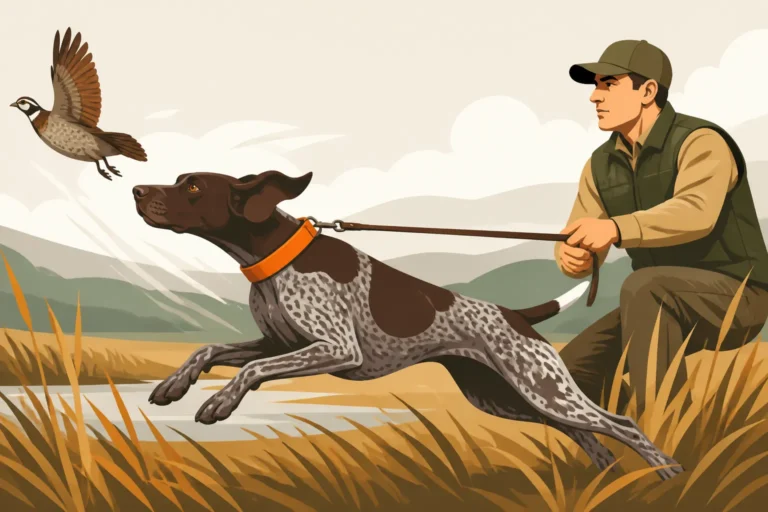
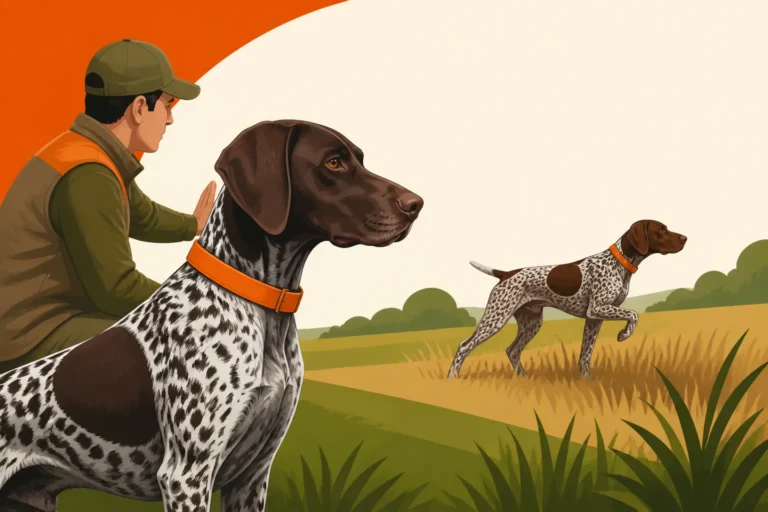
Imagine your GSP locked on point, nose twitching, tail rigid, every muscle poised for a bird flush. "Whoa" in this context means holding that precise, statuesque position until released. It means not creeping forward, not breaking point, and not chasing the flush without permission. It’s about channeling that intense prey drive into a controlled, beautiful, and effective partnership. It is this level of unwavering obedience that makes "whoa" such a powerful tool, far beyond the general request of a "stay."
The Critical Role of "Whoa" in Field Work and Safety
For a hunting German Shorthaired Pointer, "whoa" is absolutely non-negotiable. Without it, your dog will be flushing birds prematurely, running in on shots, or chasing cripples before you’re ready. This creates a chaotic and unproductive hunting experience. A GSP that breaks point consistently is not only ineffective but can also become a safety hazard in the field, especially with other hunters or dogs around.
Beyond hunting, "whoa" is a crucial safety command in everyday life. Picture your dog seeing a squirrel across a busy street, or a child darting out from behind a parked car. A solid "whoa" can literally save your dog's life by stopping them dead in their tracks, preventing a dangerous situation. It offers an immediate override for their natural instincts, giving you critical seconds to assess and react. This command builds a foundation of respect and trust, letting your GSP know that while their instincts are valued, your direction is paramount for their safety and success.
When to Begin "Whoa" with Your GSP Puppy
The best time to introduce the concept of "whoa" is surprisingly early, though formal, structured training with a check cord often begins around four to six months of age. Even a young German Shorthaired Pointer puppy can begin to learn patience and stillness. Think of it less as rigid obedience and more as building a foundation for focus. Start with very short, positive sessions. For example, when your puppy pauses naturally during playtime or is focused on something, you can gently say "whoa" in a calm voice. The goal isn't immediate, perfect stillness, but rather associating the word with the act of stopping and being still.
As your puppy matures, usually after they've grasped basic obedience commands like "sit" and "stay," you can introduce more formal "whoa" training. Waiting until your GSP has developed some impulse control, typically around that four to six-month mark, ensures they are mentally ready to understand and process the command. Pushing too hard too early can lead to frustration for both you and your puppy. Remember, every German Shorthaired Pointer develops at its own pace, so pay attention to your individual dog's readiness rather than adhering strictly to an arbitrary timeline. The Age a Shorthair Puppy Starts Whoa delves deeper into these developmental stages.
Assembling Your Check Cord Whoa Training Toolkit
Before you even utter the word "whoa" in a training context, it's vital to have the right gear. Attempting check cord training with inadequate or incorrect equipment can be frustrating for you and ineffective or even harmful for your German Shorthaired Pointer. Think of your gear as extensions of your communication, designed to guide and teach, not to punish.
Choosing the Right Check Cord and Collar
The check cord is your primary communication tool for "whoa" training. It allows you to introduce gentle pressure and maintain control without being right next to your dog, simulating the distance you'll eventually have in the field.
When choosing a check cord for your GSP, consider these factors:
- Length: A 15- to 30-foot cord is generally ideal for initial whoa training. This length provides enough distance for your dog to feel some independence, but still allows you to intervene with a gentle tug. Longer cords (50 feet or more) might be used later for advanced ranging practice, but they can be cumbersome for initial whoa work.
- Material: Nylon check cords are popular for their durability and ease of cleaning. They slide well through grass and resist tangling. Some trainers prefer cotton cords for a softer feel in the hand, but they can absorb water and get heavy. Whichever material you choose, ensure it's robust enough to withstand a strong GSP's pull without snapping. You can find a good selection of durable check cords on Amazon.
- Weight: Avoid anything too heavy that will drag your dog down, but also not so light that it tangles easily. A good balance allows for natural movement while still providing a physical connection.
For collars, a sturdy flat buckle collar is often a good starting point for very young puppies learning basic leash manners. However, for "whoa" training where more direct communication is needed, a slip lead or a properly fitted pinch collar (also known as a prong collar) can be more effective. A slip lead tightens gently when pressure is applied, giving clear feedback without being harsh if used correctly. A pinch collar, when fitted high and snug on the neck, provides uniform pressure around the neck, mimicking a mother dog's correction, which can be very effective for sensitive GSPs. Always ensure any collar is fitted correctly to avoid injury, and never use a choke chain. The goal is clear communication, not discomfort or pain.
Setting the Stage: Environment and Auxiliary Gear
Just as important as the physical tools is the environment in which you train. German Shorthaired Pointers are highly intelligent and easily stimulated, so controlling distractions is key, especially in the early stages.
- Controlled Environment: Start in a quiet area with minimal distractions. This might be your living room, a fenced backyard, or an empty park during off-peak hours. The less there is to capture your GSP's attention, the easier it will be for them to focus on you and the command. As they progress, you'll gradually introduce more distractions, but the foundation needs to be solid.
- Training Whistle: A whistle can be an invaluable tool for a GSP, especially as you increase distance. It's a consistent sound that cuts through environmental noise and doesn't carry the emotional fluctuations of your voice. You can incorporate a specific whistle blast to signal "whoa" once your dog understands the verbal command.
- High-Value Treats: Positive reinforcement is crucial for German Shorthaired Pointers. High-value treats—small, soft, and extra-tasty morsels—will keep your GSP motivated and engaged. Use them liberally when your dog performs correctly, especially in the initial stages. The faster you reward, the clearer the connection between the action and the treat.
- Patience and Persistence: These aren't tangible items you can buy, but they are absolutely essential. Training a GSP requires dedication and understanding their high drive. There will be days of frustration, but consistency and a positive attitude will pay off immensely. Online resources, such as those offered by BAXTER & Bella, can provide structured programs and support, which can be incredibly helpful for maintaining consistency and learning new techniques when tackling complex commands like "whoa."
Step-by-Step Guide to Introducing "Whoa" with a Check Cord
Now that you've got your gear and mindset ready, it's time to put theory into practice. Remember, patience is your best friend when training a German Shorthaired Pointer, especially with a command that goes against their natural inclination for constant motion.
Laying the Groundwork: Indoor Introductions and Gentle Pressure
Start this crucial training indoors, where distractions are minimal and your GSP can focus entirely on you. The goal here is to introduce the concept of stopping and holding still in response to the "whoa" command and gentle pressure from the check cord.
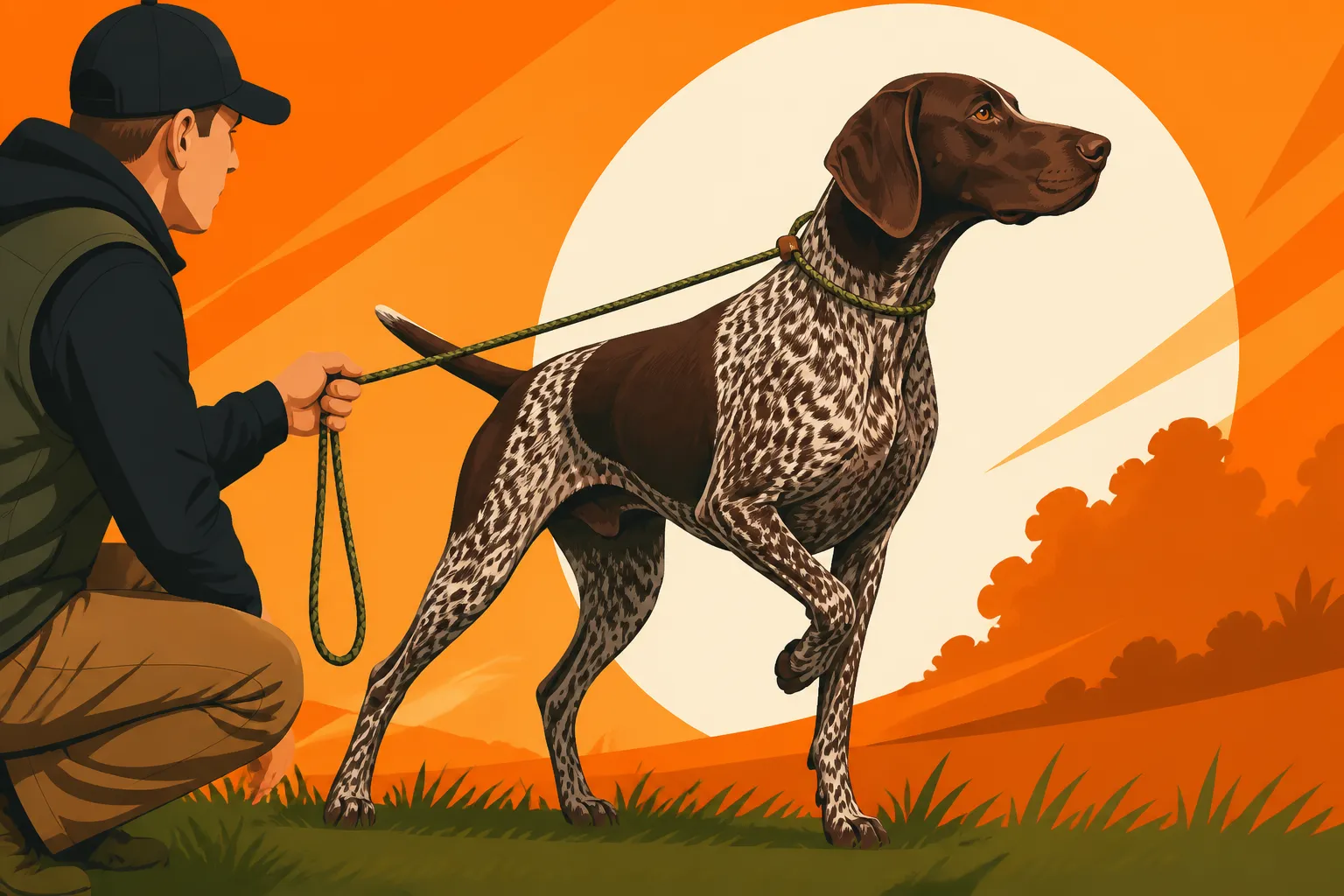
Begin by attaching the check cord to your GSP's collar (ensure it's fitted correctly). Let the cord drag on the floor for a bit so they get used to it. Now, hold the end of the check cord. As your dog is walking calmly, give the verbal command "Whoa" in a firm, clear, but calm voice. Simultaneously, apply a gentle, upward lift on the check cord, just enough to stop their forward motion. The instant your GSP stops, release the pressure immediately and praise them enthusiastically, perhaps with a "Good whoa!" and a high-value treat. Repeat this many times. The timing is critical: pressure as you say "whoa," release the moment they stop. You're teaching them that releasing the pressure is the reward for stopping. Keep these sessions short – five to ten minutes at most – to maintain your GSP's interest and prevent them from becoming bored or frustrated.
It’s important to understand that your GSP won’t naturally understand "whoa" at first. They might look confused, or even try to pull against the cord. Your job is to guide them gently into the correct response. If they fight the pressure, just hold steady; don't yank or punish. The moment they yield and stop, that's your cue to release and reward. Think of it as a conversation: "Whoa" means 'stop,' the cord helps communicate that, and the release and reward confirms they got it right. The muscle memory of stopping with gentle pressure and receiving a reward is what we’re building here.
Moving to Controlled Outdoor Environments
Once your German Shorthaired Pointer is consistently stopping and holding "whoa" in a distraction-free indoor environment, it's time to test those skills in a slightly more stimulating setting. The transition to outdoors should be gradual. Choose a fenced area or a very quiet park where you are unlikely to encounter other dogs, people, or wildlife initially.
Attach the check cord, letting your GSP roam a little further away, but still within a comfortable distance for you to manage the cord. Let them explore for a minute, then repeat the same "whoa" command and gentle upward pressure you practiced indoors. They might be more distracted now, perhaps sniffing the ground or looking around. This is where your consistency comes in. If they pull against the cord, hold steady until they stop, then release and praise. Don't let them drag you around. The check cord should be a communication line, not a battle rope. Practice moving with them, letting them walk ahead, then giving the "whoa" command and applying pressure. Vary your position relative to them, sometimes walking behind, sometimes to the side.
The key here is repetition and building confidence in the command, even with minor distractions. Slowly introduce very mild distractions over several sessions. Maybe a family member walks by at a distance, or a distant bird call. Each successful "whoa" in these new environments reinforces the command and builds your GSP's understanding that "whoa" means "stop and freeze" no matter where they are or what's happening. Your German Shorthaired Pointer’s keen senses mean every new smell and sound is a potential distraction, so gradual exposure is crucial to avoid overwhelming them.
Correcting Movement: The Art of Check Cord Communication
A GSP's natural inclination is to move, especially when excited or on the scent. Therefore, a critical part of check cord whoa training is teaching them to not move once the command is given. This is where the check cord becomes a tool for immediate, clear correction.
When you give the "Whoa" command and apply pressure, your GSP might stop but then try to take another step, or shift their weight, or even turn their head excessively. This is called "creeping" or "breaking point." The instant they attempt to move, give a quick, sharp tug and release on the check cord, simultaneously repeating "Whoa!" in a firm voice. This correction isn't meant to be painful, but rather startling enough to break their intention to move and remind them of the expectation. The timing of this quick tug is everything; it must happen the very second they initiate movement, not a second later. A delayed correction is confusing and ineffective.
After the correction, if they stop and stand still, immediately release all tension on the cord and offer praise. If they move again, another quick tug and "Whoa!" You are teaching them that stillness is rewarded by the release of pressure and praise, while movement after the command results in an uncomfortable, but not punishing, correction. This clear cause-and-effect communication, delivered consistently, helps your highly intelligent German Shorthaired Pointer understand the boundaries of the "whoa" command. Over time, your goal is for your GSP to associate the command "whoa" directly with complete immobility, even without the need for a physical correction from the check cord.
Navigating Common Whoa Training Challenges
Even with the best intentions and consistent training, German Shorthaired Pointers, with their intense drive and energetic personalities, will inevitably present challenges during whoa training. It's not a sign of failure, but rather an opportunity to refine your approach and deepen your understanding of your dog.
Addressing the "Creep" and Breaking Point
One of the most common and frustrating behaviors in whoa training is the "creep" or breaking point. Your GSP might stop on command, but then slowly inch forward, drop their head to sniff, or shift their weight, subtly moving closer to whatever has their attention. This isn't full-on breaking, but it undermines the absolute stillness "whoa" requires. A Shorthair That Creeps Once It Points is a common problem in the field.
To tackle creeping, you need to be observant and lightning-fast with your corrections. As soon as you see even the slightest muscle twitch or shift of weight indicating a creep, give that quick, sharp pop on the check cord and a firm "Whoa!" The goal is to interrupt the intention to move before the movement fully manifests. Many trainers will take a step towards the dog as they give the correction, which can add emphasis and break the dog's focus on the distraction. Don't be afraid to keep them on the check cord for extended periods, even if it feels tedious. Holding that "whoa" for gradually longer durations, especially near tempting distractions like a thrown dummy or a scent, is crucial. If they creep, reset them to their original position, give the command, and correct again. The message must be clear: "Whoa" means no movement, period.
Building Steadiness Amidst High Distractions
German Shorthaired Pointers are bred to be focused, but that focus is naturally directed at game. Getting them to hold "whoa" when a bird flushes, or another dog runs by, is the ultimate test. This requires a very gradual increase in distractions. Start small:
- Stationary Distractions: Practice "whoa" near a parked car, a person sitting quietly, or a distant dog on a leash.
- Movement at a Distance: Have a helper walk across your training area at a significant distance while your GSP is on "whoa." Gradually decrease the distance.
- Sounds: Introduce quiet sounds, then louder ones, while maintaining "whoa."
- Scent: The real challenge! Use a dummy or a wing with bird scent. Place it near your GSP while they are on "whoa." If they break, a firm "Whoa!" and a pop on the check cord, resetting them. Do not allow them to get the dummy or bird until you release them. This process is time-consuming and demands immense patience. Holding a Shorthair's Whoa Before Birds Appear requires this type of systematic exposure.
The check cord is your safety net. If your GSP completely blows off the "whoa" command in high distraction, the cord allows you to physically stop them, remind them of the command, and reinforce the expectation. Remember to always end training sessions on a positive note. If a session is becoming too frustrating, simplify the task, achieve a successful "whoa," praise, and then end it.
Troubleshooting Resistance and Disengagement
Some German Shorthaired Pointers, especially the more stubborn or sensitive ones, might react to check cord pressure with resistance. They might pull harder, become defensive, or even try to sit down and refuse to move. Others might simply disengage, losing interest if the training feels too repetitive or if they don't understand what you're asking.
If your GSP is pulling excessively against the check cord, avoid a tug-of-war. Instead, apply steady, consistent pressure until they yield, even slightly, then release immediately. They need to learn that yielding to pressure is what makes it go away. If they resist by sitting or lying down, you can use the check cord to gently lift them back to a standing position, or walk in a small circle to get them moving again, then repeat the "whoa" command. For sensitive dogs, lighten your pressure and make your praise even more enthusiastic. Some GSPs are "soft" and will shut down with too much harshness.
For the GSP that disengages, evaluate your training sessions. Are they too long? Is the environment too boring or too distracting? Re-introduce higher-value treats, make your praise more exciting, or shorten sessions to keep their enthusiasm high. Sometimes, varying your training location or the type of distraction can help rekindle their interest. A strong bond and trust between you and your German Shorthaired Pointer are paramount. If they trust you and enjoy working with you, they're much more likely to respond positively to training, even when it's challenging.
Refining and Maintaining Your GSP's "Whoa" Command
Once your German Shorthaired Pointer has a solid grasp of "whoa" in various controlled settings, the next phase is to refine it for real-world scenarios and ensure it remains reliable for years to come. This means progressing from basic obedience to more advanced field applications and consistent reinforcement.
Advancing to Wing, Shot, and Advanced Steadiness
The true test of a GSP's "whoa" often comes when live birds are involved, or when the excitement of the hunt peaks. This is where you transition from stationary "whoa" to dynamic steadiness.
- Introducing the Wing: Start by attaching a real bird wing (pheasant, quail, chukar) to a fishing pole or a string. Have your GSP "whoa" at a distance, then present the wing, moving it tantalizingly. If they break, immediately correct with the check cord and reset. Gradually decrease the distance and increase the movement of the wing. The goal is for them to remain perfectly still, even with the intense visual and olfactory stimulation of the wing. Wing on a String for a Shorthair Puppy is a great starting point, even before this more advanced stage.
- Steadiness to Flush: Once they are steady to the wing, introduce a bird launcher or a helper releasing a bird (start with pigeons or pen-raised quail). Your GSP should be on a check cord, "whoa-ed" in position. Flush the bird. If they break, correct immediately. They must understand that the bird is not theirs until you say so. This takes many repetitions, slowly decreasing the length of the check cord until they are holding steady off-leash. Steadying a Shorthair to Wing and Shot outlines these critical steps.
- Steadiness to Shot: This comes after steadiness to flush. Once your GSP holds for the flush, introduce a cap gun or .22 blank pistol fired at a distance after the bird flushes, while they are holding "whoa." Gradually decrease the distance and increase the caliber of the gun. The dog must remain steady through the shot, waiting for your release to retrieve. This prevents dangerous "gun shyness" and ensures they are safe in the hunting field.
Incorporating Tools like Whoa Posts and Barrels
For German Shorthaired Pointers that struggle with consistent stillness or have a tendency to creep, tools like a whoa post or a whoa barrel can be incredibly effective training aids. These tools physically prevent movement, making the concept of absolute stillness undeniable.
- Whoa Post: A whoa post is essentially a sturdy post (or even a tree) to which you attach your GSP's check cord or a short lead. The dog is positioned next to the post, given the "whoa" command, and then physically prevented from moving away by the lead. This takes the physical enforcement out of your hands and puts it on an immovable object. You can then walk away, creating distance, and return, reinforcing the command verbally. The post doesn't allow for creeping. If they try to move, they hit the end of the line, immediately correlating movement with resistance. This can be particularly useful for dogs that respond better to impersonal physical feedback rather than direct handler corrections. Teaching a Shorthair Whoa on a Table or Barrel is another excellent method.
- Whoa Barrel (or Table): A whoa barrel or a raised training table elevates your GSP, making it uncomfortable for them to move or jump off. It forces them to focus on holding a stationary position. You lead your GSP onto the barrel or table, give the "whoa" command, and physically keep them on it. Any attempt to step off is immediately corrected by physically placing them back on. The height creates a psychological barrier to movement. This method isolates the "whoa" command from forward motion and encourages focus on the handler. Both the post and barrel methods are excellent for drilling the concept of immobility, especially before progressing to advanced field scenarios.
Lifelong Reinforcement for a Reliable Command
"Whoa" is not a command you teach once and then forget. For a German Shorthaired Pointer, whose instincts are so powerful, it requires lifelong reinforcement. Think of it as a muscle; if you don't use it, it atrophies.
- Consistency is Key: Regularly incorporate "whoa" into everyday situations. Have your GSP "whoa" before meals, before going out the door, or while you're getting ready for a walk. These low-pressure scenarios keep the command fresh and reinforce its meaning.
- Random "Whoa" Drills: Periodically, during walks or playtime in a safe, fenced area, unexpectedly give the "whoa" command. Reward enthusiastic compliance. This prevents your GSP from anticipating the command only during formal training sessions.
- Field Practice: If your GSP hunts, "whoa" should be practiced every single time they are in the field, whether it's on game or just a training run. Never let them break point or run in on a flush without correction. Common Mistakes That Ruin Whoa on a Shorthair often stem from inconsistent application.
- Never Accept Less: The biggest mistake you can make is to accept a "half-whoa" or a "creepy whoa." If you ask for "whoa," demand full compliance. Letting them get away with subtle movements eventually erodes the command's reliability.
- Praise and Release: Always remember to praise your GSP for a good "whoa" and then give them a release command, like "okay" or "hunt on." This teaches them that there is an end to the "whoa" and that compliance leads to being able to move again. This is especially important for Whether a Shorthair Reads Hand Signals at Two Hundred Yards – a consistent release is part of the language.
By consistently reinforcing "whoa" throughout your German Shorthaired Pointer's life, you ensure that this critical command remains a reliable, instant response, contributing to a safer, more enjoyable, and more effective partnership.
Check Cord Options for German Shorthaired Pointer Training
Choosing the right check cord can make a real difference in the effectiveness and comfort of your whoa training. Here’s a quick overview of common types:
| Check Cord Type | Material | Typical Length | Pros | Cons | Best Use for GSPs |
|---|---|---|---|---|---|
| Flat Nylon | Nylon Webbing | 15-30 ft, 50 ft | Durable, lightweight, weather-resistant | Can sometimes cause rope burn, less grip | General purpose training, field work in moderate cover |
| Round Nylon | Braided Nylon | 15-30 ft, 50 ft | Good feel in hand, less tangling | Can be harder to grasp if wet, may burn | Field training, good for consistent pressure-release |
| Cotton Web | Cotton Webbing | 15-30 ft | Soft on hands, good grip, less abrasive | Absorbs water/dirt, can get heavy, tangles | Early training, sensitive dogs, less intense field work |
| Polypropylene | Synthetic | 15-30 ft | Lightweight, floats, affordable | Less durable than nylon, can fray easily | Water work introduction, temporary training, lighter use |
Disclaimer
This article is for general informational purposes only and does not constitute professional advice. Laws, prices and regulations vary by location and change over time. Consult a qualified professional for guidance on your specific situation.