The Month a Shorthair Puppy Stops Nipping
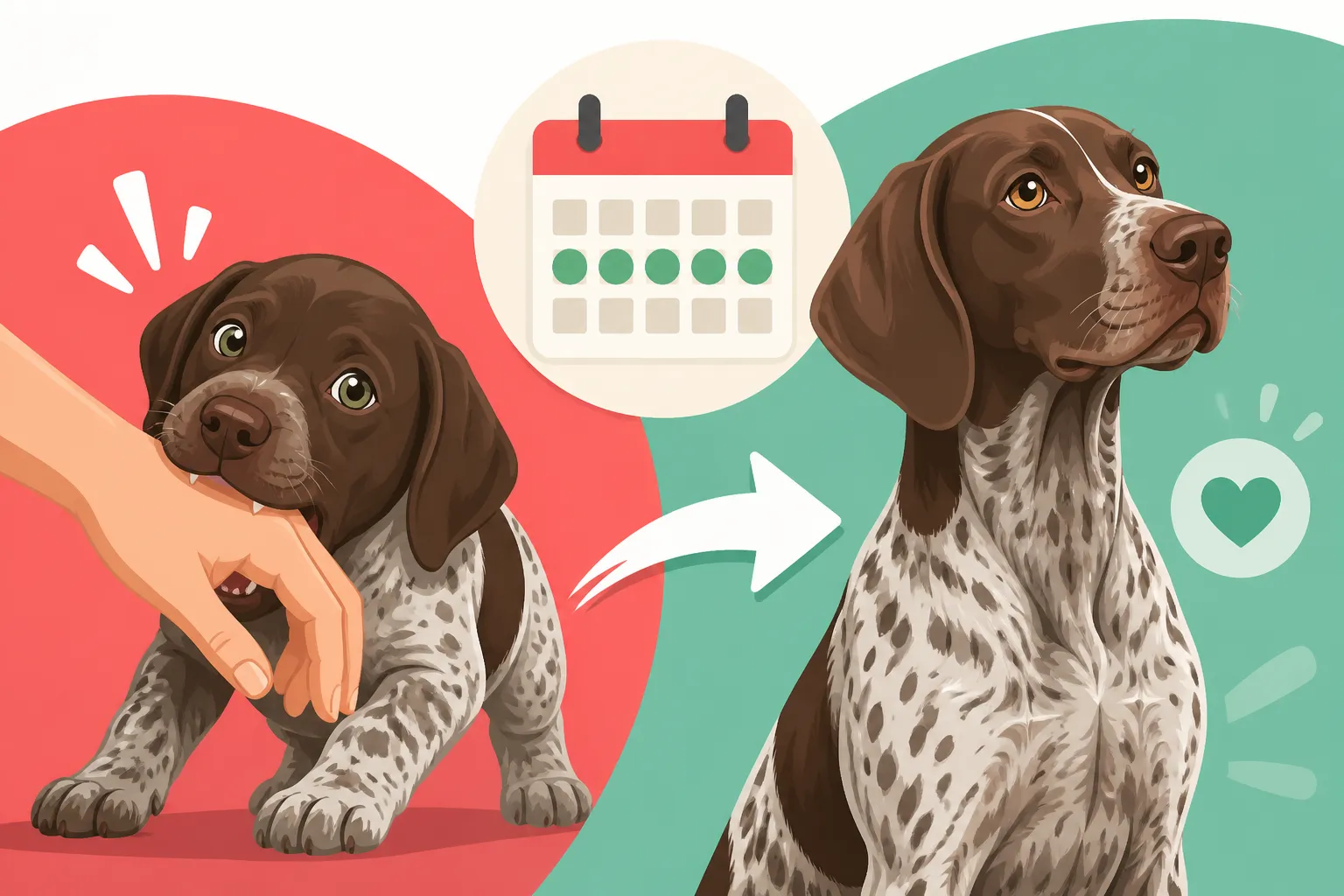
Oh, the joy and utter frustration of a German Shorthaired Pointer puppy! If you're currently living with a furry land shark who thinks your hands, ankles, and pant legs are the best chew toys around, you are absolutely not alone. That persistent nipping can feel like it will never end, and it's particularly intense with a high-energy breed like our beloved GSPs. This guide is going to walk you through exactly why your GSP puppy nips, what a realistic timeline for this behavior looks like, and most importantly, how to gently but effectively teach them better manners so you can enjoy those precious puppy cuddles without feeling like a human chew toy.
Understanding Why Your GSP Puppy Nips
It's easy to take puppy nipping personally, especially when those sharp little needle teeth seem intent on making contact with your skin every chance they get. But understanding the root causes of this behavior can help you approach it with patience and a clear strategy. For German Shorthaired Pointers, known for their boundless energy and strong prey drive, nipping is often a multi-faceted issue.
Puppy Teething and Exploration
Just like human babies, GSP puppies go through a significant teething phase. From about three weeks old, their baby teeth start to emerge, and then around three to four months, those sharp little pearly whites begin to fall out, making way for adult teeth. This process can be uncomfortable, and chewing on anything and everything—including you—helps to relieve the soreness and pressure in their gums. A puppy's mouth is also their primary tool for exploring the world around them. They pick things up, mouth them, and use their teeth to investigate textures and learn about objects. Your hands, with all their interesting smells and movements, become a prime target for this natural exploration.
Think about how much a GSP uses their mouth in the field—retrieving game, picking up scents, interacting with cover. This inherent oral fixation starts young. They're not trying to hurt you; they're simply doing what their instincts tell them to do. Providing plenty of appropriate chew toys during this period is absolutely crucial. If you don't give them good things to chew on, they will find something else, and often that something else is your arm or the leg of your favorite chair.
Learning Bite Inhibition
One of the most vital lessons a puppy learns from its mother and littermates is bite inhibition. When puppies play together, they nip and mouth each other. If one puppy bites too hard, the other will yelp loudly and stop playing, teaching the offender that "ouch, that hurt!" This is a natural feedback loop that helps puppies learn how much pressure they can exert with their jaws without causing pain.
If a GSP puppy is removed from its litter too early, or if they didn't have enough opportunities for rough-and-tumble play with their siblings, they might not have fully developed this crucial bite inhibition. They simply haven't learned that human skin is far more delicate than a littermate's furry hide. It then becomes our job as their human companions to gently teach them this lesson, mimicking the way their mother and siblings would have. This means responding consistently and clearly when their nipping crosses the line from playful mouthing to actual pain. The age a Shorthair puppy stops nipping is really about the success of this training, not just a biological milestone.
Seeking Attention and Play
Let's be honest, German Shorthaired Pointers are incredibly intelligent and energetic dogs. They thrive on interaction and engagement. Sometimes, a GSP puppy will nip because they want your attention, or they want to initiate a game. If you inadvertently reward the nipping by continuing to play or by giving them a reaction—even a negative one—they learn that nipping gets them what they want. It’s a classic case of any attention being good attention for a bored or undersocialized pup.
For a GSP, this drive to interact and "work" is particularly strong. They want to be involved in whatever you're doing, and sometimes their way of saying "play with me!" or "pay attention to me!" involves a mouthy invitation. This can manifest as nipping at your clothes as you walk by, or persistently mouthing your hand when you're trying to pet them. It’s not malice; it's often a desperate plea for engagement, a sign that they need more appropriate outlets for their energy and intelligence.
The Typical Nipping Timeline for a German Shorthaired Pointer
While every GSP puppy is an individual, there’s a general timeline for nipping behavior that most owners experience. It’s less about a sudden "off switch" and more about a gradual decline in intensity and frequency as they grow and learn. Knowing what to expect can help you prepare and stay consistent with your training efforts.
Early Puppyhood 8-16 Weeks
This is often the peak of the "land shark" phase. When your GSP puppy first comes home, usually around 8-10 weeks old, they are full of boundless energy and exploring their new world with their mouths. Their baby teeth are incredibly sharp, making even light nips feel quite painful. During this period, nipping is primarily driven by teething discomfort, curiosity, and the lack of fully developed bite inhibition. They're still learning what human skin means.
You'll likely notice them nipping at everything: your fingers, toes, pants, even the furniture. They don't yet understand the difference between a chew toy and your hand. This is also the time when they are most impressionable, and consistent redirection and teaching of "soft mouth" rules are paramount. If you're wondering how much exercise your GSP puppy needs, remember that mental stimulation is just as important as physical activity for these smart pups. How Much Exercise a Shorthair Puppy Should Get is a good resource to consider for balancing their energy.
Adolescence 4-8 Months
As your GSP puppy enters adolescence, typically from about four months up to eight months and beyond, the nature of the nipping might shift slightly. Around this time, they are usually losing their baby teeth and getting their permanent adult teeth. This can be another uncomfortable period for their gums, leading to renewed chewing and nipping. However, if you've been consistent with bite inhibition training, the intensity of their nips should start to decrease, even if the frequency remains.
During adolescence, GSPs can also start testing boundaries. They're growing in size and confidence, and sometimes nipping can be a way for them to assert themselves or get a reaction. This is where your consistency becomes even more critical. If they've learned that a yelp and a moment of ignoring them stops the fun, they are more likely to self-correct. If not, they might push the limits further. This phase also coincides with a significant growth spurt and an increase in overall strength, so a full-strength nip from an adolescent GSP can be quite startling. Keeping up with structured training, perhaps with a program like those offered by BAXTER & Bella, can be invaluable during this challenging but crucial stage.
Settling Down 8-12+ Months
By the time your German Shorthaired Pointer reaches 8-12 months of age, you should see a significant decrease in unwanted nipping behavior, provided you've been consistent with your training. It’s not a switch that flips where one day they nip and the next they don't; rather, it's a gradual process of them learning appropriate ways to interact with humans. Their adult teeth are usually in, so the teething discomfort is gone, and their bite inhibition should be well-established.
At this stage, any remaining nipping is more likely to be an attention-seeking behavior or a remnant of old habits that haven't been fully extinguished. Your GSP should be capable of understanding and responding to "no bite" cues. If nipping persists aggressively or becomes a source of concern, it’s always a good idea to consult with a professional trainer. With their strong desire to please and their intelligence, most GSPs, with consistent guidance, learn to use their mouths appropriately and reserve their powerful jaws for retrieving game or enjoying a good chew toy, not for their human family.
Effective Strategies to Stop GSP Puppy Nipping
Dealing with a nipping GSP puppy requires a multi-pronged approach that combines clear communication, redirection, and meeting their significant needs for exercise and mental stimulation. Here's how to turn that land shark into a loving companion.
"Yelp and Ignore" Method
This method directly mimics how puppies learn bite inhibition from their littermates. When your GSP puppy nips you too hard, let out a high-pitched yelp or "ouch!" immediately. This should be loud enough to startle them, but not so loud that it scares them. The moment you yelp, completely withdraw your attention. Pull your hand away, turn your back, or even leave the room for 10-20 seconds. The key is to cut off all interaction and playtime.
Your puppy will quickly learn that a hard bite means the fun stops. When you return, or when they've calmed down, offer them an appropriate chew toy. If they mouth the toy gently, praise them lavishly. If they nip you again, repeat the yelp and ignore process. Consistency is paramount. Every single time those teeth make painful contact, the fun must end. This might feel silly at first, but it's a language your puppy understands.
Redirecting to Appropriate Chew Toys
German Shorthaired Pointers have a strong urge to chew, especially during teething and as they mature. You absolutely must provide plenty of interesting and durable chew toys. When your puppy starts to nip at you, immediately redirect their attention to a suitable toy. Offer it with an encouraging tone, "Here, chew this!" As soon as they take the toy in their mouth, praise them warmly. This teaches them what is acceptable to chew.
Keep a variety of chew toys handy in every room where your puppy spends time. Look for different textures and hardness levels. Some days, they might prefer a softer rubber toy; other days, a tougher nylon bone. Interactive toys that dispense treats can also be great for mental stimulation and keeping their mouths busy. Online retailers like Amazon offer a vast selection, from durable Kongs to Nylabones, that can stand up to a GSP's chewing power. Regularly rotate their toys to keep them interesting and exciting. The goal is to make the chew toy far more appealing than your hands or clothes.
Consistent Training and Structure
Beyond specific nipping deterrents, general obedience training and a structured environment play a huge role in settling a GSP puppy. A well-trained dog understands boundaries and listens to commands. Teach basic commands like "sit," "stay," and "leave it" early on. These commands can be invaluable in managing nipping episodes. If your puppy is getting mouthy, ask them to "sit" or "down" and reward them for calm behavior. A solid "leave it" can also be used to stop them from nipping at clothing or hands.
Consistency in training means everyone in the household uses the same commands and follows the same rules. If one person allows nipping and another doesn't, your GSP will become confused and the behavior will be harder to extinguish. Consider enrolling in puppy classes or an online training program like BAXTER & Bella, which provides structured lessons and support. A consistent routine, including feeding times, potty breaks, and designated play and rest periods, also helps a GSP puppy feel secure and less likely to act out with their mouth. The Structure a German Shorthaired Pointer Needs Daily is a great reference for how important this consistency is.
Providing Ample Exercise and Mental Stimulation
German Shorthaired Pointers are a high-energy breed, plain and simple. An under-exercised or bored GSP puppy is a recipe for destructive behavior, and nipping is certainly part of that repertoire. They need more than just a quick walk around the block. Daily vigorous exercise is non-negotiable. This could include structured walks, supervised off-leash play in a secure area, fetch, or even swimming. Remember that physical exercise also needs to be balanced with mental stimulation.
Puzzle toys, scent games, short training sessions, and even just exploring new environments can help tire out their active minds. A mentally stimulated GSP is less likely to resort to nipping out of boredom or frustration. If your GSP is still nipping excessively despite consistent redirection, consider whether they are truly getting enough physical and mental engagement. Sometimes, simply increasing their appropriate activity levels can dramatically reduce unwanted mouthiness. For example, learning The Age a Shorthair Can Start Distance Running can help you plan for their future energy needs.
When Nipping Becomes More Than Just Puppy Behavior
While nipping is a normal part of puppy development, especially in an energetic breed like the German Shorthaired Pointer, there are times when it can escalate beyond typical puppy play. It's important for owners to recognize these red flags and know when to seek professional help to ensure the behavior doesn't become a serious problem.
Recognizing Red Flags
Most puppy nipping is playful and exploratory. The puppy's body language will typically be loose and wiggly, with play bows and an open, relaxed mouth. However, if the nipping starts to show signs of aggression, it's a serious concern. Watch for stiff body language, growling (not playful rumble-growls, but tense, warning growls), snarling, lip lifting, or a hard stare. If your puppy's nips become increasingly painful, or if they seem to deliberately target sensitive areas and do not readily disengage when you yelp or withdraw, this could indicate a problem beyond normal puppy mouthing.
Another red flag is if the nipping escalates when you try to disengage. Instead of letting go when you say "ouch" or remove your hand, does your puppy become more determined to bite? Do they follow you, jumping and nipping your legs or clothes even after you've tried to end the interaction? This can sometimes be a sign of over-arousal that the puppy can't self-regulate, or it might indicate a more deeply ingrained behavioral issue that needs immediate attention. Observing Reading a German Shorthaired Pointer's Stress Signals can help you understand subtle cues your puppy might be giving.
Seeking Professional Guidance
If you've consistently applied the "yelp and ignore" and redirection methods, provided ample exercise and mental stimulation, and your GSP puppy's nipping is not improving, or if you see any of the red flags described above, it's time to seek professional help. Don't wait for the behavior to get worse as your puppy grows larger and their bite becomes more powerful. Early intervention is key.
A certified professional dog trainer or a veterinary behaviorist can assess your puppy's individual situation, identify underlying causes, and develop a tailored training plan. They can observe your interactions, correct your technique, and teach you more advanced methods if needed. Sometimes, what seems like aggressive nipping can actually be fear-based or a symptom of an underlying anxiety. A professional can help distinguish between these nuances and guide you towards the most effective solution, helping you build a positive and safe relationship with your German Shorthaired Pointer.
| GSP Nipping Phase | Typical Age Range | Primary Causes | Recommended Strategies |
|---|---|---|---|
| Early Puppyhood | 8-16 Weeks | Teething, exploration, lack of bite inhibition | "Yelp and Ignore" for hard bites, immediate redirection to appropriate chew toys (e.g., from Amazon), ensure ample puppy-safe chew options. Constant supervision and short, positive training sessions. |
| Adolescence | 4-8 Months | Adult teeth emerging, testing boundaries, high energy | Continue "Yelp and Ignore" consistently. Increase variety and durability of chew toys. Focus on consistent obedience training (e.g., with resources from BAXTER & Bella), "leave it" command. Maximize appropriate physical exercise and mental challenges to burn energy. |
| Settling Down | 8-12+ Months | Learned inhibition, seeking attention | Nipping should be significantly reduced. Reinforce calm behavior. Address any remaining nipping as attention-seeking; ignore, then reward for calm. If nipping is persistent or aggressive, consult a professional trainer or veterinary behaviorist. Ensure continued appropriate exercise and mental work. The Age a German Shorthaired Pointer Finally Settles |
Dealing with GSP puppy nipping can be exhausting, but remember that it's a phase, and with consistent effort and understanding, your energetic pup will learn to use their mouth appropriately. Patience, clear communication, and providing plenty of healthy outlets for their GSP instincts are your best tools.
Disclaimer
This article is for general informational purposes only and does not constitute professional advice. Laws, prices and regulations vary by location and change over time. Consult a qualified professional for guidance on your specific situation.