The Season a Shorthair Starts Hunting Shorter Days
Aging German Shorthaired Pointers face reduced stamina and joint pain during late season shorter days and colder temperatures.
Know what to watch for.
Breed-specific conditions, screening and DNA tests, what surgery actually costs, and the daily habits that stretch a healthy lifespan.
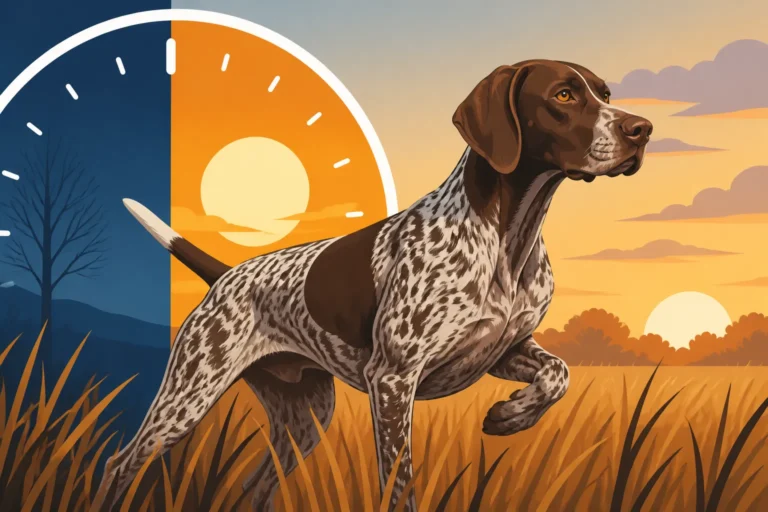
Aging German Shorthaired Pointers face reduced stamina and joint pain during late season shorter days and colder temperatures.

Non-core vaccines for German Shorthaired Pointers protect active field dogs from environmental pathogens found in water and brush.
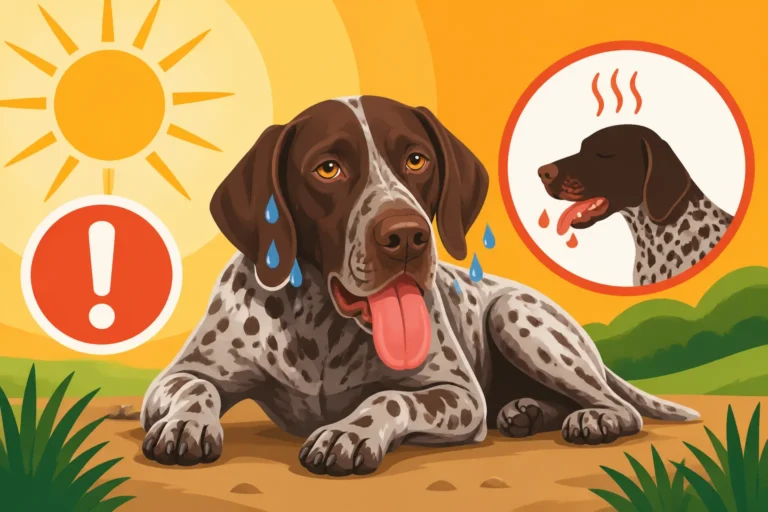
Early season heat exhaustion in German Shorthaired Pointers happens when unconditioned dogs overheat despite cool morning air and humidity.
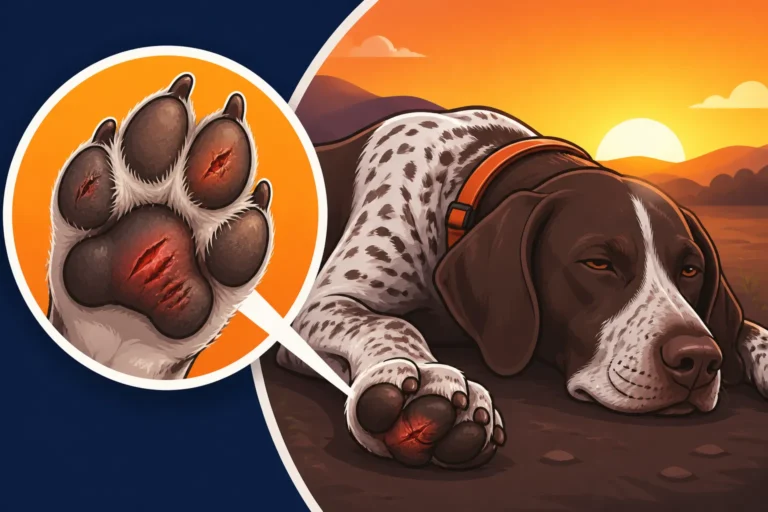
German Shorthaired Pointer pad cuts require specific recognition, treatment steps, and prevention methods after long hunting days.
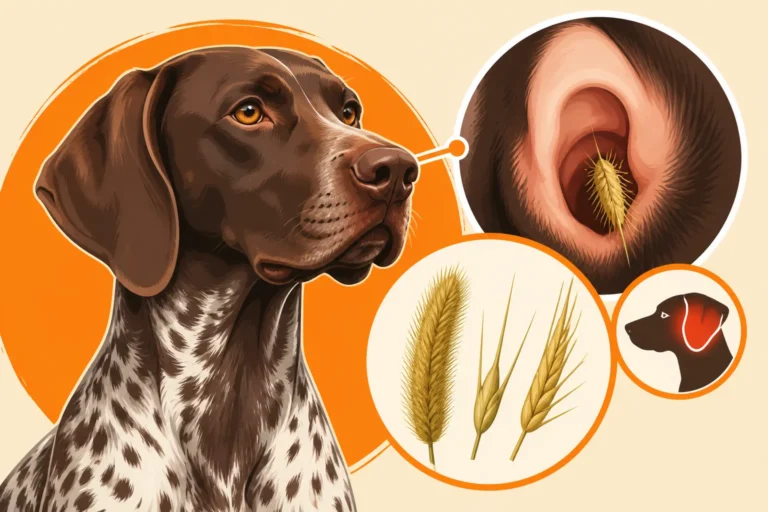
Foxtails and grass awns are barbed plant seeds that cause dangerous veterinary emergencies in German Shorthaired Pointers.

German Shorthaired Pointer ear infections caused by swimming, plus early warning signs, prevention, and treatment methods.

German Shorthaired Pointer seizure disorders, including causes, symptoms, diagnosis, and management strategies, explained for dog owners.
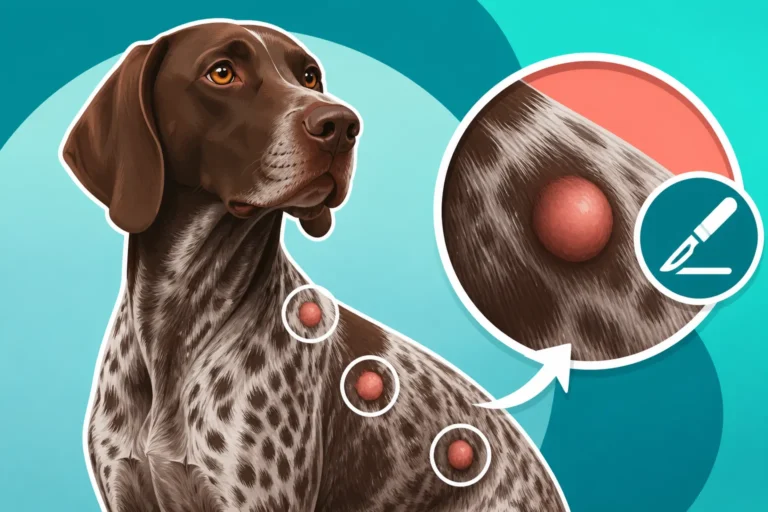
German Shorthaired Pointer lumps and bumps can be assessed for size, movement, and skin changes before visiting the veterinarian.
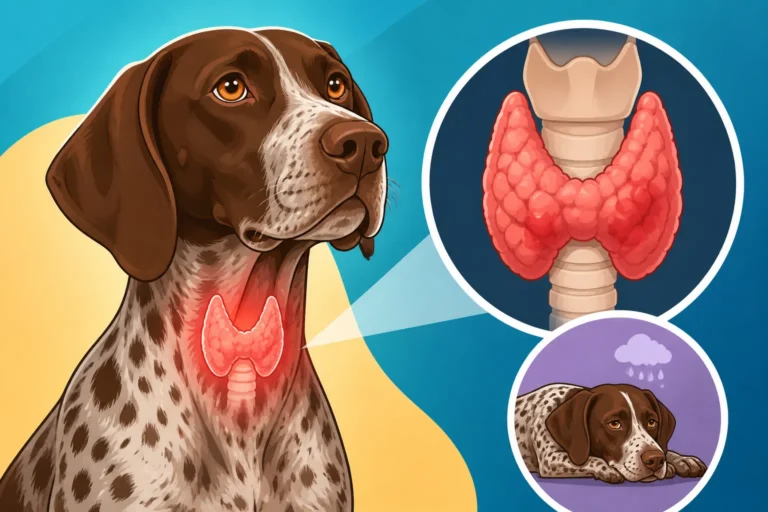
Thyroid failure in middle-aged German Shorthaired Pointers causes weight gain and low energy when glands fail to produce enough hormones.
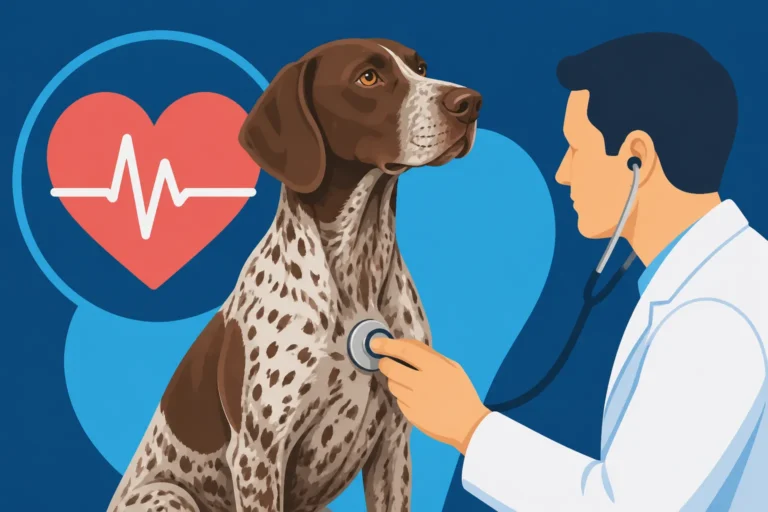
German Shorthaired Pointer heart exams help breeders screen for inherited conditions like subaortic stenosis and dilated cardiomyopathy.